
The Truterra Registered Carbon Program with Indigo pays farmers a share of registry-certified carbon credit sales for adopting new regenerative practices. Truterra, Land O'Lakes' farmer-driven sustainability company, runs the program jointly with Indigo Ag under a strategic collaboration announced in November 2024 — farmers get Truterra's hands-on, retailer-network support while generating credits through Indigo's registry-certified carbon project.
Farmers receive 55% of the project-level average credit selling price on the credits their fields generate, and Truterra may make an advance payment — estimated at $20 per metric ton — after credit issuance and before credit sale completes.
The program runs on annual enrollment cycles with a per-cycle acreage cap (the 2025 cycle capped at 400,000 acres). Truterra reports its carbon programs have paid over $21 million to farmers to date.
Eligibility
From the 2025 program cycle (the most recent published):
-
Geography: 32 states — AL, AR, DE, FL, GA, IA, ID, IL, IN, KS, KY, LA, MD, MI, MO, MN, MS, NC, ND, NE, NY, OH, OK, OR, PA, SC, SD, TN, TX, VA, WA, WI. County-level restrictions may apply where a practice is already common.
-
Field size: 1-acre minimum per field.
-
Eligible crops: barley, canola, corn, cotton, dry beans or peas, flax, hemp, millet, oats, peanuts, rye, grain sorghum or milo, soybeans, sugar beets, sunflowers, triticale, and wheat. Baseline history must include only eligible crops, alfalfa, or up to 2 years of fallow.
-
Practice change required in the enrollment crop year, on an eligible crop. Core practices (at least one): cover crop usage, strip/no-till, or adding a legume species to an existing cover crop mix. In counties where a core practice is already common, a supplementary practice is also required: longer-duration cover crops, a new cash crop in rotation, or nitrogen enhancement.
-
Practice changes are rotation-based: adopting a practice on a new crop type may qualify even if the practice was used on the field with a different crop before.
Details
Release Date
June 26, 2025
Deadline
September 2, 2025
Financial Instrument
Environmental Market
Payment Rate
Per ton CO2e
Contract Length
5 years
Stackable with Other Programs
Conditional — Public conservation programs allowed with disclosure; not with another privately funded or incompatible program
Terms
How payment works. The farmer's total payment is 55% of the project-level average credit selling price on the credits their fields generate, determined after the project's credits are sold (weighted average). Truterra may make an advance payment, estimated at $20 per metric ton, after credit issuance and before sale completes — discretionary and not guaranteed; the final payment is then the remainder. Payments for the 2025 cycle are anticipated in 2027-2028, depending on credit issuance and sale timing.
Contract term. An annual carbon offer plus a 5-year practice-maintenance and data-reporting period following the contracted year (for the 2025 cycle: 2026-2030).
Stacking. Disclosure of publicly funded conservation program participation is required for verification, and responses are unlikely to affect eligibility. Fields may not be enrolled in another privately funded or incompatible program during the contracting period.
Application Instructions
Start with the pre-enrollment form at truterraag.com/enroll, or work through a local Truterra network provider (typically the local ag retailer or co-op). Eligibility is evaluated through the Truterra MyPortal platform; data collection covers the current crop year plus four historical years, and a small portion of enrolled farmers may be selected for soil sampling or verification.
The 2025 cycle enrolled June 26 to September 2, 2025 (or until the 400,000-acre cap), with data collection due September 18, 2025 and filing due January 21, 2026. A 2026 cycle had not been published as of August 2026.
Questions: support@truterraag.com or a local Truterra network provider.
Resources
- 2025 Program Tech Sheet (223.45 KB)
Related Programs
Environmental Quality Incentives Program (EQIP)
Natural Resources Conservation Service
- GrantCost ShareConservationCover CropsForest ManagementCertified GrassfedIrrigationHigh TunnelCertified OrganicAir QualityAlternative EnergySoil HealthWildlife & Pollinator HabitatWater QualityWeatherResearchLandscapePrecision AgDroughtNutrient ManagementCarbon CaptureFencingAgroforestryGrazing ManagementReduced InputsNationalAny
Farm Storage Facility Loan Program (FSFL)
Farm Service Agency
- LoanInfrastructureEquipmentStorageLightingDelivery VehicleNationalOilseedsPeanutsPulse CropsHayHoneyBiomassFruitsVegetablesFloricultureHopsMaple SapMilkCheeseYogurtButterEggsRyeAquaculturePoultryLivestockGrains

480-a Enrollment Incentive Program
New York City Watershed Agricultural Council
- GrantNY

A Vibrant Future
International Fresh Produce Association, U.S. Department of Agriculture
- GrantClimate-SmartALCAFLGALABerriesGrapesFruitsVegetables
Updated October 2, 2026
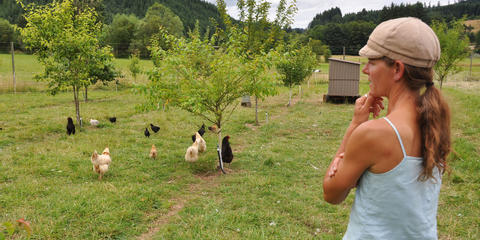
Image Credit: Josie Weiss
This information was gathered from public sources. Ambrook is not responsible for or able to affect the results of any financial programs listed, nor are they responsible for any incorrect information that is listed or is on the hyperlinked external sites. All information is subject to change.
Explore hundreds more programs on Ambrook.