
Organic Certification Cost Share (NC OCCSP)
North Carolina Department of Agriculture and Consumer Services
Certified organic operations can apply for cost share assistance toward the cost of USDA organic certification through the North Carolina Department of Agriculture and Consumer Services (NCDA&CS) or at any Farm Service Agency (FSA) county office. There is no difference in eligibility or reimbursement amount between the agencies; however, the paperwork may differ. Before a product can be labeled USDA organic, a government-approved certifier inspects the operation to ensure it follows all rules needed to meet USDA organic standards, and handlers/processors of organic food must be certified too.
Eligibility
Certified organic operations — farms and handling/processing operations certified to USDA organic standards.
Details
Financial Instrument
Cost Share
Terms
Reimbursement rate: 75% of your organic certification costs, up to a maximum of $750 per certification scope, for the 2025 and 2026 program years. This is a per-scope cap rather than a single per-applicant award, so an operation certified under more than one scope may claim up to $750 for each.
NCDA&CS itself publishes no figure — its page routes you to the federal rate and confirms the two application routes are equivalent: "Certified organic operations can apply for cost share assistance through the North Carolina Department of Agriculture and Consumer Services (NCDA&CS) or at any Farm Service Agency (FSA) county office. There is no difference in your eligibility or reimbursement amount; however the paperwork may differ between agencies." The governing terms are USDA's OCCSP final rule (91 FR 40859, July 6, 2026), which states: "For the 2025 and 2026 program years, the reimbursement percentage will be 75 percent, up to a maximum of $750 per scope."
The five scopes: crops, wild crops, livestock, handling (processing), and State organic program fees.
Allocating shared costs: "If an allowable cost is incurred for more than one scope, the amount will be divided by the number of applicable scopes."
Deadline: applications for both the 2025 and 2026 program years must be submitted by December 31, 2026. From 2027 on, the deadline is December 31 following the end of the program year.
Conditions: you must have paid certification fees to a USDA-accredited certifying agent, and a State of NC Substitute W-9 is required when applying through NCDA&CS. No match is required.
Application Instructions
Apply through the NCDA&CS (Cooperative Grading Service) or at any FSA county office; a Substitute W-9 is required.
Related Programs
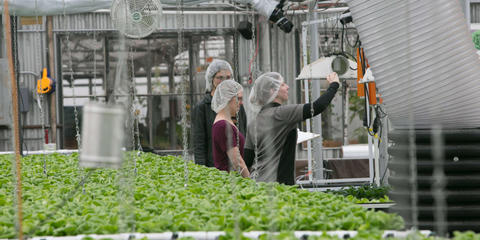
ACRE3 Agricultural Energy Efficiency
Colorado Department of Agriculture
- GrantCost ShareLoanAlternative EnergyConservationIrrigationStorageGreenhouseCOAny
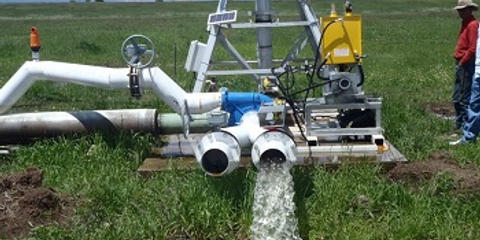
ACRE3 Irrigation Hydropower Programs
Colorado Department of Agriculture
- GrantCost ShareLoanHydro PowerAlternative EnergyIrrigationConservationWater ManagementEquipmentCOAny

Agribusiness Loans
North Carolina Department of Agriculture and Consumer Services
- LoanInfrastructureManufacturingProcessingWholesaleNC
Agricultural Conservation Easement Program: Agricultural Land Easements (ACEP-ALE)
Natural Resources Conservation Service
- EasementCost ShareConservationWaterway ProtectionWater QualityWildlife & Pollinator HabitatEducationRecreationWetland ConservationNationalAny
Updated September 9, 2026
Image Credit: Ulrike R. Donohue
This information was gathered from public sources. Ambrook is not responsible for or able to affect the results of any financial programs listed, nor are they responsible for any incorrect information that is listed or is on the hyperlinked external sites. All information is subject to change.
Explore hundreds more programs on Ambrook.