An urban mushroom farmer pulled off a tenfold expansion by tracking enterprise profitability and carefully planning his operation’s cash flow.
Meet Robbie Gianadda
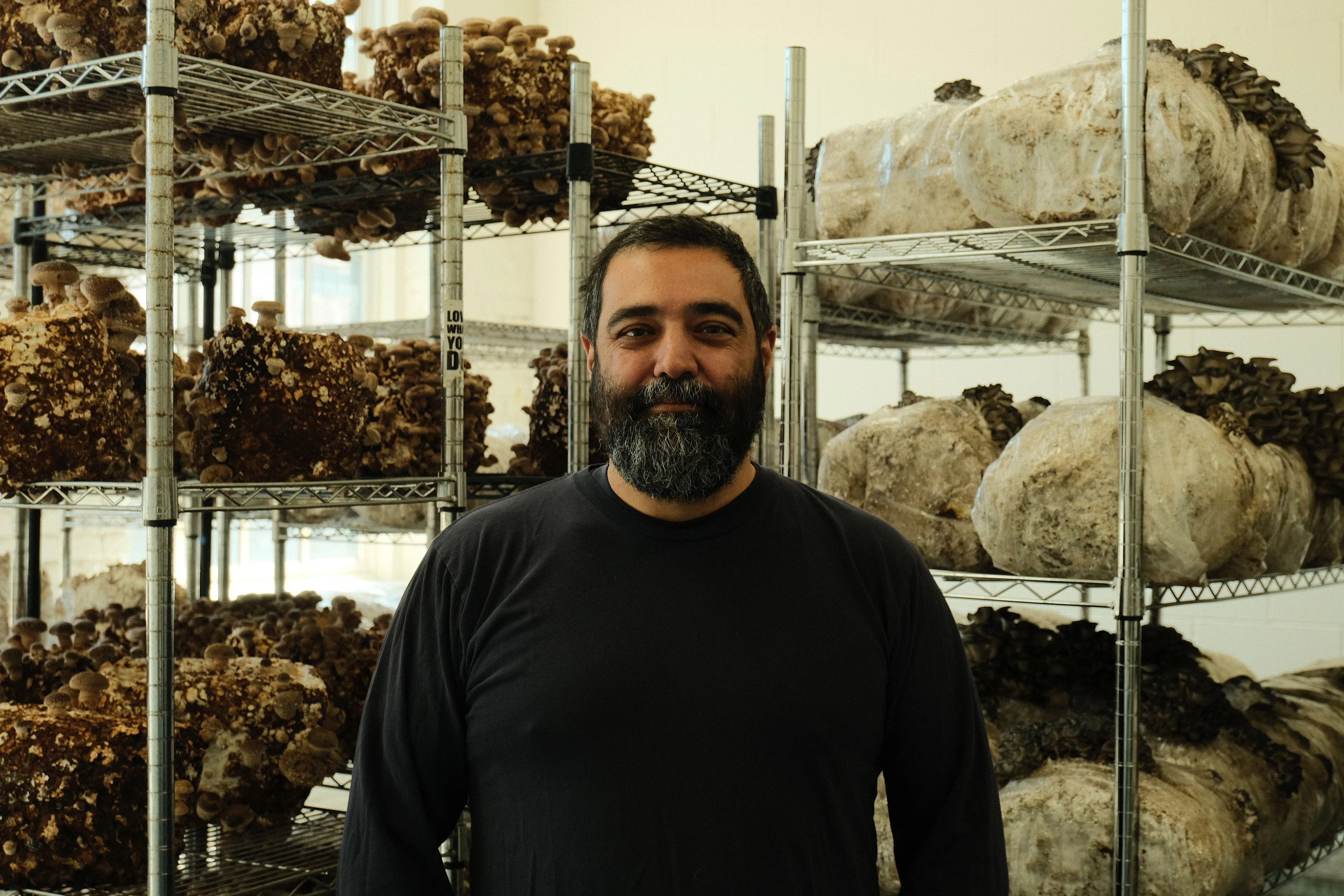
Twelve years ago, Robbie started growing mushrooms in his basement in Buffalo, New York. It was part of a project to show his daughter how food is grown, but he was soon fielding interest from local chefs who wanted to buy the mushrooms. Fast forward to today, he runs Flat 12 Mushrooms full-time as an urban farm and retail store front, harvesting up to 1200 pounds of oyster, chestnut, and shiitake mushrooms each week.
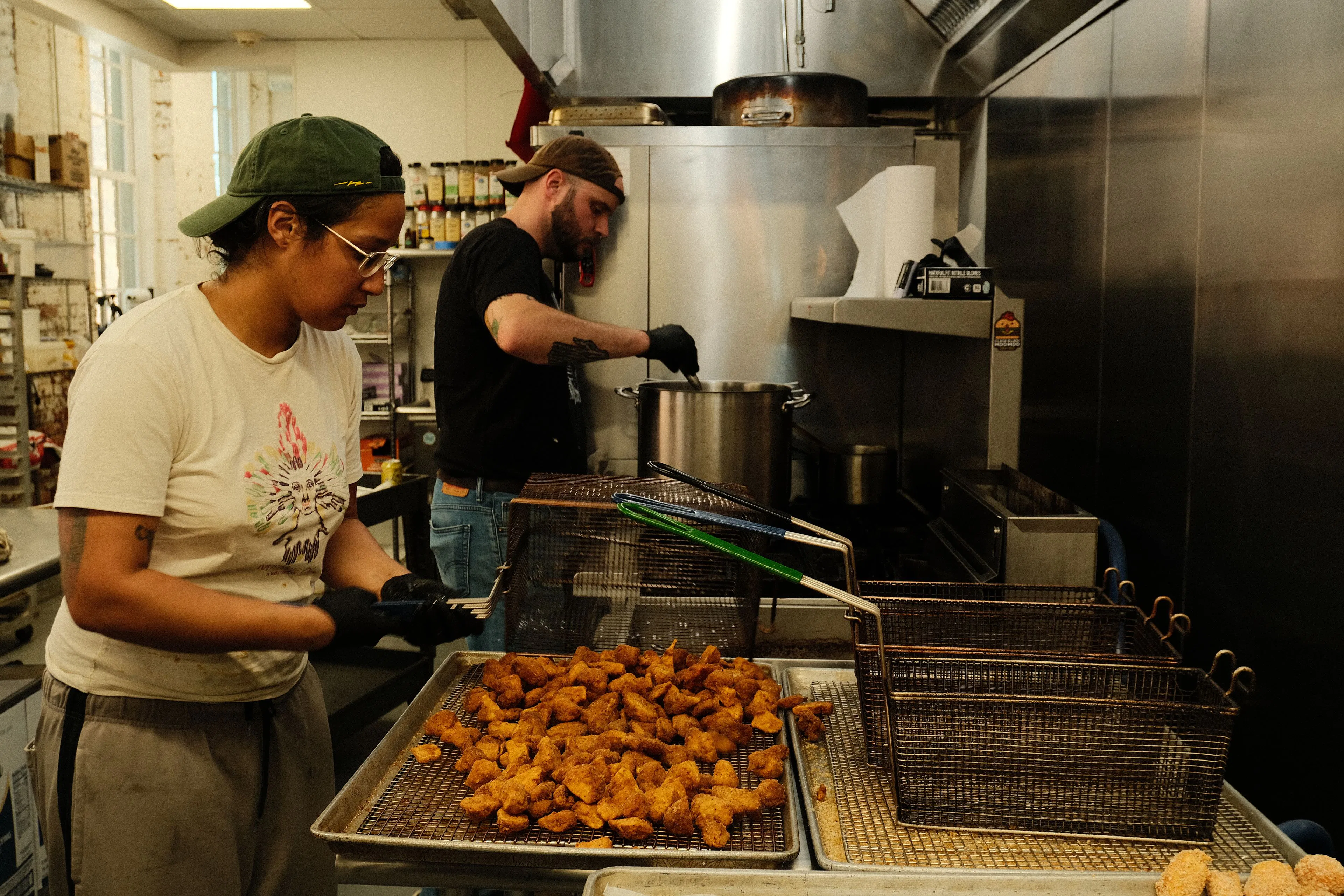
Over time, Robbie has built an operation that runs half as a farm and half as an R&D lab. He hired an in-house chef to develop recipes with Flat 12’s products, most famously creating lion's mane nuggets that are now served in Buffalo public schools and other school districts in Western New York. The team also experiments with locally foraged mushroom genetics, exploring whether unusual varieties can eventually be cultivated commercially.
That pioneering instinct runs deep in everything Robbie does. He describes Flat 12 as a business that wants to be first: first to try a new recipe, first to experiment with a new process, and first to enter a new market. Robbie wants Flat 12 to be known not just for growing mushrooms, but also for developing products no one else has imagined before.
“We’re one of one here in Western New York. There’s just not a lot of us, as far as specialty mushroom farms.”
The challenge: Two disconnected systems
Robbie had Flat 12 on QuickBooks from the business’s very beginning, mostly as a tool for printing invoices. He eventually decided to try other features, like connecting his bank accounts and running financial reports, but it was too complicated to be useful. “It’s such a huge, enormous program,” he said. “I realized I would need to take one of those online courses, or hire somebody. I would need to spend extra money just to get what I wanted out of it.”
On top of that, he couldn’t get QuickBooks to integrate well with Square, his point-of-sale system. He would have to pull the double-counted numbers from both platforms, then try to reconcile them with each other. “There was a lot of overlap between the two, because we didn't know where to classify a certain sale.”
Without an easy way to categorize every transaction, Robbie couldn’t see the profitability of different products Flat 12 sold, from their lion’s mane nuggets to their chili crisp and everything in between. It put a damper on some of his future plans: His vision was to eventually license products to external manufacturers, with Flat 12 supplying the mushrooms and receiving royalties on production. But if he couldn’t see which products were making money, he wouldn’t be able to present the numbers to a potential partner and get those conversations started.
Making the switch to Ambrook
Since he was having trouble integrating QuickBooks and Square, Robbie resorted to having ChatGPT match and combine financial reports for him. One day he happened to be using the voice chat feature and off-handedly wondered, out loud, why there wasn’t a platform that could just centralize his numbers in the first place. His AI chat suggested Ambrook.
So he checked it out. At first glance, Robbie wasn’t sure Ambrook would work for Flat 12. The operation isn’t a traditional farm and has a mix of transactions from multiple locations, product types, and sales channels to track. But when he started to take a closer look at the platform, he realized it actually did have the tools he needed to organize and understand various production expenses and sales profits.
"Right off the bat, it was going to let me track things like the cost of goods sold for all of our products, including our fresh mushroom production."
Robbie quickly tried connecting Flat 12’s bank accounts and Square, and it worked. Transactions started flowing automatically into the Ambrook ledger. He then created enterprises and categories to help him assign every transaction to its associated product and sale. Not only was Robbie assembling all the data sources for an accurate balance sheet, he was also building a foundation that could guide his financial planning and future business expansions.
What changed: Understanding profitability by enterprise and category
One of the biggest changes for Robbie was the ability to break down the operation’s profitability in detail. Everything at Flat 12 centers around mushrooms, but there are many moving parts to the operation.
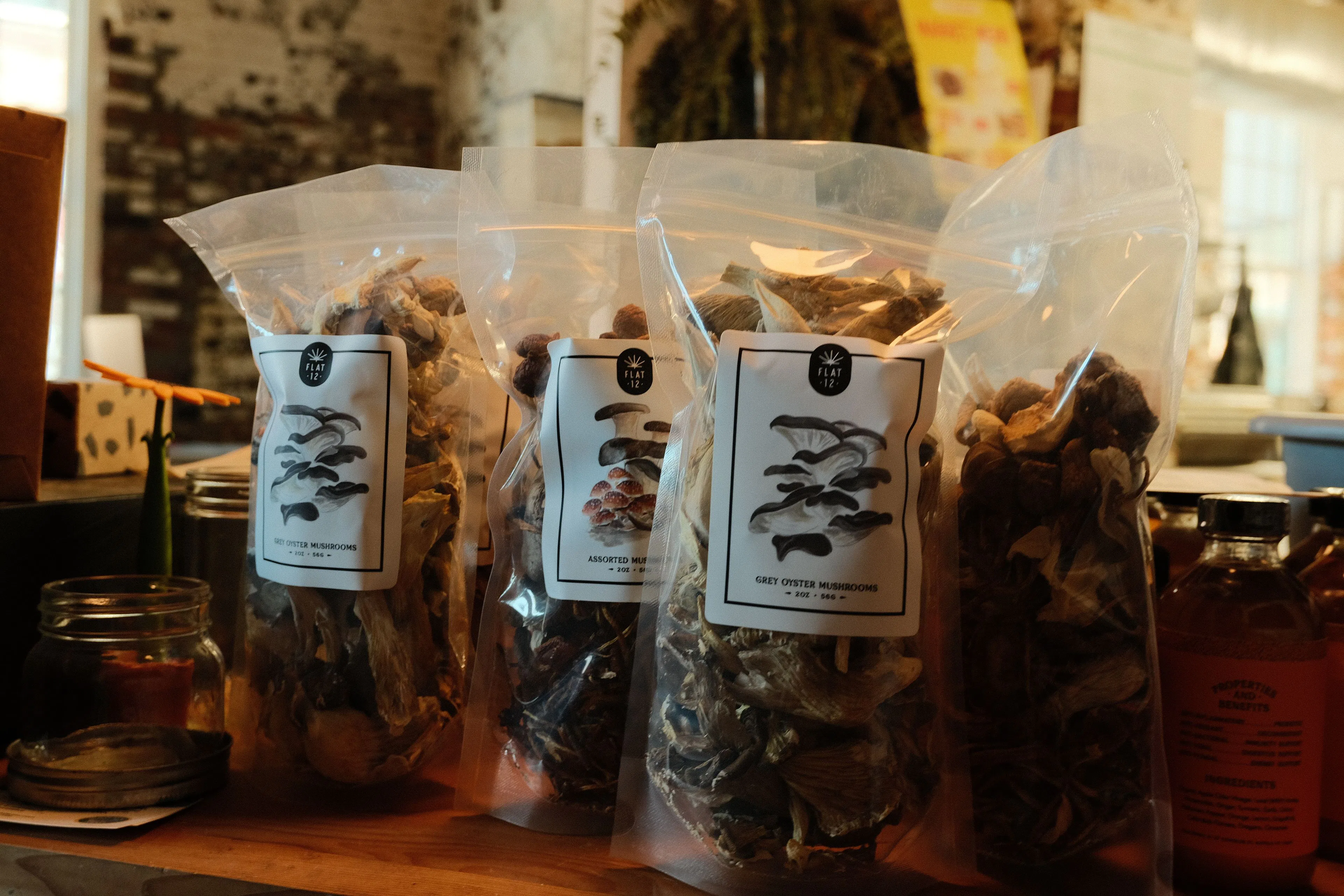
They sell fresh specialty mushrooms alongside value-added products, ranging from lion’s mane nuggets and brownies to coffee and other experimental products; they have both retail sales and wholesale income. Before, it was a challenge for him to see how individual products were performing or how their wholesale and retail businesses compared.
Now Robbie can check his margins whenever he needs to. With distinct enterprises for each item and categories for different types of sales, he’s started categorizing transactions as they come into the ledger. He even set up automations with the Square integration so most of the tagging is done for him. Then, at any point throughout the year, he can see profit and loss down to the exact product or sales channel.
“Our ledger looks a lot better, because we can tell the difference between our wholesale and retail business now.”
A weekly routine to plan cash flow and business investments
Clean numbers and enterprises gave Robbie a better picture of where Flat 12 stands financially, but he took things a step further by applying the data from his books toward a full-fledged financial planning routine.
Every week, he sits down to go through the operation’s cash obligations and financial health. This is his time to settle payroll and check that he’s up to date on loans and bills, but it’s also when he decides if there's room for an opportunistic paydown or to make a new investment in the business’s expansion.
He uses an AI assistant to help him with this process. Working as an operational planning partner, it analyzes financial data from Ambrook to rank the most important obligations and help Robbie assess where he can make additional investments. “I run a transactional weekly report, then a profit and loss, then an aging accounts receivable report,” he explained.
For an owner with limited time to spend at the desk, having financial data that’s always current and organized for AI-assisted analysis means he can act quickly and confidently on decisions for the business. It also means that when the right licensing, partnership, or lending opportunity comes up in the future, Robbie will be ready with an accurate balance sheet, precise profit and loss statements, and a plan to close the deal.

Looking forward: Expanding production tenfold and licensing the business
With his bookkeeping in Ambrook down to a science, Robbie has a financial system that’s allowed him to make confident investments in his business:
Profitability tracked for 8 different enterprises
Thousands of transactions tagged with 90+ automations
Double-counted QuickBooks and Square transactions replaced with one central ledger
One of those investments is a major expansion for Flat 12. They’re expanding into an additional 18,000-square-foot production facility, with new equipment that will increase the nugget production line’s throughput to at least 100 pounds per hour. Combined with more production space, more staffing, and longer production runs, they’re expecting their daily nugget capacity to eventually grow tenfold.
But pure growth isn’t the end goal. Robbie wants to keep doubling down on what Flat 12 does best, developing new products with their mushrooms, so they can license their unique processes to other producers. He’s in talks with one major distributor to create cutting-edge products, like mushroom puffs and mushroom-based flour, then bring them to market across the country. “They get to give us what their investors want to see hit the market and we get to make it happen, which is really exciting.”
For an operation that wants to be the first in their field, the point of clean books isn't only tidiness and peace of mind. It’s having the confidence and financial security to make the next big bet before anyone else does.