
What we learned going end-to-end in carbon markets, and what it means for our customers.
Ambrook was founded on the mission to build a more prosperous and resilient America, starting with farmers, ranchers, and other rural owner-operators. We’ve been driving that forward by building the accounting tools that help businesses manage finances and improve margins. Those same tools are also the infrastructure that connects operators to the programs, partnerships, and financing loops that secure both economic and environmental resilience. I joined Ambrook this summer to help build those connections.
We started with carbon markets, which trade credits generated by activities that reduce or remove CO2 from the atmosphere. We measured and offset our footprint, participating in carbon markets ourselves to learn how Ambrook could make it easier for our customers to engage with programs and partnerships that are meaningful to them. Using our own Ambrook account to calculate our emissions, we experienced first-hand how the financial records that make a business’s books accurate can unlock program participation without additional reporting burden. Doing this ourselves surfaced the data gaps, product features, and partnerships we’re now building on to make it easier for operators to access these opportunities.
Why Carbon Markets?
At Ambrook, we believe effective land and resource management can strengthen producers’ bottom lines and build long-term resilience against shifts in the environment and the economy. Some of our ag customers have been putting that belief into practice through participation in carbon markets, which pay them for carbon they sequester on agricultural land through regenerative management. When we heard that many of them first enrolled during a drought year, turning to carbon revenue when diversifying income felt most urgent, we decided to dig in.
Carbon markets have attracted real scrutiny. Early programs struggled to prove additionality (Would practices have been adopted without carbon revenue?) and permanence (Would carbon stay sequestered?). These additionality requirements have excluded long-term stewards, and without clear data on what participation actually means for a producer’s bottom line, skepticism about program legitimacy runs deep. On the buyer side, there’s been concern that buying offsets becomes a substitute for cutting emissions at the source.
In recent years, there’s been significant progress in the integrity and credibility of carbon credits. The programs that have addressed concerns through collaborative project design, timely payments, and more rigorous verification have earned producer trust and are growing through word of mouth. But even the best ones face a persistent data problem. The documentation required for credit verification puts a real burden on developers and participants, and it’s narrowly focused on carbon. That means there’s little data about what these programs actually mean for a producer’s operation beyond the credit itself. More of that data could demonstrate a positive impact on the bottom line, open doors to additional funding sources, and make the case for wider program adoption.
With these limitations in mind, we set out to participate ourselves in carbon markets end-to-end: measuring one year of our own emissions, looking for reductions, and offsetting our footprint with carbon credits. Rather than optimizing for ease or price, we wanted to understand firsthand what it takes to structure rigorous carbon partnerships that are meaningful to operators, and how Ambrook’s financial tools can help close the data gap. That meant pursuing a diversity of solution types and partnership structures. And since the majority of our customers today are agricultural producers, it also meant prioritizing ag-adjacent solutions they’d be excited to implement on their farms and ranches.
Measuring, Reducing, and Offsetting Our Carbon Footprint
The first step was understanding where our carbon footprint actually came from. We followed the GHG Protocol to identify our emissions sources, which organizes them into three scopes based on the degree of control within a company’s operations. As a software company, the majority of our footprint is Scope 3, meaning indirect emissions across our value chain: the energy used in our leased offices, the servers running our software, and the fuel burned on employee travel.
We do our own books on Ambrook, so figuring out our biggest categories of spend was an easy first step. Then we used AI models to extract enriched activity-based data (e.g., actual miles flown, kWh consumed) for those from receipts and bills attached to records in Ambrook. For our biggest emissions categories, granular line item data is more accurate than estimates derived from total dollars spent on broad categories. The same tools we built for our customers to get a clear picture of expenses made it easier to measure implied emissions: line items pulled from receipts and bills with OCR, transaction reports and bulk receipt exports for analysis with AI, detailed Ambrook Card transaction data, and more.
AI emissions were the hardest to pin down. A dollar of spend doesn’t map to a given amount of compute, and computing emissions vary significantly depending on the model, the data center, and the energy mix—none of which vendors consistently disclose. We pieced together a defensible estimate from the data we had access to, but this gap reflects real uncertainty in how AI emissions should be accounted for, and points to a need for greater data transparency from AI vendors.
We estimated our overall footprint for the last 12 months to be just under 200 tons, in the middle of the expected range for a SaaS company of our size. Before moving straight to buying offsets, we took stock of what we could change internally so that offsets would complement emissions reductions, not substitute for them. As a software startup, almost all of our emissions flow through choices we make about providers: the office building, the electricity provider, the rideshare services, and the AI tools we use. So we plan to further prioritize vendors who have demonstrated progress toward carbon neutrality and other sustainability metrics.
The next step was finding the right projects to buy credits from. We started mapping the solutions landscape, scoring them across three categories: methodology integrity (how rigorous and validated the science is), customer relevance (whether operators on Ambrook could realistically participate in the future), and partnership fit (whether there was more to build together beyond a simple transaction). That framework let us combine standard quality criteria for carbon projects with criteria specifically aligned to our mission.
We talked to project developers, marketplaces, rating agencies, registries, and portfolio curators to understand the full ecosystem. Going in as a small buyer, we were pleasantly surprised by how open developers were. Conversations went well beyond the transaction, including how to make the cost-benefit picture legible for different geographies and operation types. Collaborative brainstorming with developers who are thinking creatively about how carbon programs also translate into economic and agronomic value was exactly what we were looking for.
We ultimately landed on a diversified portfolio spanning nature-based and engineered solutions:
Grassroots Carbon is a regenerative grazing program with over two million enrolled acres, growing largely through word-of-mouth among ranchers, including Ambrook customers.
Loam Bio leverages fungi to sequester carbon on row crop operations through a seed treatment that doesn’t require practice changes, keeping transition costs low and the economics unusually clean for the soil carbon space.
Charm Industrial brings the engineered angle with durable biochar credits produced from forestry and agricultural waste, tying the technology back to the land.
Together, these partners capture much of the diversity in carbon markets: practice-based and technology-driven approaches, applied on different agricultural landscapes, with a mix of purchase structures across three reputable registries. The next phase is offsetting our entire historical footprint to achieve carbon neutrality, while continuing to invest in reducing emissions.
What’s Next
These partnerships are doing much more than just offsetting our footprint. They’re teaching us what it actually looks like to engage in carbon markets, both as a buyer evaluating which credits to purchase and as a company supporting operators navigating the programs that generate them. That’s shaping what we build next, to make it easier for customers to participate and access new revenue streams without adding to their recordkeeping burden. Enriched card transaction data; AI-powered enrichment with external datasets, including mapping to NAICS industry codes and emissions factors; and agentic interfaces for slicing and reporting on Ambrook data would all reduce the barrier to entry.
The financial records that make a business’s books accurate are often the same ones that document practice adoption and support program verification: cover crop seed purchases, fuel invoices, and input costs by field. When our customers tag receipts or track fuel through Ambrook Card, they’re building the dataset that carbon programs, conservation cost-share, and sustainability-linked loans all draw from. We believe that every operation on Ambrook should be able to use their books to streamline reporting, unlocking new revenue streams without days or weeks of additional recordkeeping burden.
Carbon markets have been the right entry point for us and we’re excited to build on these projects, but they’re not the right fit for every Ambrook operator. Moving forward, we will build the tools and partnerships that connect operators to the right programs for their situation: regenerative agriculture loans, USDA conservation programs, offsetting and insetting programs, and more. All of it grounded in financial data that shows economic and environmental resilience building on each other, not competing with each other.
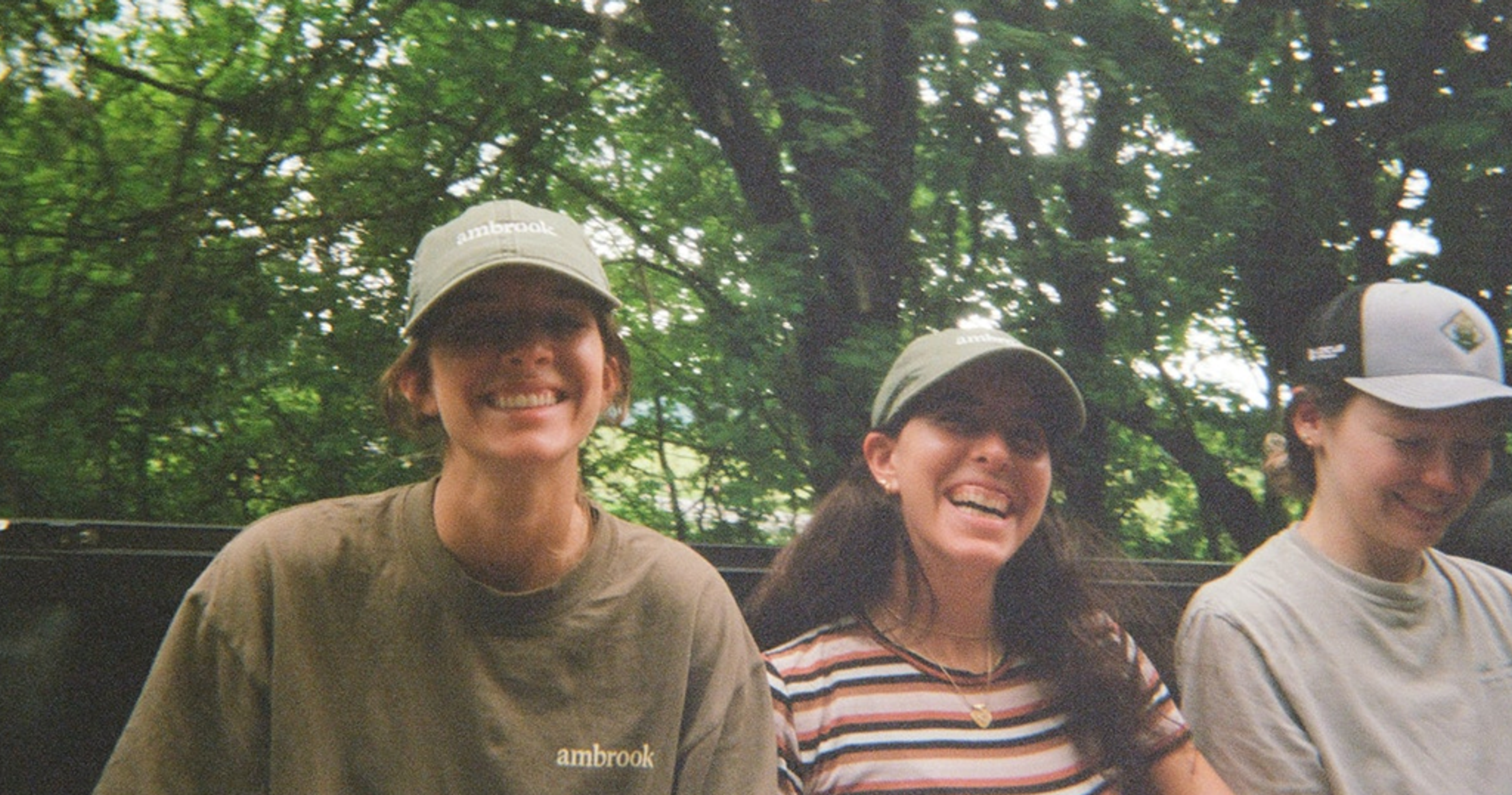
From my very first week volunteering on a customer’s farm during new team orientation, I’ve seen the trust Ambrook has built with operators and how seriously the team takes designing with customers and partners to find value well beyond the core product. We believe that collaborative ethos is exactly what it takes to close the financing gaps that stand between land stewards and the practices they want to adopt to make their business more resilient. If you’re exploring creative ideas in this space, we’d love to talk!