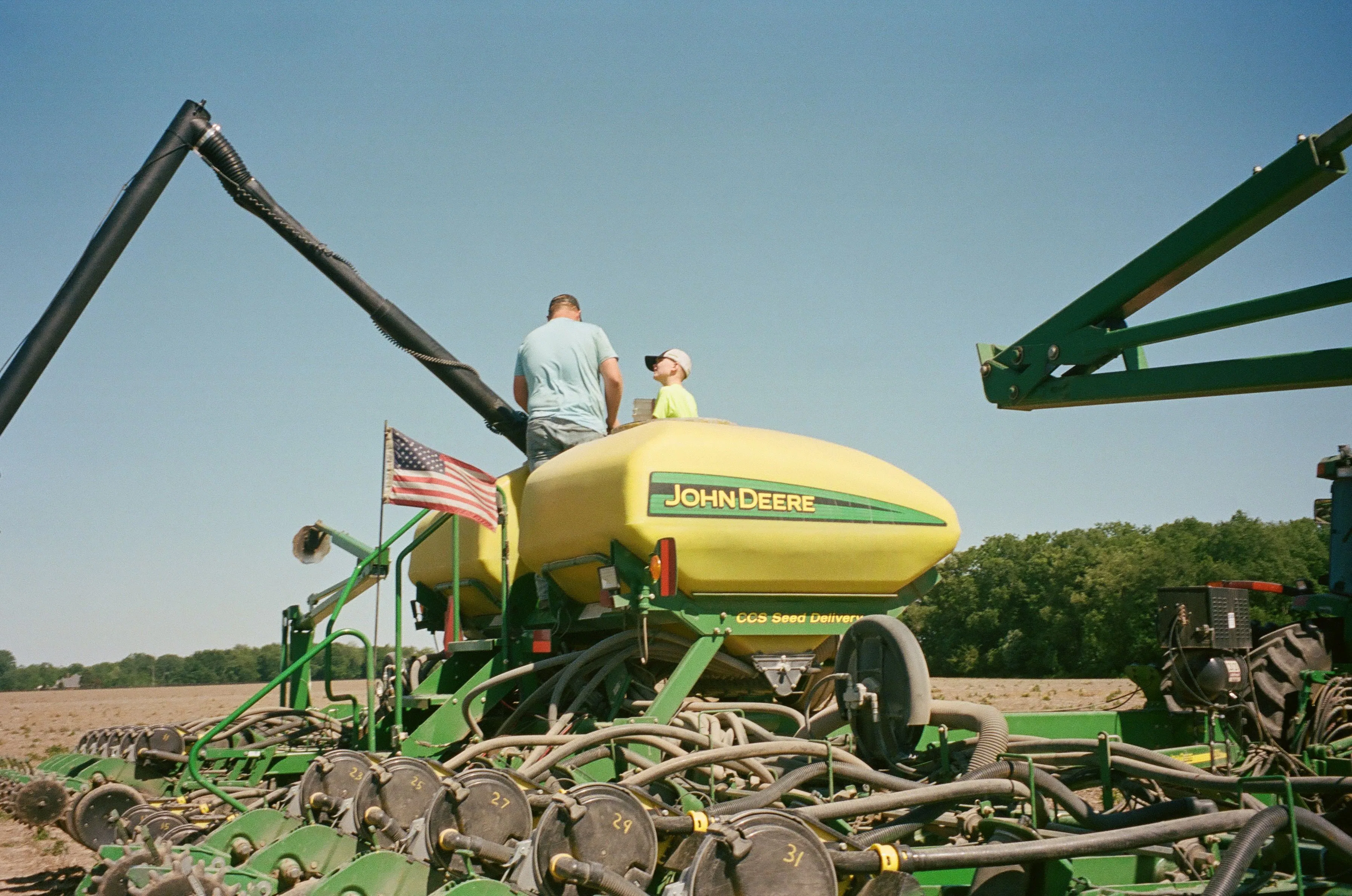
An Indiana grain farmer wanted clear financial data so his operation could always stay ahead, from nimbly evolving their marketing to selling products at the best price. He moved from QuickBooks to Ambrook to update his books in real time, manage money movement instantly, and make business decisions faster with AI.
Meet Nathan Wood
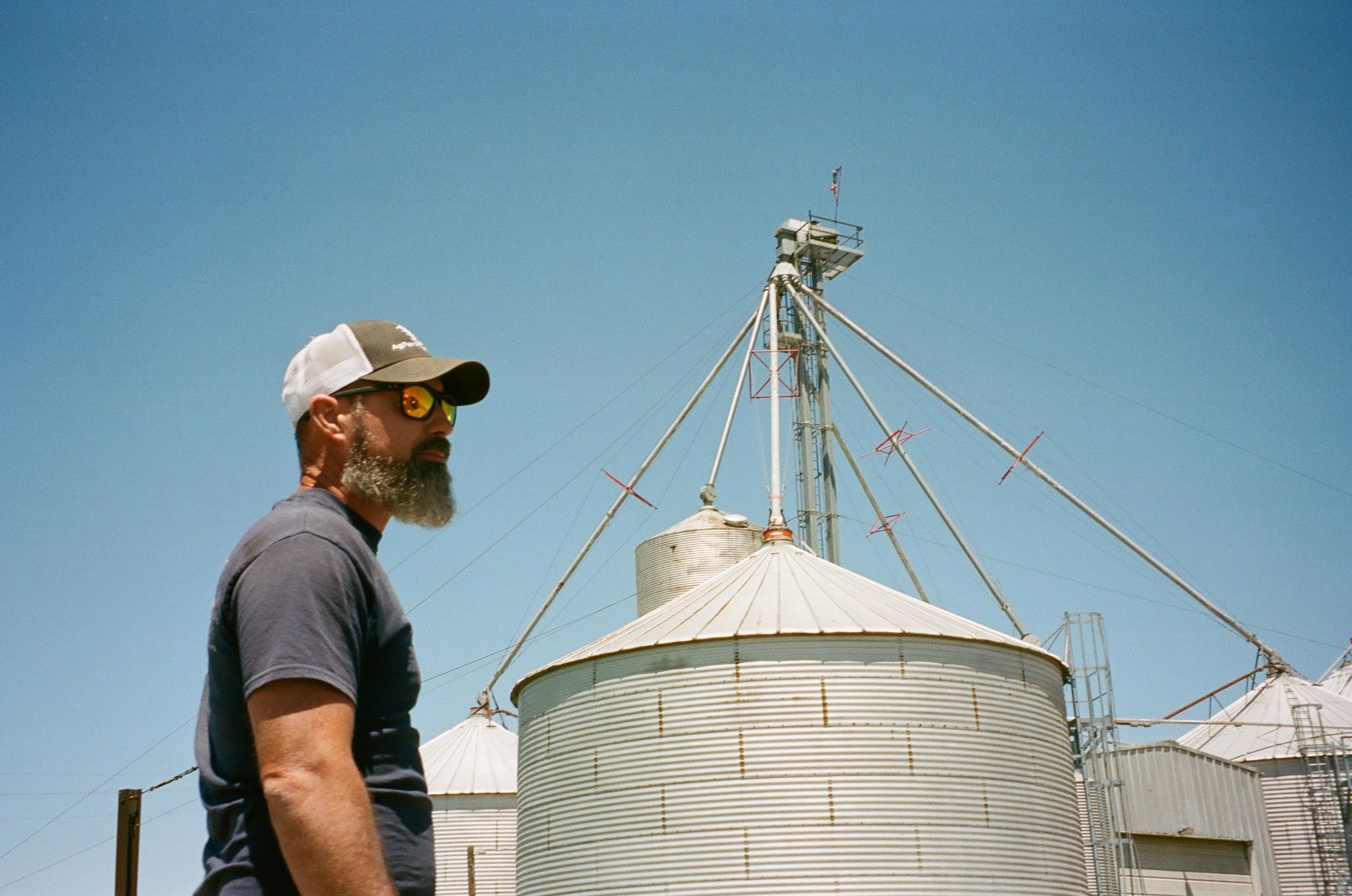
Nathan comes from a long line of Indiana farmers. In the mid-1800s his family got started milking shorthorn cattle in a town called Lapel, before moving south to Pendleton where drier conditions were better for the herd.
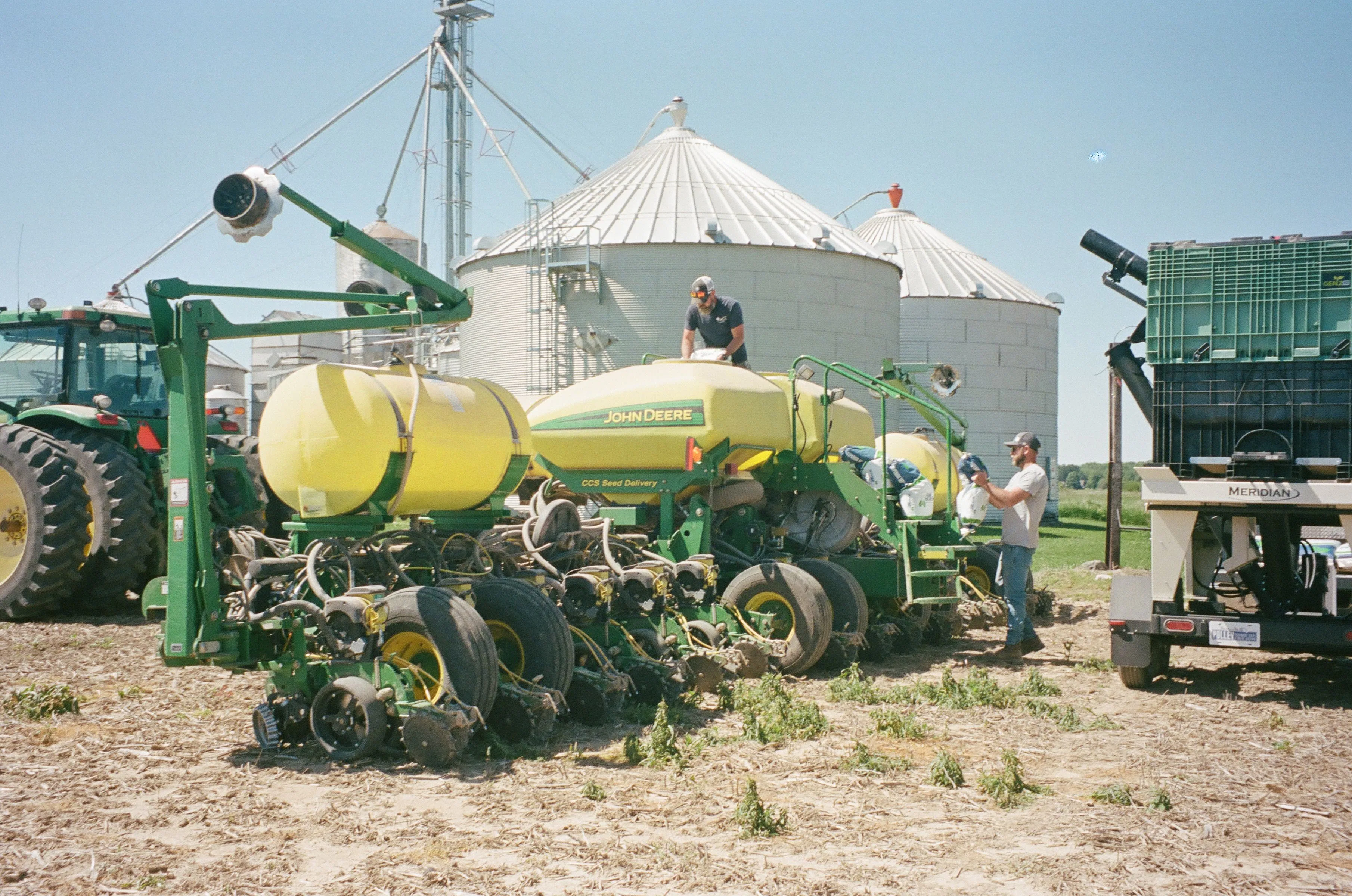
Today, Nathan still runs Wood Farms right there in Pendleton. He and two employees manage 3,000 acres of corn and soybeans, along with a small beef herd just for the family.
But before he came back to the farm, Nathan spent years as a master technician at a Mercedes-Benz dealership in Indianapolis. He worked on cars like the SLR McLaren, and it was there that he became well-versed in spreadsheets and collecting data on every part of his work.
That experience shaped the kind of operator he is now. "There's a lifestyle of farming, and then there's a business of farming," he said, and he isn’t afraid to lean heavily into the business side.
Part of that means finding opportunities to learn from other owner-operators in his community. Nathan knows that, with how quickly the years pass, he only has a limited number of planting seasons ahead of him. If he wants Wood Farms to grow faster in that time, he’ll need support from other producers who are doing it too. “I’m 45 years old. If I go until I’m 80, that’s only 35 more plantings. But if I can learn from two other guys, I might be able to turn that 35 into 70.”
The other part of leaning into the business is having reliable numbers to analyze and steer an operation, so Nathan started looking for ways to easily track his data as Wood Farms grew.
The challenge: Tools that couldn’t keep pace
Nathan is a numbers guy, and for years he built elaborate spreadsheets for his crop plans. But things always drifted: Weather turned unexpectedly, herbicides changed, or something broke down mid-season. What Nathan needed, on top of his projections, was a system that could track revenue and expenses as they came in and out.
He used QuickBooks at first, but the platform felt slow and he wasn’t impressed with their AI features. Nathan also couldn’t clearly see his cost of production with QuickBooks, which was the one number he really needed to understand his margins and how to price his products. "Cost of production is the only metric that really matters at the end of the day,” he told us.
All this is part of Nathan’s larger philosophy around running his operation, something he once learned from another business owner: The key to being successful isn’t to become bigger than everyone else, it’s to move faster than everyone else. And to do that, an operator must have accurate data.
"You still think that big fish eat little fish? Fast fish eat slow fish. And you can only be fast if you know your numbers.”
Switching to Ambrook
After he decided to move on from QuickBooks, Nathan looked at different industry options including CenterPoint and Traction Ag. He felt like these platforms went too deep in the weeds, though, like they were the kinds of systems that would force him to hire a full-time bookkeeper.
On top of that, he wanted something newer. A platform that would keep evolving and building alongside his business, and a partner he could grow with for years. When his accountant told him about Ambrook, it checked the box. “You guys are young and still learning, which is great. Not QuickBooks, dinosaurs.”
Soon after, Nathan moved two of his entities onto Ambrook: Wood Farms, his own operation, and Wood Brothers Farms, the LLC he runs with his uncle. He noticed even the small differences from QuickBooks, like the fact that he could now manage vendors and customers in a centralized contact list, and they quickly made Ambrook feel well worth it for him.
“I wanted to make sure I was getting the $99 value or more out of Ambrook. After using it and kicking tires and getting into it, I definitely am getting that, if not more.”
What changed: Books that are never more than a day old
The biggest shift in Nathan’s day to day is how easy it feels to keep the books current. Nathan makes a point to tag and categorize new transactions every single weekday, but the effort barely registers: Most mornings, it takes him all of 8 minutes.
This is possible now because with Ambrook, he can categorize pending transactions immediately, tagging them and attaching receipts before they’ve even posted. In QuickBooks, he remembers having to wait each time until the transaction cleared. He can also tag his transactions by enterprises, like corn, soybeans, equipment, and overhead, which allows him to drill down into his cost of production anytime.
All of that discipline has turned tax time from a year-end scramble into a non-event. If Nathan gets audited at any point, he’s confident the numbers will be accurate and their clean categorization makes them unambiguous. “I can say, ‘Hey, here’s every receipt and here’s my accounting program. Go sit in the corner and I’ll make you coffee.’”
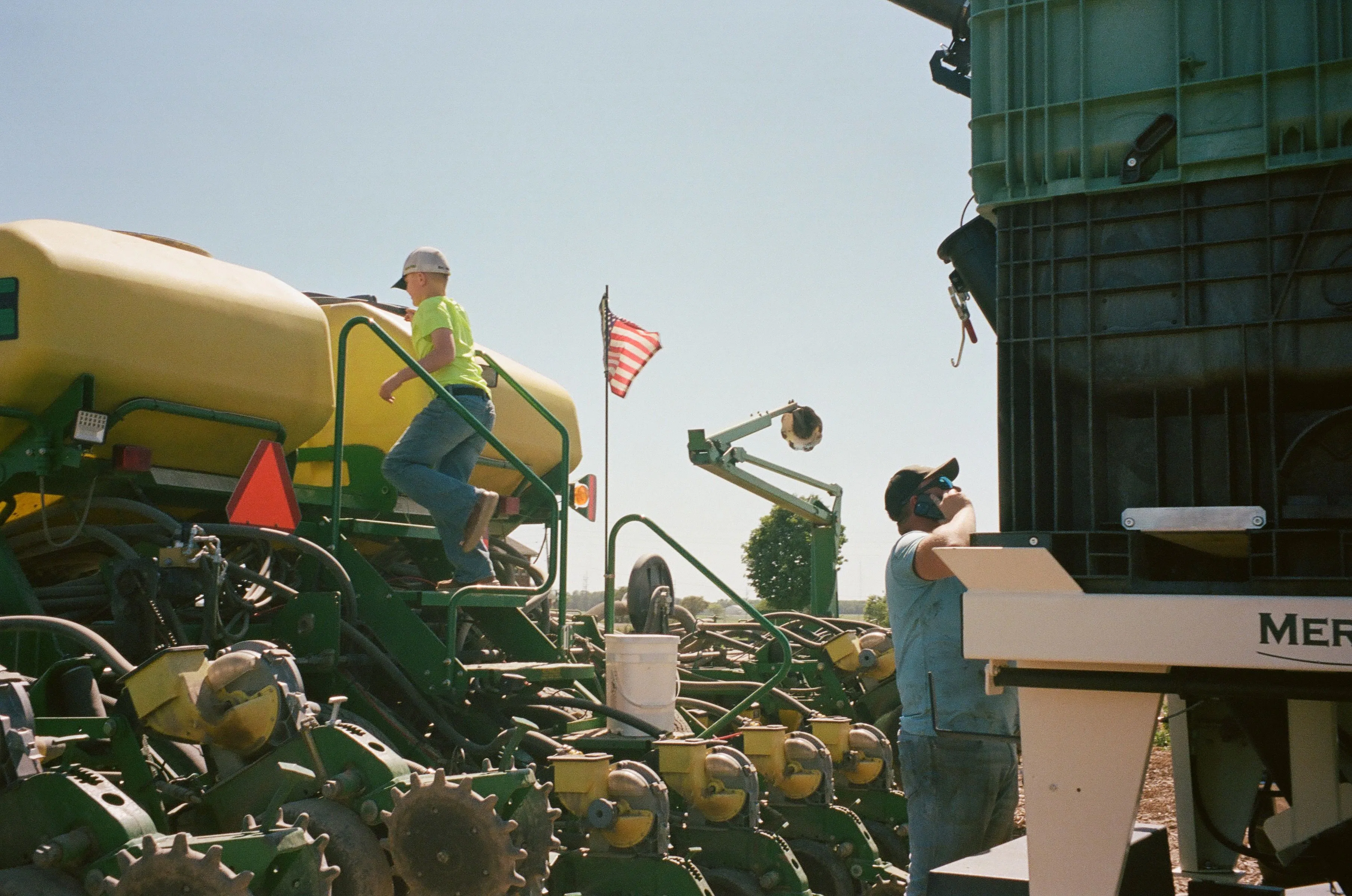
Nathan also likes that he can take care of receipts and tagging directly in the Ambrook mobile app. On any given day, he and his crew are often running around between different fields or going out to buy replacement parts for equipment, so the app’s convenience goes a long way in helping them stay on top of things.
“I was like, ‘Wait a minute, I can just take a picture with my phone.’ Your office is literally anywhere you are. And as you’ve seen, we're in lots of places in a day.”
Instant money movement and instant receipts
Quick tagging habits are one way Nathan stays ahead. Another way is giving both of his crew members access to their own Ambrook Wallet cards. Before, when his team needed to purchase seed or equipment, they would have to ask to borrow Nathan's card and he’d be stuck chasing it down for the next month.
With Wallet he was able to add funds into a single business account, then issue individual spending cards for each of his employees and his wife. Everyone’s purchases flow into one ledger for Nathan to manage in Ambrook, and crew members themselves can upload photos of their receipts as soon as they make a purchase.
But Ambrook Wallet really won Nathan over when, one time, he had a large payment to make and needed it to go through fast. One of the landowners Nathan leases from reached out, letting him know she needed a same-day rent payment after a previous check got lost in the mail. Cash or another check wouldn’t make it in time since she was out of state, so Nathan decided to try Ambrook Wallet’s ACH option instead. He was able to wire thousands of dollars over to her instantly.
"I had a problem and Wallet actually fixed it.”
Data that’s ready to experiment with AI
For Nathan, it was essential that his financial platform kept pace with AI developments and would allow him to experiment with AI workflows himself. He's convinced that producers who adopt these tools early are the ones who will eventually come out ahead.
"The first people to use AI are going to be the ones that prosper from it.”
In Ambrook he no longer has to spend time manually itemizing the whole crew’s receipts, because AI extracts the line items automatically. Nathan has also started taking the data from his Ambrook profit & loss statements and using AI tools to run risk analysis. This helps him quickly understand how he's tracking against costs he projected at the start of the year and connects his financial actuals back to his goals.
There are a lot more AI projects Nathan is excited to work on. He recently built a custom tool that aggregates soil and yields data for a given piece of land. Then, combined with data from Ambrook on his cost of production, he can come up with reasonable bids for new land he wants to rent. "I can afford to pay you this," he can clearly tell a landowner. "Here's my profit margin."
Looking forward: Staying current to stay ready for lenders
In the end, Nathan’s goal isn’t to have clean books for the sake of it. He plans to use his meticulous financial records and well documented payment history to secure more credit from lenders and expand Wood Farms. He feels optimistic about getting good loan terms after keeping every part of Wood Farms’ finances updated and organized in real time:
Books done in under 1 hour per week
3 spending cards managed under one account
Rent payments sent same-day with Ambrook Wallet
Receipts itemized automatically with AI
Nathan counts on being a fast fish by nailing his business’s numbers. He hopes other family-run operations will start adopting tools that can help them move quickly, too. “You’ve got to be lean and quick, and ready to adjust.”