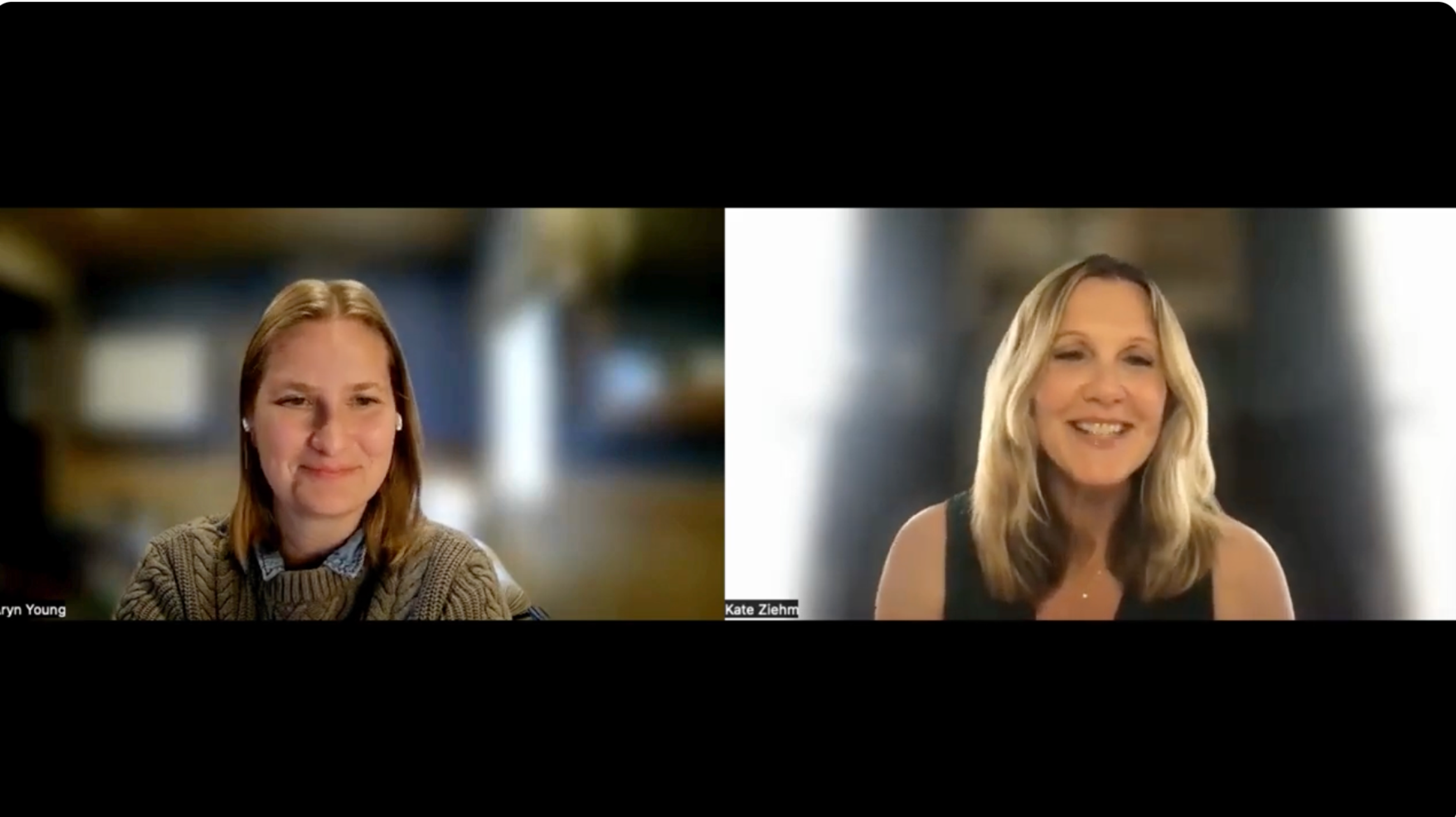

To be clear, I didn’t want to do this.
Show me a company blog — especially an engineering blog — and I’ll show you an enthusiastic batch of posts followed by the soul-sucking emptiness as the initial ideas dry up, motivation wanes, and the blog runs dry. It’s unclear whether the company still has an engineering team or if they just aren’t doing anything interesting anymore.
Blogs generally have overestimated reach and underestimated cost.
This description was once the fate of the Ambrook team blog. Some incredible early posts that are still relevant to this day, then years in the Abyss.
When discussing ways to attract the best people to join our team last year, Mackenzie, our CEO, needed to give me a few pushes to get this going again. I was skeptical we’d be able to beat the trend, but now I’m happy to admit that I was wrong. Over the last year or so, we published incredible writing from across the team in a way that felt sustainable. More and more, job candidates arrive at the initial Ambrook conversation with a better sense of our culture and technology, and the content is actually stuff I’m proud we’re putting out. We’re a year in, have published 20 posts, and our content calendar is full for the next six months.
Here’s what we’ve learned in putting together Inside Ambrook:
Pick a topic mix that speaks to your culture
We’ve aimed from the start to include a mix of content, from projects we’ve worked on to how we work. We’ve published a history of our company offsites (Retreats in Ambrook vernacular) — holding them in incredible locations certainly helps the post resonate. Going in-depth, we’ve written about specialized subjects like the implementation of metrics in our backend. We’ve covered company news, like our Series A fundraise and our new Denver office. (We’ve just opened an even bigger office there — expect updates soon!) One of my favorite posts, from Calvin on our Design team, has created multiple conversations about the depth of design thinking to pick colors for use in bright sunlight. Having this mix has made the blog more usefully interesting to a wider audience and given us a broader range of posts to publish.
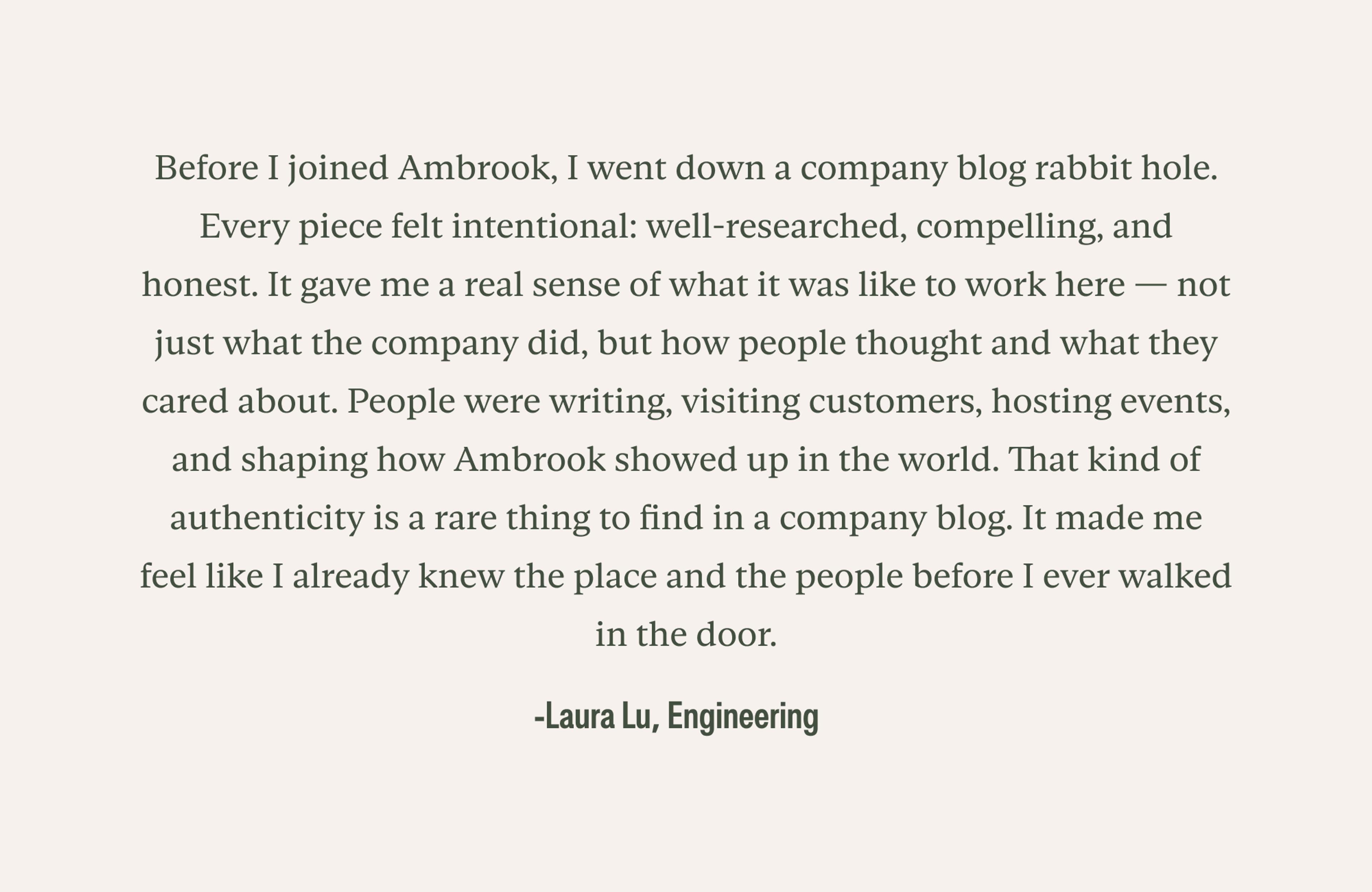
Editing is important
One of the unique things about Ambrook is that we also host Offrange, an editorially independent media publication focused on food and farming. Jesse, its editor, has been incredible in working with authors before the Inside Ambrook posts go out to tighten stories and create something that the writer is proud of. (You don’t want to see where this post started.) While the process can be painful, it encourages authors and colleagues to share content, and to come back and write again. If you don’t have a captive editor, find someone on the team who can take this on — and make sure to give them time to do it.
A reminder: Writing isn’t everyone’s favorite pastime or primary skill. Even with the motivational critique that an LLM can provide, it takes confidence and bravery to put yourself out there in posts that go beyond the mechanical project launch.
You already have some great content that will speak to your audience
Some of the content that has resonated most deeply was already lying around in Google Drive — the Touching Grass photojournal, or our post on how we’ve evolved the creative in our Meta ads. This means we’re getting double duty out of our hard work in other areas. We spend a lot of time being intentional about our culture and brand; it’s mostly a question of making that intentionality visible. The things you put time into will also help speak to your culture.

Force people to write
For our last two retreats, we’ve put aside a block of time and asked (really nicely) that each colleague puts together a draft of a post. Coming up with the idea for a post takes time and focus; that’s sometimes hard to find at a Series A startup. It’s crucial to have dedicated space where you expect people to share an idea, and as much of a draft as they’ve been able to write. This gives people room to be creative and come up with posts that you’d never have expected, from personal stories about their first months at Ambrook to philosophical musings on agricultural accounting. Not all of these make it to the blog, but all have generated great conversation.
Find the balance between quirky and too insider
Allowing the personalities of both our writers and Ambrook to shine through is an important guiding principle for us. We’ve not been afraid to home in on the quirkiness of our culture and laugh at ourselves. At the same time, we’ve steered away from posts that require too much insider knowledge or are on themes that would not resonate more broadly. For those posts, we’ve made a home on our internal wiki, and point people towards it when they join.
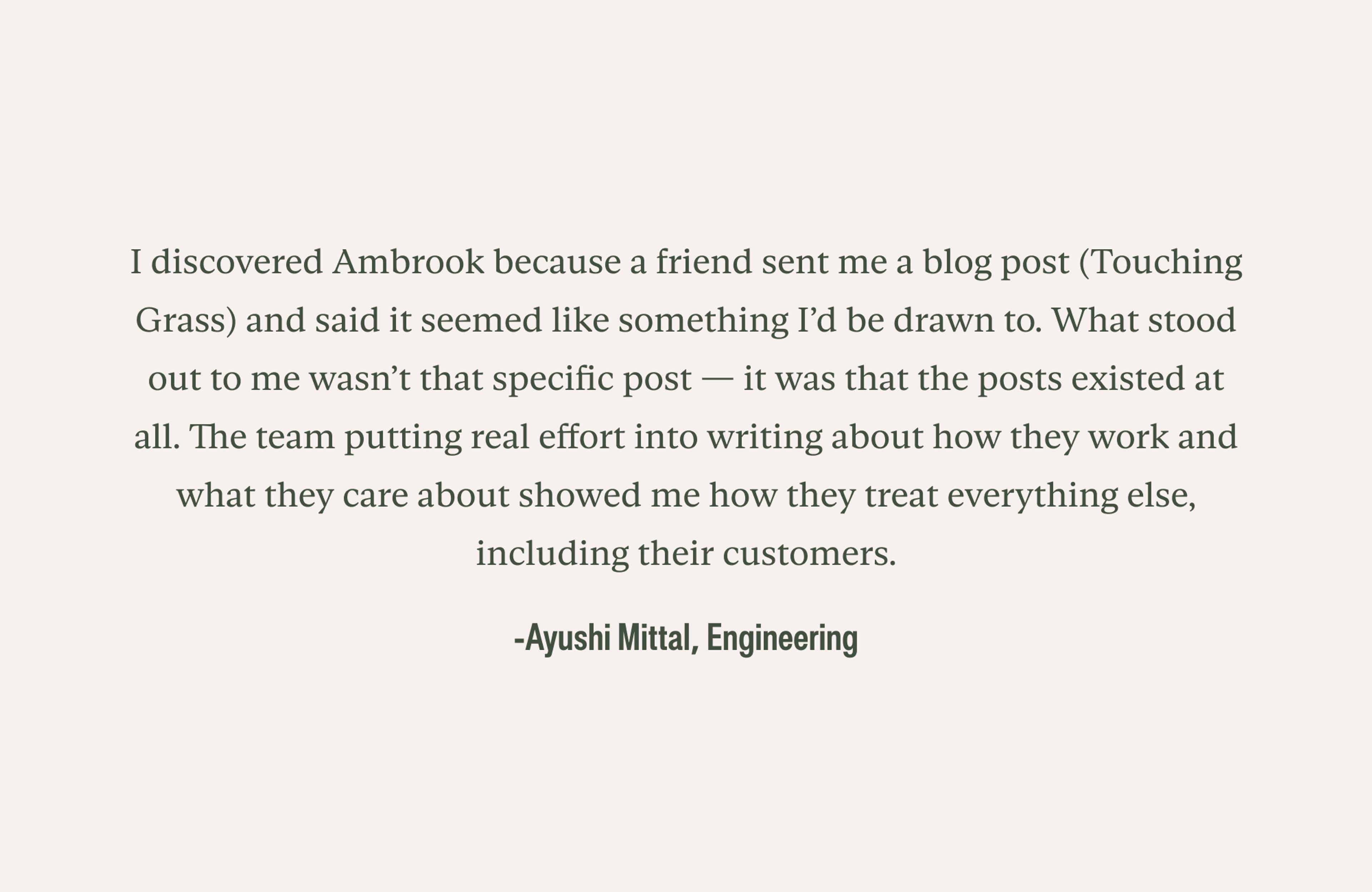
Don’t try and please everyone all the time
In the end, there will (hopefully) be people who your stories resonate with and those who they don’t. The aim is to tell a story about your company’s specific culture. We aim for earnest posts told well, rather than trying to sanitize each post for everyone.
At this point, we include a personalized selection of links in outreach and conversations with candidates. Nearly 20% of people who read a blog post also visit our Careers page.
We’re aiming to continue publishing posts that tell the story of what it’s like to be Inside Ambrook. Interested in writing one? Find a role that speaks to you here!