“Move too fast, grab the wrong leaf, and you may set the whole plant back. Every new customer is the same.”
I joined Ambrook’s Product Ops team last November, working directly with customers as they get started on the platform. A few weeks later I borrowed my roommate’s car and drove up to Shelburne, Vermont, to spend some time volunteering with one of our customers, Bread and Butter Farm.
I had no idea what to expect.
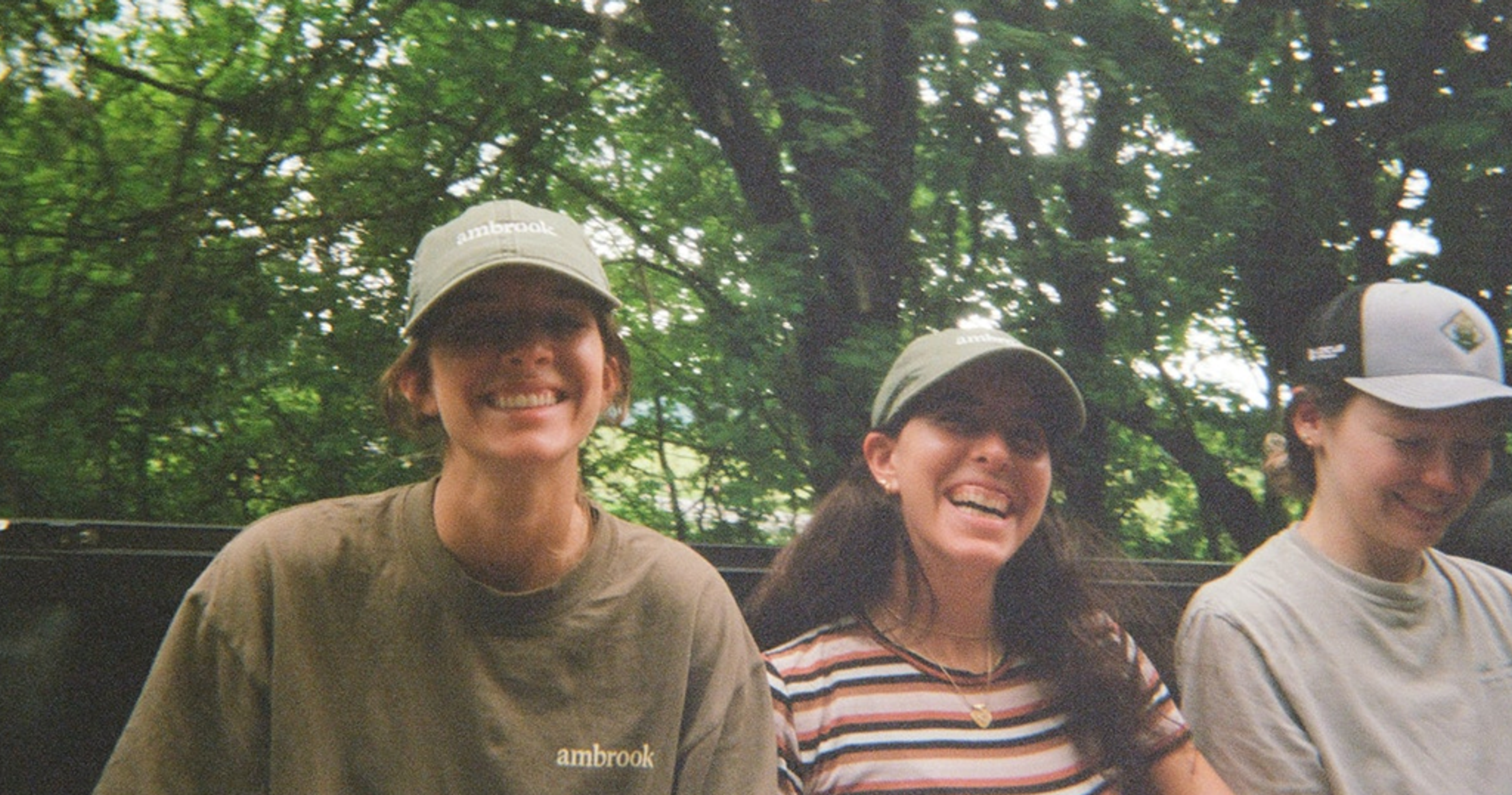
I was the willing guinea pig for a planned series of Onboarding Weeks for new Ambrook employees. The idea is to work alongside our customers on their land, and to build the kind of camaraderie with our teammates that is hard to come by over a video call — not exactly a standard week at a tech company.
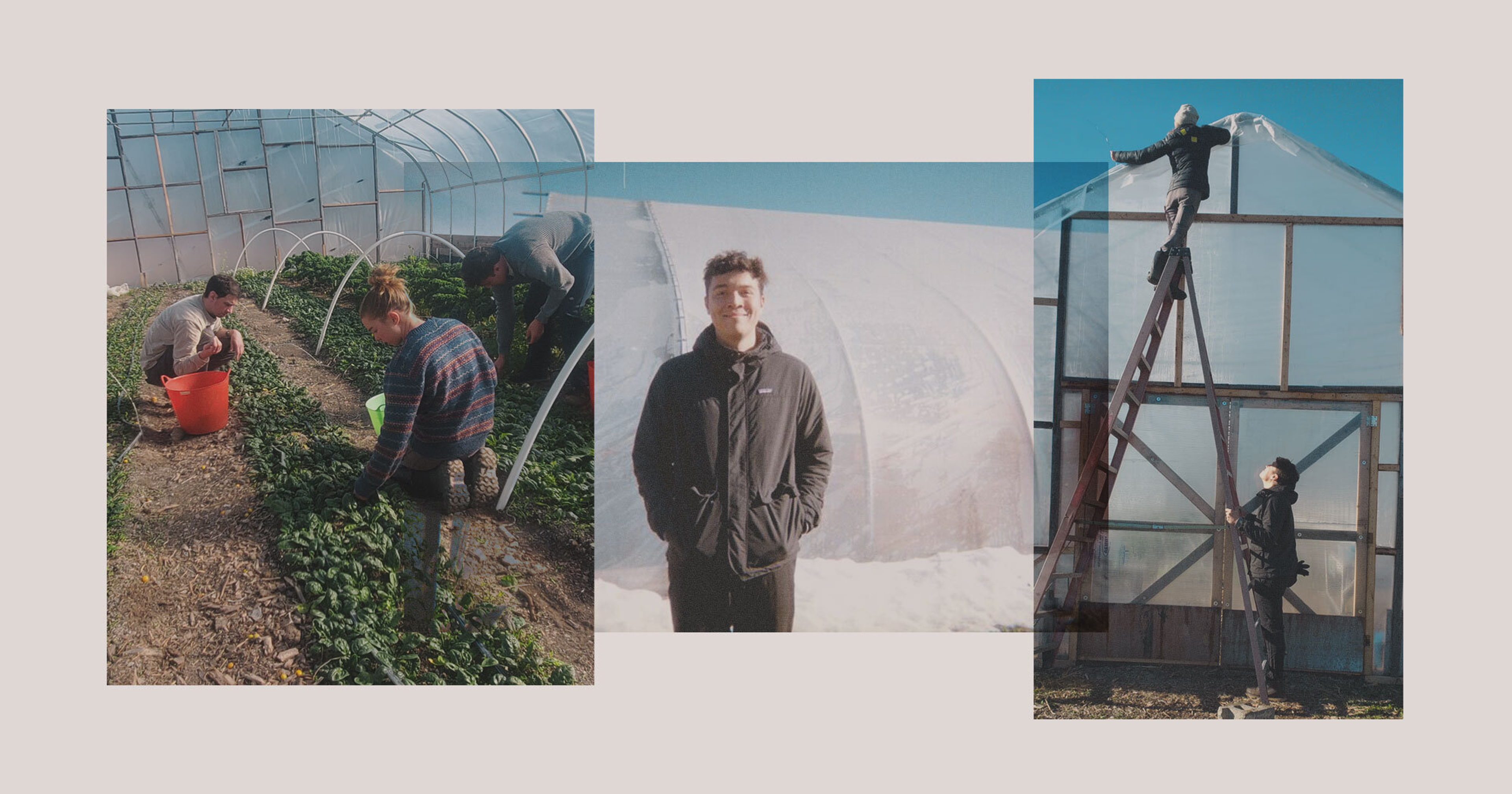
When John, Jesse, and I arrived, we went straight to the greenhouse to meet the farm manager. By mid-afternoon, we were on our hands and knees in the dirt. Over the next five days, our little crew did everything. We rolled hay bales to cover beds. We harvested radicchio, kale, and different varieties of lettuce. We helped re-tarp one of the greenhouses with 30 kids from Bread and Butter’s local school program — something that sounds simple until you’re up on a ladder pulling out old nails while John and Jesse orchestrate a small army of children on each side, trying to get them to heave in unison on the count of three. It was equal parts fun, well-managed, and chaotic.
Throughout the week, we were perpetually covered in dirt, learning the behavior and process of how each plant behaved and how the business operated — occasionally getting teased about how underdeveloped our harvesting skills were.
But it was the spinach that humbled us in a different way.
Spinach plants sit low to the ground. You don’t harvest spinach standing up. You bend or you kneel, and you stay there. Each leaf has to be picked close to the soil line, extracted carefully so you don’t drag dirt onto it, one leaf at a time. One leaf takes maybe a few seconds if you know what you’re doing. And it’s not just speed — you have to know which ones to take. The bigger, outer ones stay, left to absorb sunlight so the plants can keep growing and pushing out new leaves through the season. It’s a small act of restraint that keeps the whole plant alive. But, if you start second-guessing yourself (e.g., Is this one good enough? This one has a few holes. This one is tiny and might grow a little larger.), the process moves quite slowly. We second-guessed ourselves a lot.
After a few hours of work, the three of us had barely filled each of our buckets. It was November in Vermont (grey, cold, and quite damp). We were on the ground, tired, moving slowly down the rows, and the spinach did not care. The farm manager, working at a normal pace, glided down the rows and filled several buckets. She told us not to worry. Apparently everyone struggles with spinach.
***
Working on the Product Ops team, I help customers find their footing and try my absolute best to set them up for success. It’s work I feel comfortable with, but it’s also work I do from a laptop, on calls, from the comfort of an office, far away from the fields of Vermont. This trip was a good reminder of that distance and what it was like to start from scratch.
Harvesting spinach as a novice was a joyous and humbling testament to how much learning and growing always lies in store. Specifically, it reminded me a lot of the intentionality we approach our work with. To me, every new customer is like a fresh row. I may know Ambrook as a product really well, but I don’t know a customer’s operation yet — their rhythms and their quirks, along with what actually matters to them.
The farm manager blazed through those rows because she earned it through years of patience and attention. That’s the thing — real expertise and understanding isn’t assumed, but built slowly, over time. That’s true on the farm, and it’s true with our approach to our customers as well.
This is what struck me most — how closely our time with spinach mirrored our approach to supporting our customers. Learning to harvest spinach isn’t just about copying what the manager does; it’s learning what each individual plant needs. Move too fast, grab the wrong leaf, and you may set the whole plant back. Every new customer is the same: You must start fresh, learn what makes their operation tick, and resist the urge to bulldoze your way in with a solution before you’ve actually listened and understood.
***
Each customer takes time. Real time. And at Ambrook, we don’t want to rush it. Every day, I feel so energized hopping onto calls, helping our customers across the country get set-up, get unstuck, get more out of Ambrook than they ever expected.
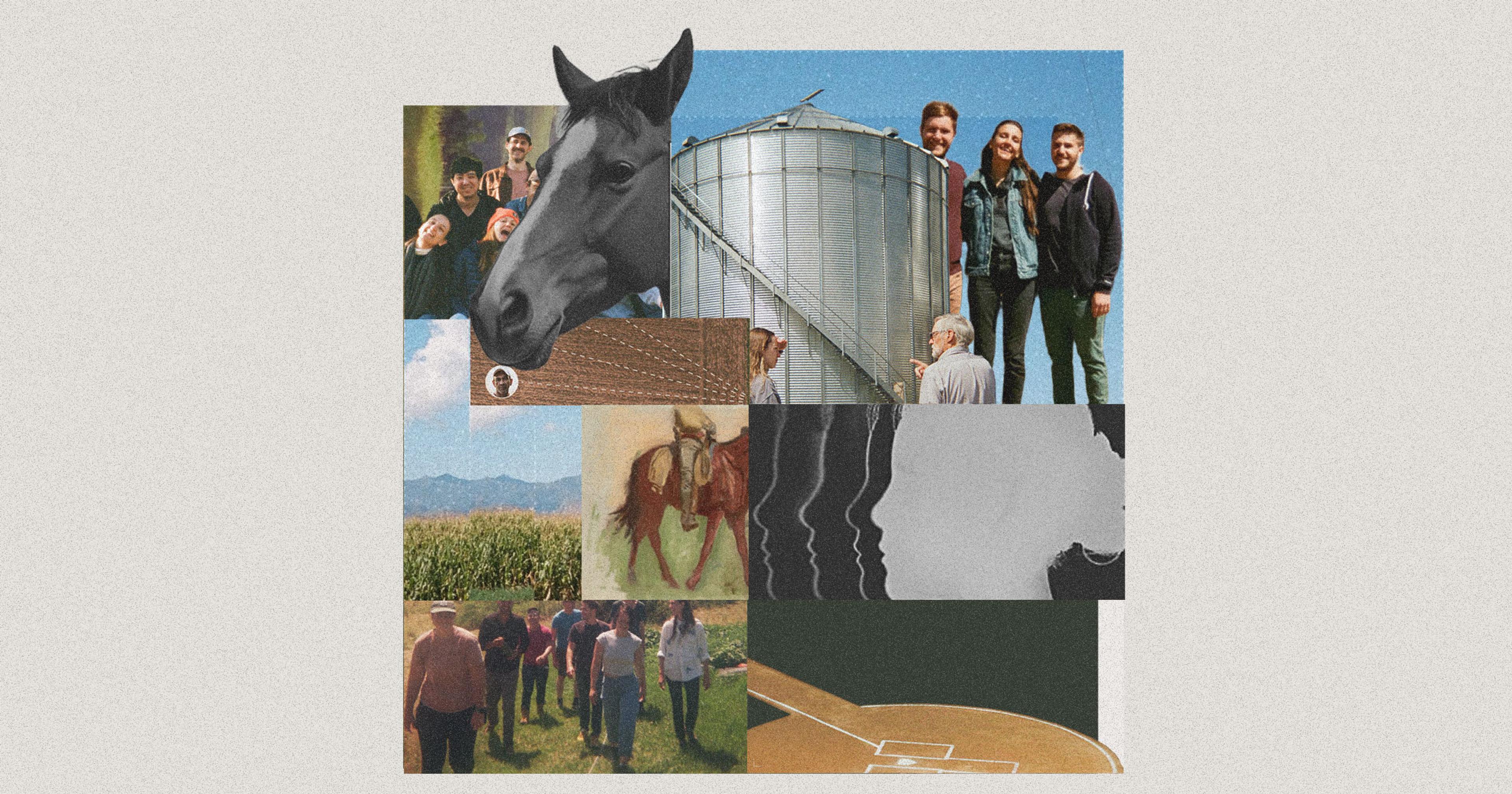
This is how we work at Ambrook. We take the time to understand each customer’s operations, their goals, their problems. We learn what it means to design a product for a farmer, a rancher, a trucker, a property manager, and so on. Experiences like these, embedding ourselves directly in the workflows of the customers we serve, has given us a distinct understanding of why we build what we build.
As we scale up, it’s become abundantly clear that it’s not about industrializing customer success. It’s about getting better at the work itself. Understanding each customer deeply enough to know what they actually need. Creating accessible tools and resources to empower customers to have every single thing they need to make a decision for themselves. Having the discipline to move at the right pace for them, but also the willingness to sit down and spend a few hours learning what works for them. The pace that requires intention, and while laborious, yields dividends in the trust we build and relationships we cocreate.
***
I drove back from Vermont coated in a thin layer of dirt, feeling elated and at peace, absolutely certain I’d made the right call joining Ambrook. Every day since, I hop onto calls with customers across the country and, more than ever, feel the weight of what they’re actually doing. Building for our customers can feel hard at times, but that’s why it’s so important we get it right. That week reminded me what it actually feels like to be new at something, to need someone to slow down and meet you where you are. I don’t want to forget that.