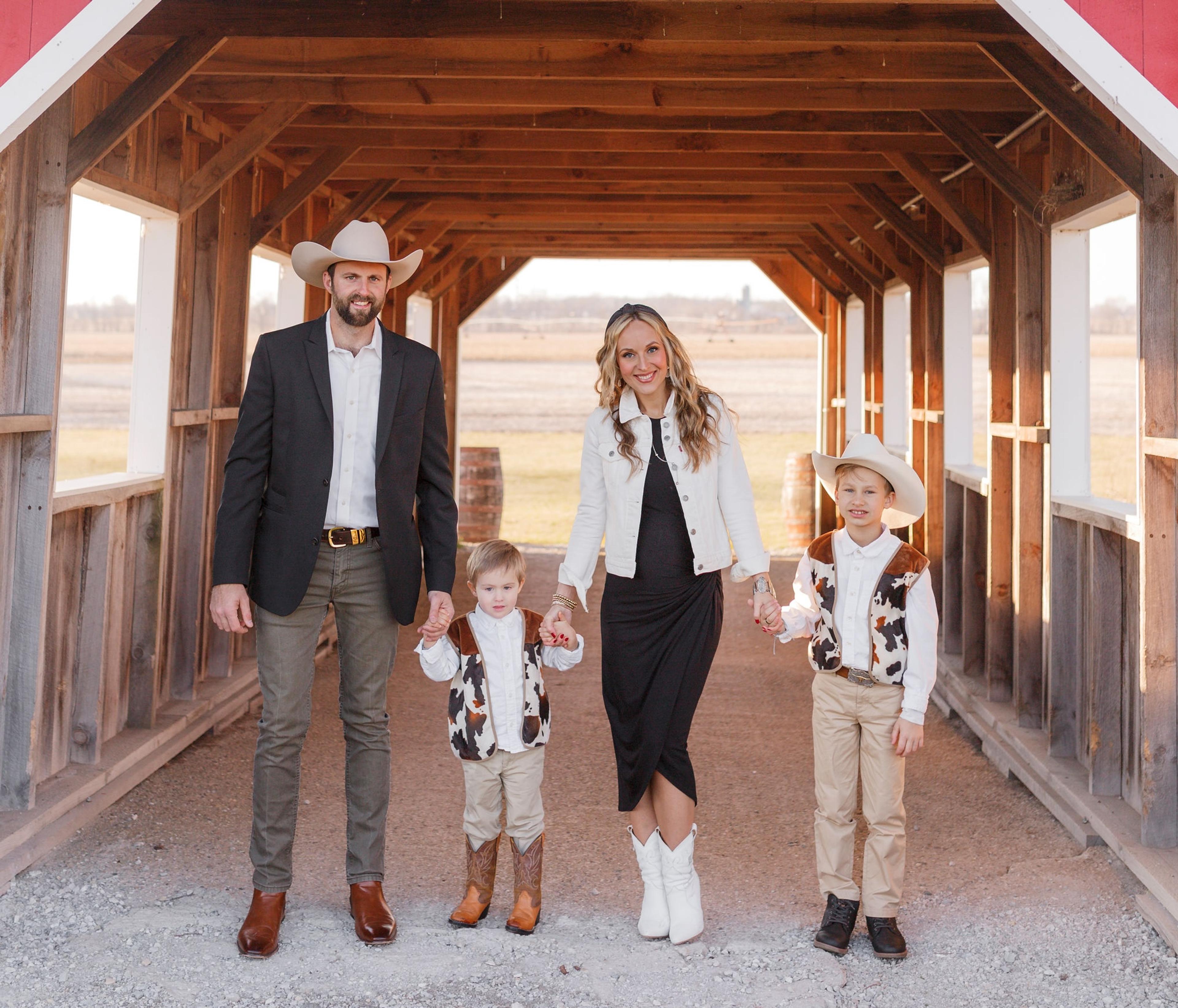
A sixth-generation Indiana farmer turned to Ambrook to untangle multiple entities, get current on bookkeeping, and build the financial clarity to diversify into livestock and direct-to-consumer sales.
Meet Warner Family Farm
Clark Warner is a sixth-generation farmer in Goshen, Indiana, working ground that's been in his family for over a century. His house alone has stood in the family for 124 years.
"I was just reading some old articles and handwriting from the early 1900s," Clark said. "My great-great-grandparents had strawberries, apples, eggs, and chickens. We milked until '98. We had a 40-acre apple orchard until the early '90s."
Today, Clark farms about 900 acres after letting go of 300 underperforming ones, and still grows corn, wheat, and hay. But the operation is changing. He and his wife also run a wedding business and Airbnbs, and Clark is moving the farm toward livestock, grazing, direct-to-consumer beef, and eventually organic corn.
The shift is financial and personal. Commodity grain gets harder to justify each year, and Clark wants to build an operation his kids could come home to.
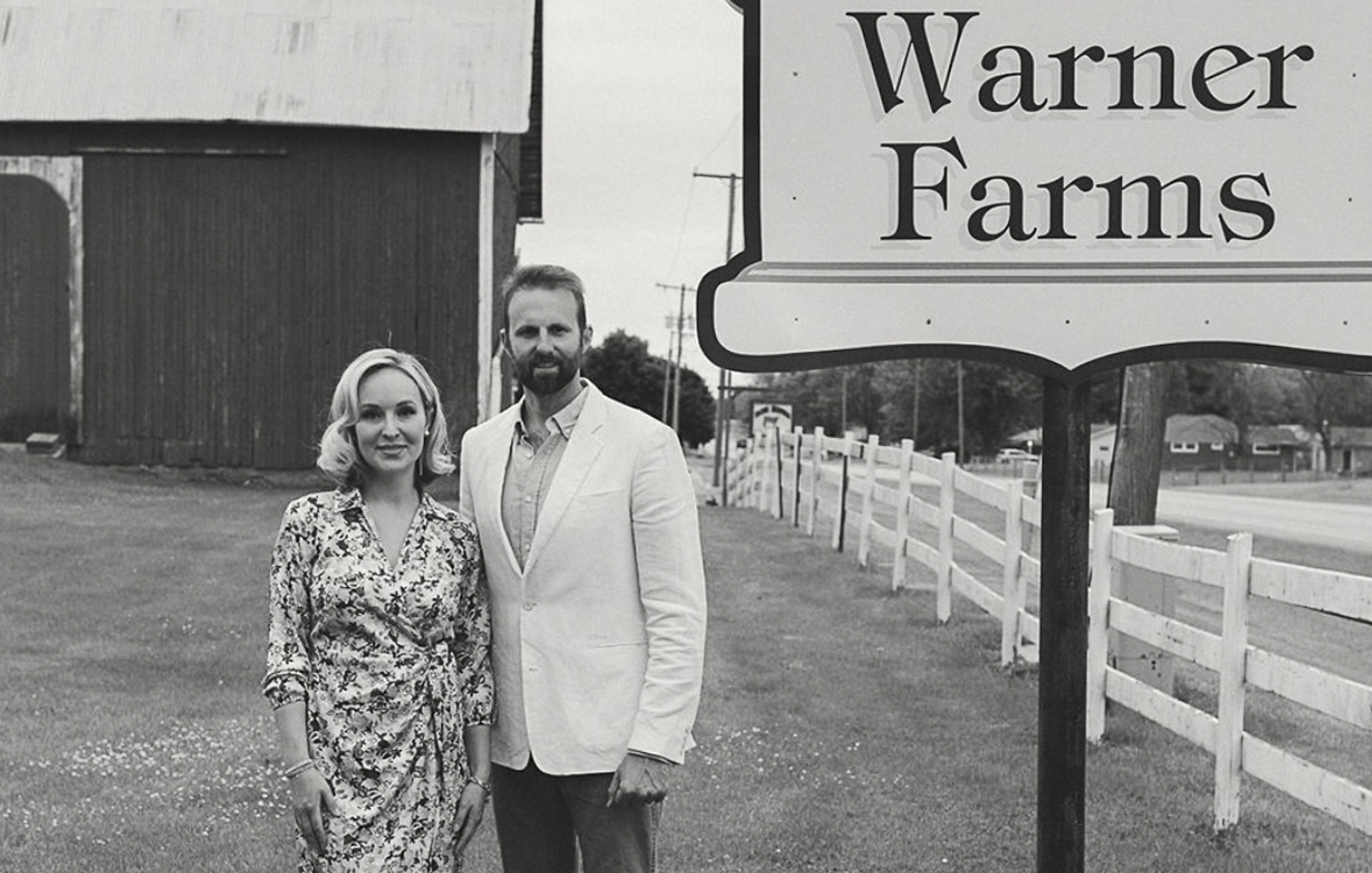
"I feel like we're never going to be able to get big enough selling corn and soybeans to bring my kids back to the farm. My vision would be that all of my three kids and their spouses could be involved in the operation."
The challenge: Tracking a complex operation with outdated tools
Clark has always paid close attention to cost of production. For years, he used technology to understand working capital, break-even prices, and grain marketing decisions. That part of the business was disciplined.
Bookkeeping was a different story.
“When it came to tax recording, reporting, I was horrible,” Clark said. “I had QuickBooks, but I wasn't staying up on that. So then I just tried to do it in Excel.”
Clark cared about tracking the numbers, but the tools didn’t fit the pace and complexity of his life. Between the farm, wedding business, Airbnbs, three kids, and long workdays, sitting down to clean up books was always the thing that got pushed.
“I love working 16 hours a day, but when it comes to sitting down and doing book work, I’m just always like, ‘Oh, I hate it,’” Clark said.
That inconsistency created a painful year-end process. His accountant was sending large bills and asking follow-up questions that were difficult to answer after the fact.
“I’ve failed, like really failed at that for three years,” Clark said.
Switching to Ambrook
Clark first heard about Ambrook in a podcast interview with Ambrook’s CEO and founder, Mackenzie Burnett. The message landed because he knew he needed something different; not just software, but a system that would help him stay accountable.
“When I first reached out to your team, I said, I want a program where I’m going to be held accountable,” Clark said. “I need someone to be an accountability partner.”
Clark chose Ambrook’s higher-support Full Service plan to get help cleaning up the books and building the right structure. That support quickly became one of the clearest early benefits.
“I’ve been very impressed with how much you guys do in that,” Clark said. “Everything my support member asked me, I’ve been able to answer, and she has understood it, and my accountant’s excited about it.”
For Clark, the value beyond simply getting transactions into a system is being able to organize a complex operation in one place: farm, wedding barn, Airbnbs, hay, grain, and eventually cattle. This multi-entity breakout helps Clark see his profitability across different revenue lines.
What changed: Multi-entity books that match the actual business
Warner Family Farm is no longer a simple corn-and-soybean operation. Clark manages grain, hay, a developing livestock enterprise, Airbnbs, and a wedding venue, and Ambrook lets him track each of those entities without losing the full picture.
That matters because Clark is actively deciding what to grow, cut, or transition. One early example: he and his wife had been renting one wedding barn while owning another, and he knew it was costing money, but not how much.
"I knew we were bleeding money somewhere. I was able to see in Ambrook that I was paying $47,000 a year just to operate that property. I would've guessed $35,000.”
A clearer picture of recurring costs
Ambrook also surfaced utility costs across the operation. Between the farm, two wedding barns, and Airbnbs, Clark was paying about $57,000 a year to the local utility company.
With that kind of clarity, the question changes from where money is going to where the operation can be more efficient.
"You can always be more efficient," he said. "How can I heat stuff over the winter with minimal energy, things like that."
Building a weekly bookkeeping rhythm
Clark's earliest wins with Ambrook were foundational: clearer bookkeeping structure, support, and an accountant pleased with the direction.
He’s building a weekly rhythm for doing the books. "My goal would be to do it Friday when I come in for lunch. Just get in and do it once a week. I think it would take less than 10 minutes, maybe even five minutes."
Next up after that: invoicing, receipts, and enterprise tracking so Ambrook captures his entire operation in real time.
"What I really want is, when I go to Menards, I want to get in my truck and just go click and assign that receipt to the transaction."
Looking forward: A profitable business for the next generation
For Warner Family Farm, Ambrook is not just solving a bookkeeping problem. It’s helping Clark build the financial foundation for a larger transition.
He’s moving from conventional commodity production toward a more diversified model built around hay, cattle, grazing, direct-to-consumer food, and potentially organic corn. He wants better margins, more direct relationships with customers, and a farm that can support the next generation.
“I’m really passionate about selling a good product that I believe in,” Clark said.
That future requires more than instinct. It requires knowing what each enterprise costs, where cash is leaking, and which parts of the business deserve more attention. Ambrook is helping Clark get there by turning scattered financial activity into a structure he, his wife, and his accountant can actually use:
Surfaced the true $47K annual cost of a rented wedding barn
Untangled $57K in annual utilities across the farm, wedding barns, and Airbnbs
Replaced QuickBooks and Excel with multi-entity books that match the business and a weekly bookkeeping rhythm
“We’re in transition into the regenerative, diversified ag space and direct to consumer,” Clark said. “We want the kids to be able to be involved in the future. We want to be that kind of steward.”