Inventory, finally connected to your books
For many operators we work with, managing inventory is their business.
It’s what drives assets, costs, margins, cash flow, and ultimately the success of their operation.
But when inventory lives outside your accounting system, your financials only tell part of the story. Balance sheets leave out real asset value. Labor, supplies, and operating costs get scattered across tools, making it hard to see what a unit of inventory actually costs to buy, sell, or produce. To understand what the business truly earns, operators end up re-entering the same information—once in spreadsheets, again in operational tools, and again in their books.
That’s why we’re launching Ambrook Inventory: to tie inventory directly to your accounting, so your books reflect what you have, what it costs to produce, and what your operation is really worth today.
Let’s dive in.
The cost of accounting & inventory not talking to each other
Many operators track their inventory in one system and do their accounting in another—not by choice, but by necessity.
Operational tools are great for tracking detailed production data like breeding records or planting schedules, but they aren’t specifically built for accounting. And generic accounting platforms like QuickBooks weren’t designed to represent the value producers are building over time—a calf putting on weight, a crop maturing in the field—just what’s been bought and sold.
So many producers end up bridging the gap themselves. They re-enter invoices, reconcile counts by hand, and rebuild cost of production in spreadsheets. The result is a balance sheet that understates assets, a P&L that doesn’t reflect true costs, and lender conversations based on estimates not evidence.
Over time, that gap turns into real risk. You don’t fully trust the numbers. Your banker doesn’t either, and every decision—from buying feed to taking on more debt—comes with more guesswork than it should. And in low-margin industries, the cost of getting those decisions wrong is too high to gamble.
Ambrook Inventory: Bringing inventory and accounting together
Ambrook Inventory connects what you produce, what you buy, and what you sell to your books. It keeps quantities, costs, and values accurate and your financials complete, with far fewer steps.
For producers: Represent production in your financials
On a ranch, value is created long before a sale happens. Animals gain weight. Feed, labor, and health programs accumulate into cost of production over months or years. But most accounting tools only capture the endpoints, what you bought, what you sold, but not the value being built in between.
Josh McKinney runs McKinney Land & Cattle, a 30,000-acre cow-calf and feedlot operation in Oklahoma. Before Ambrook, he had detailed herd data but no reliable way to translate it into accurate financials.
“We didn’t have a good way to tie it all together,” he said. “We had an idea, but we weren’t accurate.”
With Ambrook Inventory, producers like Josh can track self-produced goods and see true cost of production reflected in their books—so inventory shows up as assets on the balance sheet, costs roll up correctly in his P&L, and numbers stay in sync with what’s actually happening in the field. That accuracy matters when it comes to growth and expansion.
“Now, with Ambrook Inventory, we’ve been able to get really accurate on what it costs us to raise a calf. That accuracy has been a game-changer. It’s helped us earn our bank’s trust.”

Josh McKinney, McKinney Land & Cattle, Oklahoma
For retail operations: Know what’s on hand in real time
In wholesale retail and resale operations, inventory doesn’t sit still, and can often move faster than the books. Stephanie Nussbaum owns Cattleman’s Ag Supply in Montana, where feed, salt, and tubs might be sold in-store, delivered to a customer, or loaded out in the field—sometimes all in the same day.
When sales, bills, and inventory live in separate systems, basic questions take a long time to answer: What’s actually on hand? What sold today? What needs to be reordered?
“We’re making over 100 transactions a month,” explained Stephanie. “To do that all in Excel? No way. We don’t have the time.”
Now, Ambrook Inventory keeps stock levels, sales, and accounting in sync—so Stephanie’s books can reflect what’s on hand in real time, without hours of manual reentry.
"Ambrook makes everything work together. My husband can load out feed, invoice it right from his phone, and nothing gets lost. I can glance at the inventory and know what we need to reorder. It keeps us on track."

Stephanie Nussbaum, Cattleman's Ag Supply, Montana
How inventory works with Ambrook
Now that inventory’s built into Ambrook, quantities update automatically and all your assets flows straight into your financials, keeping your books accurate without manual reentry or cleanup.
Here’s how it works.
1. Set up the items you buy, sell or produce
Every inventory workflow starts with getting the foundation right. When items are set up correctly, your balance sheet doesn’t need to be rebuilt later.
In Ambrook, inventory starts with items—calves, hay bales, grain, feed, retail products.
Each item includes:
A name and group
A unit of measure
A costing method (FIFO or weighted average), which determines how COGS is calculated
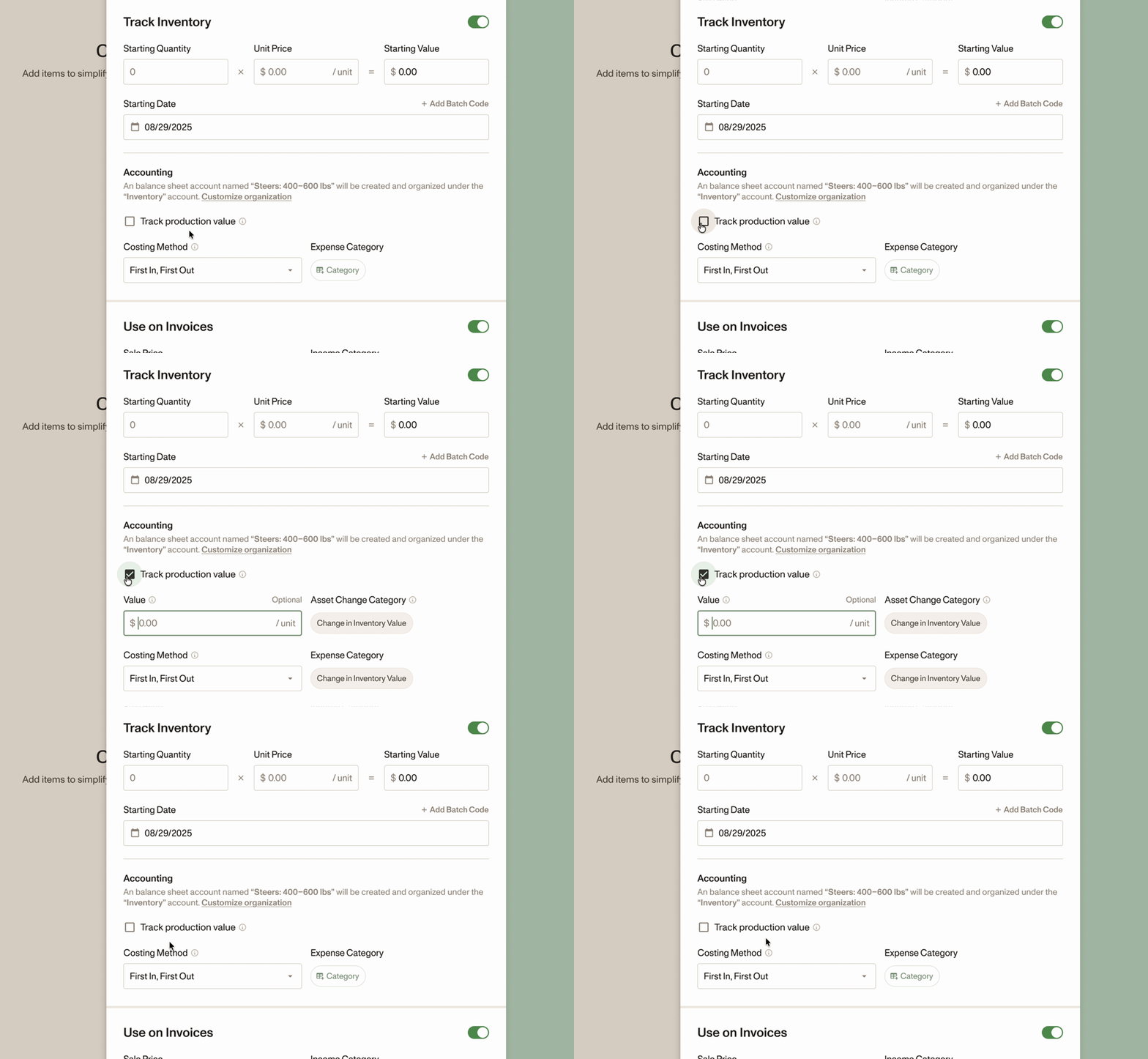
If you produce the item yourself—like a calf born on your ranch or hay you put up—you check Track Production Value. That checkbox tells Ambrook this wasn’t purchased from a vendor; it came off your operation, and its value should be tracked accordingly.
Most accounting systems can’t represent that distinction. Ambrook makes it foundational.
2. Record purchases, sales and production
Inventory updates in Ambrook in two ways: automatically through transactions, and through quick adjustments for real-world events.
Bills and invoices update inventory automatically when you buy or sell. For retail operations, this keeps stock accurate as sales happen—in store or in the field.
Tagged transactions link feed, vet work, fertilizer, baling, or other input costs directly to the items you produce.
For events not tied to a bill or invoice—births, harvests, usage, death loss—you record an Inventory Change. Enter the quantity and reason, and Ambrook assigns or removes value accordingly.
No other accounting system connects production activity to inventory value this cleanly.

3. Have lender-ready financial statements
Once production, purchases, and sales flow through Ambrook, your financials will keep current without manual work.
Your balance sheet stays up to date.
Every inventory change updates your balance sheet in real time. Cattle on hand, feed in storage, grain in the bin all appear as assets—so your balance sheet reflects the complete picture of what you have, not just what you’ve spent or sold.
COGS, done for you.
When inventory is sold or used, Ambrook automatically calculates cost of goods sold using your chosen costing method. Your P&L reflects true production costs, real margins, and enterprise-level profitability—without manual cleanup.
Market Value Balance Sheets for lender conversations.
You can now generate a balance sheet that shows book value and market value side by side, giving lenders a clear picture of what your operation is worth today. Market updates are tracked as Change in Market Value, so your underlying books stay clean and intact.
What’s Next
For some operations—like Cattleman’s Ag Supply—Ambrook now serves as both the inventory and accounting system, with everything seamlessly integrated. For others with more complex production workflows like McKinney Land & Cattle, Ambrook works alongside already strong tools like Performance Livestock Analytics—bringing the inventory those systems track into complete, reliable financials.
Looking ahead, we’re focused on continuing to build on this foundation so Ambrook can support even more complex production activity and higher-volume retail operations.
Either way, the goal is the same: making sure what you raise, grow, buy, and sell shows up accurately in your books.
We’re working toward a future where operators:
Walk into bank meetings with complete, bank-ready financials
Grow without gambling—making expansion decisions based on numbers, not guesswork
Build businesses their kids and grandkids can step into with confidence
As Josh McKinney put it: “I just want to get rural America back to making a living.”
We hope Ambrook Inventory is another step toward that.
Try it out. Tell us what you think. Help us keep building it the right way.
Get started with inventory
Availability
Starting today, all Ambrook Pro plan customers have access to our new inventory features in their account.
If you’re on a Build plan and are interested in inventory, reach out to us for more information on how to upgrade to Pro.
See our pricing for more information.