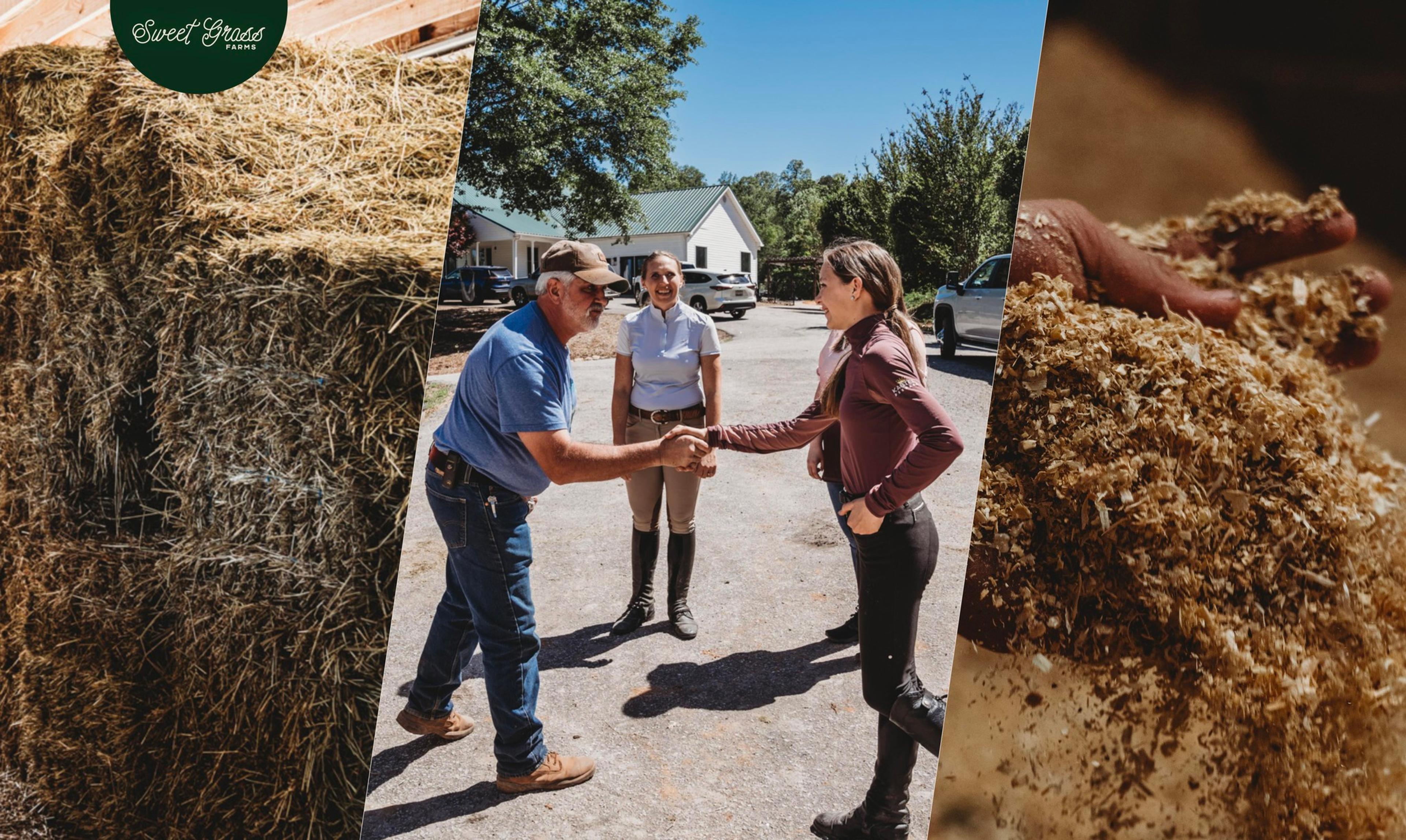

"It's absolutely horrifying. The idea that you can move a million dollars in product and not make any money off it," says Nicole Miller, reflecting on the moment she realized her thriving hay business had nearly collapsed under its own financial complexity. "But that did happen to us."
It's a Monday afternoon, and Nicole is managing Sweetgrass Farms' South Carolina retail store remotely from Ohio while coordinating shipments—one semi headed to Virginia, another load being prepped for local delivery. Her husband is working on equipment at their Ohio farm.
"We're busy. We're in the field, we're on the computer, we're doing all the things," she says. "We're also running a horse farm while running the hay operation."
How they got started
The husband-wife team built Sweetgrass Farms into something unusual in the hay industry: a science-driven operation where every batch of hay is nutritionally tested through Rock River Laboratory. Nicole, who studied cellular molecular biology and was pre-vet before starting the business, applies analytical rigor to equine nutrition consulting.
She knows how to ask pointed questions. "We spend a lot of time with our customers, helping understand what their needs are, teasing out the real issues," Nicole explains.
It's this diagnostic approach that has earned her the nickname "the hay scientist." Local veterinarians refer their most challenging metabolic cases to her. She and her husband have now created a loyal following shipping premium hay across the Eastern Seaboard.
But until recently, they struggled to answer pointed questions about their own operation: Which products were profitable? What were their real costs when trucking rates swung by hundreds of dollars per load? Were they making money in Ohio versus South Carolina? Wholesale versus retail?
"We were in a bad way," Nicole recalls frankly. "I mean, our business was good, but in terms of our books, it was a nightmare. It was an absolute nightmare."
"We were in a bad way. Our business was good, but in terms of our books, it was a nightmare. An absolute nightmare."
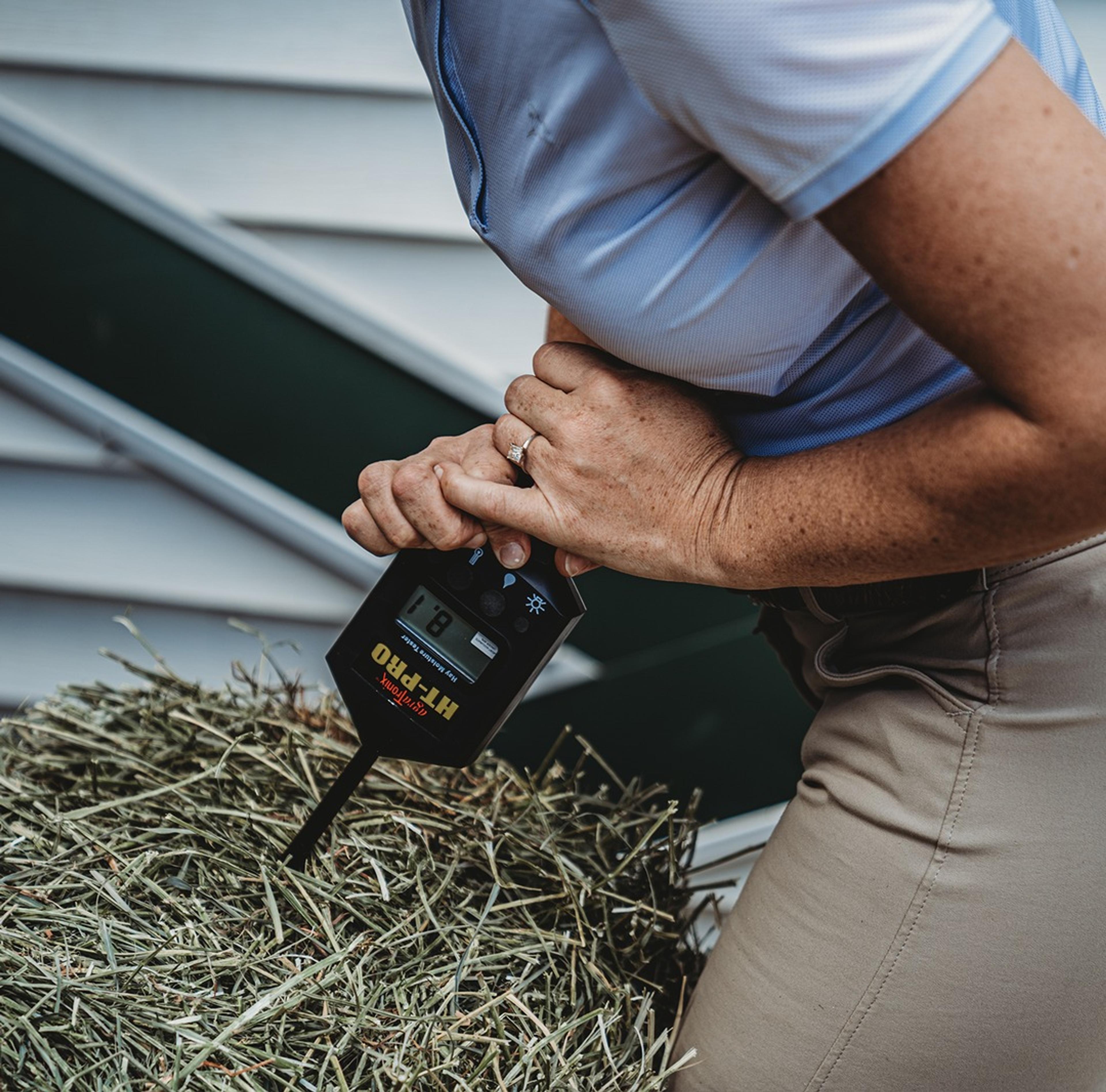
Sweetgrass Farms ships Rock River–tested hay across the Eastern Seaboard, serving some of the most nutritionally complex equine operations.
Challenge: An angry bookkeeper, un-filed taxes, mounting fees
The breaking point came when everything fell apart at once. Sweetgrass Farms was juggling HubSpot for customer management, Shopify for online sales, and QuickBooks for accounting. When HubSpot used them as a beta test for their QuickBooks integration, transactions started duplicating uncontrollably.
Nicole had hired a bookkeeper on a trusted referral. At their first meeting, the bookkeeper made an unusual request: stay completely out of QuickBooks and let her handle it. "That was a big red flag," Nicole says. "But I was like, okay, we're just going to follow the rules and trust this process. Super bad plan."
The integration kept breaking. The bookkeeper couldn't fix it. Three months passed with no solution—while Nicole was simultaneously selling their South Carolina farm and moving operations to Ohio. "I had a very angry bookkeeper who increased our rates. I had books that I couldn't file taxes on. I couldn't figure out who owed us money, who didn't owe us money."
"I had a very angry bookkeeper who increased our rates. I had books that I couldn't file taxes on. I couldn't figure out who owed us money, who didn't owe us money."
When the tech company finally acknowledged they'd discovered a "deep-seated issue” thanks to the beta test, it didn't help Nicole's immediate crisis: two years of un-filed taxes, a failing business system, and mounting bookkeeper fees.
"I hated QuickBooks. It gives me anxiety to look at QuickBooks," she says. "So I reached out to Ambrook and said, okay, I surrender. Just tell me what I need to do because I can't keep doing this."

Before Ambrook, Sweetgrass juggled multiple disconnected systems — leaving them with unfiled taxes and a limited view of cash flow.
Solution: Making the switch
Her husband was skeptical at first about Ambrook. "I do not wanna pay another bill where they promise the moon and deliver nothing," he told her.
But Ambrook's software and support team proved transformative. "I could not recommend it highly enough," says Nicole. "Ambrook has delivered more than we could’ve imagined."
Tax season offered the first moment of relief.
When they first got started with Ambrook, Nicole recalls, "I had to do two years of taxes simultaneously because of all the issues we had, and one was in QuickBooks and one was in Ambrook."
"The idea that I could push a button in Ambrook and have a Schedule C and a Schedule F was hands-down amazing," she raves. "And then on the other side, I'd be looking at QuickBooks and literally asking ChatGPT to help me sort through how to categorize this or that.”
But the real power came from finally understanding their costs.
"I can look at my wholesale versus retail, or I can look at my Ohio location versus my South Carolina location. I can understand how grain has terrible profit margins, how it’s not very cost effective at all," Nicole explains. "It's easy to categorize things; it's easy to sort things."
For Alvin, raised Amish with limited computer experience, Ambrook's accessibility was revolutionary. "Although my husband can and does use a computer, it isn't second nature to him," Nicole says. "But Ambrook has made it very palatable, very approachable."
"It's been empowering to be able to go into our own books and manage our transactions and pull reports and know exactly where we are."
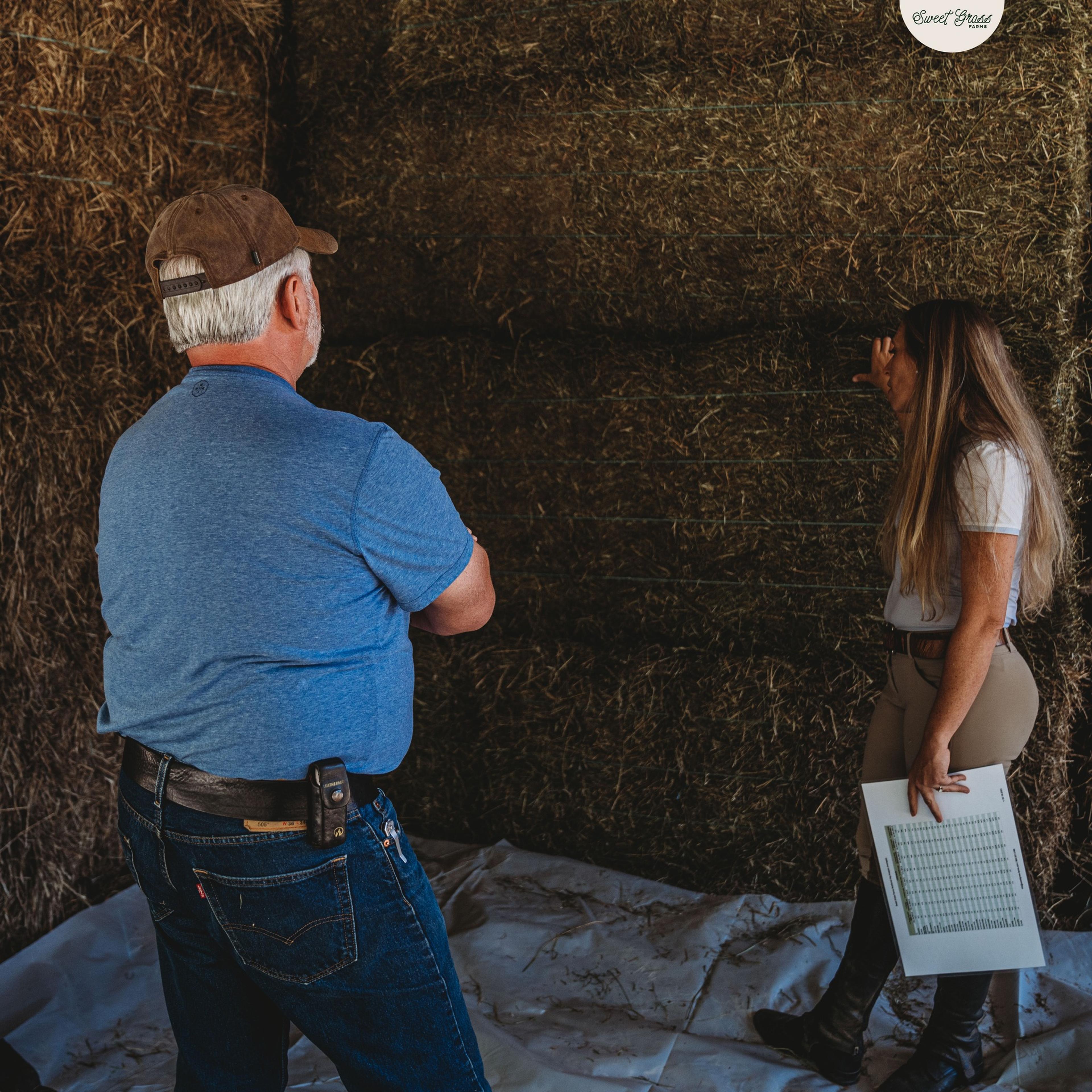
With Ambrook Wallet, staff photograph and deposit checks immediately — eliminating 70-minute bank trips and week-long delays.
Ambrook Wallet: "A game-changer"
With clarity finally restored to their books, Nicole turned her attention to the daily cash grind that still slowed things down. Sweetgrass Farms moves product fast — often tens of thousands of dollars in a single shipment — but accessing that money was another story. Checks piled up. Bank runs ate hours. Funds sat in limbo while bills came due.
"Just the concept of Wallet is huge," says Nicole, remembering when she discovered that key Ambrook feature. "It's been a game-changer."
Now, Ambrook Wallet has solved four key problems for Sweetgrass Farms:
Pain #1: "It was an ordeal to get to the bank."
At their operation in rural South Carolina, the nearest bank is a 35-minute drive away—a 70-minute round trip just to deposit checks. “The bank’s not right around the corner.”
Before Ambrook, checks might sit for a week. “We had clients angry that we weren’t depositing the checks fast enough. I found $3,000 in checks that looked like they had been deposited but hadn't."
Solution #1: Mobile check deposit with Wallet
With Ambrook Wallet, staff can now photograph and deposit checks the day they arrive, and Nicole can track it all from Ohio: “You made it where we could quickly and easily deposit the checks.”
The time savings have been substantial. Nicole no longer needs to "pay somebody to work 40 hours a week plus figure out how to get to the bank 35 minutes away." Their customers are also happier because “we aren't sitting on their checks for a week."
Pain #2: 6+ day holds on deposited funds
Their previous payment processor held deposits for six or more days. “I’m not really interested in another business earning interest on my hard-earned money that I need to pay my bills,” Nicole says.
And the fact that faster access would mean buying additional devices and paying monthly fees? "Ridiculous."
Nicole adds, “We deal with big checks with small profit margins. So having access to our cash quickly is really important.”
Solution #2: Access to money in 24 hours
With Ambrook Wallet, Nicole now gets her cash the next business day — automatically. “I really appreciate that Ambrook doesn't play games with getting us our money: within 24 hours, we have access to our money.”
“I really appreciate that Ambrook doesn't play games with getting us our money: within 24 hours, we have access to our money.”
Pain #3: Fragmented financial tools
Nicole was juggling Invoss, QuickBooks, Shopify, and her bank — none of them talking to each other. When their ACH integration broke, the bank suggested handwriting every check instead. “Who wants to handwrite every single check that you’re paying out?”
Solution #3: Wallet centralizes everything
Today, everything—cards, check records, balance visibility, transaction history—lives in Ambrook, thanks to Nicole's use of Wallet. “It’s not segmented. It’s not fragmented. It’s not, oh, let me check my account balance here. Let me look at this. It's just the whole operation in one place,” Nicole explains.
"I want everything in Ambrook. It just simplifies life immensely."
Pain #4: Limited oversight of employee spending
Monitoring card usage required manually reviewing multiple statements. Errors went unnoticed. Spending visibility mattered daily, but she couldn’t easily track how much team members were using the business card or for what—leading to unnecessary questions and a lot of undue reconciliation work.
Solution #4: Real-time view of spending on team cards
Now, Nicole issues spending cards to her team through Ambrook Wallet. She can set spending limits and see all their transactions pop up immediately in Ambrook.
“Now I know Kay spent $553 this month. What has she spent it on? Are they reasonable purchases? With Ambrook Wallet, I get to answer all of those questions,” Nicole says.
For a business operating across multiple states with staff making purchases locally, that visibility matters. She no longer has to go hunting through separate statements or systems to understand where money is going.
"You make it easy. You make it where we can centralize everything in one spot."
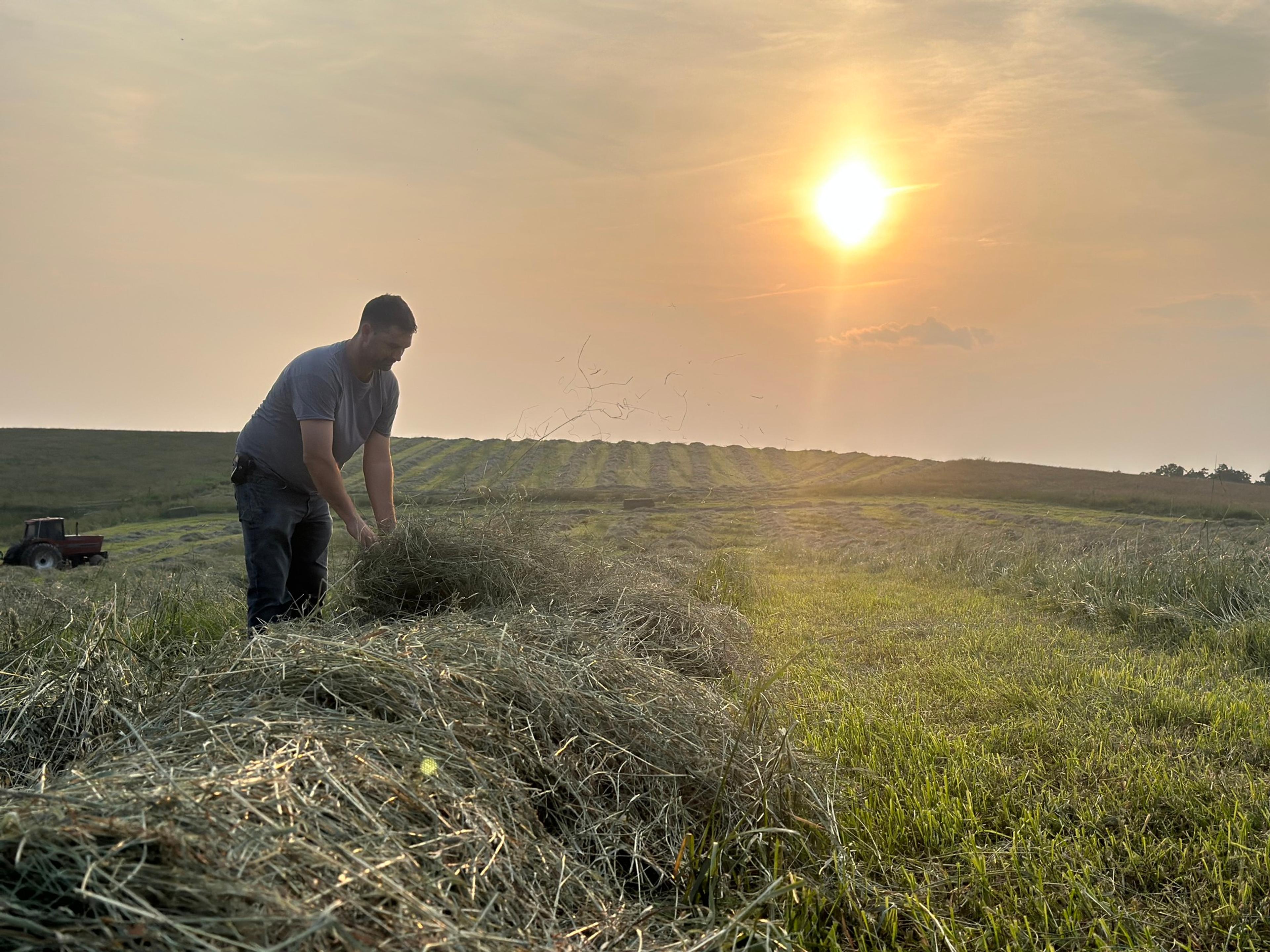
Nicole Miller manages Sweetgrass Farms across two states — running the retail store in South Carolina while operating the farm with her husband in Ohio.
Looking ahead:
Last Friday afternoon, Nicole’s brother-in-law — who runs an Amish business nearby in Ohio— watched his entire operation burn to the ground in a catastrophic fire.
Paper records, his QuickBooks Desktop computer, everything gone. Over the weekend, Nicole and her family helped him sift through charred remains, trying to piece together what was left. She kept returning to one grounding question: how can he find the best way forward?
“I’m hoping that we can switch him over to Ambrook,” shares Nicole, as she recounts this tragedy. “I know I can help him recreate these things. He's a brilliant man and even the most brilliant people still need help with their books. It’s not like you get financial literacy schooling, unless that’s the path you choose to go down.”
Nicole knows the cost of operating without clarity.
“Just because you move a million dollars doesn’t mean you’re making money,” she says. “Unless you can easily and quickly look at your costs and profitability, you can very quickly not be making any money on something you’re working really hard at.”
And it’s a lesson she’s determined to pass on.
“I’ve looked at my 14-year-old children and said: You’ve seen how hard we’ve worked to get back on top of our books. That happened because I trusted someone who told me to stay out of it. Well, there’s no more of that. We’re in the books every day now. Every day.”
“Ambrook has empowered my husband and me to make better, more well-informed decisions about our business, and to grow our business. I couldn’t be more grateful.”
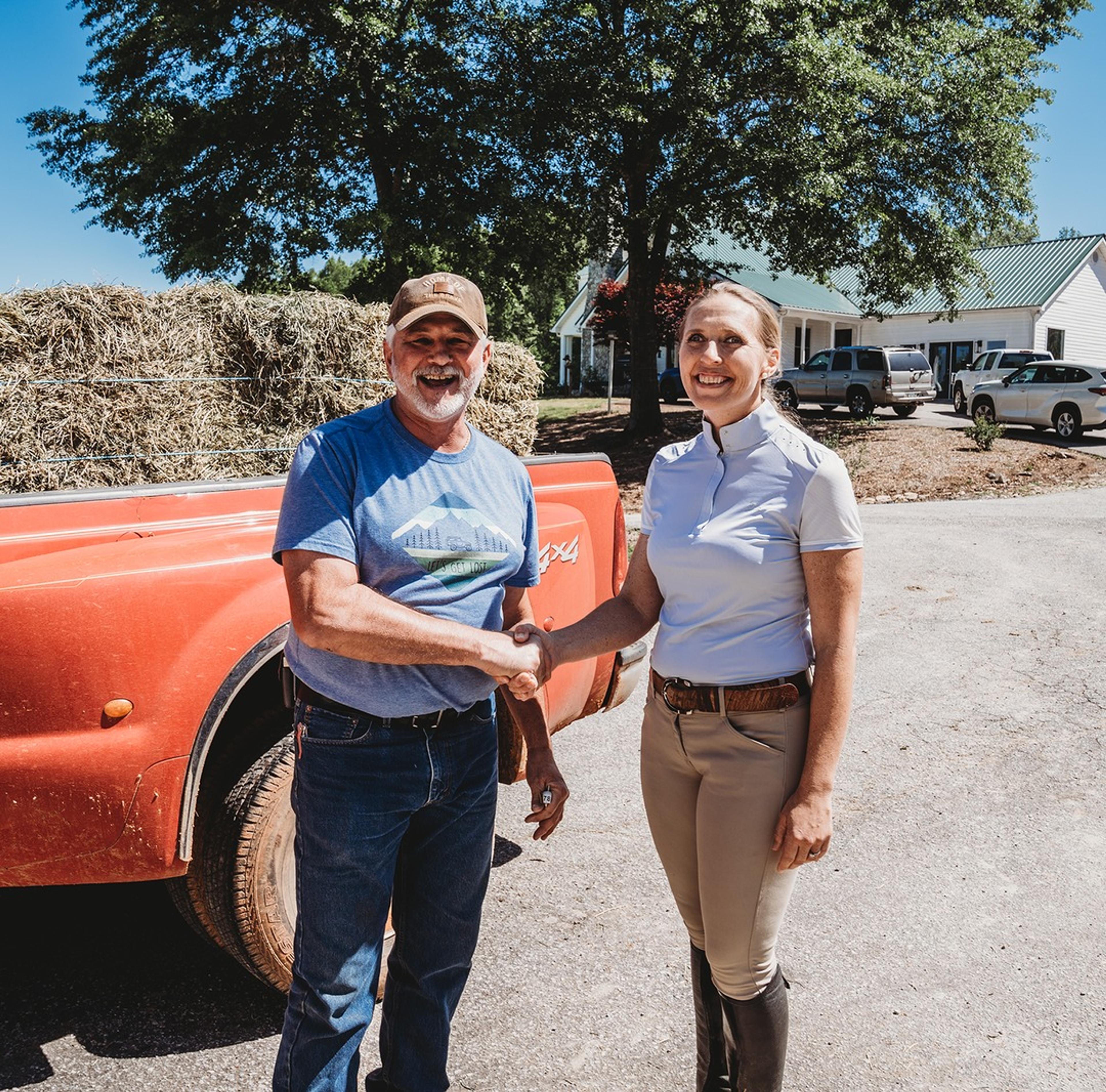
“We’re in the books every day now. Ambrook has empowered us to understand our numbers and grow our business,” says Nicole.
Try Ambrook for free