Mandee Stull’s daughter is two years old. She already helps carry grain buckets around the farm. When a cow recently got her legs caught in a fence, Mandee’s daughter saw what was happening, how they freed her, and understood.
“She said, ‘Her legs hurt, but we made her better,’” Mandee recalls her. “It's very rewarding to see them be able to understand from a super young age the value of taking care of something."
That’s the environment Mandee and her husband Jake are raising their family in on their Virginia farm in Shenandoah Valley. "I couldn't ask for a better way to raise our babies," Mandee says. She wants them to learn early what it means to care for something outside yourself.
But building a farm that lasts, one that they can realistically pass down, takes more than commitment and long hours. It takes a clear understanding of the business behind it.
For the first few years, Mandee admits they didn’t have that.
“We were just winging it sometimes,” she says. She and her husband Jake bought the poultry farm in 2019. Jake works mornings at UPS. Mandee is a nurse practitioner. Together, they’re running Spring Oak Farm, which is a multi-enterprise operation: two turkey houses, 45 cow-calf pairs, and a newly purchased litter truck for their spreading business.
It’s a life that forces constant tradeoffs. “Nothing gets done 100%, but everything gets done fairly well,” Mandee says. “Sometimes the house is messy, but the cows are fed. Sometimes the house is clean, but the laundry’s backed up.” She laughs. “We don’t sleep very much.”
But there was one place where improvising wasn’t sustainable: the books.
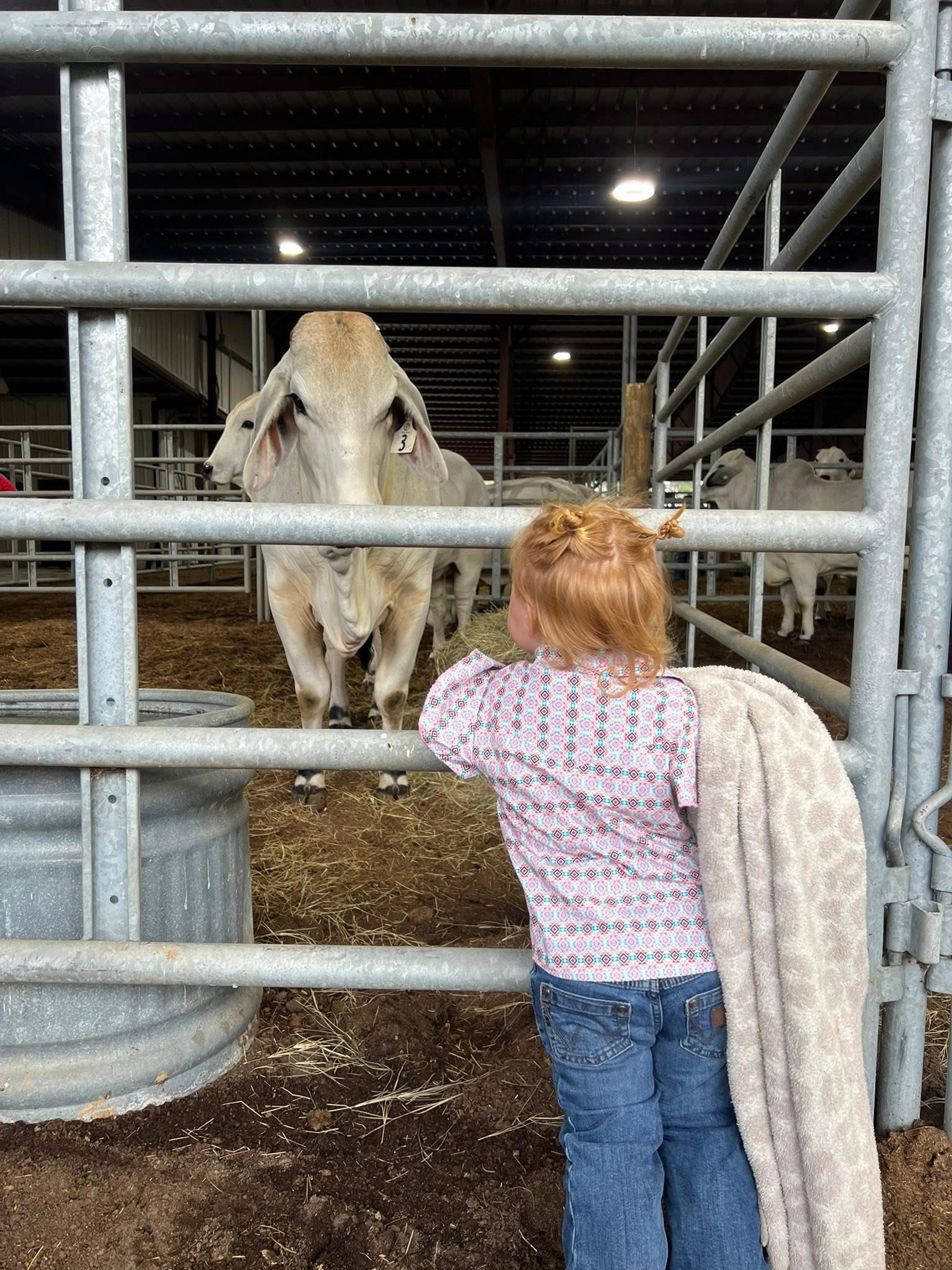
At two years old, Mandee's daughter already knows what it means to take care of the cows, learning responsibility from the ground up.
Challenge: The first-generation struggle
"It's really hard," Mandee says about being a first-generation farmer. "There's no fallback plan. You don't have land that's paid off that you can use as collateral to buy equipment. Most of your income from the farm gets sucked up into your mortgage payment. And then the tractor that you need, you don't have the cash, so you have to finance it."
She watched Jake sell calves for the same price his granddad had gotten at the stockyard thirty years ago, while the cost of producing those calves had climbed year after year.
"That's 30 years without any change in your income, despite 30 years of change in what it costs to produce the same thing," she says.
But they kept going because of what the farm gave them. Mandee works with people in medicine, and it's rewarding when patients improve. She says farming offers something different.
"There's something so gratifying in working with the land and animals and seeing the product of what you do. Taking care of your cows, watching them have their calves, seeing the calves grow up," she reflects. "I think maybe for me it's because they're kind of helpless. They can't tell you what's wrong. So they're very dependent on you."
Still, the farm had to be financially sustainable if it was going to be something worth passing down. When they started, Mandee jokes that they couldn't call what they used to have “a financial system.” "It was just a mess," she says simply.
Jake had an accountant in 2021, but that relationship didn't work out. Then Mandee found a new accountant and spent the next few years "essentially sending her all of my stuff at the end of the year and praying that it worked." She tried QuickBooks. It didn't click. "I never understood what it did," she recalls.
But she'd established one firm rule from day one: "If the farm can't pay for it, the farm doesn't need it." Without understanding the actual numbers, however, she couldn't tell whether they were following that rule or breaking it.
"If the farm can't pay for it, the farm doesn't need it."
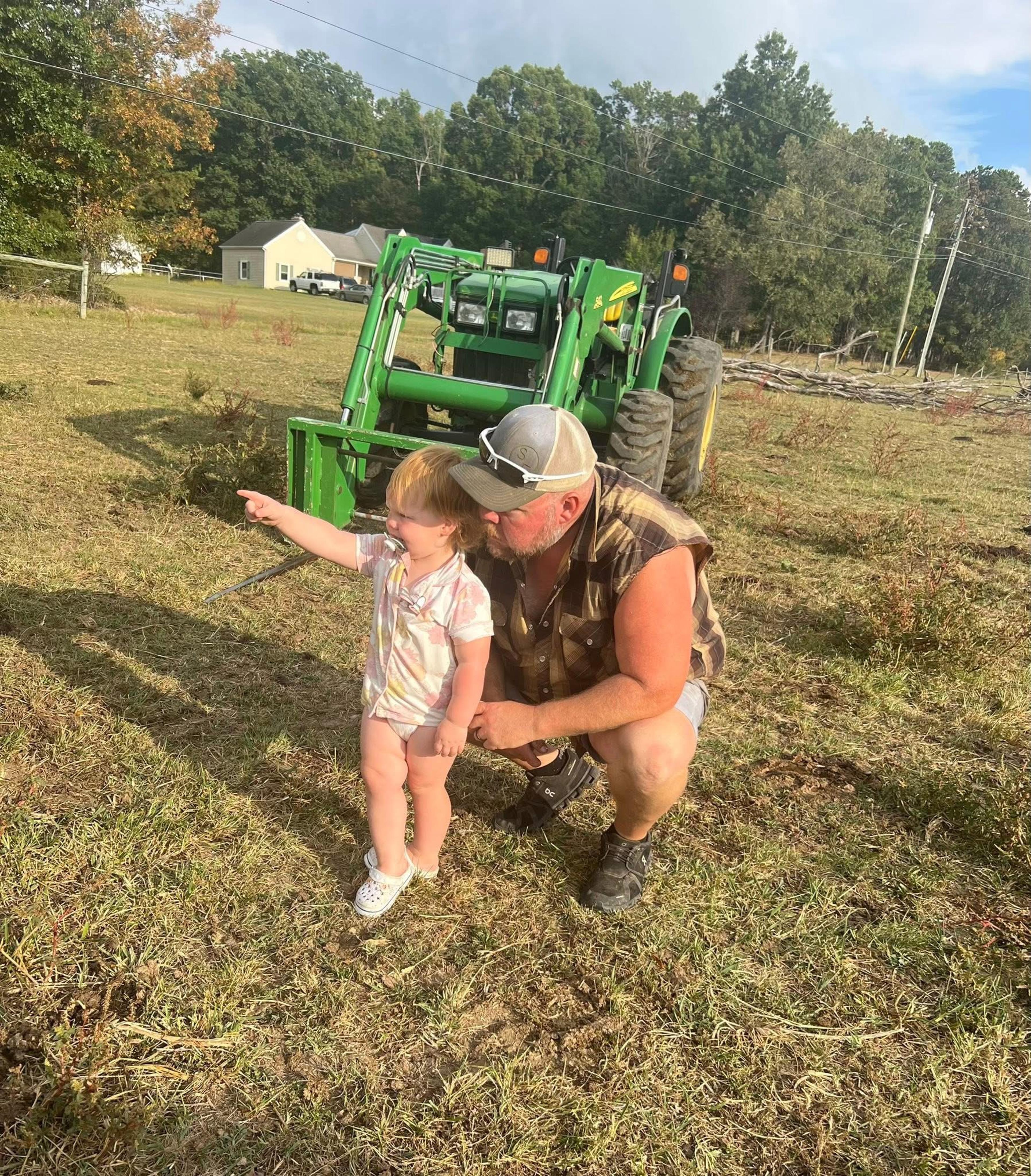
"I couldn't ask for a better way to raise our babies," Mandee says about farm life, where her kids learn early the value of taking care of something outside themselves.
Finding Ambrook
Mandee kept seeing Ambrook ads on Facebook. She clicked a few times, hesitant. Then she scheduled the introduction call with a member of Ambrook's team. That’s when it clicked: "I was like, man, this seems pretty cool."
The pricing helped her decision. When Ambrook's cost got close to what she'd been paying for QuickBooks, she figured she had nothing to lose. "Let me just try it. It can't hurt anything."
What she found was a system built for people like her.
"Neither of us had ever run a business," Mandee says of herself and her husband. "I've never taken a financing class. Neither of us knew what we were doing." But Ambrook's tutorials made sense to someone with little financial background. The interface was intuitive. And for the first time, the books started telling her something she could actually use.
Getting started: Education that works
"All of the tutorials I found super helpful," Mandee says. She started by tracking their loans in Ambrook, watching the balance tick down with each payment and finally understanding how principal and interest actually worked.
The expense categories made sense too.
"The types of categories that you put your expenses into match up with the Schedule F," she explains. No translation needed between her software and tax season. No wondering whether she'd categorized things correctly for her accountant.
When asked who should consider Ambrook, Mandee doesn't hesitate. "Anybody who is trying to get a better understanding of their business portfolio as a whole can benefit from Ambrook."
"The amount of education Ambrook provides makes a huge difference. A 15-year-old kid could figure it out. My 70-year-old grandma could figure it out too."
For Mandee, that accessibility is as important as the software itself. Because financial clarity isn't just about managing what's in front of you. It's about building toward something bigger.
But the feature that changed everything was enterprise tracking.
"Once I started seeing things in Ambrook, I realized we were $15,000 a year in the negative if we're just working off of poultry income."
How it works: Seeing which enterprises pay
Mandee had always run the farm finances with a specific philosophy: the poultry income should cover all the farm expenses, and cattle sales would be extra money they could reinvest in improving their herd. That's what she thought they'd been doing.
"But once I started seeing things in Ambrook, I realized we were $15,000 a year in the negative if we're just working off of poultry income," she says.
The enterprise split made it visible. She could see exactly what the turkeys brought in, what the cattle operation cost, and what the new litter truck was eating in payments and maintenance.
"Take the litter truck. Okay. If it ends up being a super duper money suck, then over the next two years, we’ll sell the litter truck," she jokes, testing out the scenario.
The real power wasn't in any single number. It was in having the complete picture.
"Thanks to Ambrook, I've shifted our focus and we've paid off a bunch of debt this year."
Impact: From pipe dreams to planning
"Ambrook has helped me make possible what I thought might be just kind of a pipe dream for the future," she reflects. "I feel like I have the ability to set a goal for us and to make it work from a financial perspective, from what I can learn from Ambrook."
Before, she was managing what was right in front of her. Now, she can think five and ten years out.
That long-term thinking matters because Mandee and Jake aren't building this farm just for themselves. They both moved away from their families, and they want something different for their kids.
"Our long-term goal for the farm is to give them a place to have and to be able to work if they choose," Mandee says. "To build a legacy for our family."
She dreams of a farm where her daughter won't need an off-farm job when she starts her own family.
Where there's land and opportunity for both kids if they want it.
Where the next generation doesn't have to start from zero like they did. She dreams of offering each child a house on the property when they're grown.
"It's not going to get any easier for children to make a way in the world. So we're doing what we're doing now in hopes to make their transition into adulthood as easy as we can."
"I never envisioned myself being a mom who wanted to just stay at home with her kids," Mandee reflects. "I always thought that I would work until I met my husband and was on the farm. I would love to be able to stay home with them and hopefully in the next few years that may become a possibility."
Right now, Mandee's still working as a nurse practitioner. Jake's still at UPS. They're still juggling babies and birds and cattle and laundry that gets behind. But they're not winging it anymore. They know where they stand. They can see where they're going.
What once felt like distant possibilities—staying home with her kids, paying down debt faster, building something that lasts beyond one generation—now feels achievable.
Not because the work got easier.
But because for the first time, they can see the path forward.
"Ambrook has helped me make possible what I thought might be just kind of a pipe dream for the future."
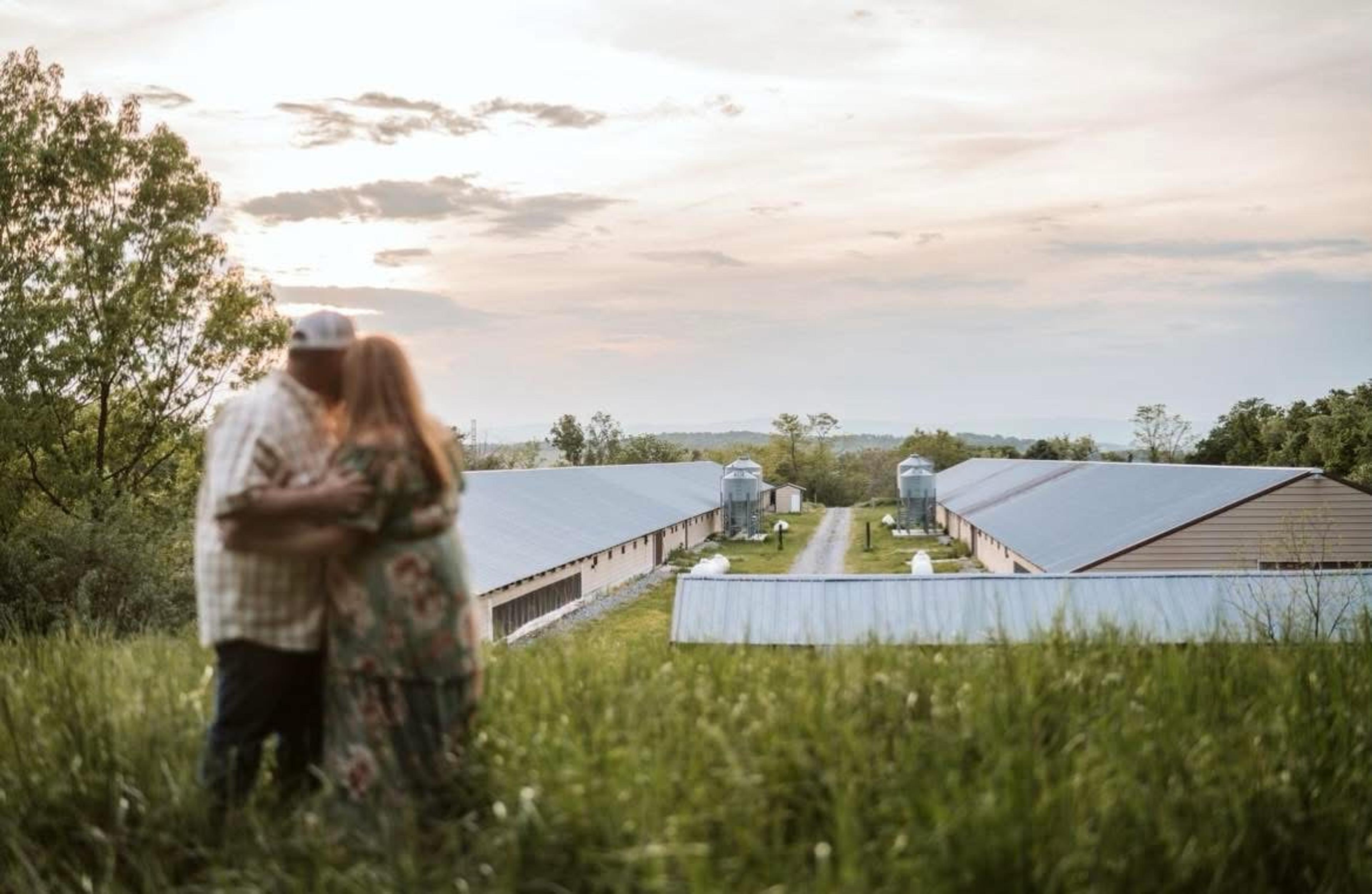
The Stulls' long-term goal is to build a legacy farm their two young children can choose to work on without needing off-farm income.
Try Ambrook for free