Starting fresh
"There has to be something better out there," Steph Nussbaum remembers thinking. She and her husband Joe had spent years working at a local co-op, watching managers come and go (three in eight years) and growing frustrated with how ranchers were being treated.
"The farmers and ranchers deserve to be treated better than how they are when they go to town," says Steph. In their corner of southeastern Montana, where oil field business has pushed agriculture to the back of the line, she and Joe decided to do something about it.
In September 2025, they opened Cattleman's Ag Supply, a feed store built to serve the people who'd been overlooked. Steph is a fourth-generation Montanan rancher. She knows what it's like to wait behind three oil field trucks for a tire repair. She knows what ranchers actually need.
But starting a retail business from scratch meant building everything from the ground up: inventory, invoicing, accounting. And the Nussbaums weren't just opening a store. They were running it alongside a 300-head cow-calf operation, raising two young kids, and doing it all without a physical location yet—delivering feed direct to customers while their warehouse went up.
They needed an accounting system that could keep up.
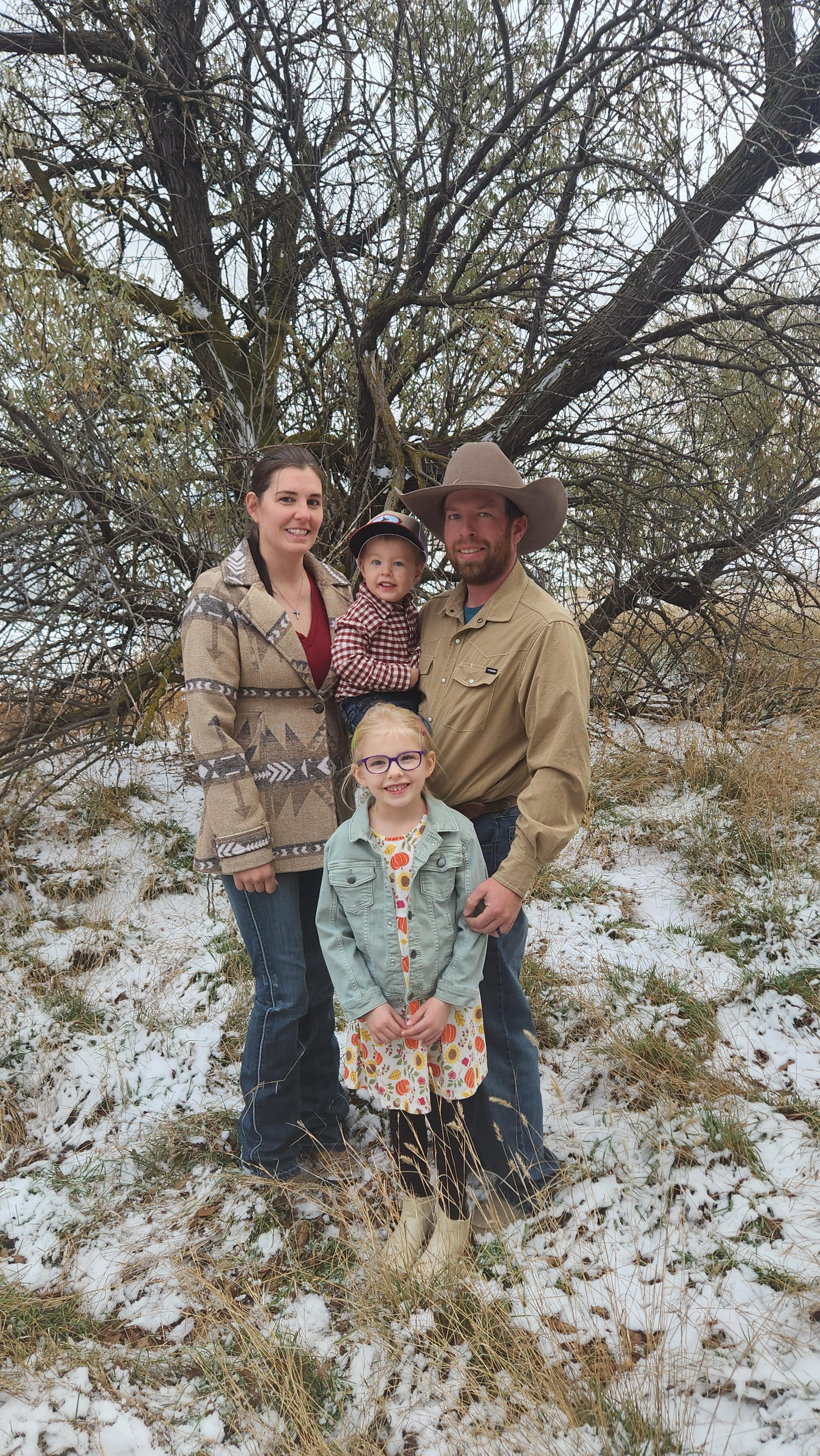
Steph and Joe Nussbaum are building Cattleman’s Ag Supply alongside their family-run ranch, and raising two kids at the same time.
Challenge: Making it all work together
At the co-op, Stephanie had used QuickBooks. She didn't hate it, but she knew there had to be something better, especially for an operation like theirs, where retail inventory and ranch accounting would need to work together side by side.
"We needed an inventory system for all of the feed products and vaccines," Stephanie explains. "And then the accounting side of it as well. We needed something where everything worked together."
On the ranch side, she'd been managing books with an Excel spreadsheet, entering bank statements monthly and categorizing transactions by hand. That worked fine for 20 checks a month. But a feed store? They were looking at over 100 transactions monthly, customers on credit, inventory moving in and out daily.
"To actually sit there and do that all in an Excel spreadsheet—no way. We needed something where everything worked together."
And there was another problem she'd seen up close at her old job: books that didn't tell the truth.
"I hated that," Stephanie recalls. "That's not an accurate picture of the business."
She wanted something different. Something where the numbers had to be real.
Finding Ambrook: Right place, right time
Someone had recommended Ambrook, and when Stephanie reached out, the timing couldn't have been better. Ambrook was just rolling out its new Inventory feature to a small group of early users.
"They said 'We're putting inventory into the system, but we’re still building it and want feedback from customers,'" Stephanie remembers. "And they were able to make us one of the first ones to try it."
For the Nussbaums, that meant starting fresh. No messy migration from old software. As their product came in, it went straight into Ambrook. As invoices went out, inventory updated automatically. No double entry. No reconstruction at month-end.
"It all came out just right," she says. "Within a month of getting started, it all worked together."
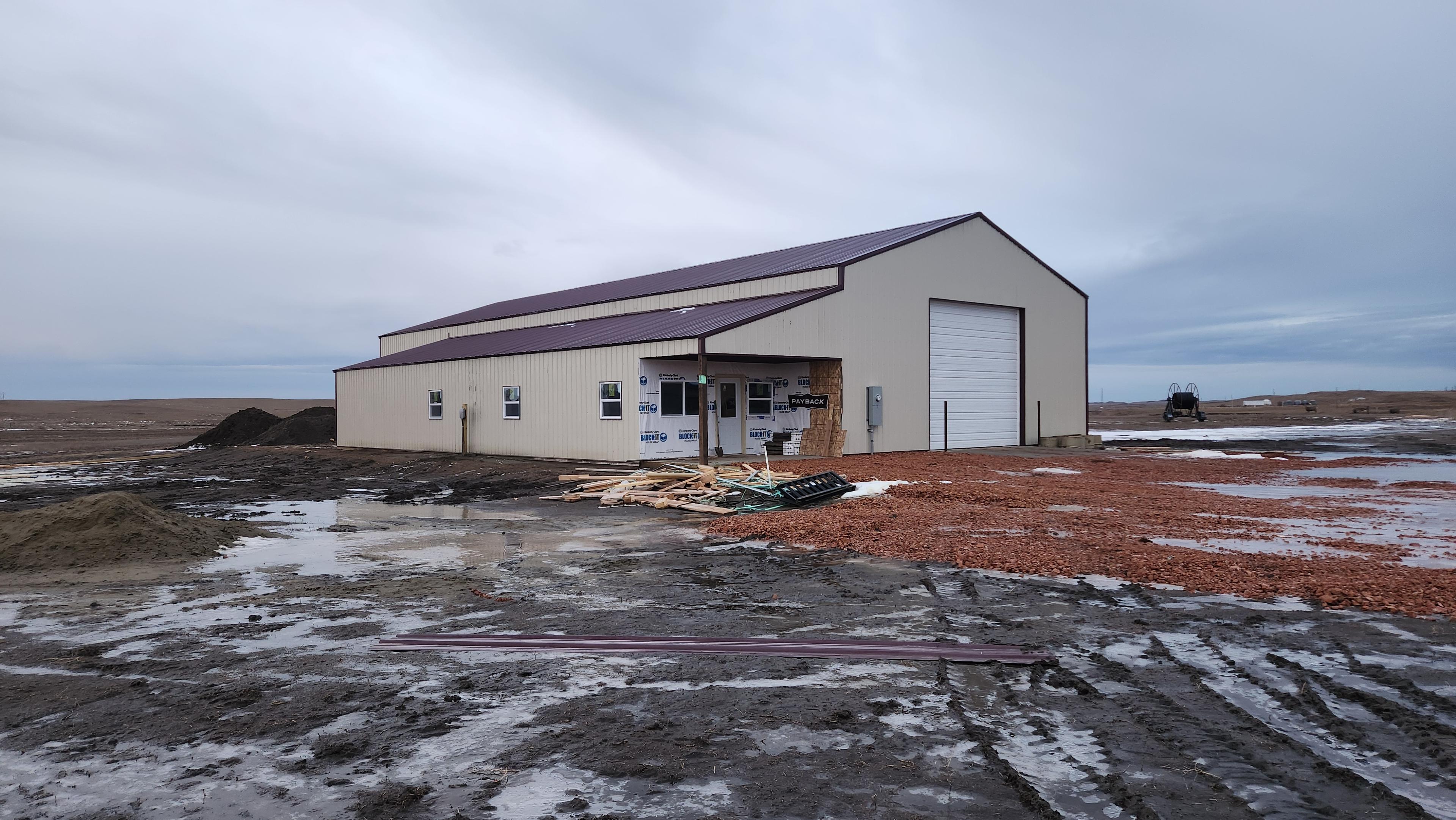
With the exterior 98% complete, Cattleman’s Ag Supply in Plevna, Montana is starting fresh and building something better for ranchers from the ground up.
Setting up Ambrook Inventory
Getting started meant building out the catalog: every product Cattleman's would sell. Feed bags. Salt. Lick tubs. Vaccines. Each one had to be set up with a name, unit, and category.
Stephanie worked with the Ambrook team on a screen-share call to get the structure right. "I like to get almost overly detailed," she admits. "And they were like, 'No, pull it back, simplify it down to start. We'll just have this, this, and this.'"
"It's really nice to separate it out—bag feed, salt, lick tubs. You can make a different category for each one and subcategorize all the variants under it."
The result: 25 different lick tubs, all from the same brand, neatly organized under one category. Easy to find. Easy to invoice. Easy to track.
"Ambrook helps keep it organized without making it overly-complicated," she says.
How it works: in real time, from the field
The Nussbaums don't have a storefront yet. They're running the business out of a quonset half a mile from where their building is going up, loading customers out of storage, then heading back to the ranch to check fence and water.
Cell service is terrible. Internet is worse. But Ambrook's mobile app means Joe can load a ton of tubs, create an invoice on his phone, and have it sync the moment he gets signal.
"A lot of times he loads out most of the feed, but the message doesn't make it to me," Stephanie explains. "This way, I can just look at Ambrook and see what went out."
When a shipment comes in, it's added through a bill. When product goes out, it's captured on an invoice. Inventory updates automatically. No second system, no manual adjustments, no guessing what's left in the warehouse.
"It's great to just glance and say, 'Oh man, we only have eight tons of this.' A quick glance in Ambrook and you can manage the whole inventory."

Joe Nussbaum loads feed and invoices from his phone. Then Ambrook syncs to his account when signal comes back, so everyone can see exactly what went out.
Seeing the full picture: Reports that tell the truth
With inventory tied directly to the books, Stephanie's reports actually reflect what's happening in the business.
She can hover over an invoice and see exactly what percentage came from lick tubs versus salt. It's useful when she's deciding whether to extend credit on a late payment. ("Salt is low margin," she says. "You're paying interest.")
She can pull a balance sheet that shows $20,000 in unpaid invoices and know that number is real. She can see exactly how much operating money they need to cover bills and explain to herself where the cash went when sales are up but the account feels tight.
"I don't like to see negative numbers," Stephanie says. "I like to know where the money's going. And that's where Ambrook gives me a really detailed picture of where it is."
But what she values most is the accuracy itself.
"There's no fudging. Everything ties together. When you're pulling a report, you know it's correct."
She's already given her accountant access. And twice a year, when Ag West Farm Credit Services needs a balance sheet, she won't be scrambling to reconstruct what they own; she'll click a few buttons and send it.
Impact: Time back, confident future
Stephanie reconciled her first full month in Ambrook expecting it to be a chore. It took two minutes.
"On the ranch side, with the Excel spreadsheet, that same process takes me 20, 30 minutes—and that's only 20 checks," she says. "With the feed store, we had well over 20 checks, and it was a couple minutes."
The time savings add up. Steph estimates that she's doing things 15 times faster. But what matters more is what she's not spending time on: worrying whether the numbers are right, chasing down what Joe sold, manually updating spreadsheets that don't talk to each other.
Instead, she's planning for growth.
Looking ahead: A system that grows with them
Cattleman's Ag Supply is just getting started. Right now it's strictly feed, but the Nussbaums are already in talks with local vets about bringing in vaccines and supplies. They're looking at stocking gates from local manufacturers. Maybe even equipment sales down the road.
In the past, adding a new product line would mean asking, "How are we going to keep track of this?" Now, that's not even a question.
"It'll just grow with us. If we take something new on, 'How are we going to keep track of this?' is not even a question."
She's also thinking about bringing the cow-calf operation into Ambrook. With projects, she could track each lease separately, and finally see whether that grass 12 miles out is actually making money or just feels like it should.
"The market's been good lately," she says. "It's allowed some poor decisions to be tolerated. But we know it's coming to an end. That's where we need to start narrowing in: is it actually profitable to be doing this?"
For now, though, she's focused on the store and on building something her kids can grow into. Her daughter Willow turns six next week. Her son just turned two. In ten years, Stephanie figures, they'll be old enough to help ring up customers.
"It's very easy and self-explanatory," she says. "It's not hard to teach anybody invoice making or anything like that."
And when they call Ambrook with a question? The person on the other end actually knows what a lick tub is.
"You don't have to spend 10 minutes explaining what you're talking about," Stephanie says. "The Ambrook team understands. That part's really nice."
"You don't have to spend 10 minutes explaining what you're talking about. The Ambrook team understands. That part's really nice."
Back in the town of Plevna—if "you can call a post office, a school, and maybe a bar a town," adds Steph—the Nussbaums are building something for the people who've been here all along. A place where ranchers come first. Where the books are honest. Where the system just works.
"It either works or it doesn't," Stephanie says of their leap into entrepreneurship.
And so far, it's working.