A few years ago, Isaac Maria had a steady government job. He got home early. The work was predictable.
He didn’t like it.
“It wasn’t fulfilling,” he says. “It was very boring.”
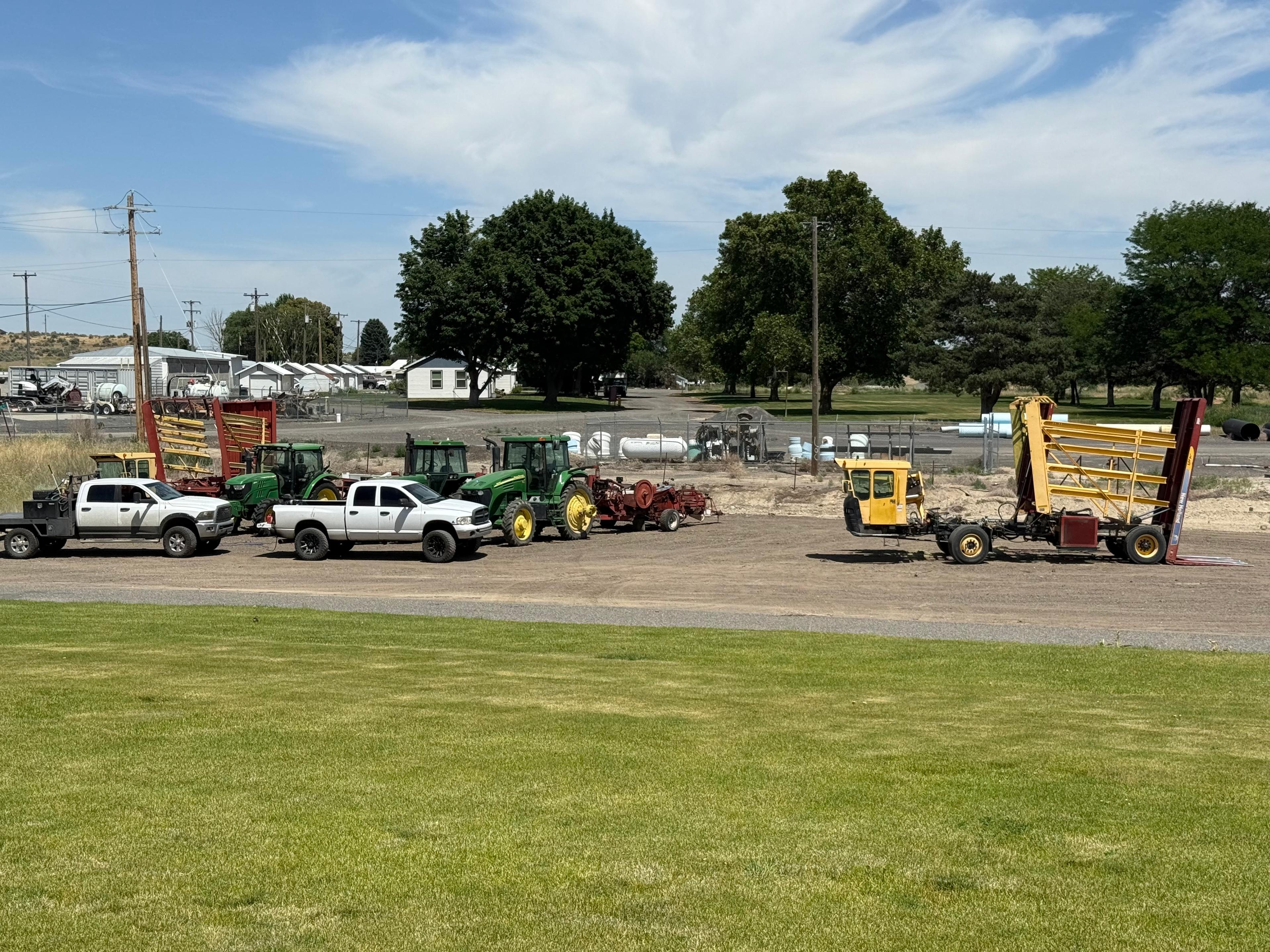
Today, Isaac is in his second year as a first-generation farmer in Franklin County, Washington, growing hay, running cattle, custom grazing through the winter, and traveling regularly for Farm Bureau work. The days are long. The margins are thin. But the work finally matches the life he wanted.
That said, Isaac Maria doesn’t spend much time in one place.
One week he’s in California, attending the American Farm Bureau Convention as Washington’s state chair for Young Farmers and Ranchers. The next, he’s back home in Franklin County, managing hay ground, cattle, and custom grazing. In between, he’s fielding calls from other producers, traveling to state meetings, and keeping a young operation running, mostly on his own.
For a first-generation farmer in his second year, standing still isn’t an option.
Becoming a farmer by saying yes
Isaac didn’t stumble into agriculture. He grew up around it. His dad worked for farmers, and by the time Isaac was heading into fourth grade, he was already waking up before dawn, working long days, and learning what it meant to put in the hours.
“I’ve known since I was a kid,” he says. “It’s something you gotta love.”
What he didn’t have was land, or a clear path to get started.
That changed during an interview Isaac had a couple years ago, when he was applying to become an irrigation manager. Halfway through the conversation, the interviewer paused.
“He goes, ‘It looks like you want to be a farmer, not an irrigation manager,’” Isaac recalls. Then came the offer: “We’ll go buy equipment, and I’m gonna help you start farming.”
Isaac said yes.
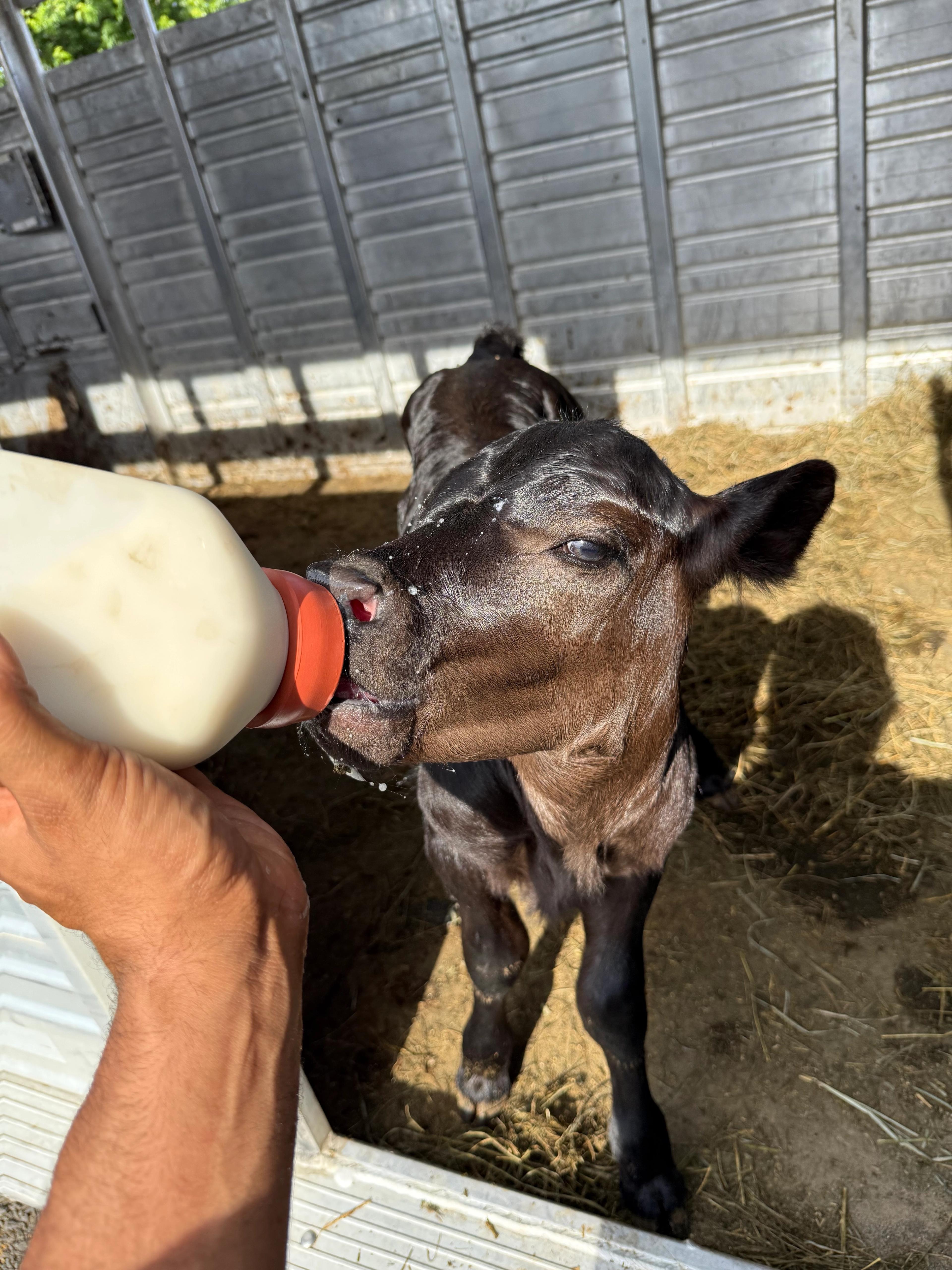
He’s now running a diversified operation: alfalfa and timothy hay, a small cow-calf herd, and custom grazing cattle through the winter. It’s lean by necessity. Isaac bankrolls most of it himself. There isn’t much room for waste.
“Every penny counts,” he says.
Why visibility matters when margins are tight
As Isaac’s operation took shape, so did his responsibilities beyond the farm. He joined the Washington State Farm Bureau at the county level, then the state level, and now serves as the state chair for Young Farmers and Ranchers.
The role comes with travel, and perspective.
“Not just being stuck at the farm all the time,” he says. “I need to be able to go talk to other people and see what’s going on around the state, around the country.”
But travel also makes one thing very clear: if the business can’t run without him glued to a desk, it won’t scale.
That was especially true when it came to money.
“I knew I needed to know where my money was going. One wrong decision in this business can ruin you. In a heartbeat.”
Finding a system that worked on the move
Like most farmers he knew, Isaac heard a lot about QuickBooks. Mostly complaints.
“Everybody’s always b*tching about it,” he says. “How hard it is to navigate.”
Scrolling Facebook one night, he saw Ambrook, accounting software built for farmers and ranchers. He decided to try it.
Two things mattered immediately: it felt built for agriculture, and it worked on his phone.
“For me, the mobile app was a big one. I don’t have to have my laptop with me all the time.”
Receipts could be photographed on the spot. Transactions flowed in automatically. When he had questions, support was quick.
“I’d have a response within an hour,” he says. “That was really nice.”
The moment the numbers changed behavior
Ambrook confirmed what Isaac already suspected. Categories made sense. Setup was straightforward.
Then fuel costs started standing out.
“I noticed my guys were driving way too much,” Isaac says. “We were spending way too much diesel.”
Because transactions were clearly visible in his ledger, Isaac could see fuel purchases stacking up and he could ask better questions:
“Where are we driving? What are we doing? Are we backtracking more?”
The insight led to a simple operational change: slow down, plan trips better, and stop unnecessary driving.
The impact was immediate.
Isaac’s crew went from two tanks of diesel per pickup per week to about one tank per week, without losing productivity.
“They’re still getting everything done,” he says. “They’re just not filling up all the time.”
With diesel running $4 to nearly $5 per gallon, that reduction adds up quickly.
If one pickup tank holds about 26-36 gallons, that’s approximately $100-$250 saved per week per pickup, depending on tank size and fuel prices.
For a first-generation operation with thin margins, that kind of savings doesn’t come from expansion or scale. It comes from clarity.
Fewer receipts. Fewer surprises.
Fuel wasn’t the only place where visibility helped.
Isaac stopped drowning in paperwork, too. His crew uses bank cards; transactions feed directly into Ambrook. Receipts get photographed and attached.
“I don’t have a big pile of receipts in my office anymore. I just tell them, take a picture and throw the darn thing away.”
He still keeps a backup shoebox at the end of the season, just in case. But day to day, the system keeps moving without bottlenecks.
Confidence, earlier than expected
Isaac has only been running his operation for about a year and a half. But the books don’t feel like they belong to a beginner anymore.
“It feels like I know what I’m doing,” he says. “It feels like I’ve been doing this for years.”
More importantly, the work doesn’t pile up anymore.
“I feel like I can actually leave and go do something for a night,” Isaac says. “And not have to be like, ‘Oh man, I gotta go home and sit at a computer for five hours.’ It’s just 'Well, that was easy.' I’m done for the week.”
What comes next
Isaac’s plans are simple: keep expanding.
But long-term, he wants to do more than grow his own operation. He wants to help someone else start the way he did.
“Hopefully one day I’ll be the guy that helps someone else start farming,” he says. “And show them that if you actually love it, don’t give up. Keep pushing.”
For now, that means staying mobile, staying disciplined, and keeping a close eye on the numbers, especially the ones that used to slip by unnoticed.
“When you know where your money’s going, you can actually keep going.”