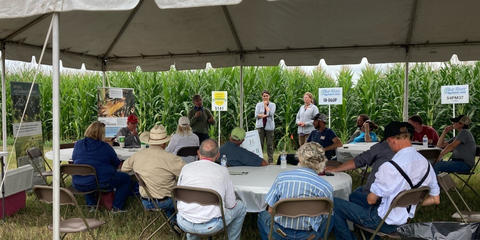
The Transition to Organic Partnership Program (TOPP) is investing up to $100 million over five years in cooperative agreements with non-profit organizations who are partnering with others to provide technical assistance and wrap-around support for transitioning and existing organic farmers. AMS is building partnership networks in six regions across the United States with trusted organizations serving direct farmer training, education, and outreach activities.
The partner organizations will:
-
Connect transitioning farmers with mentors for at least one year after certification.
-
Build paid mentoring networks to share practical insights and advice.
-
Provide community building opportunities to include:
-
Train-the-mentor support
-
Technical assistance
-
Workshops and field days covering topics including organic production practices, certification, conservation planning, business development (including navigating the supply chain), regulations, and marketing
-
-
Help producers overcome technical, cultural, and financial shifts during and following certification.
-
Engage educational and training institutions (including crop advisors and extension agents) on organic workforce training and education and future human capital planning.
Over time, technical assistance resources will be made available to all candidate and existing organic farmers through the USDA website.
TOPP is a collaborative effort involving many partners working together towards a common goal. The TOPP partnership network covers six regions: the Mid-Atlantic/Northeast, Southeast, Midwest, Plains, Northwest, and West/Southwest. Organizations in these regions are actively forming partnerships to serve transitioning and existing organic farmers. TOPP regions are set geographically and form a mix of states that are well-represented in organic and states that are currently underserved. Additional partners will be added as the initiative unfolds, as it will take more time to identify partners that have been traditionally under-represented in organic.
Eligibility
A farmer cannot apply for TOPP money. The $100 million goes to organizations, not producers: AMS "is investing up to $100 million over five years in cooperative agreements with non-profit organizations who are partnering with others to provide technical assistance and wrap-around support for transitioning and existing organic farmers." If you are looking for a check, this is not the program — see USDA's Organic Certification Cost Share Program instead.
What a farmer can do is join the network, and there are three doors, all open nationwide across TOPP's six regions (Mid-Atlantic/Northeast, Southeast, Midwest, Plains, Northwest, West/Southwest).
1. Technical assistance — no eligibility test at all. "Technical assistance resources are available to all candidate and existing organic farmers through the OrganicTransition.org website." Workshops, field days and webinars are open.
2. As a mentee — you must be transitioning to organic. The mentorship program is for producers moving off conventional: "conventional farms and producers changing to organic will receive free mentorship from an experienced organic producer." No acreage minimum, income test, commodity restriction or state restriction is published. It is free to the mentee, and includes help writing your organic system plan (which USDA organic certification requires). Apply through the Transitioning Producer (Mentee) Application on the AMS TOPP page or "Become a Mentee" on organictransition.org.
3. As a mentor — this one has a hard threshold, and it pays. "All organic crop and organic livestock producers are welcome to apply!" Qualified mentors have:
-
"At least three years of experience with organic production and certification"
-
"A strong understanding of USDA organic rules and regulations"
-
"Experience with the advantages of organic farming, production, and certification as well as the challenges"
-
"An interest in sharing knowledge and giving back to the growing U.S. organic community"
Mentors receive a "$3,000 stipend for each mentorship year you participate (additional stipend for mentors with more than one mentee)," plus paid training and travel, and "Multi-lingual mentors may be eligible for additional compensation." Mentor applications are "accepted on a rolling basis" — apply anytime.
So the practical answer: individuals cannot receive TOPP grant funding, but an already-certified organic producer with three or more years of experience is eligible for a paid mentor role, and any producer transitioning to organic is eligible for free mentorship.
Details
Organization
Financial Instrument
Education, Discount
Total Program Funding
$100,000,000
Terms
No payment rate, stipend amount or cost-share percentage is published for farmers. TOPP does not write checks to producers — it funds organizations that then deliver free help. AMS is "investing up to $100 million over five years in cooperative agreements with non-profit organizations who are partnering with others to provide technical assistance and wrap-around support for transitioning and existing organic farmers."
What a farmer gets is services rather than money: a mentor connection ("Connect transitioning farmers with mentors for at least one year after certification"), workshops and field days, and one-on-one technical assistance — all at no published cost to the farmer. Mentors themselves are paid — the program is "Building paid mentoring networks to share practical insights and advice" — but no mentor stipend figure is published.
If you want money toward certification costs, that is a different program: the page points organic producers to farmers.gov for the Organic Certification Cost Share Program, NRCS programs, insurance and disaster assistance.
Application Instructions
Are you interested in becoming involved in the TOPP network? Let us know using one of the following forms:
Resources
-
Interactive TOPP map with state-by-state partner listings
- Use this interactive map to explore the partner organizations located in your state. When you click on an individual state, the map will take you to the page in the document that displays contact information for partners in that state. When you click on a region, you will be taken to the first state, listed alphabetically in that region. In the bottom right corner of the contact information page, there is a link to return to the main map.
-
News Release: Organic Transition Initiative (issued August 22, 2022)
-
Farmers.gov – Organic Farmers (check here for information on Organic Cost Share, NRCS programs, Insurance and Disaster Assistance and more)
Related Programs

Acequia and Community Ditch Fund (New Mexico)
New Mexico Department of Agriculture
- GrantWater ManagementConservationLegal & FinanceResearchNM
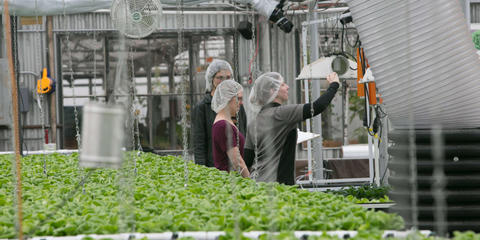
ACRE3 Agricultural Energy Efficiency
Colorado Department of Agriculture
- GrantCost ShareLoanAlternative EnergyConservationIrrigationStorageGreenhouseCOAny
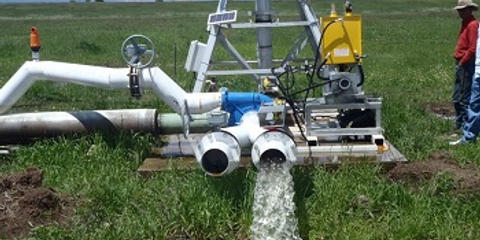
ACRE3 Irrigation Hydropower Programs
Colorado Department of Agriculture
- GrantCost ShareLoanHydro PowerAlternative EnergyIrrigationConservationWater ManagementEquipmentCOAny

ADM re:generations
ADM
- Environmental MarketCarbon CreditsCarbon CaptureSoil HealthCover CropsClimate-SmartNationalCornSoybeansWheatCanolaPeanuts
Updated September 4, 2026
Image Credit: AMS
This information was gathered from public sources. Ambrook is not responsible for or able to affect the results of any financial programs listed, nor are they responsible for any incorrect information that is listed or is on the hyperlinked external sites. All information is subject to change.
Explore hundreds more programs on Ambrook.