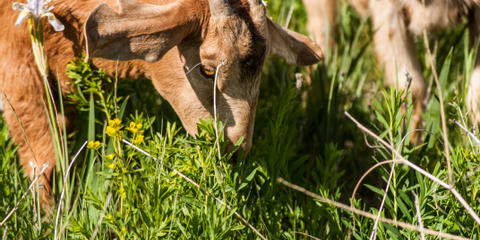
Montana Noxious Weed Trust Fund Grant Program (NWTF)
Montana Department of Agriculture
Due January 6, 2027
The Montana Noxious Weed Trust Fund (NWTF) Grant Program was established by the 1985 Montana Legislature to provide funding for the noxious weed research projects, state and community education/development projects, and local cooperative-landowner cost share. Applicants may apply for funding up to $75,000 per project.
Eligibility
Applicants must work with and apply through an organization, such as a weed district, conservation district, extension office, non-profit, or tribal weed district to be eligible.
Noxious Weed Trust Fund grant funds may not be used for:
-
Application expenditures
-
developing grant proposals, grant hearing travel expense
-
Purchase of biocontrol agents
-
Equipment purchases
-
Indirect costs
-
Capital improvements
-
Annual herbicide for cropland/CRP practices
-
Re-seeding efforts for alfalfa fields, grain for wildlife habitat, or other cropland situations
Details
Release Date
September 10, 2026
Deadline
January 6, 2027
Organization
Financial Instrument
Cost Share, Grant
Maximum Award Amount
$75,000
Terms
Reimbursement grants capped at $75,000 per project per year, with the match depending on which track you apply under. Montana Department of Agriculture: "Applicants may apply for funding up to $75,000 per project." Funding is paid after the fact — "Grant funding is provided as reimbursement for completed project expenditures," and "Costs incurred prior to final signing of the contract will not be reimbursed."
Match by track (Grant Guidelines):
-
Local Cooperative (landowner cost-share) — "required to have a minimum of 50% cash match for commercial application, herbicide, and revegetation costs. Projects are funded only if matching funds are available from grantees." Administrative costs may be requested "up to 3% of the grant total, maximum of $1,000" (for organizations not receiving a County/Reservation Program Enhancement grant). "Maximum total grant request of $75,000 per year."
-
Research and Development projects — "Matching funds are not required... but can be included in budget information. In-kind matches or forgone indirect costs can be noted." "Maximum request of $75,000 per year."
-
Education projects — "Projects are not required to have a 50:50 match on the budget form, but some match is suggested." "Maximum request of $75,000 per year."
Term: "Requested funds should be fully spent within one year, however for those projects eligible for Statewide Program grants, funds can cover up to three years."
What the money cannot buy: "grant proposals, grant hearing travel expense, Purchase of biocontrol agents, Equipment purchases, Indirect costs, Capital improvements, Annual herbicide for cropland/CRP practices, Re-seeding efforts for alfalfa fields, grain for wildlife habitat, or other cropland situations."
Structural point for individual landowners: you do not hold the grant yourself. "Grant applicants collaborate with an organization, such as those listed below, that will administer the grant and serve as the recipient for funding reimbursements" — a county or tribal weed district, extension service, conservation district or educational institution. Local Cooperative projects also "require the participation of a minimum of three adjacent landowners," each with "a committed dollar amount for the acres to be treated prior to application submission," and new projects need a completed environmental assessment. Applications are due January 6 each year, with a ten-minute presentation to the Advisory Council at the February/March hearings.
Application Instructions
Register & Apply Online:
-
Applicants may apply for up to $75,000 per application.
-
All applications must be submitted by an authorized organization (county weed district, conservation district, MSU extension or a non-profit).
-
Refer to the Grant Guidelines for complete details and requirements.
-
Register online at funding.mt.gov and choose Agriculture as your program of interest.
Application forms are submitted electronically using the online Montana Grants and Loans system.
Grant Presentations:
Applications are reviewed by Department staff and the Noxious Weed Management Advisory Council. Grant hearings are held annually in March, where each applicant provides a ten minute presentation (PowerPoint, photos, etc.) for their project. Applicants are notified of the date and time of their presentation prior to the grant hearings.
Resources
Related Programs

480-a Enrollment Incentive Program
New York City Watershed Agricultural Council
- GrantNY

Acequia and Community Ditch Fund (New Mexico)
New Mexico Department of Agriculture
- GrantWater ManagementConservationLegal & FinanceResearchNM
ACRE3 Agricultural Energy Efficiency
Colorado Department of Agriculture
- GrantCost ShareLoanAlternative EnergyConservationIrrigationStorageGreenhouseCOAny
ACRE3 Irrigation Hydropower Programs
Colorado Department of Agriculture
- GrantCost ShareLoanHydro PowerAlternative EnergyIrrigationConservationWater ManagementEquipmentCOAny
Updated September 24, 2026
Image Credit: USFWS Mountain-Prairie
Run this program? Email fundinglibrary@ambrook.com to request changes to this listing.
This information was gathered from public sources. Ambrook is not responsible for or able to affect the results of any financial programs listed, nor are they responsible for any incorrect information that is listed or is on the hyperlinked external sites. All information is subject to change.
Explore hundreds more programs on Ambrook.