Agriculture Risk Coverage and Price Loss Coverage Programs (ARC/PLC)
Due December 11, 2026
The Agriculture Risk Coverage (ARC) and Price Loss Coverage (PLC) programs were authorized by the 2014 and 2018 Farm Bills.
If you received a post card from FSA about ARC/PLC enrollment, contact your tenant if you have one or contact your local FSA Office if you don't have a tenant.
Agriculture Risk Coverage-County (ARC-CO): The ARC-CO program provides income support tied to historical base acres, not current production, of covered commodities. ARC-CO payments are issued when the actual county crop revenue of a covered commodity is less than the ARC-CO guarantee for the covered commodity.
Price Loss Coverage (PLC): PLC program payments are issued when the effective price of a covered commodity is less than the respective reference price for that commodity. The effective price equals the higher of the market year average price (MYA) or the national average loan rate for the covered commodity.
Eligibility
The binding test is base acres, not what you plant this year. FSA states it in one line: "Eligible participants include agricultural producers who have an interest in a commodity grown on a farm with base acres." Payments are "tied to historical base acres, not current production" — so if the farm has no base acres for a covered commodity, there is nothing to enroll, however much of that crop you grow.
Covered commodities — 22 of them: "wheat, oats, barley, corn, grain sorghum, long grain rice, medium/short grain rice, temperate japonica rice, seed cotton, dry peas, lentils, large and small chickpeas soybeans, peanuts, sunflower seed, canola, flaxseed, mustard seed, rapeseed, safflower, crambe, and sesame seed." Anything outside that list is not covered.
Payment limitation. ARC and PLC appear together in FSA's payment-limitation table, with a per-person-or-legal-entity annual cap of "$164,000" for program year 2026. Watch which figure you use: the cap was "$125,000" per year from 2019 through 2024; statute then set it at "$155,000" beginning in program year 2025 and requires it to be "adjusted annually for inflation based on the Consumer Price Index for all Urban Consumers," and FSA's published inflation-adjusted table shows the amounts actually applied — "$160,000" for 2025 and "$164,000" for 2026, with 2027 onward still "TBD." So $155,000 is the statutory base, not the limit in force for 2025. Limits are enforced by direct attribution, tracked "through four levels of ownership," and every legal entity earning payment "must report to their local FSA committee the name and social security number of each person who owns, either directly or indirectly, any interest in such legal entity."
Income limitation. FSA's average adjusted gross income limitation "applies to most programs administered by the Farm Service Agency (FSA)": "The 2018 Farm Bill required the implementation of an average AGI limitation for payment eligibility, ($900,000). This limitation provision was updated by the Working Families Tax Cuts Act, also known as the One Big Beautiful Bill Act." AGI is the "Average of the 3 taxable years preceding the most immediately preceding complete taxable year" — for program year 2026 that means 2022–2024. "Participants in programs subject to AGI rules must annually certify their eligibility" on form CCC-941. Ask your FSA office what the current dollar limitation is; FSA's page states the statutory update but not a revised figure.
Landowner vs producer. Election and enrollment are the producer's, but base-acre decisions are the landowner's: "If you received a post card from FSA about ARC/PLC enrollment, contact your tenant if you have one or contact your local FSA Office if you don't have a tenant."
You cannot apply right now. "The enrollment period and applications details will be announced at a later date." The landowner base-allocation review under the 30 million added base acres closed Aug. 31, 2026, and "FSA will provide more information after the base allocation review process is complete." No acreage minimum, tenure requirement, or audience restriction (beginning, veteran, socially disadvantaged) is published for eligibility. Enroll through your local FSA office.
Details
Tags
Release Date
September 16, 2026
Deadline
December 11, 2026
Organization
Financial Instrument
Insurance
Terms
What has changed under the 2018 Farm Bill compared to the 2014 Farm Bill?
-
The effective reference price replaces the reference price for calculating benchmark revenues under ARC and payment rates per unit under PLC.
-
ARC-county yields are based on data from the Risk Management Agency rather than data from the National Agricultural Statistics Service.
-
ARC-county yields are trend adjusted.
-
Yield designation status under ARC county increases the number of counties from an “All” type designation to an irrigated/non-irrigated designation.
-
Seed cotton was added as a covered commodity and generic base acres were eliminated beginning with the 2018 crop, the last year of the 2014 Farm Bill. Seed cotton continues to be included as a covered commodity under the 2018 Farm Bill.
-
Producers may elect for ARC or PLC by covered commodity or ARC-IC for 2019 and 2020 and re-elect each year thereafter through 2023.
-
One-time opportunity to update PLC program payment yields that take effect beginning with the 2020 crop year.
-
The effective reference price, ARC-county benchmark yields, and ARC-county benchmark prices calculations are based on a one-year lag (i.e., For program year 2019, crop years 2013-2017 will be used to calculate the effective reference price, ARC-county benchmark yields, and ARC-county benchmark prices, and ARC-individual coverage).
Application Instructions
To enroll in the ARC or PLC programs, agricultural producers can contact their local FSA office or apply for ARC and PLC online.
Resources
Related Programs

ADM re:generations
ADM
- Environmental MarketCarbon CreditsCarbon CaptureSoil HealthCover CropsClimate-SmartNationalCornSoybeansWheatCanolaPeanuts

Ag Commodity Export Enhancement Program
Bank of North Dakota
- InsuranceShipping & ExportValue-Added ProductsND

Agoro Carbon Alliance Carbon Program
Agoro Carbon Alliance
- Environmental MarketCarbon CreditsCarbon CaptureSoil HealthCover CropsGrazing ManagementNationalAny

AgriCapture Climate-Friendly Agriculture Program
AgriCapture
- Environmental MarketCarbon CreditsCarbon CaptureSoil HealthClimate-SmartNationalRiceLivestock
Updated September 24, 2026
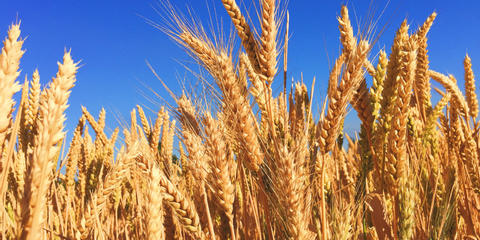
Image Credit: Melissa Askew
Run this program? Email fundinglibrary@ambrook.com to request changes to this listing.
This information was gathered from public sources. Ambrook is not responsible for or able to affect the results of any financial programs listed, nor are they responsible for any incorrect information that is listed or is on the hyperlinked external sites. All information is subject to change.
Explore hundreds more programs on Ambrook.