
After centuries of overhunting for the fur trade, trappers are now playing a key role in saving beavers.
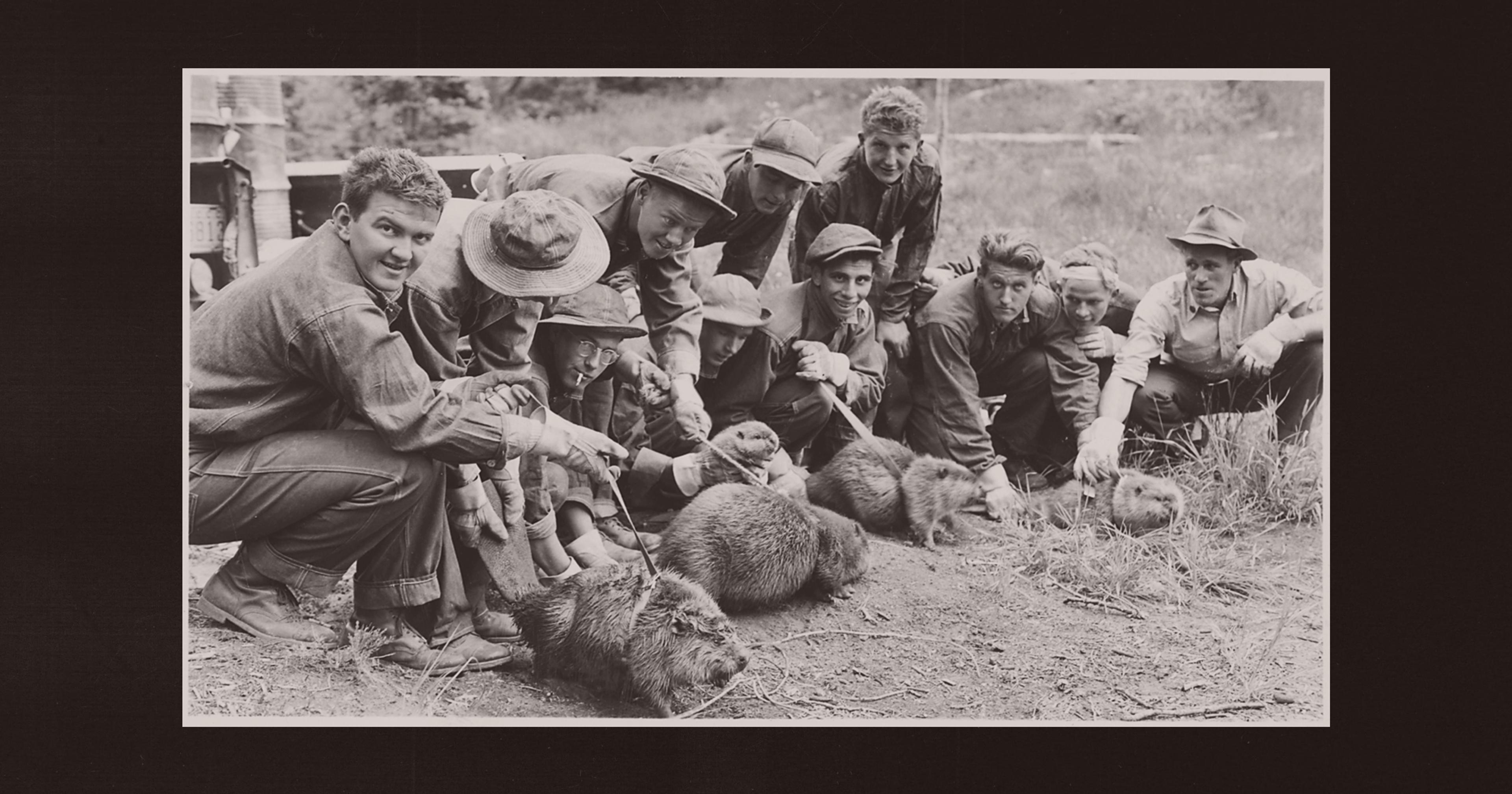
I was recently in the middle of a routine interview when my source explained an event so strange, it may be seared into my mind for eternity: Back in 1948, the Idaho Department of Fish and Game dropped 76 beavers in wooden boxes from airplanes via parachute that floated safely down to land. The goal was to move the beavers from lowlands in the state where the animals were plentiful — and a relative nuisance — up into the high mountains, where their presence could be beneficial to the environment. Beavers making a mountaintop entrance like a top-secret spy was one of the strangest things I’d ever heard. It also is one of the earlier instances of beavers and trappers coexisting in harmony.

Fur trading was one of the central economic activities that led to Westward Expansion throughout the United States, and caused centuries of exchange and war between tribes and colonists. Similar to the story of American bison, overtrapping beavers drove the animal to the edge of extinction in the mid-1800s when their domestic population was reduced by 99 percent. Thankfully, fashion trends that powered the fur trade shifted, beaver pelts went out of style, and in the following years trapping was regulated en masse.
Beavers are no longer in immediate peril. In fact, their fur is worth so little that a winter pelt may sell for $20, if a trapper is lucky. They’ll earn even less for a beaver’s summer skin, which isn’t as thick and full as the winter variety. For that reason, for years trappers have helped landowners capture nuisance beavers dead or alive, but typically just killed them because they had little economic value.
That’s all started to shift — at least in Utah.
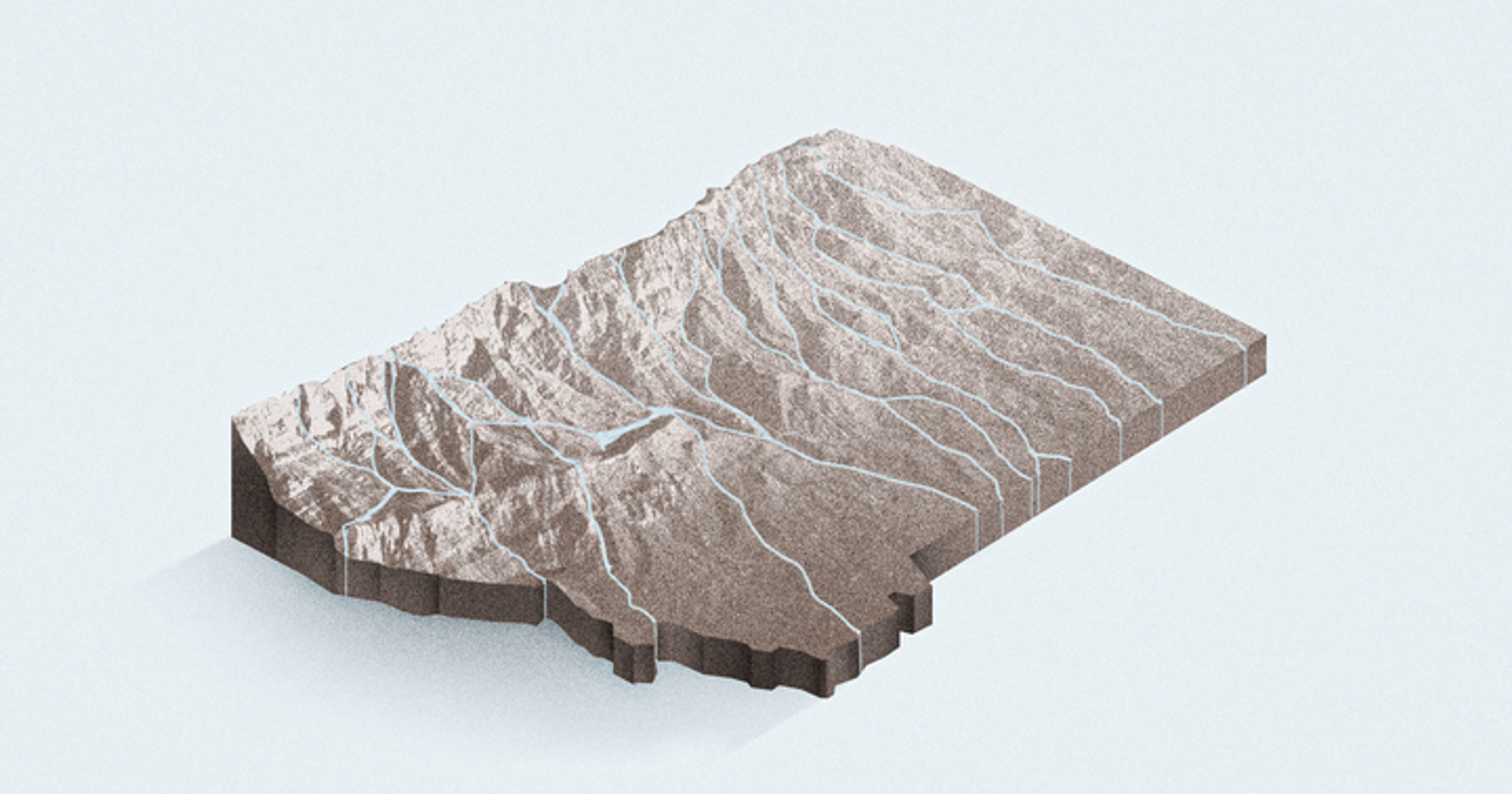
Beavers are magical for ecosystems because they naturally build dams, which establish ponds. As those dams and ponds grow, they create their own new wetland ecosystems. The presence of beavers supports all of the fauna that slowly but surely return to these waterways — insects, birds, fish, and even moose.
To maximize on their potential to restore ecosystems, the Beaver Ecology & Relocation Collaborative (BERC) at Utah State University started offering trappers a $100 surrender fee to catch beavers alive to transport them to private lands in need of hydrological TLC. The success of the project could be replicated elsewhere, with sweeping ramifications throughout the American West. Early this year the United Nations announced that the world is in the midst of water bankruptcy, as humans have “borrowed” so much water that there is no way to get these resources back to historic baselines.
This issue hits home when one considers the Colorado River Basin, which provides water to 40 million people across seven states including Utah. Beavers may be a natural key to improving water quality and abundance throughout the Southwest to mitigate the impacts of water bankruptcy, but it all starts with the idiosyncratic trappers who have shifted from profiting off of beaver death to earning more from their lives. The big question is if others will follow in their footsteps.
Feet in the Mud
When Ryan Brown has a few trapping projects on his plate, he wakes up as early as 2 a.m. in Heber City, Utah. Ideally, he gets to his traps right around daybreak. He straps a pistol to his chest to protect against mountain lions and pulls on neoprene chest waders and a head lamp before descending into riverbeds. Willow branches slap his face, sometimes in the drizzling rain. If he’s lucky, he can look up on a clear, cold morning as the stars fade in the sky.
“I’m having a great time,” he says. “But then if I got a beaver? Oh yeah!”
Brown prefers using cable restraints, which are a type of snare that trap beavers by wedging a thin cord under their armpits. The cord is anchored at another point, like a tree, so if the beaver enters a circular cable in the water, the pressure will cause the cord to tighten around them, trapping them. When Brown catches an animal, he collects a transport cage from his truck, loads the beaver in, and calls a contact at BERC. They make arrangements for where to pass off the beaver, perhaps at a nearby Maverik gas station, but before he starts the next leg of the journey, he does as much as he can to make the beaver comfortable.
“It’s important not to stress them any more than [necessary],” he says.
Brown admits that he’s shifted “from the dark side” of lethal trapping into live trapping, partly because he now earns far more than the $20 value of a beaver pelt.
Brown places food, sticks, and a little dish of water in the transport vessel with them. If it’s hot out, he soaks a few bath towels and drapes them on top of the cage to keep the beaver cool, and positions the cage to avoid direct sunlight. Typically, the final pass-off to the next leg of the beaver’s journey is wrapped by 8 a.m. From there, the beaver goes into a quarantine for 72 hours, which includes a health exam to prevent any spread of diseases. If all goes well, it is then transported onto a private landowner’s property, where it goes about the rest of its life.
Brown is the first to admit that he’s shifted “from the dark side” of lethal trapping into live trapping, partly because he now earns far more than the $20 value of a beaver pelt. Between the $100 surrender fee from the Utah Division of Wildlife Resources and the market prices landowners will pay for an expert to get rid of a problem beaver, Brown’s final pay can range. It’s not uncommon for a trapper to earn well over $500 per animal.
Over 100 miles away, outside of Wellsville, Utah, Ambrie Darley has a similar morning routine. By day, she works in human resources, but in the very early morning, she’s a trapper. She started in 2017 with a focus on nuisance animals like muskrats, raccoons, and beavers, but she has never trapped for money. Instead, she barters with landowners to trap an animal in exchange for hunting rights on their land, as she’s a fan of duck and pheasant.
Darley usually stops by her traps 45 minutes to an hour before she goes to work in the morning. She pulls on her waders and trudges into the mud, typically a ditch on the side of the road, which makes for comical office banter later. In the past, colleagues have driven by while she stands on the side of the road, peeling off waders to reveal a blazer, button down, and office attire beneath.
Darley barters with landowners to trap an animal in exchange for hunting rights on their land, as she’s a fan of duck and pheasant.
Overall, Darley’s proud of her success rate. The quickest she has caught a beaver is 12 hours, but it’s taken as long as a month. Typically, she traps a beaver in two to four days. It takes an investment of equipment and time, but for her, the hobby is an excuse to spend more time outside and support a valuable conservation cause.
“I think [BERC] has a really good program trying to find the usefulness of animals somewhere else. I really do,” she says. “Just cause I’m not getting paid [doesn’t mean anything] ... It’s about making a difference.” And BERC isn’t the only beaver relocation project out there. There are similar programs in Washington as well, but it’s still not a mainstream practice just yet. In Utah, the path to recruit new trappers is rather straightforward.
Those born after 1984 have to complete a furbearer education course through the state, which lasts eight hours and costs about $20 overall. Those born prior to 1984 are not required to complete it. An annual furbearers’ license is $33. A one-time registration fee is $10, and lasts a lifetime. From there, it’s a matter of investing in traps and stamping the registration number on equipment to track it. Continuing education beyond the eight-hour course is rooted in apprenticeship, like tagging along with an experienced trapper to learn trade secrets or watching YouTube tutorials. The bar is not incredibly high to be able to dip your own waders into the river.
Somewhere up North…
Jay Wilde grew up on his family’s ranch in southeast Idaho near Preston, and even though he left for 30 years, he always knew he wanted to go back. When he returned to 600 acres of land, some of it was different from what he remembered. The Birch Creek watershed is on his property, which is a tributary to Nick Creek, which connects to the Bear River, which eventually flows into the Great Salt Lake.
Wilde’s motive was simple: He wanted to be able to run cattle on Birch Creek in the summertime, but in the early 2000s, the creek wasn’t perennial anymore, and stopped flowing by July. Cattle couldn’t graze in the vicinity because there was nothing to eat or drink. That’s when Wilde started learning about beavers. “I grew up hating them, but I needed to change my mind,” he says.
It took a few years of trial and error, but once he stumbled upon Beaver Dam Analogs, or human-made dams with natural materials that create deeper water to reintroduce the animals, they helped ease in the first five beavers that stuck in 2015. The next year, four more beavers came in via trapper, “and I paid that fellow $50 for each beaver,” Wilde says, which was over double the value of their pelts. Ever since, beavers have remained in the Birch Creek region, and the stream is flowing perennially again.
Since beaver reintroduction, the river beds have improved. More aspens are growing. Cutthroat trout in the creek were numbered at less than five per 100 meters back in 2001 and 2012, and by 2019, their numbers skyrocketed to 130 fish per 100 meters — plus they were bigger and healthier than before. Cedars and rush are growing, stabilizing the stream bank. Wilde regularly sees waterfowl like families of mallards that he never saw in the area before, as well as moose.
The whole experiment changed Wilde’s opinion on reintroducing species, and of the power of putting a baseline value of a $100 surrender fee that overshadows the value of a pelt. “It’s a matter of education,” he says. “Local folks here questioned my motives, but now they see the results.”
Looking Ahead
Brown and Darley have diverging views on the future of trapping, even for its place to support conservation and ecological restoration. Brown sees beavers gaining traction on social media, and more trappers are interested in transitioning from the lethal camp to the live side, he says.
But when Darley runs into Fish and Wildlife workers while trapping, they tell her that they see fewer and fewer trappers out there. The older people are dying off without younger hobbyists to replace them. “That doesn’t mean that things couldn’t turn around,” she says.
As a landowner, Wilde is in a unique position. He’s seen up-close how Birch Creek transformed. He changed his mind about the beaver, and is open to learning about ways that even the most controversial species could be introduced back into their native ecosystems — as long as they don’t harm his livelihood as a cattleman. But to attract trappers to the field, the money, even if it’s not a lot, has to be a motive.
“There is a sport to trapping beavers, [...] and lethally trapping beavers should be unlawful,” Wilde says. “It’s good to trap nuisance beavers, but [we should always] do it live, and then put them somewhere where they’re needed.”