Prescribed Burn Associations, or PBAs, are scrappy, volunteer-run organizations helping keep farms and ranches safe from wildfires.
The United States is experiencing something of a pyro-renaissance. After decades of federal and state policies restricting the use of fire on our nation’s land, private and public land managers alike are embracing prescribed burns to accomplish a range of goals. As reported in an Offrange dispatch last September, prescribed burns can help stem the proliferation of invasive shrubs and trees, boost grass production on pasture, and improve waterway flow.
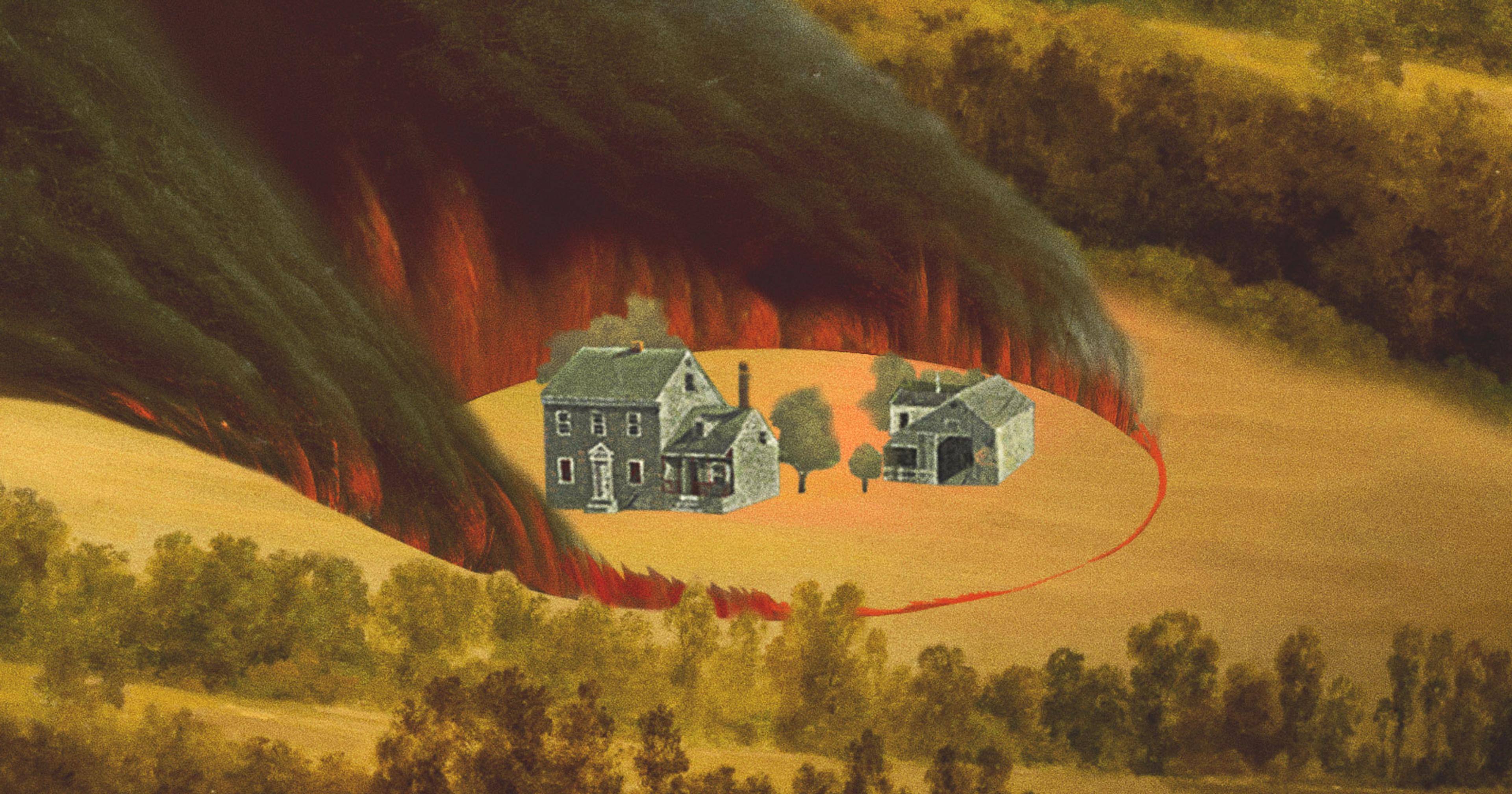

Even though the benefits of fire are becoming more widely known, for the lone farmer, simply heading out with a gas can and a water tank can be intimidating, as the consequences of an inexperienced mistake can be catastrophic. To have a safe and productive burn, a certain level of training, equipment, and expertise is necessary — services that are difficult to come by in many parts of the country. This lack of resources threatens to snuff out the nascent prescribed burn movement before it can take flight.
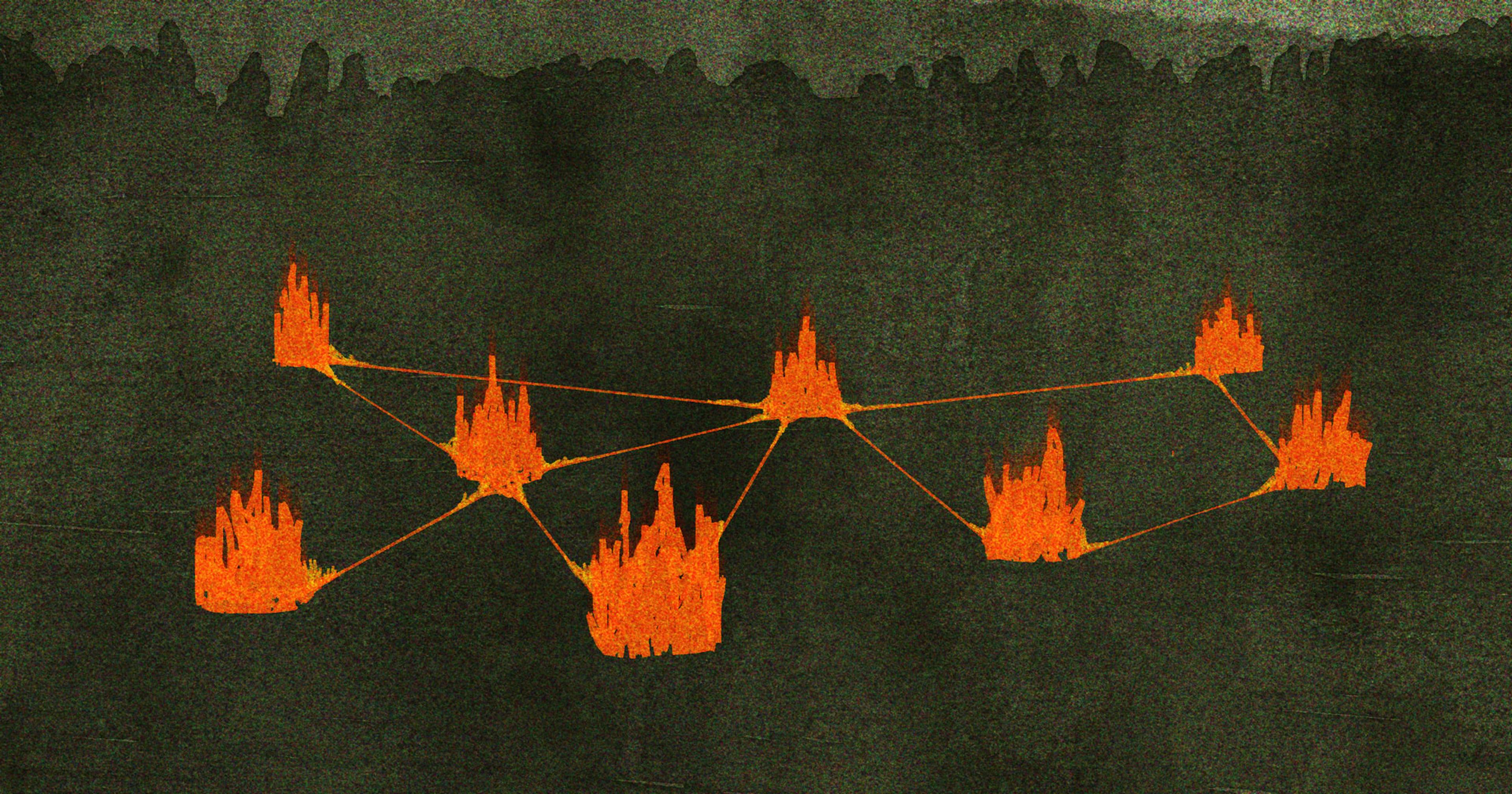
Bridging this resource and support gap is a collection of organizations known as Prescribed Burn Associations (PBAs). Carrying on communitarian traditions like corn husking bees, barn raisings, and penny auctions, these grassroots organizations allow farmers to share the load of burning one another’s land.
Before the advent of PBAs, numerous barriers prevented private landowners from adopting prescribed burns, including the availability of training, equipment, and labor. In the 1990s, Oklahoma extension specialist John Weir was considering these constraints while reading an article in Beef Magazine. The topic was Ranch Improvement Associations, a type of burning cooperative employed in California before Smokey Bear’s scorched earth campaign nearly killed prescribed burns in the U.S. Thinking a similar model would be useful for addressing issues facing Great Plains ranchers, Weir revived the concept and began promoting it to landowners from Nebraska to Texas.
The core idea of a PBA is a network of neighbors, mainly landowners, working together to pool equipment, organize group trainings, and plan and execute burns on one another’s land. While Nebraska would see the first modern PBA, the concept planted its deepest roots in Texas and Oklahoma. Here, the encroachment of woody species like eastern red cedar threatened grassland productivity, galvanizing the rapid adoption of PBAs following John’s crusade. In a 2024 article in the International Journal of Wildland Fire, it was reported that PBAs now facilitate the annual burning of over 84,000 acres, with the average PBA conducting 10 burns a year.
Led directly by landowners, PBAs decide their own goals and membership requirements. Democratic control is more amenable for farmers, who typically prefer to be in charge of any institution conducting work on their land. John Weir told Offrange that when public agencies attempt to steer the activities of PBAs, it can turn ranchers against participating in any form of coordinated burning. “Sometimes you did see a little bit of pushback from some of the federal and state fire people because they have their qualifications and they think everybody should be qualified to that level. . . . For a PBA to work, it has to be a grassroots organization.”
PBAs are here to facilitate, not (ironically) to prescribe.
“Sometimes you did see a little bit of pushback from some of the federal and state fire people because they have their qualifications and they think everybody should be qualified to that level.“
While PBAs have historically been concentrated in the Great Plains, in recent years the model has spread eastward. A PBA just established on Maryland’s Eastern Shore is focused less on land productivity and more on improving woodland habitat. Founding director Kyle Magdziuk described their member profile, which differs quite a bit from the production-oriented ranchers out West. Because landowners in this region are less economically dependent on their forestland, members of the Eastern Shore PBA prioritize wildlife habitat and general conservation, with a particular interest in the Northern Bobwhite quail.
As a newer PBA, formed in 2024, the Eastern Shore PBA has largely been focused on assembling the necessary resources to begin operations. After getting legally incorporated and assembling grants for equipment and insurance, Magdziuk said the organization is ready to begin burning and providing essential habitat for wildlife.
Access to equipment and similar resources is a common constraint for those in the process of establishing a PBA. Badger Johnson, a consulting forester living in Appalachian Ohio, is working to organize a PBA in a region that has been fire-starved for generations — his first goal is working to establish social infrastructure.
In 2025, he hosted several “learn and burns” to stoke interest among the fire-curious and help “get their feet wet” with prescribed fire. After the workshop, he put together a mailing list to keep participants in touch with one another; Johnson hopes that the rapport fostered by the event might one day coalesce into long-term solidarity and collaboration.
Being fairly informal and grassroots, PBAs face a number of challenges. Since these organizations are largely volunteer-run, obtaining the specialized equipment necessary to conduct frequent burns can be an obstacle. Johnson said that being able to rent a UTV and a slip-on pump from a local fire department or conservation organization would go a long way to making his efforts more realizable.
The old age of many PBA members presents questions about how these organizations will sustain themselves as their membership retires.
Overreliance on one or two volunteers is another constraint that has caused some PBAs to falter when a leader steps down. According to Weir, “A lot of the time, the person that takes charge of the PBA is typically a leader in the community, and they’re one of those people that is kind of an overachiever. They’re the president of the PBA, they’re on 2 or 3 other boards, they’re on this or that ... sometimes they can’t say no, they’re good leaders, but sometimes they do get overextended.”
Prescribed fire councils have attempted to fill in some of these gaps. Organized at the state level, these entities, normally made up of natural resource, fire, and extension professionals, don’t direct the activities of PBAs but instead assist in building their organizational capacity. The Oklahoma Prescribed Burn Association, of which Weir is president, was established to assist local PBAs that were struggling with inexperienced local organizers. OPBA funds local coordinators to conduct training workshops and write grants to fund the purchase of equipment.
In other states, conservation organizations are at the forefront of organizing and supporting PBAs. In Missouri, nonprofits like The Nature Conservancy and Pheasants Forever hold leadership positions on the Missouri Prescribed Fire Council and are involved boosters of the movement. Through the Council, both organizations work to educate landowners on the economic benefits of fire and to provide administrative support in setting up new associations. During the formation period, they also bring in local fire departments to observe the process. Seeing the training and planning processes PBAs undergo helps officials feel more comfortable with amateur burns in their jurisdictions.
The old age of many PBA members, mirroring a challenge in much of agriculture, also presents questions about how these organizations will sustain themselves as their membership retires. However, there are PBA’s that have worked out models to fight this trend.
The Eastern Shore PBA, being situated near the University of Maryland and Salisbury University, has numerous wildlife and environmental science students nearby who are eager to gain experience conducting burns. Drawing from these populations provides a flux of manpower, allowing the PBA to take on more frequent and larger burns. But even for associations that aren’t lucky enough to sit within a sea of students, PBAs are able to find a use for everyone willing to help. Weir pointed to a couple in their 80’s who drive around burns on their UTV, keeping watch for flare-ups and distributing water and fuel to the younger guys managing the burn.
“There’s strength in numbers, you know? I can get it done safely if I have my neighbors here by my side, helping me do this.”
Some problems are proving more sticky, however. Tell Deatrich of the Loess Canyon Rangeland Association told Offrange how drier grasslands, a trend linked to climate change, are reducing the number of burn days available to their crew. “All of our young guys are covering more country,” Deatrich told me. Worried about burnout and being overstretched by a more constrained calendar, the association is considering adopting larger burn units. While they now average around 2,000 acres, with their largest burn to date being in the 3,500-acre range, there is talk of going up to 8,000 acres.
There are drawbacks to this approach, however. Burns of that size approach the scale of some ranches, leaving little space for livestock as the land recovers. Additionally, larger burns could be playing with fire, the metaphorical kind. While the LCRA has a near spotless safety record, the recent Plum Creek Fire in northern Nebraska (which claimed over 7,000 acres, a cabin, and 45 head of cattle) was in part the result of poor burn practices. With the public just now warming to the idea of prescribed burns, one conservation official told Deatrich the escape “set prescribed fire back 20 years.”
But at the same time, by bringing more fire to the countryside, PBAs are showcasing the benefits of prescribed burns to their neighbors, be they producers or members of the public. This can stimulate interest in the practice and subsequent interest in PBAs. “One unforeseen benefit is just stronger relationships with neighbors. People see each other more often, and it’s easier to get along when you have that kind of community when you see them, and you get to know them.” Weir, the guy who started it all, agrees. “There’s strength in numbers, you know? I can get more done. I can get it done safely if I have my neighbors here by my side, helping me do this.”