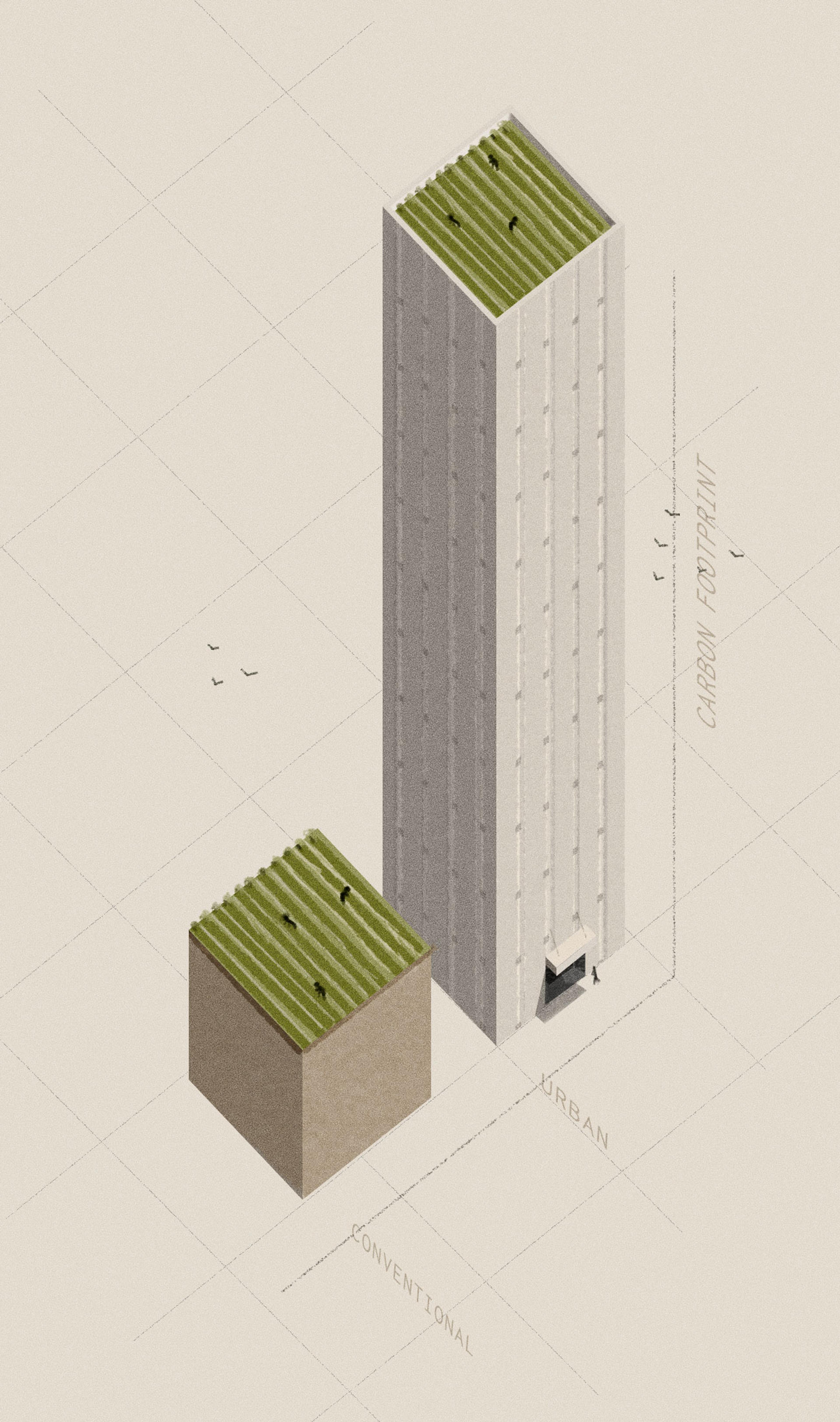
An explosive study came out in 2024, indicating urban farming could be six times worse on carbon emissions than conventional ag. The study authors would like a word.
Urban agriculture is often invoked as a vital step in creating self-sustaining cities. Allowing urban areas greater control over their food supply makes city dwellers less dependent on imported food, and routes that could be disrupted by political conflicts, climate events, or public health emergencies like Covid-19. (Beef prices in U.S. grocery stores jumped 9.6 percent between April and May of 2020.)


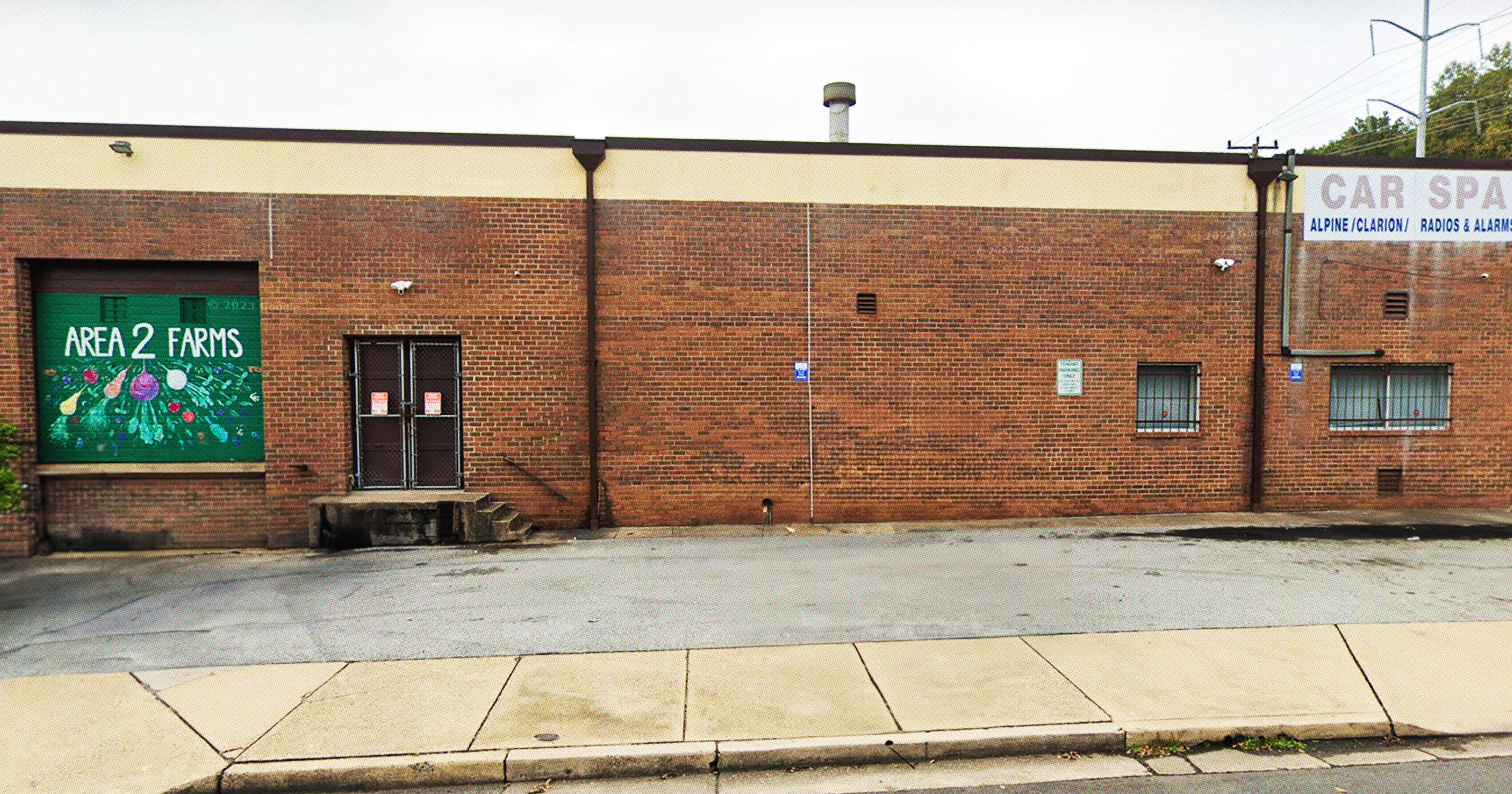
However, though the social and nutritional benefits of urban agriculture are well-documented, its carbon impact is a notable gap in the literature. In addition, most studies around urban ag have focused on high-tech indoor operations, which include aquaponic tanks, vertical farms, and rooftop greenhouses. Low-tech urban farming, accessible to a broader cohort of growers, has yet to be the recipient of much research.
But a March 2024 study in Nature Cities led by Jacob Hawes and Benjamin Goldstein at the University of Michigan found that fruit and vegetable crops from low-tech urban agriculture — open-air and soil-based — could have up to six times the carbon footprint of their conventionally grown analogs. The study aggregated data from 73 farms across France, Germany, Poland, the United Kingdom, and the United States, gathered by citizen scientists over a two-year period.
According to the paper, the food at urban agriculture study sites emitted on average 0.42 kilograms of carbon dioxide equivalents per serving, compared to the 0.07 kilograms of carbon dioxide equivalents produced by growing conventional produce.
The results were counterintuitive to some degree — inviting sensational headlines and fevered discussion in ag forums. What the initial rash of attention often missed, however, was that the study actually supports urban agriculture as a way to keep emissions down — by keeping city grow spaces in existence longer, and by carefully selecting what to grow, and how to grow it.
The Study Methods
The researchers studied three types of low-tech urban agriculture: urban collective gardens, a communal space managed by a group of people; urban individual gardens, which is a single plot managed by a single gardener (or household unit); and urban farms, which are sites focused on food production and managed by professionals. They compared the average carbon emissions per serving of fruits and vegetables produced in these gardens to the carbon emissions of their conventionally grown analogs.
The term “conventionally grown” is the researchers’ shorthand for the average emission of a crop found in a typical grocery store; conventionally grown crops are typically produced in large, monocropped fields — but not always. The researchers used data from the Food and Agriculture Organization of the United Nations to identify the main geographic sources of a crop and computed a weighted average of the carbon footprint of a crop shipped from those sources.
Conventionally grown crops are typically produced in large, monocropped fields — but not always.
For instance, 96% of onions in German supermarkets are grown in Germany, Spain, and the Netherlands. The researchers approximated the carbon footprint of a typical onion in a German supermarket by taking an average weighted by percent of sales of the carbon footprint of the onions grown and shipped from these three countries, then comparing that value to the onions grown in German urban agriculture sites.
Inputs to the urban agriculture sites were classified in three main categories: infrastructure, the material used to build the gardens; material used to grow crops, such as fertilizers and compost; and irrigation water. The researchers quantified the carbon footprint of the wood for the raised beds, steel for the wire netting, and other equipment using EcoInvent, a database that tracks the lifecycle emissions of materials — the total greenhouse gas emissions of a material from its extraction all the way to its disposal or recycling.
Blame the Infrastructure
The key component that raised the average emissions of low-tech urban agriculture was infrastructure. Gardens tend to exist for years, not decades as conventional farms do. An urban garden may rise out of a demolished lot; the equipment used to demolish the garden is associated with emissions. Then the urban garden might be converted in a matter of years to developments, especially for cities weighing the tradeoffs between a garden and a higher-value housing complex. All this means that the emissions of the demolition equipment and garden material gets tacked onto the per-serving footprint of the crop.
“This article and many others have really emphasized the importance of land tenure,” Hawes said. “Most investment is upfront in infrastructure.”
The other main finding was that many common vegetables such as potatoes experience significant economies of scale. Though all forms of urban agriculture are on average more carbon-intensive than conventional agriculture, only the urban collective gardens and urban individual gardens exhibited statistically significant differences; in fact, most urban farms had comparative carbon intensities to conventional farms.
The reason is that large-scale farming could require less per-unit agricultural input than small-scale farming. Beans, carrots, lettuce, onions, and potatoes all followed this trend. However, tomatoes exhibited comparable emissions to conventional agriculture due to the latter’s growing methods (typically, carbon-intensive greenhouses) as well as suboptimal distribution patterns. For perishable vegetables that are typically flown in internationally, such as asparagus, the results from individual gardens show little difference from conventional methods.
“The real things that make [conventional emissions] a problem is if you have highly spoilable products flown in from Chile,” Hawes said. “At the end of the day, most train and truck transport are pretty efficient relative to production processes we use for food commodities.”
What the Coverage Missed
Hawes points out the initial response to the study neglected to highlight the researchers’ implications and recommendations. For instance, one way to lower the average per-serving carbon footprint of urban garden-grown vegetables is simply to ensure the longevity of the community garden. Normalized for the years they’ve been in existence, the per-unit carbon footprint harvest contribution of those raised beds, fences, and sheds will drop off proportionally. Also, the carbon intensiveness of vegetable planting is highly correlated with growing methods. A climate-conscious urban gardener can choose to grow crops that already are on average more carbon-intensive in conventional methods — such as tomatoes — to minimize the emissions tradeoff.
“The study itself has internal trade-offs,” he added. “A lot of urban agriculture sites are organic or mostly organic. There’s an important benefit from an environmental standpoint that’s being traded off with, say, if you buy a bunch of wood from Home Depot to build your beds.”
Some argue that vegetable emissions aren’t the primary axis by which community gardens should be evaluated.
In addition, some argue that vegetable emissions aren’t the primary axis by which community gardens should be evaluated. “There are a lot of cobenefits of urban agriculture — social, emotional, educational,” said Nevin Cohen, study co-author and associate professor in the CUNY Health Policy and Management Department.
For instance, a group of researchers at the Technical University of Munich discovered in February 2024 that urban gardens preserve native plant biodiversity. In Berlin, the number of wild species found in community gardens over a two-year period corresponds to 23% of the total wild species on the city’s Red List of threatened, endangered, and extinct native plants.
Looking Ahead
To reduce the carbon impact of urban gardens, recommendations by the researchers include investing in the circular economy, reducing synthetic nutrient inputs, and relying on compost and graywater recycling. Some sites cut their emissions by more than 52% by upcycling materials for garden infrastructure such as raised beds. Making use of city compost also helps; this reduces reliance on synthetic fertilizers. Many community gardens will offer a compost program or a “compost hour” for locals to bring compost and volunteers to break it down, and gardeners can use the compost for their plots.
“Urban agriculture is not just the urban, smaller-scale version of conventional agriculture,” said Cohen. “It provides different benefits and operates in a different way, with a completely different infrastructure.”
Civilian science is difficult, relying greatly on sustained, reliable participation. Still, Hawes believes there was a strong appetite among study participants for understanding low-tech urban agriculture. In particular, the gardeners of the sample in his study indicated environmental sustainability as the most common motivation for growing food.
“Urban agriculture is not just the urban, smaller-scale version of conventional agriculture. It provides different benefits and operates in a different way.”
“There are certainly folks who would argue that we missed the point with our article — who would say the point of urban agriculture is to reconnect people with the land, give equal opportunity to get affordable vegetables, and allow immigrants to grow food that they can’t get at the grocery store. We can walk and chew gum at the same time, we should be able to accomplish … all these things,” said Hawes.
As for connection to the land, David Gauch, a member of Greene Acres Community Garden in Brooklyn, New York, mentioned that the garden personally became a “catalyst for deeper community involvement.” In 2025, he helped organize the first block party on Greene Ave in 20 years, and has begun to work with long-term residents to revive a dormant block association that will act as a go-between for neighbors and the city council.
“Many gardens focus exclusively on plots and production, which is valid, but I believe gardens are at their strongest when they also serve as welcoming, accessible spaces for the broader community,” he said.