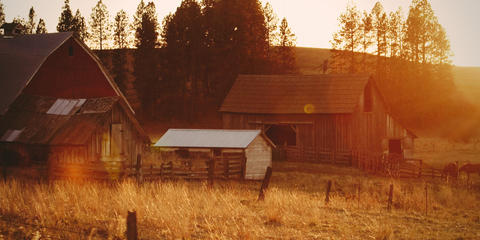
Massachusetts Agricultural Preservation Restriction Program (APR)
It is essential to keep the agricultural industry in Massachusetts thriving. The APR Program helps to preserve agricultural land to keep valuable farmland soil from being built on by development companies for non-agricultural purposes that could be detrimental to the environment. The program offers to pay farmland owners the difference between the "fair market value" and the "agricultural value" of their farms in exchange for a permanent deed restriction which prevents any use of the property that will negatively impact its future agricultural viability.
It is a voluntary program for farmers who are faced with a decision regarding the future use of their farms. The main objective of the APR program is to protect productive farmland with the deed restrictions and revitalize the agricultural industry by making land more affordable to farmers and their operations more financially secure. The program accepts applications on a rolling basis, but applications submitted before the current deadline will be considered a priority for the next funding cycle.
Eligibility
Landowners with at least five acres of land with suitable soils in agricultural production for the last two years.
Primary Requirements:
-
Farm must be at least five (5) acres in size.
-
Land has to have been actively devoted to agriculture for the two (2) immediately preceding tax years.
-
Farm must produce at least $500 in gross sales per year for the first five acres plus $5 for each additional acre or 50 cents per each additional acre of woodland and/or wetland.
Other criteria considered:
-
Suitability and productivity of land for agricultural use based on soil classification, physical features, and location
-
The degree of threat to the continuation of agriculture on the land due to circumstances such as owner's health, retirement, financial positions, development pressure, or insecurity due to rental agreements
-
The size or composition of the land that determines if it is economically viable for agricultural purposes, and the likelihood that it will remain in agriculture in the future
Details
Tags
Financial Instrument
Easement
Terms
The program accepts applications on a rolling basis. Projects are evaluated on a quarterly basis and are advance subject to available funding.
Application Instructions
APR Program staff are available to discuss the APR application process with you year-round and can explain program requirements so that you can make an informed choice whether the program fits your goals. Enrolling your land into the APR program is a significant decision and process that takes careful thought, planning, and time.
It can take up to one year for submitted applications to receive state and federal approvals to proceed, and up to an additional 1 to 2 years to complete the purchase on the approved applications, so you are highly encouraged to contact staff representatives early in your APR consideration process. ** **Donated APRs can take much less time – a few months to a year total, and have substantial state and federal tax incentives.
Detailed APR program information can be found in the APR Program Guide. See also the listing at the bottom of this page to contact your local APR Regional Planner.
Pre-application Planning
Your APR Field Representative will schedule an appointment to meet with you at the farm property to go over the details of the program, ask you questions about the land and your farming operation, walk the property to observe the productive fields and forest, and discuss any questions you may have. If it is determined that your property fits the requirements of the program, and program details align with your goals as the landowner, the APR Field Representative will provide you with an application to sell or donate an APR for your farmland.
If you have prepared any of the following items, please make sure you have them available for review on the day of the field visit:
-
USDA-NRCS Conservation Plan
-
Forest Management Plan
-
Succession Plan for the property
-
Lease Agreements covering the land proposed for restriction.
-
Fertilization/Reseeding Schedule
If you elect to submit an APR application, the following information will be required. Generally, APR applications are accepted and reviewed on a quarterly basis:
Maps:
-
An aerial photo map showing boundaries of all of your property (tax parcel boundaries). Please also indicate the areas proposed to be included in APR and left out (excluded) areas. Also identify any differences in ownership amongst the parcels.
-
A soils map clearly showing property and APR boundaries, as well as prime farmland, farmland of statewide importance, and/or farmland of local importance. Include calculations of % of these soils compared to the total acreage.
-
A land use map showing boundaries and open active agricultural land use and/ or woods.
-
USGS topographic map showing property and APR boundaries.
-
Any existing full boundary survey (if known).
-
Any additional maps that you may feel helpful can also be included (wildlife and wetland maps, aquifer and water resource maps, public trail maps, etc.) This non-agriculturally related information helps staff determine if APR is the best fit for your goals or if another conservation program may be a better option.
There is an online mapping tool, Mass Mapper, which is available to the public for creating maps. Another online mapping tool is the USDA NRCS Web Soil Survey. Other services for map making include your local USDA Natural Resource Conservation Service office or Land Trust Organizations. If you need assistance with an APR Map Packet, please contact your local APR Field Representative to assist with a mapping requirements.
It is important for you to consider existing infrastructure that will be included for APR program enrollment (barns, utilities, storage, etc). These commercial agricultural structures may be included at the owner’s option. Residential and commercial non-agricultural structures should be excluded, as well as any areas that may be considered for residential or commercial non-agricultural use in the future.
It may also be necessary to exclude portions of woodland, wetland or open land that do not contain productive agricultural soils. This will be discussed during your visit with the APR Field Representative, but you may want to discuss this possibility with family members prior to the visit.
If you are uncertain about possible exclusions, please ask your local APR Field Representative.
Please contact your APR Field Representative listed below to make an appointment:
CHRIS CHISHOLM
Essex & Middlesex Counties, Westport & Dartmouth, and Hampshire County
617-455-9204
RON HALL
APR Program Coordinator
413-726-2002
MICHELE PADULA
Northern Worcester, Franklin, and Northern Berkshire Counties
617-921-0051
JAY ROSA
Southeastern MA, Southern Worcester County, Hampden County, and Southern Berkshire County
857-507-5367
Resources
Related Programs
ACRE3 Agricultural Energy Efficiency
Colorado Department of Agriculture
- GrantCost ShareLoanAlternative EnergyConservationIrrigationStorageGreenhouseCOAny
ACRE3 Irrigation Hydropower Programs
Colorado Department of Agriculture
- GrantCost ShareLoanHydro PowerAlternative EnergyIrrigationConservationWater ManagementEquipmentCOAny
Ag Educator Scholarships (CASE)
Farm Credit East
- EducationGrantEducationTrainingCTMEMANHNJNYRIVT

Aggie Bond Beginning Farmer Loan Program (Aggie Bond)
Minnesota Rural Finance Authority
- LoanBeginning FarmersMNAny
Updated July 23, 2026
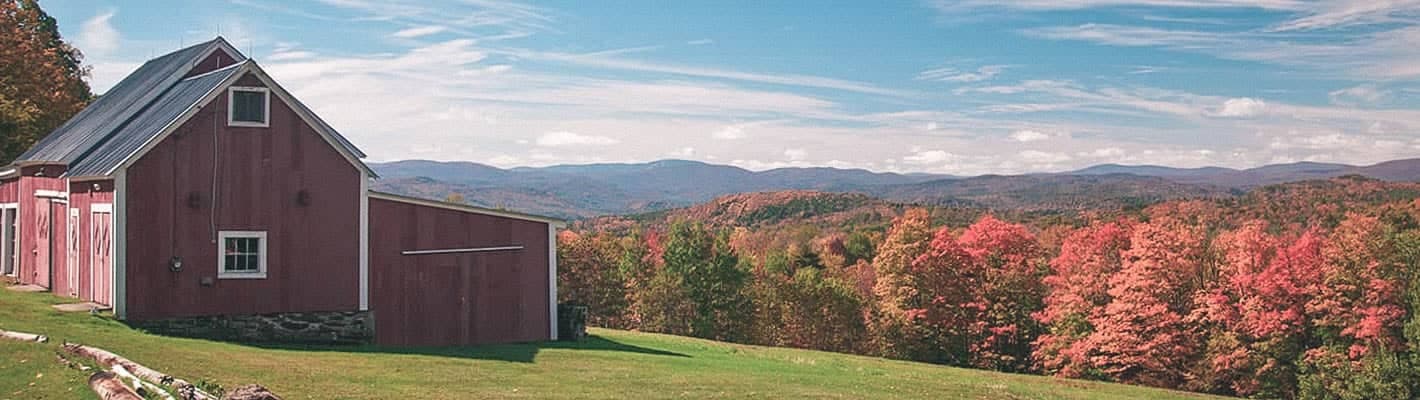
Image Credit: Timothy Eberly
This information was gathered from public sources. Ambrook is not responsible for or able to affect the results of any financial programs listed, nor are they responsible for any incorrect information that is listed or is on the hyperlinked external sites. All information is subject to change.
Explore hundreds more programs on Ambrook.