
Cairnspring Mills has shown that there’s a market for regenerative, regionally sourced grain. Now it’s trying to prove that the model can grow.
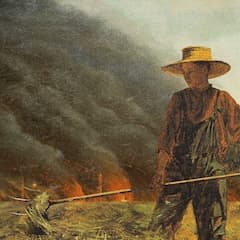
When Woody Guthrie memorialized wheat fields in his 1940 classic, “This Land Is Your Land,” it was an image of the U.S. coming out of the Great Depression, of farmers rebuilding their land after the ecological collapse of the Dust Bowl.

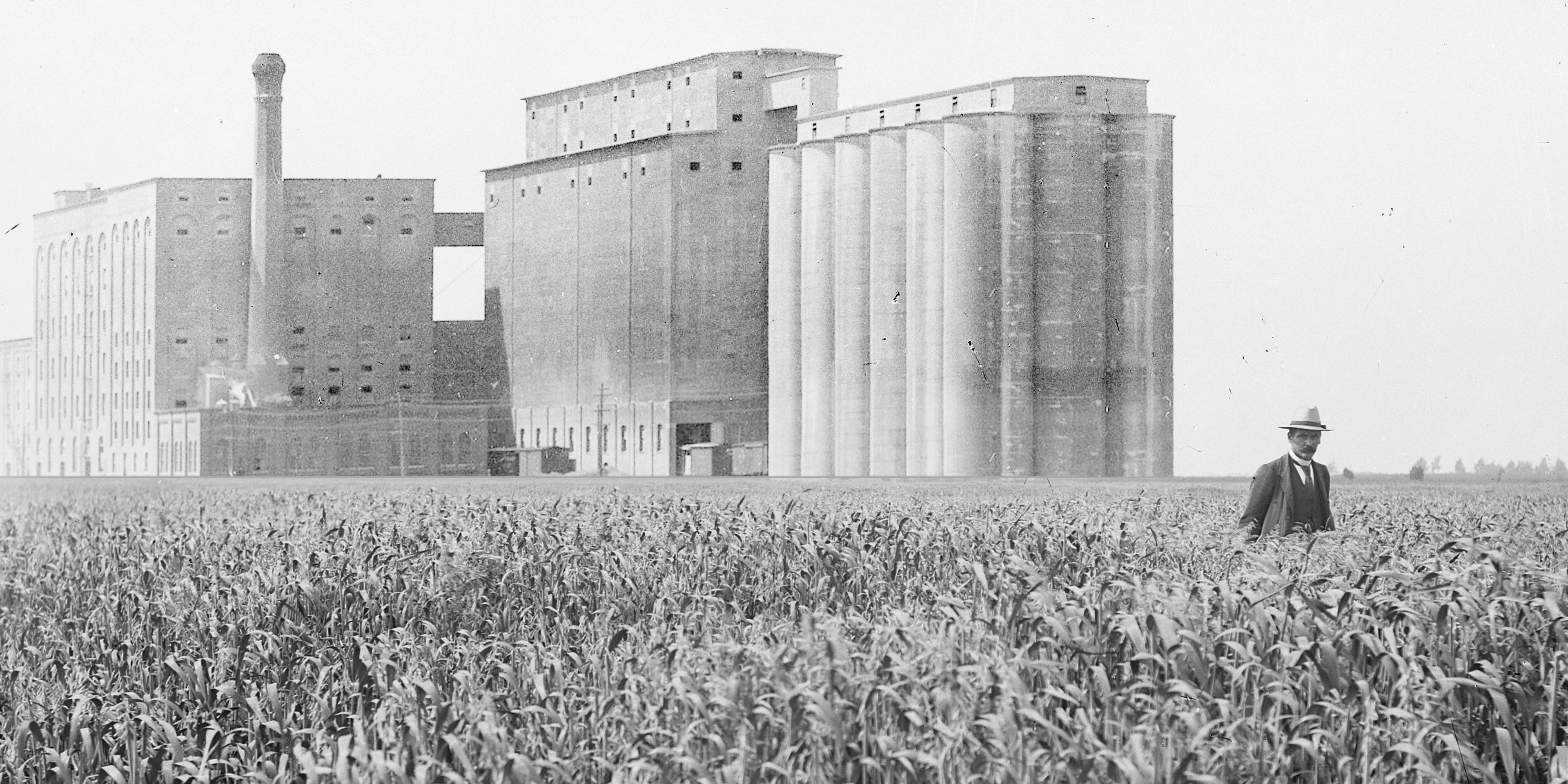

Today, wheat farmers in the U.S. face a different kind of strain. Prices are at six-year lows, while fuel and fertilizer costs are rising. At the same time, extreme weather is making yields unpredictable and further shrinking already-tight margins.
This is compounded by the fact that the U.S. wheat system is built around standardized classes and industrial milling requirements. Because of the commodity structure, prices are determined in bulk, which gives individual farmers little control over what they’re paid.
Some smaller mills are trying to push back, including Cairnspring Mills, located in Washington’s Skagit Valley, about 70 miles north of Seattle.
Opened in 2017, Cairnspring works with about a dozen local farmers, many of whom had been growing wheat at a loss for years, according to CEO Kevin Morse. (The region is home to a wealth of crops, but he said wheat was largely grown to break disease cycles; farmers weren’t able to sell it for a profit.)
Today, the mill processes 7 million pounds of flour a year, bound for some of the most renowned bakeries on the West Coast.
The mill launched with some heavy hitters behind it: Patagonia, King Arthur Flour (whose West Coast Baking School is just around the corner from Cairnspring), and Washington State University’s renowned Breadlab. Those connections undoubtedly made the rollout easier, because while Cairnspring has shown there’s clearly a demand for premium flour, developing an entirely new distribution chain — on top of sourcing the wheat itself — can be a challenge. (Cairnspring sells to restaurants and bakeries, as well as direct-to-consumer.)
“When hard times hit, we’re really vulnerable because of the way the global supply chains work.”
From the outset, the goal wasn’t just to mill high-quality, regenerative flour, but to invest in local farmers and challenge a food system that is often disconnected from where crops are actually grown.
Grain farmers have seen massive consolidation over the last century. In the late 19th century, Morse said there were more than 20,000 wheat, rye, and durum mills. Today, there are around 170, and 21 mills process more than 96% of the grain. Morse said more than 80% of the wheat grown in Oregon and Washington is ultimately sent to Asia.
“The centralization of our food processing extracts all the value from the communities because they put people in a commodity system,” Morse said. “But, when hard times hit, we’re really vulnerable because of the way the global supply chains work.”
This has become especially pronounced in recent months. Roughly a third of the world’s fertilizer shipments pass through the Strait of Hormuz, which has been largely closed since the war with Iran began. Fertilizer prices have spiked as a result, adding more challenges for farmers who are already struggling with tariffs and global supply chain issues, says Andrew Ross, a professor at Oregon State University who specializes in wheat and barley.
With so many farmers in dire straits, Ross said it’s beneficial when companies or collectives start to shift people’s approach to the extractive commodity system. “Just having people think about alternative ways of sharing profits, sharing prosperity, being gentler on the soil, these things do percolate through the rest of the community.”
***
Cairnspring’s capacity is about to significantly expand. This fall, it will open a new mill near Pendleton, Oregon, which will have 10 to 12 times the capacity, able to process 110 million pounds a year.
The new Blue Mountain Mill is located on Tribal land of the Confederated Tribes of the Umatilla Indian Reservation (CTUIR). When it opens in the fall, it will add around 22 new jobs and more than double the farmers that Cairnspring sources from (going from 12 to about 30).
All of its farmers use regenerative practices, which include things like crop rotations, animal integration, cover crops, and low- or no-till. Cairnspring is also helping farmers reduce chemical inputs. (Regenerative farming limits chemical fertilizers, while organic farming eliminates it entirely; Cairnspring sells both organic and conventional flour.)
“We do everything we can to flatten the learning curve, reduce costs, and make it economically viable.”
“We’re trying to meet the farmers where they are and bring both a market incentive and technical assistance [so they can] drastically reduce chemicals,” Morse said. “We do everything we can to flatten the learning curve, reduce costs, and make it economically viable.”
That will continue with the new mill. Bill Tovey, director of economic development for the CTUIR, said farmers in the tribe have been no-till for decades, but it can be difficult to stop using chemical fertilizers. “Cairnspring has been really good at saying, ‘OK, here’s where you are now. Let’s see what steps you can take to become more regenerative,’” he said. “That’s been very helpful for the community. It will be wonderful to have a local mill producing regenerative grain.”
Ross said regenerative practices are becoming increasingly mainstream, especially as geopolitical conflicts cause input costs to rise. He said more commodity farmers may start to look at those techniques as a way to bring costs down. “Their margins are so razor thin, they’re going to have to find other ways of doing things.”
***
When Morse decided to expand Cairnspring several years ago, he said he visited 20 sites in the region before ending up on the Umatilla Reservation. “I knew it was the right property when I stepped onto it.” He spent three years raising a little more than $50 million in financing for the new facility. But last summer, when he’d raised about 95% of the money, “the economy started getting weird, and people started holding their checkbooks close.”
He still needed about $5 million, especially if they were going to start construction in August as planned. This was further complicated by the fact that his other investors didn’t want their checks cashed until he was at 100%. “The system really isn’t set up to finance us.”
He approached Tovey about a possible bridge loan. Tovey connected with Ted Piccolo, who runs the Indigenous Futures Fund at Mission Driven Finance. Together, the two groups came up with what Morse needed — and then some. “I can honestly say they probably saved the project by keeping us on schedule,” Morse said.
Piccolo, a member of the Colville Confederated Tribes in Eastern Washington, has two decades of experience working with and leading Native CDFIs. He said that over the years, investors would put money into projects on tribal land, but his CDFIs — which operated with much lower budgets — weren’t included. “We never got the call,” he said. “It was always an outside lender, and none of them lived on the reservation. It was another form of extraction.”
The deal with Cairnspring — and the work Piccolo does more broadly with the Indigenous Futures Fund — is intended to counter that. While the CDFIs on their own didn’t have enough capital to meaningfully work with Cairnspring, together, it was a different story: Nine of them provided a $9 million loan, which was instrumental for the Blue Mountain Mill. (The CTUIR also invested and now has about 14% ownership.) This isn’t just a boon for the tribes, which will see returns on the loan, but the deal also served as a proving ground for other tribal projects in energy and agriculture that Piccolo is putting together financing for.
“What’s needed, and hopefully what we’re inspiring, is a capital and finance system that can do this faster and at scale.”
Morse said Cairnspring is talking with another tribe that’s interested in a flour mill on its land and has already completed a feasibility study. And the momentum is growing even beyond tribal lands. “We literally had a small flour milling company come to us and say, ‘Look, we’re just copying you, we’re telling your story,’” Morse said.
While the craft flour movement is still in its infancy, he said that over the last five to seven years, consumers increasingly want to know where their food comes from and how it’s grown. This demand is helping to drive the new mill — Morse said they already have customers in place for much of the flour — as is a push from investors who tell him, “I just want you to change the food system and show the world that we can do something different.”
Both Morse and Ross cited other small mills across the country that are serving their communities, including Camas Country Mill in Eugene, Oregon, (which was an early investor in Cairnspring); Capay Mills in the Sacramento Valley; Grist and Toll in Pasadena; Southern Ground, in Asheville, N.C.; Farmer Ground Flour in New York’s Finger Lakes; and Barton Springs Mill in Texas. While most are smaller operations right now, Morse said many of them are trying to scale up and he’s helping where he can. “It’s a $23 billion market,” he said. “There’s lots of room.”
Historically, wheat hasn’t grown as well in certain regions because of disease and mycotoxins, but universities are increasingly working to breed varieties that grow under specific conditions, just like WSU’s Breadlab is doing for wheat in the Northwest. This could broaden opportunities even further.
In the meantime, Cairnspring is already eyeing more expansion plans. “We have a vision of maybe three to five mills in strategic locations across the country,” Morse said. “The mill in the Southwest could also be doing heirloom Mexican corn or durum.”
But in order for this to happen — and for a larger shift to take place in U.S. grain milling — Morse said funding mechanisms have to change. “It’s really capital intensive to build a bigger mill,” he said. “That’s why it’s so hard to break into this space. And it’s sad, because there’s the demand. What’s needed, and hopefully what we’re inspiring, is a capital and finance system that can do this faster and at scale.”