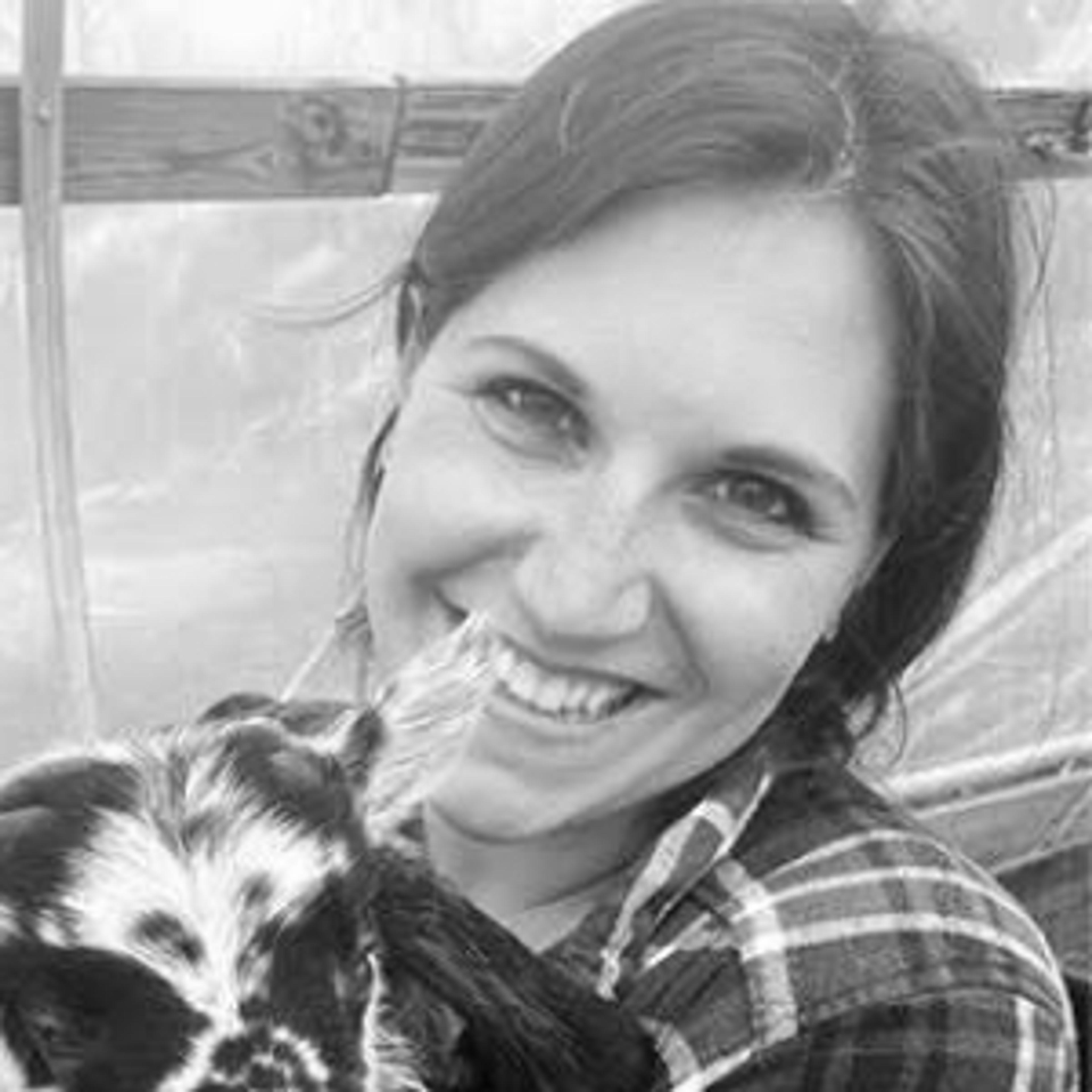
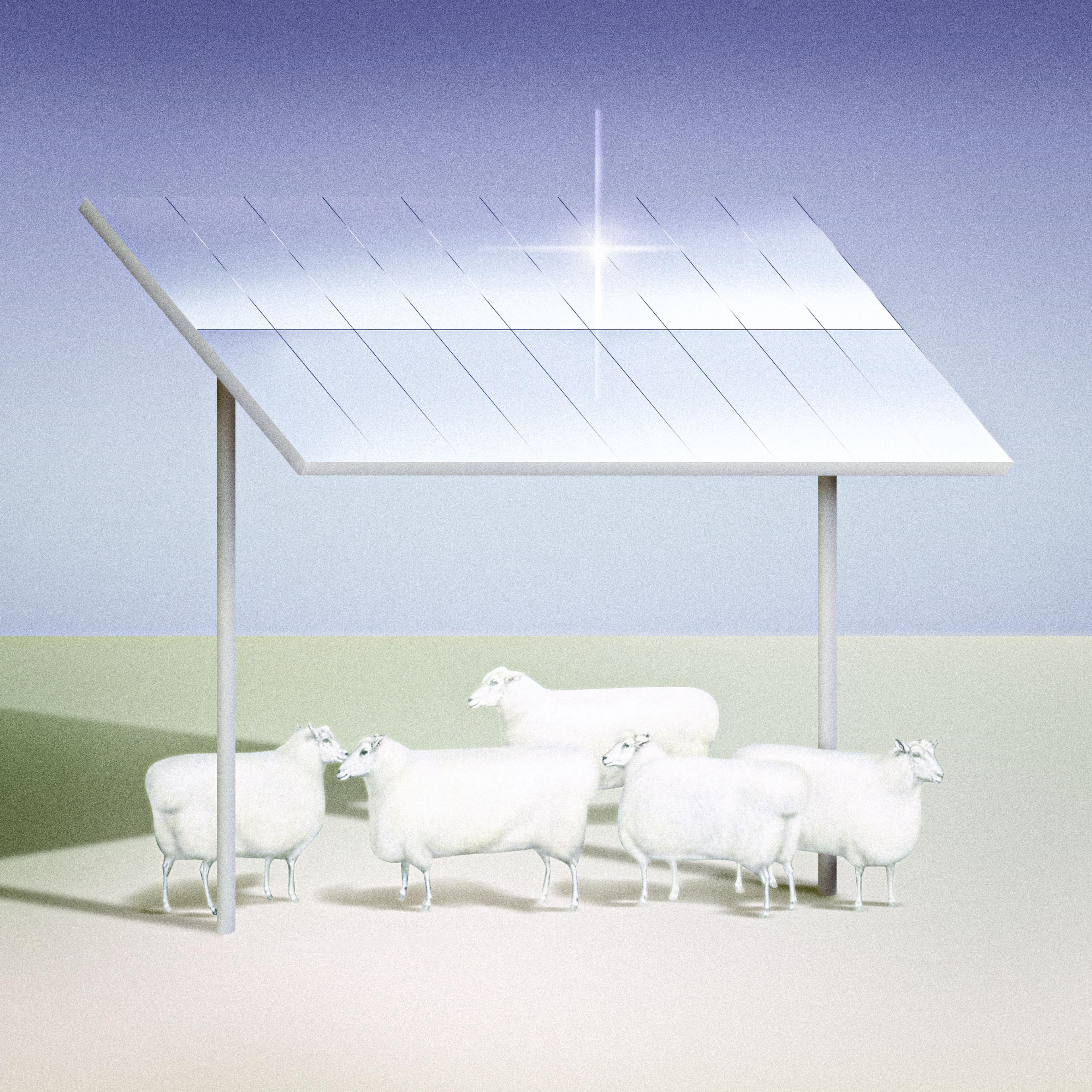
Sending our flock to graze on eight different solar farms is the best business decision we’ve ever made.
This Perspective piece does not necessarily represent the views of Offrange or Ambrook, its parent company.
If it ain’t broke, don’t fix it.
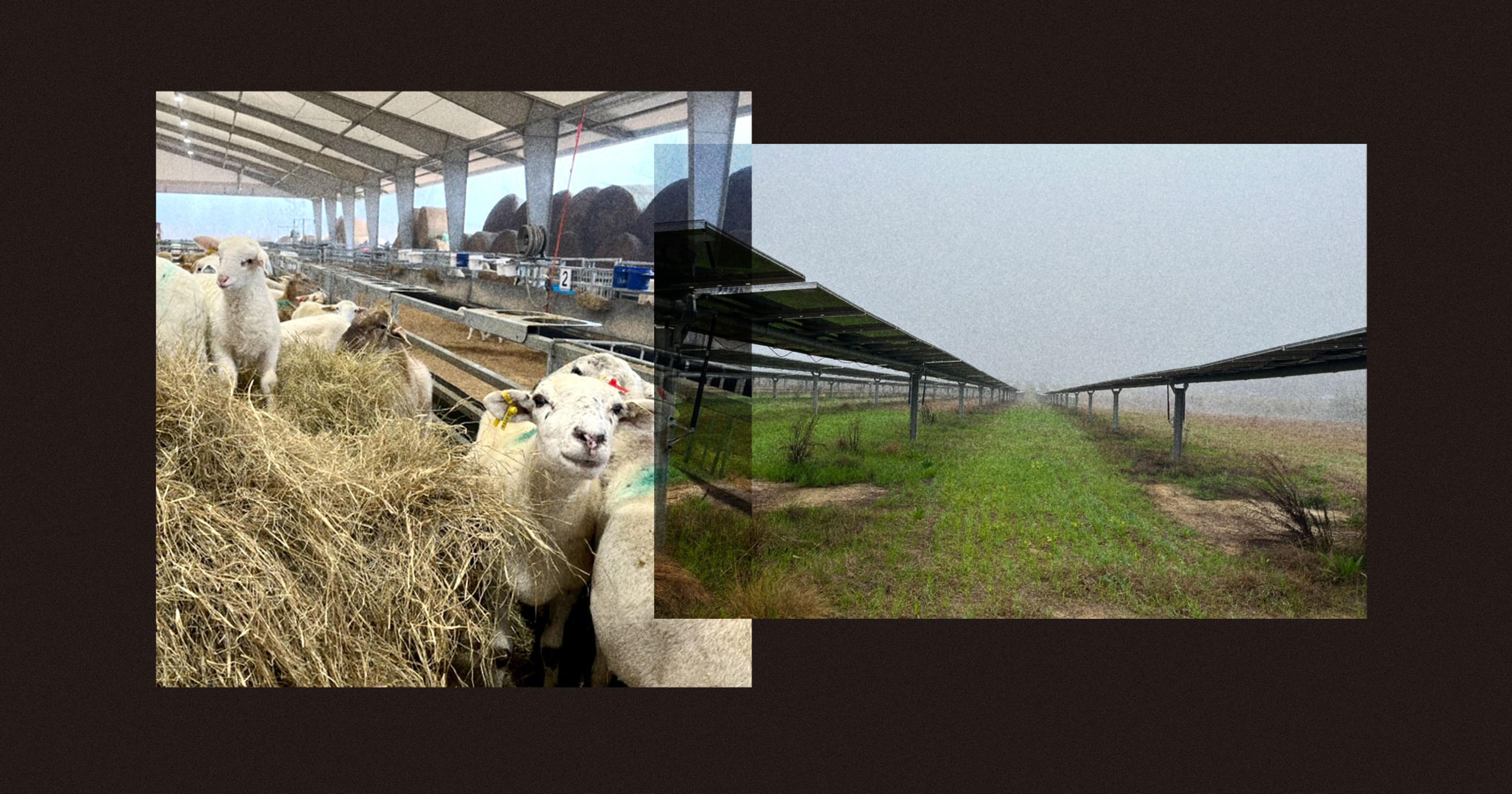
Farmers are known for their steadfast adherence to tradition: for their grit, ingenuity, and an almost stubborn ability to make things work with whatever’s on hand. Duct tape. Baling twine. A general willingness to “figure it out.”
But agriculture itself is under enormous pressure, to the point where even duct tape may not help (yes, I said it).
Agriculture has always been a challenging industry, but in 2026, it’s become something else entirely. Farmers are up against an unending onslaught of low commodity prices, high production costs (nitrogen fertilizer costs jumped 30% in April alone), and crippling debt.
More than 80% of American farmers now rely on off-farm income just to stay afloat. We’re in crisis mode, and we need a fix. For us, that “fix” looks like several hundred hair sheep, grazing not at home on our small, 22-acre plot of land, but at solar farms in four neighboring counties.
We own J&R Pierce Family Farm, LLC, a solar grazing operation just north of the Adirondacks in New York. Like many first-generation farmers, we started small, with a goal of raising livestock regeneratively and selling locally. And like many others, we hit a wall: land.
Pasture access is one of the biggest barriers in agriculture. Roughly 28% of U.S. farms operate on rented land, and for graziers, expanding acreage without taking on suffocating costs is nearly impossible. That constraint is what led us to our first solar grazing contract in 2022. What started as a stopgap solution quickly became the backbone of our entire operation. We now graze eight sites on farmland leased to solar companies, using sheep to manage vegetation beneath the arrays.
There’s a largely untrue narrative that solar development takes agricultural land out of production, forever. It doesn’t. Unlike housing developments or retail builds, solar projects in 35 states (as of 2025) require some form of decommissioning plan. For several states, including New York, developers must fund surety bonds to ensure the farmland is restored at the end of the project’s life.
We’re producing two outputs from the same acre: food and power.
And while we’re paid by solar developers to manage vegetation (keeping grasses from shading the panels), we’re also improving the land beneath them. Through managed rotational grazing, we’re rebuilding soil, reducing erosion, and increasing carbon sequestration, by as much as 65% compared to conventionally farmed land. This model of farming alongside energy production is called agrivoltaics, also referred to as “dual-use” agriculture. I tend to use the broader term “agri-energy,” because it captures what’s really happening. We’re producing two outputs from the same acre: food and power.
There are three primary models of agrivoltaics that farmers can pursue, each offering unique benefits and challenges.
The first is the relatively straightforward landowner lease model. A farmer leases their property to a solar developer and earns consistent income (often $1,000 or more per acre annually) for 20 to 30 years. Many farmers are “land rich and cash poor,” holding substantial illiquid assets but little cash for day-to-day expenses or retirement. For these individuals, these leases can mean the difference between holding onto land and being forced to sell it.
There’s an assumption here that, after leasing, the landowner will have to step back from farming and that once-productive farmland will now lie fallow. Yet a farmer can also continue agricultural operations among the panels themselves, if they wish to continue farming, or, if they’re ready to retire, can work with the solar developer to bring in another agricultural operator through a second model of agrivoltaics.
This second model is the one we operate under: the tenant-farmer or service-provider model. In this arrangement, the solar company hires us to graze sheep beneath and around the panels as a form of vegetation management. Solar sites need grasses and weeds kept under control so they don’t shade the panels or create fire or maintenance risks. Traditionally, that work was done with mowers and herbicides, but now, solar companies are increasingly leaning toward grazing and other agrivoltaic models to reduce emissions and erosion, improve soil health, and support broader sustainability goals.
For us graziers, the model completely flips the economics of expansion. No land purchase or lease is required. Rather than “paying to play,” we’re getting paid to use the land instead. It removes one of the biggest barriers in agriculture — land access — while dramatically lowering the financial risk involved in scaling a livestock operation (something especially valuable for young, first-generation farmers).
All of these different models have the exact same outcome: giving control back to the farmer. The very person who deserves it most.
The third option is on-farm energy. In this set-up, a farmer would install solar for their own operation (generally, what’s referred to as “behind-the-meter”), often to power their barns, milking parlors, irrigation, processing, what have you. It reduces energy costs and eliminates dependency on external utilities, while also hedging long-term operational risks.
All of these different models have the exact same outcome: giving control back to the farmer. The very person who deserves it most.
In the conversation about renewables on farmland, it’s easy for the debate to flatten into absolutes. Critics worry, sometimes understandably, that large-scale solar development could remove productive farmland from food production, disrupt wildlife, and push decisions about agricultural land further away from the communities most affected by them. Some projects of the past were poorly planned, and not every solar development deserves blanket support simply because it produces renewable energy.
Nor is every acre the right acre for solar. Not every project is designed well enough to support meaningful agricultural use. Poor siting, weak community engagement, and developments that treat agriculture as an afterthought deserve scrutiny, especially in rural communities that have already seen family farms disappear at an alarming pace. We’ve lost more than 150,000 farms in just five years. The average farmer is nearly 60 years old.
Those same concerns, however, are what ultimately serve as the bedrock for my support of agrivoltaics. Conversations around farmland preservation tend to circle back to the same mantra: “We can’t take prime farmland out of production.” These arguments, though well-intentioned, ignore the realities facing the people who actually own and work that land.
Farmland doesn’t remain farmland simply because we want it to. It’s preserved if, and only if, farmers can afford to keep farming it. For many families, a solar lease provides enough stability to avoid selling off acreage for permanent commercial or residential development. For others, agrivoltaic models create a way to keep the land actively producing food while generating additional income streams to make the operation financially viable.
Critics are also right to caution against treating agrivoltaics, or renewable energy more broadly, as a climate cure-all.
I’m not just talking about existing farmland here, either. Because of the soil-building qualities I wrote about earlier, this unique method of farming beneath the panels can also create new farmland where there was none. If we want economies that are fully circular and less vulnerable to the impacts of overseas wars, strait blockages, and tariffs, agri-energy is the way to go.
In the U.S., we import more than 50% of the lamb we consume, despite having the land and capacity to produce it domestically. Agri-energy helps close the gap, producing food and energy locally. Often better-quality food, too: Solar not only increases forage quality and water efficiency but also produces feed with higher crude protein and better digestibility.
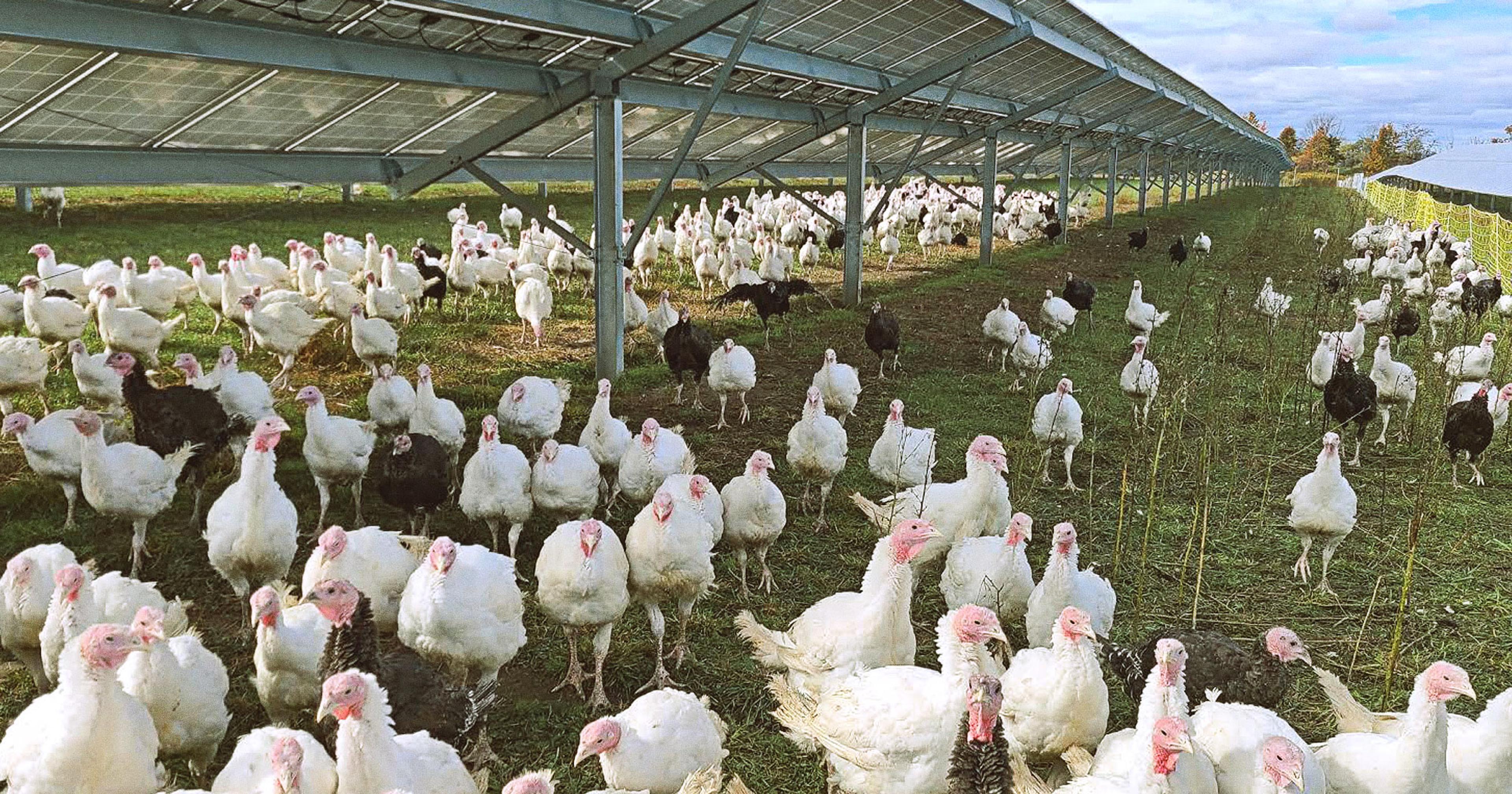
It’s not just sheep, either. Although sheep are largely considered the “plug and play” option for solar (their small size means they duck easily beneath the panels and aren’t interested in jumping on the arrays or chewing on wires), they’re far from the only choice. Cattle grazing under solar, charmingly dubbed “cattlevoltaics,” is expanding rapidly, with research underway at institutions like Cornell and Rutgers. Early research has been promising, suggesting that some sites may need taller panel heights, while others can support cattle grazing through smaller breed selection, rotational management, or strategic fencing.
Crops ranging from hay and grains to fruits and vegetables are being successfully grown under and around panels, with benefits from frost protection to shade to water conservation stacking up before our eyes.
We were once told by another farmer that we were “cheating” and “taking all the risk” out of farming by doing so under solar. Agri-energy doesn’t remove the risk, nor is it perfect. Raising livestock is still an inherently risky business. And there are plenty of places in the U.S. where solar development, especially agrivoltaics, is very much uncharted territory, with few regulations and limited incentive support.
Agrivoltaics isn’t perfect, and it doesn’t eliminate risk. Farming will always carry risk.
Critics are also right to caution against treating agrivoltaics, or renewable energy more broadly, as a climate cure-all. Sheep, like all ruminants, produce methane, and agrivoltaics shouldn’t be used as a blanket justification for endlessly scaling livestock production without considering those emissions. We still need more research around that emissions accounting, along with infrastructure design and other long-term ecological impacts.
But the relevant comparison isn’t between agrivoltaics and some hypothetical zero-impact agricultural system. I don’t think such a system exists. Nor do I think we should remain stuck in a holding pattern of moratoriums and legislative delays while waiting for perfect data to emerge.
Because the real comparison here is one between dual-use agricultural land, and the alternatives farmers currently face: farmland leaving production entirely, vegetation managed with diesel-powered machinery and herbicides, or acreage sold for permanent commercial and residential development.
These agri-energy systems still require intentional design. Many existing solar sites weren’t designed with agriculture in mind, which can limit what’s possible (beyond sheep). Integrating larger livestock or certain crops may require higher upfront costs, like taller racking systems or wider spacing. And there’s still a lack of standardized best practices, which means outcomes can vary from site to site.
There’s also a learning curve. Grazing sheep on solar isn’t as simple as dropping them off in the spring and picking them up in the fall. It requires infrastructure, coordination, and real management. And yes, yields can sometimes be reduced. But that’s the wrong metric. If your yield per acre drops, but your income per acre doubles or triples because you’re now harvesting two crops (say, solar power and strawberries), the system works.
Agrivoltaics just might be the bit of baling twine and duct tape American agriculture needs to keep moving forward.
Where there’s a will, there’s a way. Farmers don’t need saving. They need options. Agrivoltaics is one of the first that actually works. We’ve got to stop with the tired adage of “solar takes farmland out of production” because these aren’t either-or prospects. They’re “this, and also…”
For many rural communities, opposition to solar is not simply a matter of energy policy, or even food policy. It’s about identity, stewardship, and the fear of losing the landscapes that have been shaped by generations of farming families. I understand that fear. Agrivoltaics doesn’t look like the farming many of us grew up with.
But neither did robotic milking parlors, GPS-guided tractors, or precision agriculture when they first appeared. Agriculture has never been static. Farmers have always adapted to new technologies, new markets, and new realities in order to survive. Agrivoltaics may change how farmland looks, but it also creates an opportunity for farmland to remain actively worked, locally owned, and economically viable in places where traditional models are failing.
And ultimately, those decisions should remain with the people who know the land best: the farmers and landowners themselves. Rural communities deserve a voice in how projects are developed, but farmers also deserve the right to decide what combination of agriculture, energy production, conservation, and business strategy allows them to keep hold of their land in the first place.
Agrivoltaics isn’t perfect, and it doesn’t eliminate risk. Farming will always carry risk. But it brings that risk closer to what other industries consider normal: manageable, predictable, survivable. It just might be the bit of baling twine and duct tape American agriculture needs to keep moving forward.