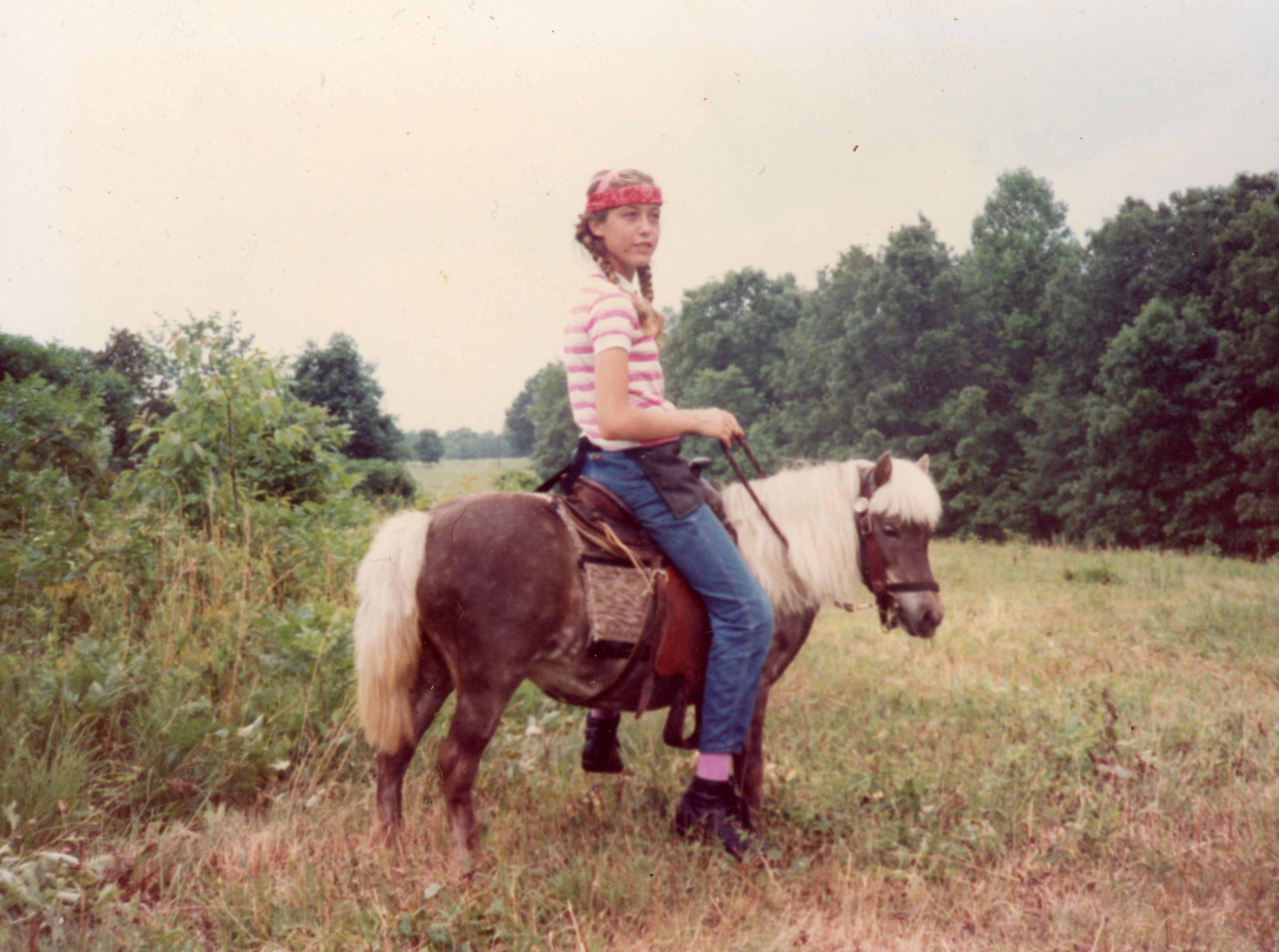
Growing up on the world’s largest hippie commune, my mother received an unorthodox education in caring for the land.
In the early 1980s, when she was nine years old, my mother moved into the Single Fathers’ House. Her own single father, Randy, had just helped build it. The house was a ramshackle affair, its uneven walls finished with tar paper, an outhouse slouching in the forested yard. The interior was roughly furnished with odds and ends, and the small bedrooms were divided between half a dozen families—fathers and their sons, almost exclusively. My mother and her younger sister were the only girls in residence.
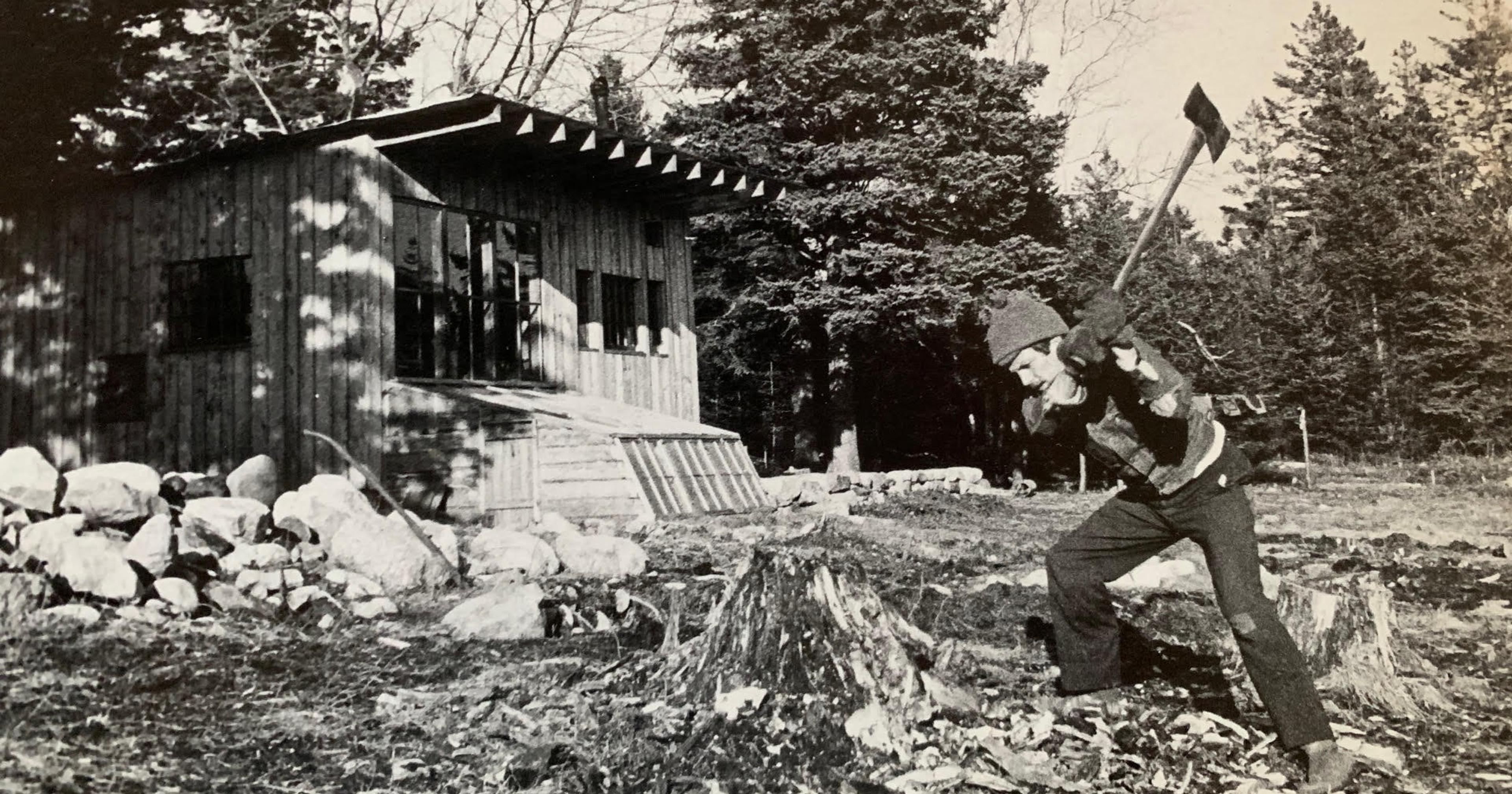

Leah, my mother, still recalls with vivid detail the thick, doughy pancakes that constituted breakfast, invariably raw in the middle and inedible (without covert refrying). In fact, none of the fathers could cook. With a wry smile, my mother describes a litany of culinary catastrophes. There was the time the clogged pressure cooker exploded, erupting with boiling beans that spewed volcanically across the kitchen, as children dove beneath the table for cover; the enormous caterpillars that always floated dismembered in the kale soup; or the casserole filled with mushrooms harvested from the surrounding woods, which turned out to be poisonous. In the last case, she ended up violently sick, relying on the absentminded care of the other fathers, while Randy was away at a party. To this day, she can’t stand to eat mushrooms.
The Single Fathers’ House was one of many shared homes on The Farm, a sprawling commune in rural Tennessee. Nearly 300 hippies, back-to-the-landers, and counterculture enthusiasts from San Francisco had settled on the 1,000-acre former cattle ranch back in 1971, following the philosophical and psychedelic teacher Stephen Gaskin. As their caravan approached, a Nashville radio station is said to have proclaimed: The Hippies are Coming!
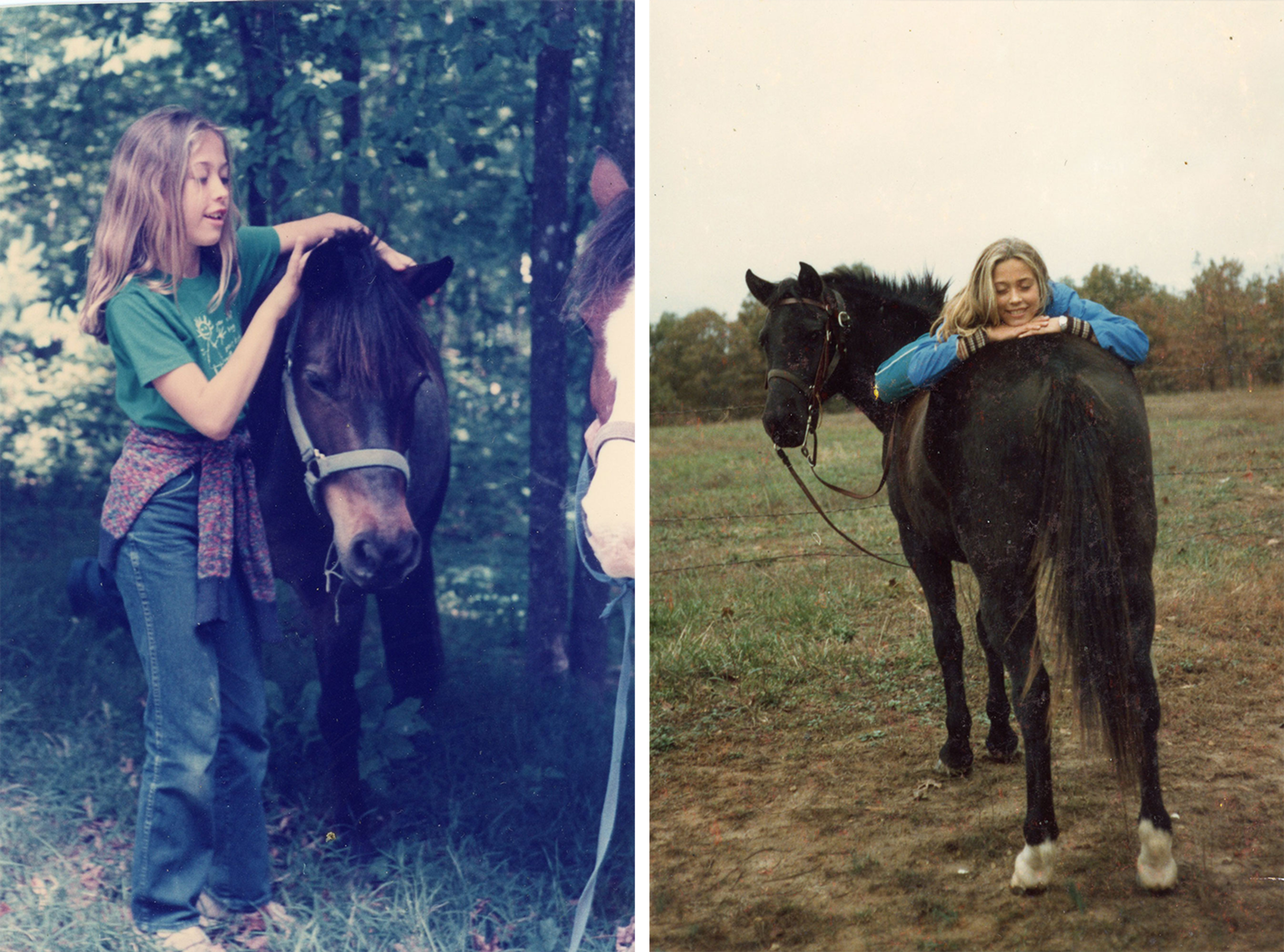
Leah and her other horse, Velvet. (1985)
·Leah with her horse, Bonita. (1990)
Though almost none of them had farming experience, the commune members learned from their reluctant neighbors how to live off the land, enduring hunger, harsh weather, and bouts of disease. For my mother, it made for a chaotic and profoundly unconventional upbringing. She was a ferocious, half-feral child. Yet those are years she now speaks of with gratitude. My mother was safe, minor poisoning notwithstanding; loved, if not always cared for closely.
Perhaps most important of all, she was shown the beauty of the surrounding ecosystem and its profound necessity for human flourishing. Such tenets were baked into the rhythm of life on the commune, in which the children were deeply involved. Growing up on The Farm meant being raised in a manner largely lost across the United States: by the proverbial village, a community sustaining itself and striving together toward a greater ideal.
That ideal was hard to articulate precisely, even back then. It included a rejection of the Vietnam War and nuclear armament, but also broader critiques of the inequality and destructive excesses of modern life. The first commune members sought to escape the rat race of capitalism and to create a society as an example to others—one that was self-sustaining and communally owned, vegan and agrarian. They wanted to reshape the world, or failing that, to build a new one for themselves.
*
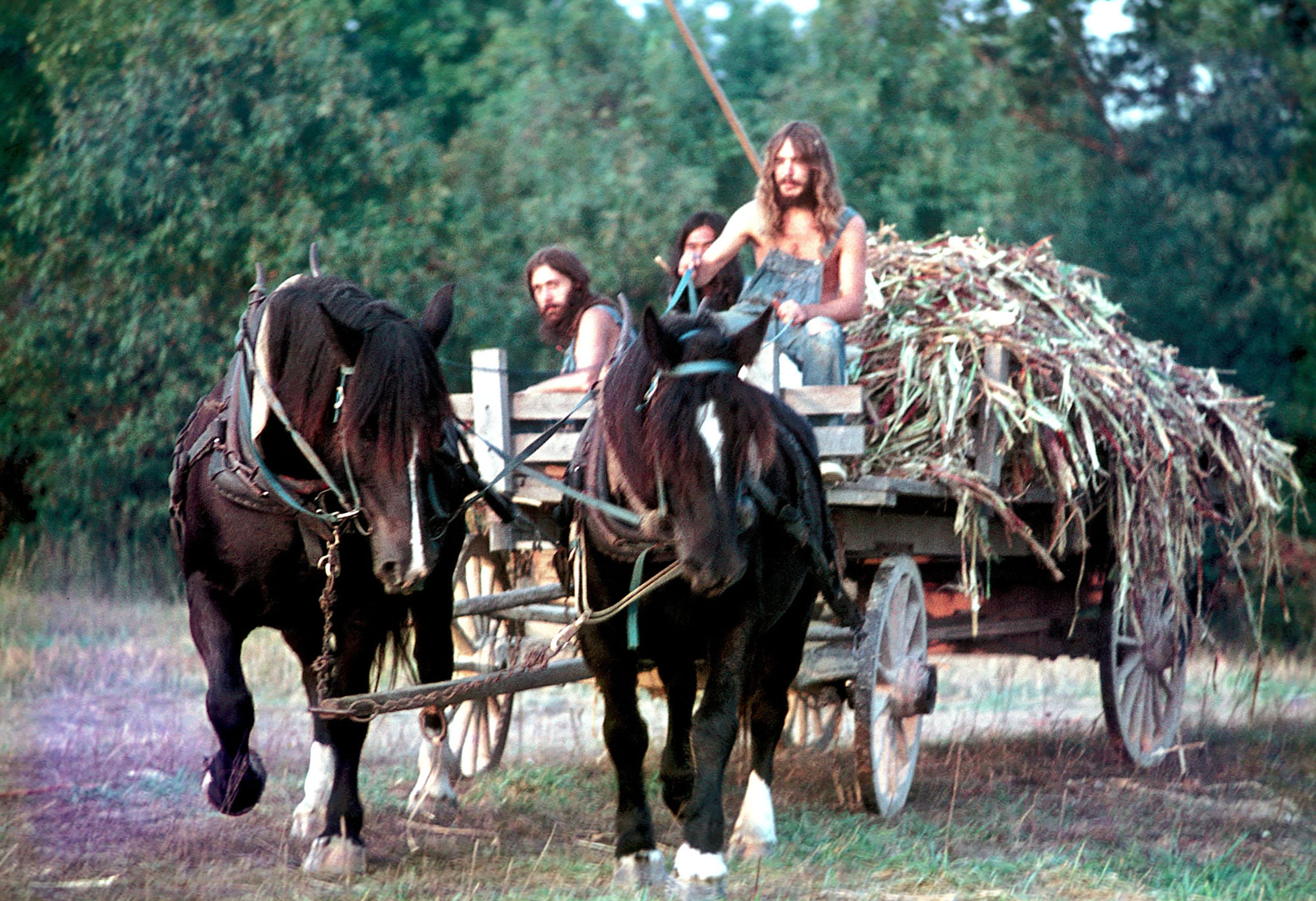
Farm members transporting sorghum harvest to the mill
·Photo by David Frohman (1970s)
My family’s journey to The Farm began long before the Single Father’s House was built. In 1970, my great-uncle Jay was in his 20s, living in San Francisco. Not long before, he’d been a Marine deployed in Vietnam. Now he was a protester opposing the war and a spiritual student attending the weekly lectures of Gaskin, who was “like a Zen master,” as Jay put it. That summer, Gaskin set out on a national speaking tour with a caravan of 50 converted buses, trucks, and camper vans. Jay traveled with him to churches and colleges across the country, where Gaskin shared his philosophy and spiritual vision with crowds of students. When the caravan returned to San Francisco months later, they decided to find a place to put down roots. Land in California was too expensive, so they set a course for backwoods Tennessee, where they founded The Farm.
Jay described a mixed reception from the residents of Lewis County, when the commune’s caravan arrived on the dirt road that led to the land. “Some neighbors came to help us. Others came carrying shotguns.” While the locals were understandably suspicious of these eccentric newcomers, they came to respect the earnest determination of the hippies. As Jay put it, “Once people realized we were not violent, and that we were honest and hardworking, they began to think of us as something like Technicolor Amish.”
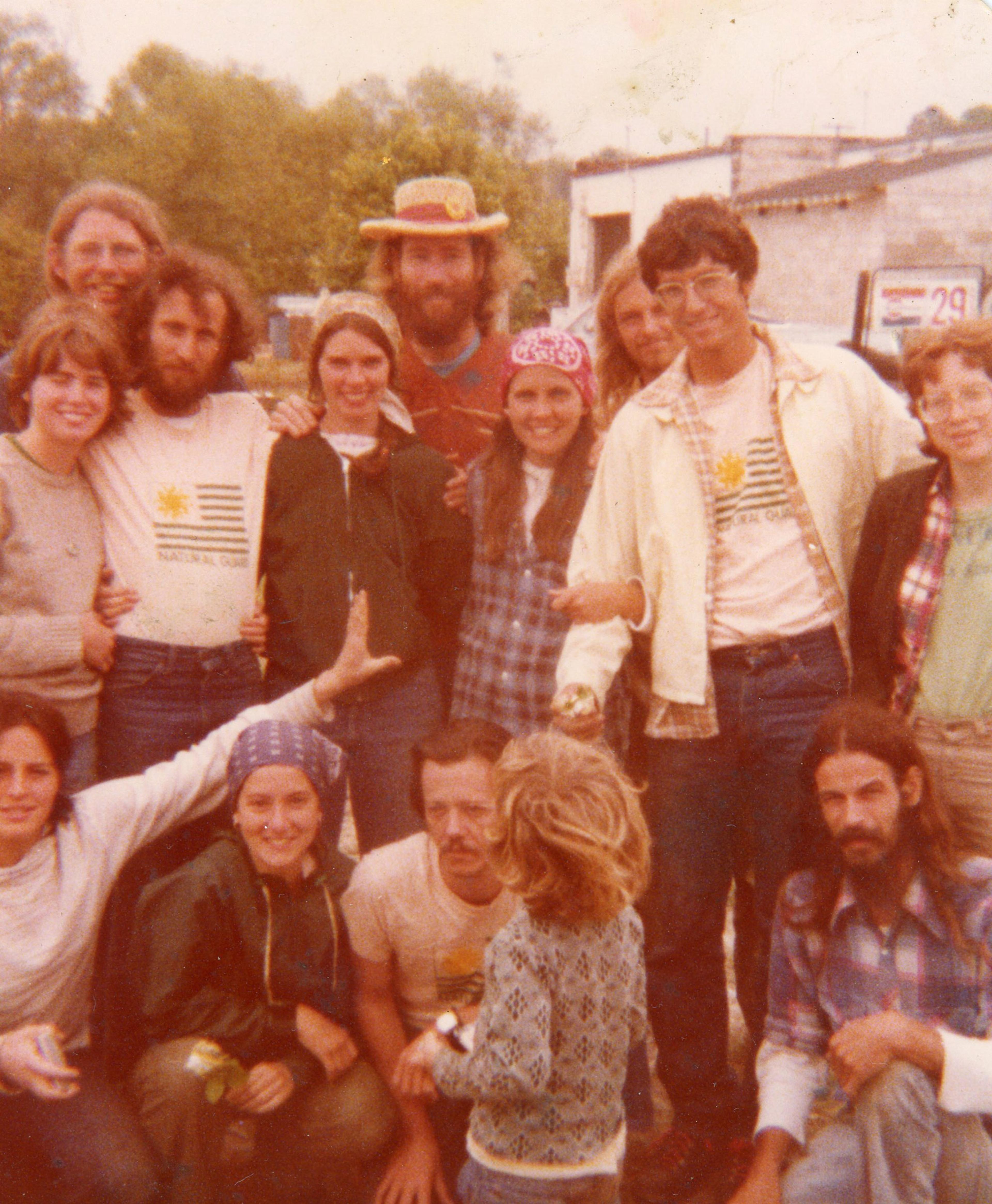
Five-year-old Leah (front center) and Randy (back center) at an anti-nuke protest. (1979)
Grueling work was mandatory for everyone on the commune, especially in those early years. “It was seven days a week, 10 hours a day. Hard physical labor,” Jay told me. When some initial members refused to contribute, he helped evict them from the property. Despite the constant work, resources were slim. The standard meal was plain soybeans in tortillas, occasionally served with mustard, which my mom remembers relishing as a special treat. During the infamous “Wheatberry Winter,” everyone ate plain grain several times a day; it was all they had. Sometimes, they resorted to Vaseline as cooking oil. The lifestyle was monastic in its deprivation and discomfort, almost comical in its lack of infrastructure. Their first “well” was a Volkswagen engine mounted on a tripod beside the creek. But they survived, and gradually, their intense poverty reached a modest but bearable equilibrium.
Randy, my grandfather, moved to The Farm with his two daughters in the spring of 1981. By that time, the community had grown to over 1,200 residents and 1,750 acres. His wife, Karen, had died suddenly not long before, when my mother was only three years old. Although Jay, Karen’s brother, had left the commune by then, he and Randy had both been students of Gaskin in San Francisco. As my grandfather put it, he was “guided there by those memories.” He thought it would be better to raise his kids with the support of a community, outside the oppressive influences of mainstream society.
My mother didn’t always agree with that choice. For many years, she harbored anger toward her father for his emotional and physical absences, as he traveled to work in Nashville and struggled to nurture his daughters. She often had to care for her younger sister, as if she wasn’t still a child herself. The community kept them fed and clothed, but it also left them largely to their own devices, especially after the other families moved out of the Single Fathers’ House.
At 10 or 11 years old, they’d be alone for days at a time. In retrospect, however, she’s come to think that “there’s a lot to be said for growing up feral with the land.” Her prevailing impression of those years is “not the agricultural component,” despite the commune school’s children often being employed in the fields, harvesting crops or picking off bugs. Instead, she remembers the moments of intimate and unmediated connection with natural spaces.
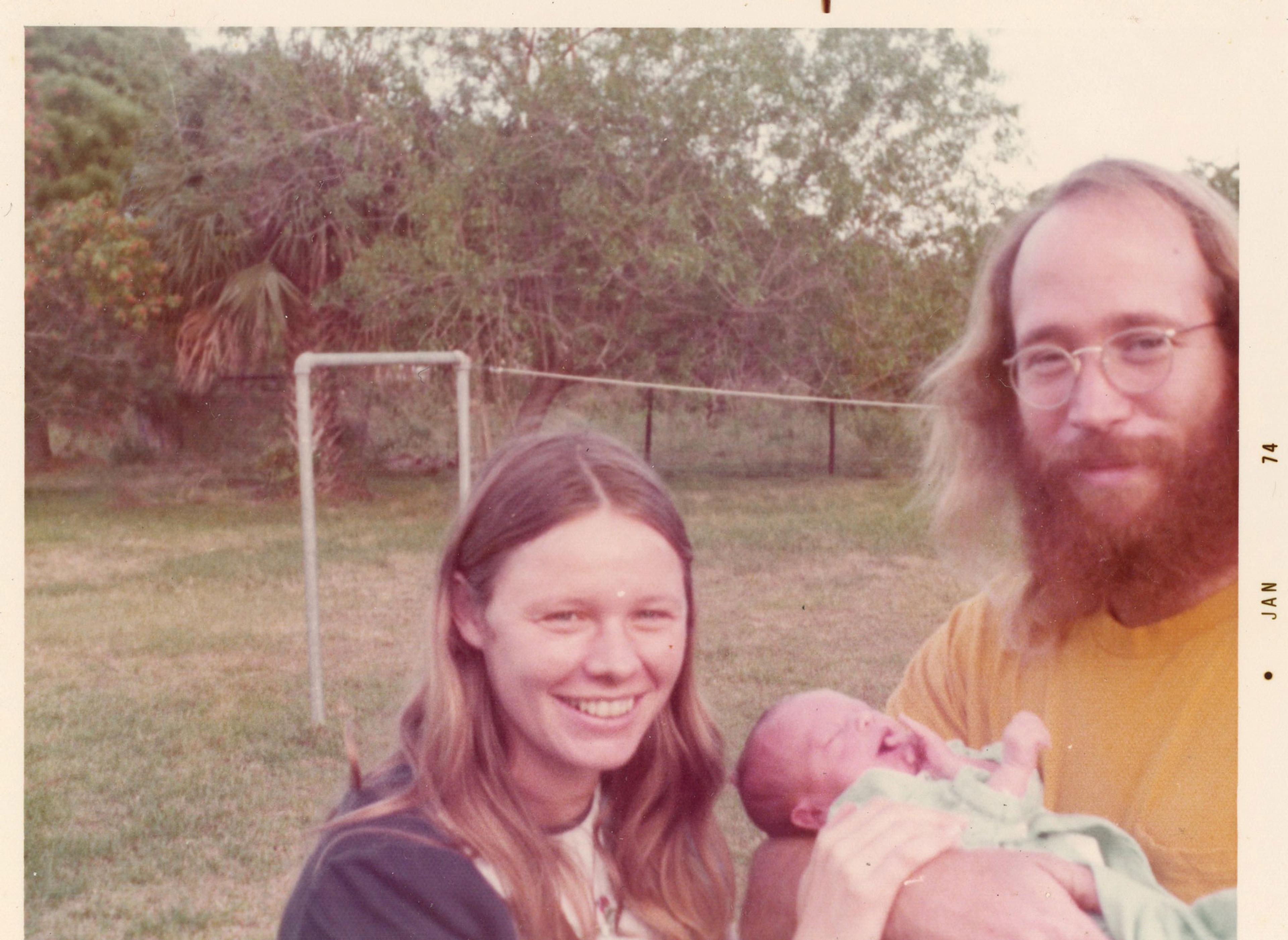
Leah, one year old, with Karen and Randy. (1974)
With friends, she would ride ponies to the orchard to forage for apples and dig up clumps of sassafras root, which they’d take into the woods. After building a fire, they’d roast the apples and inhale the scent of the sassafras while they ate. “It made it taste like apple pie,” she said, “which we couldn’t make.” She and her sister spent countless hours making fairy houses from sticks and mosses, devising elaborate games, and catching snakes. Later, at night, she’d follow the unlit paths home through the forest, in total darkness. She had learned to navigate by recognizing the patterns of the branches overhead against the starry sky.
The first members of The Farm were radical idealists, willing to give up everything to heal the ills of modern society. Perhaps inevitably, such aspirations were only ever realized in part. At its worst, the lax environment allowed for neglect and alleged abuse. Even the initial economic structures soon became less ambitious. Shortly after Randy moved to The Farm, a recession and the mounting pressures of expansion led the members to cease pooling all their resources together, in a transition known as the Changeover. After that, each family had to earn a private living in neighboring towns and pay property dues, while the self-sufficient agricultural fervor subsided.
The Farm still exists today as a close-knit liberal community, with its own school, businesses like book publishing and midwifery, and a self-contained social scene. Although the land is still communally held and governed by an elected committee, members own their individual houses and typically work external jobs. Serious agricultural efforts have largely been supplanted by piecemeal gardening; The Farm’s years as an agrarian commune are long gone. For my family, however, the legacy of its founding vision has endured and evolved.
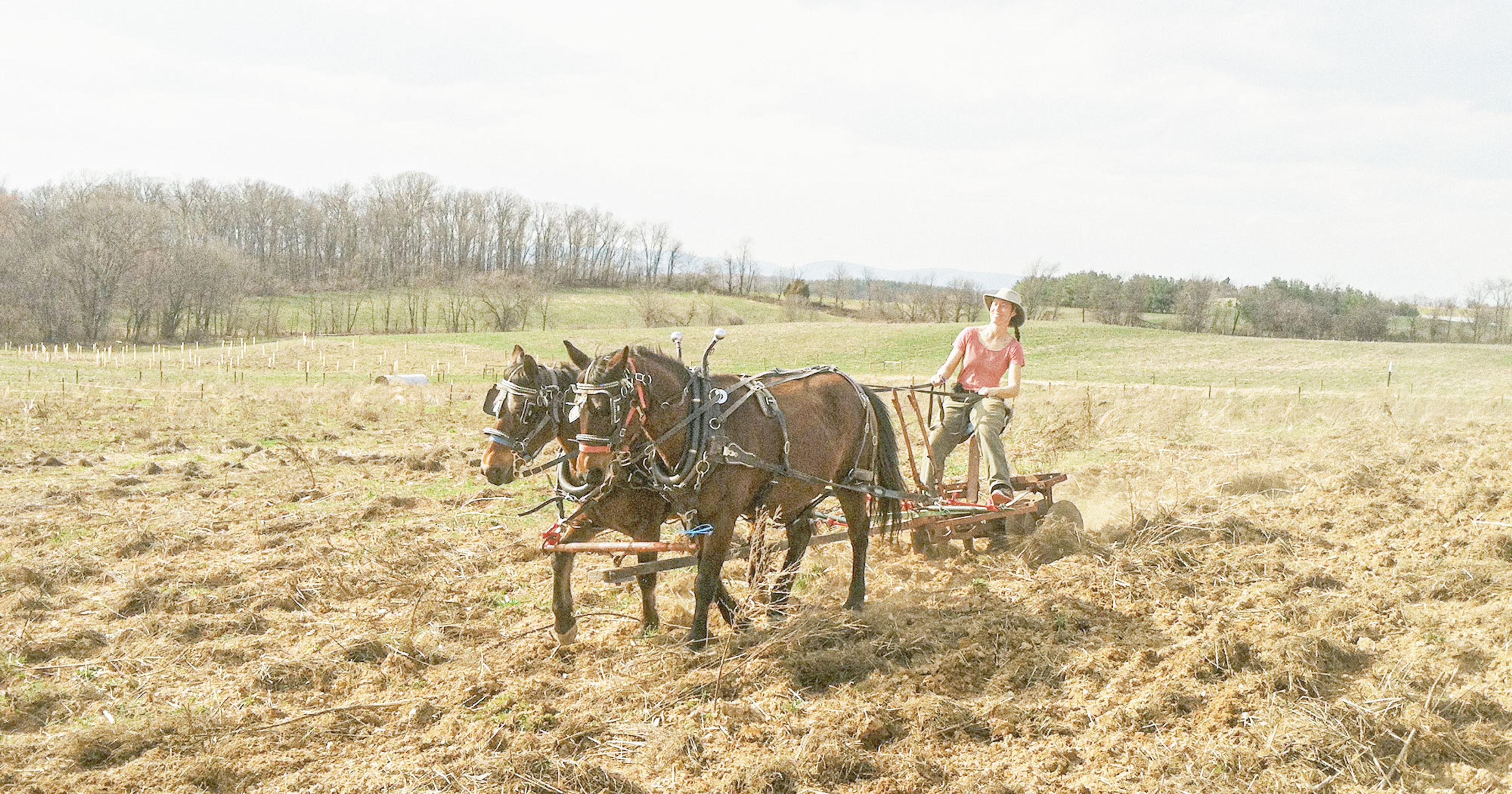
Leah on her current farm in Maryland. (2013)
On my mother’s own farm in central Maryland, the verdant flush of summer is just now beginning to sweep across the land. Dozens of newborn Katahdin lambs are frolicking in the fields, where wildflowers are sparking up left and right. The orchards are unfurling and ripening, too: blueberries, raspberries, strawberries, pears, cherries, and too many others to name. Growing fruit is still one of her greatest joys, an echo of those years plucking apples and digging up sassafras root in Tennessee. When we first moved to our land, I was five years old. Back then, the 85 acres were mostly a sprawl of monoculture corn over depleted and desiccated soil.
But drawing on the practices she first witnessed as a child, my mother set to work diversifying and revivifying the property, while building a community of neighbors and friends. As my parents worked, I played in the woods and creeks, learning their paths and studying their quiet mysteries. Our well was not an old VW engine; I was never poisoned by a casserole of wild mushrooms or left alone for days, yet my childhood was rooted in the forest and the fields, almost as much as my mother’s was. She passed those lessons on to me, a gift I still cherish.
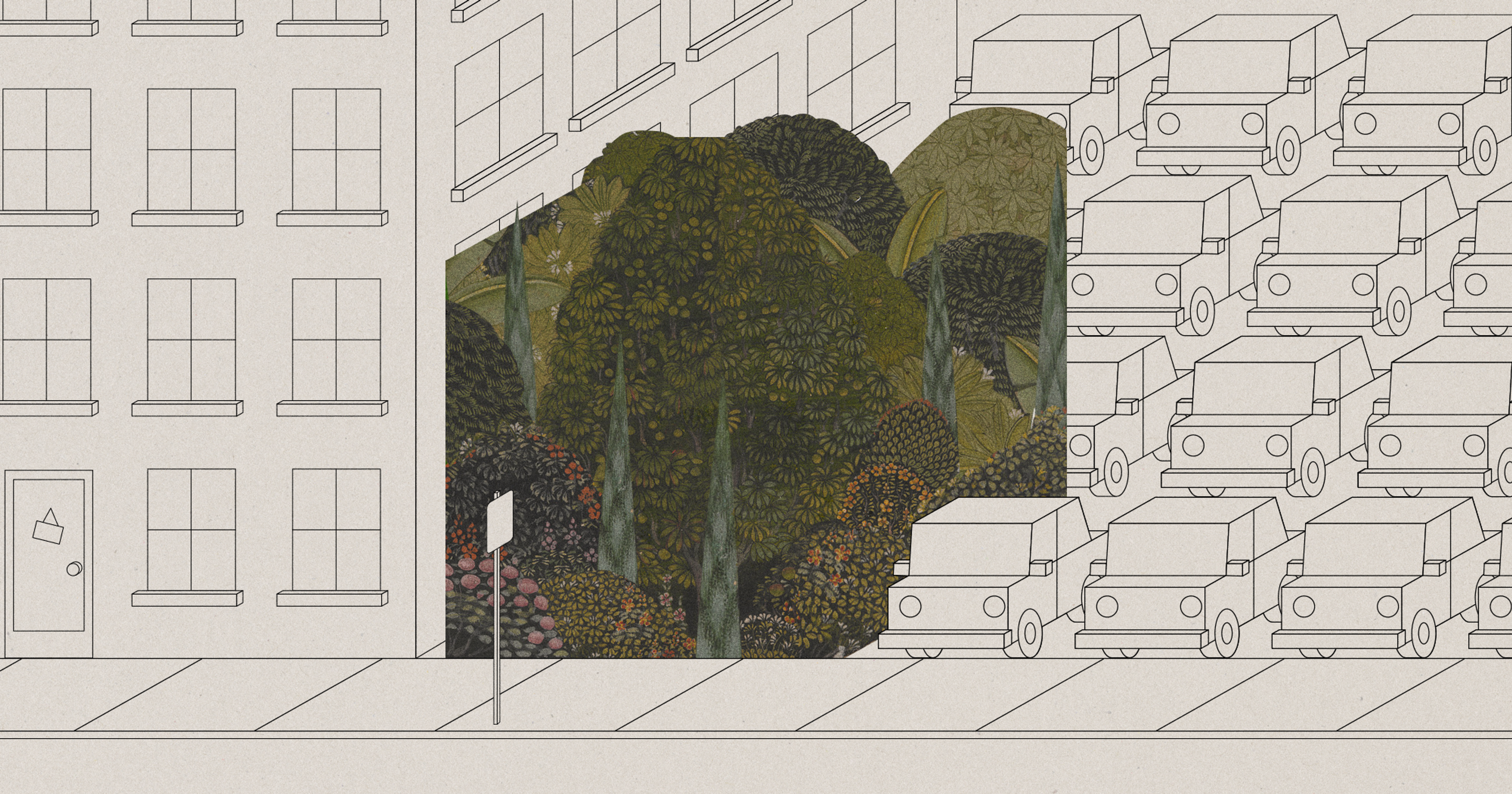
The inheritance of The Farm’s imperfect but idyllic lifestyle is a deep love for the half-wild spaces surrounding us, in steadfast resistance to a culture of extraction and dominion. It’s the way you have to see the environment when you’ve grown up enmeshed in it, sustained by it—not abstractly, but up close and messy, with dirt under your fingernails and blackberry juice staining your face. The glory of interdependence becomes inescapable, like the soil or the sky.
That love is written deep in my mother’s soul. The land was always there for her, an inextricable part of the devoted community that tended it. It was a haven and a teacher. When the chaos of the Single Fathers’ House or the aching boredom of solitude became too much, she said, “I’d just go out in the woods.”