
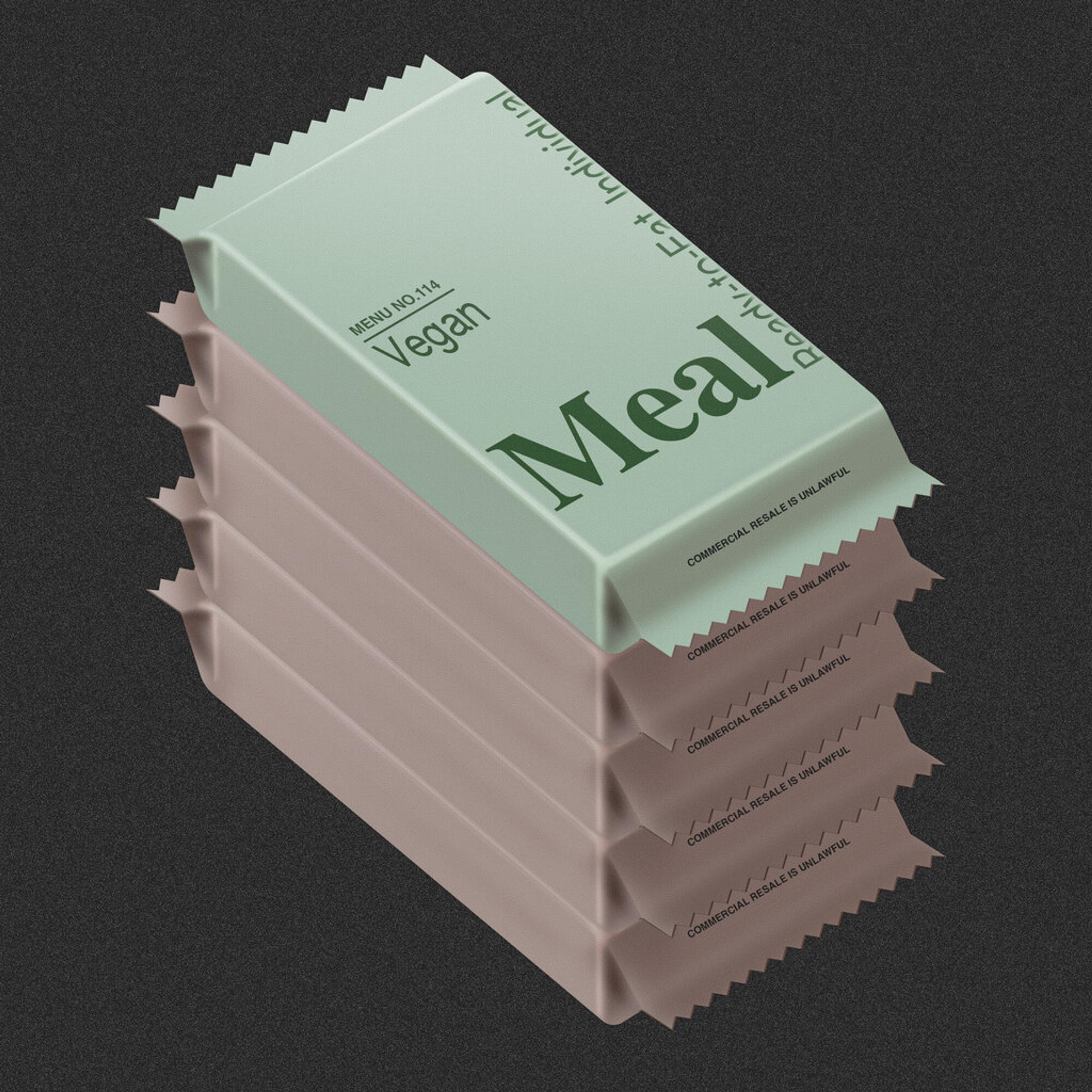
Starting in 2027, the U.S. military will offer four plant-based Meals Ready-to-Eat. Troops asked for them.
This Perspective piece does not represent the views of Offrange or Ambrook, its parent company.
Animal foods make you strong.
Real men eat beef.

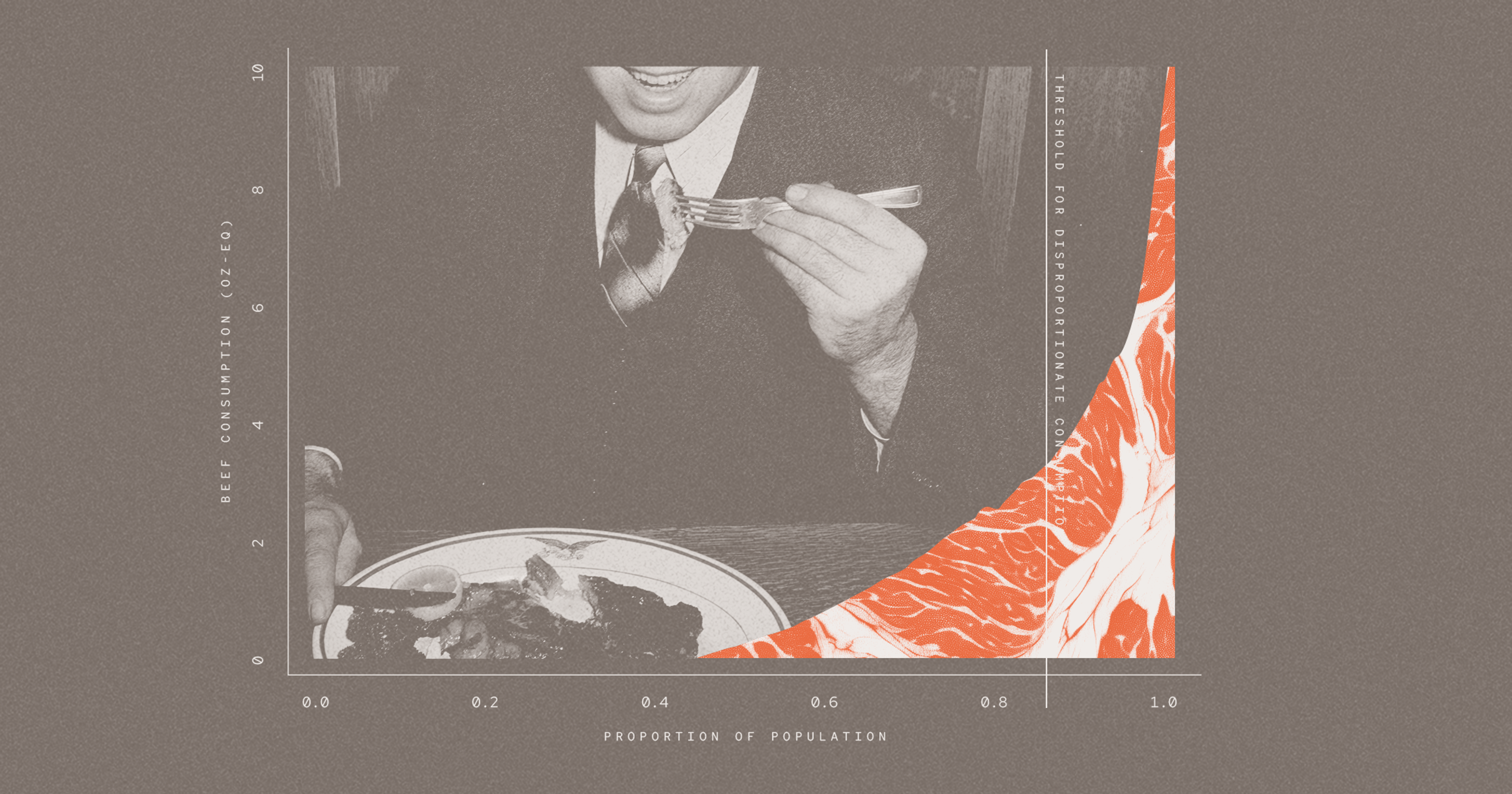

So says the manosphere, exemplified by health secretary and dedicated carnivore RFK, Jr. and his agency’s meat-forward Dietary Guidelines for Americans (DGA); and defense secretary Pete Hegseth, who recently faced backlash for a $15 million spend on rib-eyes for his warfighters. Casual observers of this macho ethos may therefore be forgiven their surprise to learn that Fort Hood in Texas opened a healthier-eating chow hall earlier this year that featured a salad bar with organic roasted vegetables and quinoa. And perhaps even more unexpected, that the Army announced that 2027 would usher in the first-ever release of four vegan Meals Ready-to-Eat, or MREs.
So who might actually want those meatless MREs? According to the animal welfare advocacy group Mercy for Animals (MFA), 63 percent of active-duty service members. An online survey conducted by the animal protection nonprofit found that 142 of 226—admittedly a small, self-selected group—majority male respondents from all branches of the military would choose a vegan MRE over a meat-based one. It’s a result that MFA’s director of plant-based initiatives, Jennifer Behr, says was a “key element” with the defense department’s consideration of this pivot.
“One of the key drivers of that was a desire for inclusivity,” Behr said, alluding partly to the fact that an estimated 40,000 of 1.3 million active-duty members of the military follow meat-free diets for ethical, environmental, religious, and restrictive-dietary reasons. In fact, 6 million vegetarian MREs are currently produced every year, out of a total of about 30 million, according to an Army spokesperson. Vegan MREs will replace vegetarian instead of meat options, in part, said Behr, because dairy and eggs are among the top food-based allergens. But maintaining a full range of choices for meat eaters may be a factor, too.
Although advocacy for vegan MREs predate this political moment, it’s hard to parse how they fit in with the current “eat animals” messaging coming from certain corners of the federal government—RFK, Jr.’s carnivore diet, for example, but also Donald Trump’s fast-food burger and fried chicken habit. A clue might lie in the fact that physically fit-enough recruits have been hard to come by for the U.S. Armed Forces throughout its history.
“Maybe this is one of those things at the end of the day where Pete Hegseth bites his tongue, knowing that for practical manpower purposes, this makes sense.“
These days, many of them “can’t do the requisite pushups so they are funneled into a boot-camp style program that is both military conditioning, but also largely oriented around nutrition, with certain weight goals,” said Jasper Craven. He’s a journalist with a new book on the roots of military masculinity, God Forgives, Brothers Don’t. “Maybe this is one of those things at the end of the day where Pete Hegseth bites his tongue, knowing that for practical manpower purposes, this makes sense, even if it is considered gay or soft or whatever else in his eyes.”
One of the self-proclaimed manliest men in U.S. Army lore, fitness fanatic and military school founder Bernarr MacFadden, was a vegetable stan. Craven attributes this to “a panic that set in in the run up to our involvement in World War II concerning the physical strength and corporeal excellence of the American man.” With his avowed preference for carrots, raw milk, and fasting, and his assertion that white bread was “the greatest humbug ever foisted upon a civilized people,” MacFadden was likely something of an outlier among his warmongering contemporaries.
Contemporary nutrition science has confirmed some of his less alternative ideas. Current military fitness manuals feature a “power plate” diagram that tacitly contradicts the new DGA, which recommends eating up to four daily servings of “healthy fats” like cholesterol-busting beef and pork. The power plate emphasizes plant-based foods, fish, poultry, and yogurt. “B vitamins found in a range of foods—including whole grains, lean proteins, dairy, nuts, beans, and leafy greens—support your body’s processing of energy,” exhorts one such handbook.
The Army’s Combat Feeding and Military Nutrition divisions are tasked with making sure MREs meet a suite of dietary standards, albeit with zero fresh foods. The military introduced these vacuum-sealed meals in 1981, intended to be consumed for short periods in combat situations where field kitchens can’t be set up. They were a replacement for Vietnam-era C-rations, which came in heavy, hard-to-dispose-of cans whose contents frequently spoiled.
Offerings for the first 15 years included frankfurters with beans, meatballs and bbq sauce, and chicken loaf. In 1996, two vegetarian MREs were added to the mix, which eventually became four: heavy on the pasta (tortellini, elbow macaroni) but also rotating through offerings like veggie burgers and ratatouille. These days, a package also contains energy drink powders and condiments like hot sauce, desserts and snacks like dried or “wet” fruit packs, candy and a flameless heater.
“When you’re hungry, [an MRE]’s not bad. But after so many days they all start to taste the same and it’s not necessarily what you want for breakfast.”
Soldiers’ feelings run hot over some MRE options, like 2005’s cheese and veggie omelet, which they quickly dubbed the “vomelet.” For the most part, though, “When you’re hungry, [an MRE]’s not bad. But after so many days they all start to taste the same and it’s not necessarily what you want for breakfast,” said a Major in the Army Reserves given anonymity to speak his thoughts freely.
With snacks like beef sticks, “It’s not like Slim Jim, per se. The consistency’s off, it is a little bit drier, it’s not good,” added Sherman Neal, a Marine Corps veteran and deputy director of the Sierra Club’s Military Outdoors campaign. There’s a reason, “In urban areas where there’s opportunities to have vendors in town, you start getting reports of Marines trying to find their own way, getting pizza.”
Palatability (or lack thereof) is actually a huge problem when it comes to MREs, which could help explain why the military has agreed to serve vegan meals they’ve perceived there’s a demand for. Service members engaged in training or in combat situations need a certain number of calories and nutrients for energy, for recovery, and to avoid dehydration and heat exhaustion.
“The intent of the MRE is to eat the entire thing and so if people don’t like what’s in them, they ratfuck them,” said Neal. Especially junior service members take out the energy bars and other things they like and throw the rest away—or sell whole meals to non-military MRE enthusiasts over the internet, to supplement paychecks small enough, in some cases, to render them food insecure. “There’s realities to the injuries that come from that, and actual performance measurements over time…to having 19-year-olds that are hopped up on Skittles and tobacco and coffee, trying to accomplish pretty extreme things with their bodies,” Neal said.
There also may be a supply chain element to the Army’s decision. As reported in Military Times, the U.S. military is looking into ways they can produce protein-packed meat alternatives in combat zones, a way of circumventing the need to ship large quantities of meat in the heat of war. ““These technologies should focus on creating lightweight and nutrient-dense ration solutions to reduce logistical burdens and physical load on warfighters while maintaining or enhancing nutritional value and operational performance,” reads an official notice obtained by Military Times.
Whatever the motivation, Neal sees any change to MREs as an adjustment that isn’t “being made for troop welfare. It’s probably being made for performance-related reasons in the field,” he said. The Army Major pointed out that even now, vegetarian MREs are set aside for the actual vegetarians in a unit, and he doesn’t imagine that will change when the vegan MREs, with contents as yet TBD, are finally released. Still, he said, “I would be interested to have it, just for a little variety.”