
In an overcrowded ag market, what does it take to break through with a new product?
American agriculture is dominated by regional monoliths. Corn and soybeans are king and queen of the Midwest. Wheat has a stranglehold on the Great Plains. Meanwhile apples, rice, and grapes maintain fiefdoms in Washington, the Mississippi Delta, and along Lake Erie. The United States grows a vast array of products, but for the rural and regional economies reliant on one or two crops, this lack of diversity can threaten the financial viability of farmers and communities in the face of environmental or economic shocks.


The addition of alternative crops to farmer portfolios can help remedy these vulnerabilities, allowing farmers to mitigate the risk of one of their dominant crops underperforming agronomically or financially. For example, the planting of oats to meet demand for plant-based milk has brought new drought-resistant sources of revenue for Midwestern grain farmers.
But attaining diversity—which requires an extensive ecosystem of aggregators, processors, and customers—is hindered by a core chicken-and-egg conundrum: farmers are hesitant to plant without existing demand, and entrepreneurs are reluctant to invest in new facilities and product lines without reliable supply.
In this way, incumbent food systems hinder the growth of new crop segments. Yet, despite these hurdles, the allure of new crops that are kinder to the land and better matched to new climates has driven enterprising agrarians across the country to cultivate new market ecosystems that nurture this diversity. They may also offer compelling blueprints for breaking the mono-economies gripping American agriculture.
***
Grizzly Chews is one such torchbearer. The company, founded in 2024 by Raphael and Ellie Pintor, manufactures fruit-flavored gummies with an Alpine identity and mission. By developing products using native North American berries uniquely suited to high-altitude Western landscapes (where few crops can handle the biting spring frosts or scalding summer sun) the Pintor’s hope they can galvanize demand for new crops in remote mountain towns. They believe that such a berry-flavored upswing will help retain rural residents and keep farmland from being sold for development.
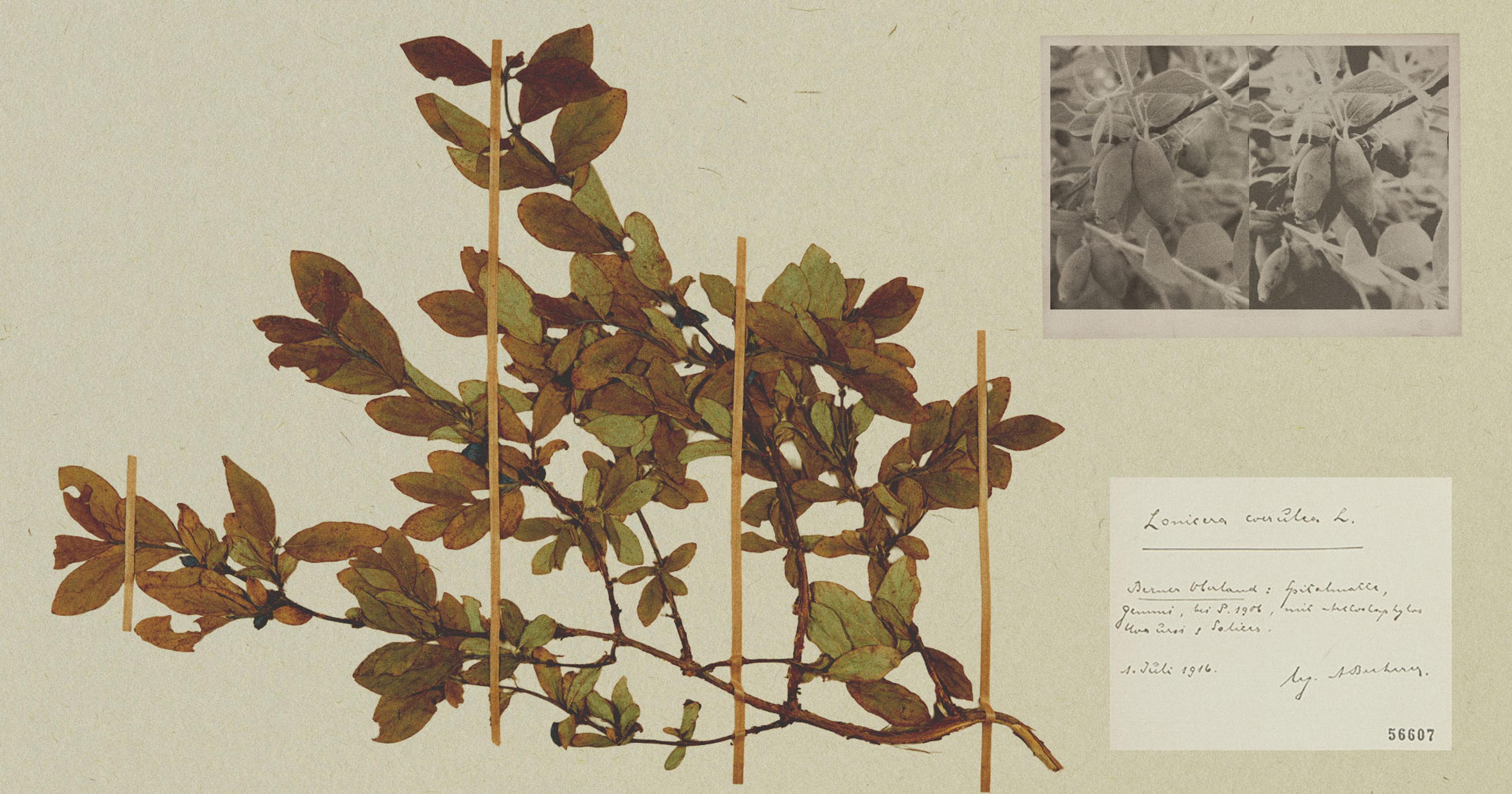
Their inaugural gummy is produced from the juice of the little-known, sweet and tangy honeyberry. They initially sought suppliers in Montana and neighboring states, but the few growers they could find catered to direct-to-consumer formats like farmer’s markets and lacked the licenses required to sell juice for manufacturing. For a while the company was able to pin down a domestic supplier, but that eventually fell through.
“And that’s what started this search around the world,” Pintor explained. “We went to Poland, we went to Norway, we went to Canada, looking for just a usable juice product.” Eventually, they secured a foreign supplier (a move where obscurity proved to be an advantage, as most tariffs aren’t assessed on honeyberries). This move allowed them to finally have a product to sell, but, at least temporarily, foreclosed on the company’s social objectives.
Raphael sees achieving a larger volume of consistent sales as a precondition to building the kind of domestic supply chain that would bring new markets to rural communities. To feel comfortable entering into the kinds of contracts that would ensure consistent supply, the Pintors want to ensure that consumer demand is locked in, ever-cognizant of the fact that such contracts would tie a farmer’s financial future to their focal fruit. “If you make a deal with a farmer and the farmer plants [a crop on your behalf], and then you don’t follow through, that’s a capital sin in Montanan agriculture.”
So for now, they’re banking on international supply chains to achieve the scale necessary to bring their vision of a diversified network of Rocky Mountain berry farms to reality. “We’re just a little too early at this stage,” Raphael said, later adding, “We’re trying to prove that people are interested in Alpine flavors and fruits . . . and justify continued investment.”
***
Kernza—a perennial form of wheat developed to curb soil erosion and retain water, nutrients, and carbon in the Earth—illustrates how forming thoughtful institutions and partnerships are indispensable to the growth of a new crop, especially in keeping markets stable. The nascent Kernza industry centers in southern Minnesota and northern Iowa, where the Perennial Promise Growers Cooperative was organized to help facilitate the rollout of this soil-building cereal.
Farmer-member Wendy Johnson told Offrange that, as the first food-grade Kernza variety was being released and would-be early adopters began expressing interest in the grain, “the groups that were developing Kernza didn’t have an organized supply.” The cooperative was thus launched to serve an aggregator, giving purchasers a single point of entry into the market.
Streamlining producer-consumer negotiations into a single entity aids the flow of information by amalgamating supply and demand information. If a farmer is mapping out how much Kernza they want to plant, their involvement in the cooperative gives them a picture of how many buyers exist and how much of last year’s crop was cleared, giving them a more holistic understanding of the market landscape than if they had been negotiating directly with one or two processors. Similarly, buyers can better forecast Kernza supply since the cooperative conveys how many acres their members have in production.
By lubricating the flow of information, farmers can avert overplanting thanks to cleareyed estimations of demand and food companies can properly size production runs, distribution agreements, and advertising campaigns around an accurate view of supply. This improves the long-term stability of the Kernza market by reducing the risk of overinvestment on both sides of the supply-and-demand curve, sustaining participation of all participants.
General Mills, a beneficiary of Perennial Promises aggregation services, has also acted to strategically kindle the nascent Kernza ecosystem. A spokesperson told Offrange that the company first rolled out a Kernza-containing cereal in 2019 under its Cascadian Farm brand. The company was cognizant that, in launching a national product with a niche ingredient, it would be easy to stimulate demand to fast and overwhelm the market. Thus, they designed their procurement strategy around the “1% Kernza Initiative.”
“The 1% Kernza Initiative,“ said the spokesperson, ”incorporates a small amount [of Kernza] into mainstream Cascadian Farm products to build volume, consumer awareness and more durable demand for growers . . . Lower inclusion across several mainstream products can create meaningful total volume without concentrating all the demand on one specialty product or creating an abrupt volume requirement for growers. Expanding access to milled flour and working with aggregation and sourcing partners have also helped us increase product use while continuing to build the underlying supply ecosystem.”
This procurement strategy allows the company to intentionally stimulate demand for Kernza while avoiding a situation like the quinoa bubble of the 2010s, where ballooning demand and subsequent overplanting eventually brought a price crash and economic hardship to Andean farmers. With supply side players building information sharing institutions and demand side actors aiming to maximize the size of markets they can include Kernza in while calibrating product design around planting conditions, the Kernza ecosystem seems to have
***
This considered approach points to a growing sophistication among growers, users, and promoters of novel crops. And Minnesota’s Forever Green Initiative has become a center of such knowledge. A program of the state department of agriculture and housed at the University of Minnesota, the initiative seeks to propagate cropping systems that provide year-round groundcover to curb erosion and improve water quality.
They work with 15 crops, including native woodies like hazelnut, winter annuals like barley, and soft perennials like Kernza (they are a partner of both General Mills and Perennial Promise). By breeding and improving crops from each of these categories, they aim to cover bare soil year-round with a new assemblage of cultivated flora. Their focus on commercialization comes from the theory that by stimulating markets around these ground-covering crops, they can galvanize an agricultural economy that structurally incentivizes soil protection and regeneration.
Director Mitch Hunter describes their strategy as “knowing who’s out there, who’s already growing a crop, and who’s interested in buying it.” They bridge the gap between early-adopting farmers and emerging market actors, transmitting vital information between the two while using their intermediary position to identify and fill gaps in budding crop sectors.
The Initiative’s commercialization staff led the release of Minnesota Clearwater, the first commercial Kernza variety, in 2019, and took a variety of steps to amplify its adoption. The Initiative initially distributed seed directly to farmers, created seed and grain quality standards, and purchased a seed cleaning machine. By the end of the first year, they had sent out 10,000 pounds of seed to growers.
As demand grew, they licensed three regional seed companies to produce and sell the seed to growers, with commercialization staff working with each company to handle regulatory compliance and certify lots. Through these and other actions, they were able to expedite the growth of Minnesota’s Kernza industry by incubating the early nodes of the supply chain necessary to get plants in the ground and establish a strong supply base ready to take advantage of intrigued customers.
At the same time, the group nurtured the demand side by encouraging exploration among both startups and heavyweight companies. This took the form of sending off batches of grain to millers, bakers, brewers, distillers, and even animal feeders to experiment with the ingredient. But they also looked to fill knowledge gaps and build the capacity of various firms to work with Kernza. They provide startups with technical support as they grapple with how to use Kernza in new food products and conducted a lifecycle analysis for General Mills, providing data essential for corporate sustainability reporting and advertising efforts.
Their collaboration with the company allowed the Initiative to “educate their brand team and share the environmental benefits of Kernza, [helping] tell the story of the crop,” said Hunter. Combined, these activities have coalesced to build sustained energy for Kernza, as well as other perennial crops, in the state by consistently working with a range of actors on the demand side of the market, eventually translating to a consistent customer base for farmers.
A robust assortment of activities, from personally delivering bags of seed to farmers to engineering whole pipelines for business creation, covers the gamut of what it takes to create a market ecosystem around a new crop. As Mitch Hunter describes it, it’s an iterative process: “Get some supply, build enough demand to use up that supply. Then work to build up demand enough to stimulate [the production of] new supply.”
By touching all sides of the marketplace, constantly monitoring the activities of each actor, the Forever Green Initiative has engineered a pipeline for simultaneously building systems of production and consumption around a target crop. Mitch Hunter likens their strategy to a stairway, co-generating momentum on both ends of a market as supply and demand climbs: “Get some supply, build enough demand to use up that supply. Then work to build up demand enough to stimulate [the production of] new supply.”
It’s a constant balancing act of keeping both as closely matched as possible without overheating the market. If sustained long enough, a consistent market for a formerly obscure crop may firmly take root and germinate a more diverse landscape.