
A return to rural Utah was supposed to provide peace. Instead, our writer found a delicate balance of anger and acceptance.
The wind drives down my lane in February, slipping between the white horse panels and the neighbor’s rusted shed. Their house stands empty again this winter. I still call them my neighbors, though they spend eight months of the year somewhere warmer. The flagpole rope clatters against metal. The valley is quiet, except for the wind and my boots on the frozen ground.
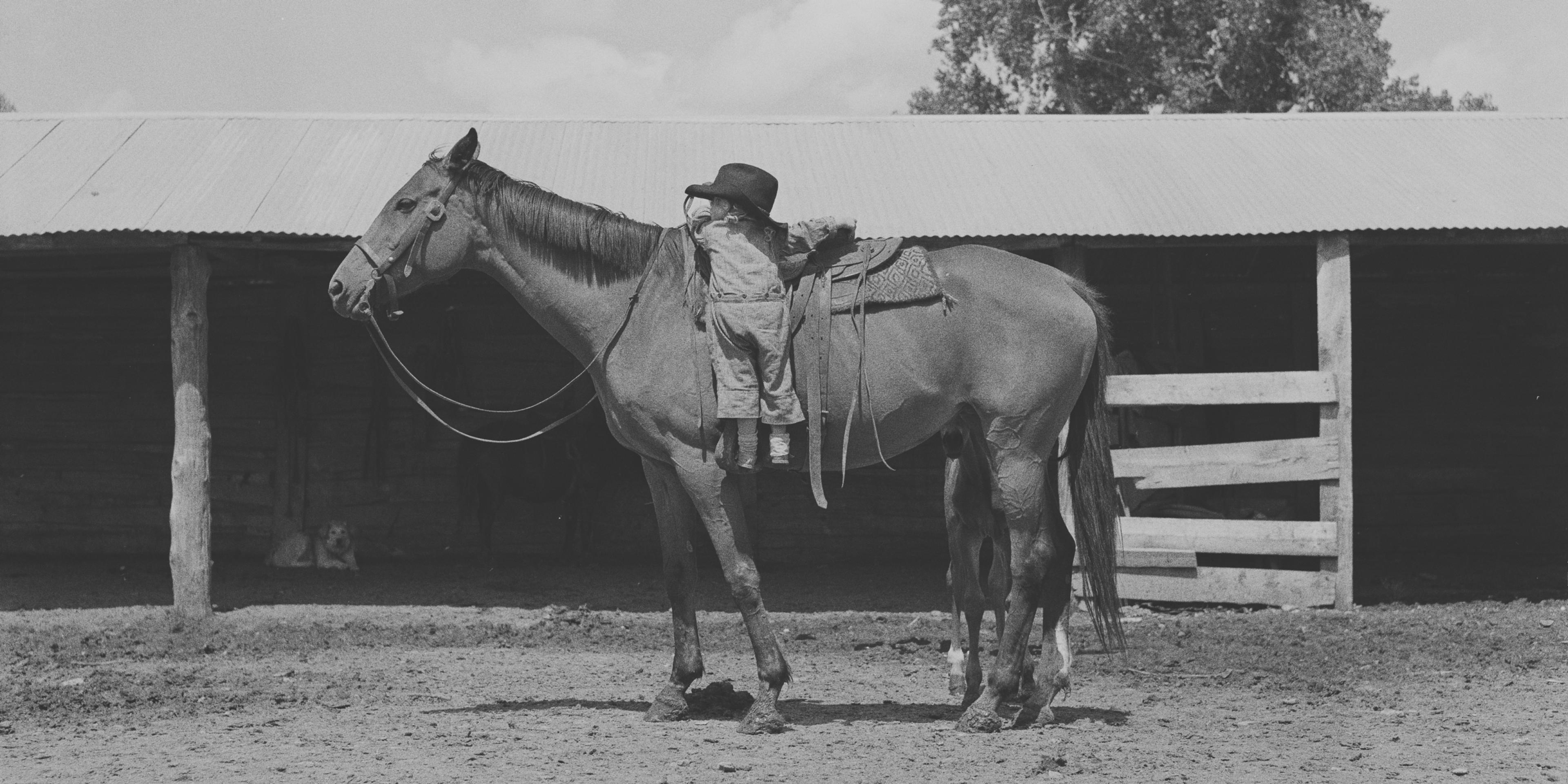

I grew up near here, in Marysvale, a small town in south-central Utah. Rural America felt steady when I was a boy, not perfect, but good. My father taught music at the high school. My mother sold cosmetics and made pottery to stretch his modest salary. My grandparents lived down the street. The gas station doubled as a town hall. Men drank coffee and discussed politics that made little sense to me.
On Sunday afternoons, when I was twelve, my father drove me around town to collect church offerings from those who couldn’t attend. Widows. Shut-ins. People who had lost their faith. I wore high-water slacks and a white shirt with a tie. I remember coins poured from mayonnaise jars, hands pressing folded bills into mine. Even those who no longer believed still gave. Not because they had to. Because they felt connected.
It felt like an unspoken contract: We take care of one another.
There was something particular about belonging to a place so small. People knew your parents, your grandparents, your troubles, and sometimes your secrets. Privacy was scarce, but so was anonymity. You could disagree with someone on Sunday and still find yourself helping him pull a truck from the mud on Monday. At least, that was how I understood the world around me.
I carried that image of rural life with me for years, like a pinecone gathered in the woods. The Army eventually carried me far beyond the mountains of my childhood, into other communities, cultures, and ways of understanding the world. But some part of me remained anchored to that small Utah town. I believed if I returned, I would find that same steadiness waiting.
After 20 years in the Army, after war zones and hospital rooms and too many folded flags, my family and I came back home. We wanted to reconnect with land and identity. We wanted our children to grow up where mountains mark the horizon, and neighbors still wave.
Some part of me remained anchored to that small Utah town. I believed if I returned, I would find that same steadiness waiting.
So we started a fiber mill. We raised Icelandic sheep and alpacas. Each morning at dawn, I fed the animals while the mountains turned pink with the first light. My wife worked the mill, spinning raw wool into yarn that farmers could hold in their hands. I watched old sheep ranchers run skeins across their faces with emotion. It felt like we were part of something sacred, transforming labor into beauty and art.
For a few years, it worked. Truckloads of wool arrived. Visitors came from cities. School groups toured the farm. We printed T-shirts with our logo. We believed we were rebuilding something enduring. But when the economy tightened, luxury yarn seemed like the first thing people stopped buying. Funding dried up. My wife needed knee replacement surgery. Our bank account thinned.
One summer morning, we decided to sell the mill.
It felt like a knife splitting something inside me. I had imagined this work carrying me into the rest of my life. Instead, it collapsed under financial strain and exhaustion. Leaving the military had already meant surrendering a clear identity. Losing the mill meant giving up on another.
Looking back, I understand that our business struggled for reasons both ordinary and complicated. We had chosen demanding work in a difficult market. There was no great rural conspiracy behind our failure. Yet emotionally, I struggled to separate the loss of our business from the loss of something larger. I had returned believing that hard work, community, and a connection to the land might sustain us. When those hopes began to unravel, I found myself questioning not only our decisions but the place itself.
In the years after we returned, I noticed something else in the community. A tension. A brittleness. Conversations felt sharp. Disagreements escalated quickly. I took a part-time role with the local school district, offering mental health support. Many of the teachers were former classmates. Their students were children and grandchildren of those I had grown up with.
In the years after we returned, I noticed something else in the community. A tension. A brittleness. Conversations felt sharp. Disagreements escalated quickly.
One night, the principal called. Her voice trembled. A student had been murdered by another student, an act of rage that shattered our small towns.
I drove to the school under a sky that felt too still. I had witnessed violence before, in other countries, in other contexts. But this was home. This was supposed to be different. As I sat with faculty and grieving teenagers, I again felt something crack inside me. The violence I thought I had left behind had followed me.
After that night, rural life felt less simple. I could not look at our valley without sensing something simmering beneath it.
I began to call what I was witnessing rural rage. Not because anger belongs exclusively to rural people, but because it seemed especially painful in communities whose identity depended, at least in my memory, upon mutual obligation. In a place where everyone is connected, anger has a way of traveling through relationships. There are few strangers. The person who wounds you may be the same person you see at the post office, the school, or the gas station. I had believed this closeness made rural communities resilient. Now I was beginning to wonder whether it could also make their fractures more intimate. The same neighbors who argue fiercely will show up without hesitation if your livestock escapes or your truck slides into a ditch. Beneath anger lies great generosity. Beneath resentment, there is loyalty. It is both.
One afternoon, I was feeding the horses when I heard a truck barreling down the dirt road toward the creek below my house. Too fast. Too reckless. My dog, Tundra, charged toward it, barking. The truck slammed to a stop. Its brake lights glowed red in the dust. Then it roared into reverse and accelerated backward, straight at my dog. I shouted. Tundra darted sideways just in time as gravel sprayed. The truck paused, engine growling, then sped away.
I stood there shaking, diesel fumes in the air, my dog trembling beside me. What kind of person turns a vehicle into a weapon against something so small? And yet, I cannot pretend I don’t understand rage.
When I was a teenager, a boy from town deliberately ran over my dog. I saw the blood on his tires. Something snapped in me. I chased his red truck with a baseball bat, blind with fury. I wanted him to feel what I felt.
I have returned to that memory often. Two trucks. Two acts of cruelty. Decades apart, in the same rural landscape. And suddenly, the story I had been telling myself about what had happened to my hometown became harder to defend. If this kind of violence existed when I was a boy, how could I claim that rage had somehow arrived while I was away? Had the community changed, or had I simply forgotten the parts of it that did not fit the story I wanted to remember?
That realization, I think, unsettled me more than the truck in the lane.
Perhaps I had been looking for a rural world that never existed in quite the way I remembered. Perhaps the kindness was real, but so was the cruelty.
The anger I sensed in the community was not separate from me. I carried it too, grief over lost identity, over dreams that didn’t survive economics, over a version of rural life that may have been partly imagined. I had taken experiences that were painful and deeply personal and begun to interpret them as evidence of something wrong with the place itself.
Perhaps I had been looking for a rural world that never existed in quite the way I remembered. Perhaps the kindness was real, but so was the cruelty. Perhaps both had always lived together, even when I was too young to recognize it. For a time, I felt unmoored. I questioned whether I belonged here anymore. And then I began to pay attention differently.
On clear nights, I stepped outside and looked up. The sky here is still full of stars. The Milky Way stretches across the darkness without apology. The mountains remain patient. In winter, it seems their bones stretch through their skin. The wind continues its slow work across the brush.
Standing beneath that sky and embracing a sense of awe, my frustrations feel smaller, my certainties less rigid. I am reminded that rural life is not just its economic hardship or cultural fracture. It is also this, the quiet immensity of land and sky, that humbles and steadies. I began to think that the antidote to rural rage is not argument but more intentional attention. Belonging to a place requires patience with its imperfections and with our own.
Somewhere between rage and resilience is a narrow path. It requires humility. It requires responsibility. It requires tending to land, to relationships, to our own inner weather.
Even now, I see signs of both fracture and resilience. Empty houses through winter. Political yard signs that shout. Dollar stores where family businesses once stood. But also neighbors sharing hay during drought. Teenagers who still gather around bonfires. Fathers driving sons down dirt roads to knock on doors after church.
Just this week, two young boys came to my house to collect church offerings, much as I once did with my father. Their shirts were wrinkled. Their pants were a little too short. They kicked pinecones in the freezing wind before knocking. Though I no longer attend church, I found myself searching for a few bills in my desk drawer. As I handed the money to them, I wondered whether they understood what this ritual once meant to me: that it wasn’t about money, but about belonging. About participating in something larger than yourself.
Rural America is not one thing. It is not pure rage and it is not pure virtue. It is memory and loss, generosity and resentment, resilience and fracture woven together. It is a place where dreams can flourish and collapse in the same season. A place where violence can erupt and neighbors can still show up at your door with a casserole or a tow chain. I no longer believe in the rural myth I carried as a child. But I also refuse to surrender to the narrative that this place is defined by anger.
Somewhere between rage and resilience is a narrow path. It requires humility. It requires responsibility. It requires tending to land, to relationships, to our own inner weather. And, I am still learning how to walk it. The wind continues down my lane. I am looking out the window at the neighbor’s house which stands empty for now. My dog lies near the fire, sleepy with heavy eyes. And the rope on the flagpole continues to clang.