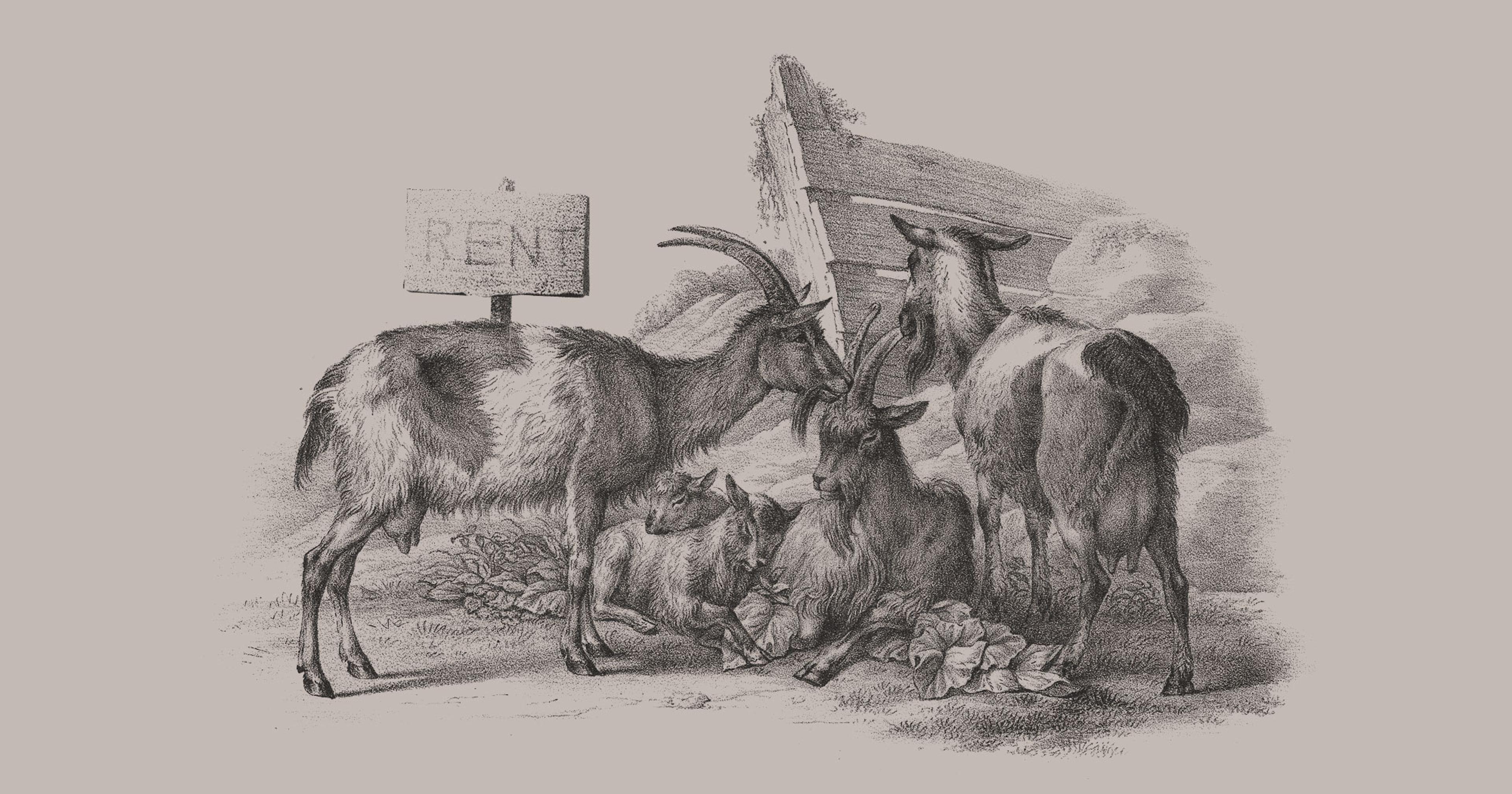
Using goats and sheep as lawnmowers has become a booming cottage industry, particularly in conjunction with solar operations. Meet the farmers renting out their ruminants.
If you have a field of poison ivy, invasive weeds, or any unwanted vegetation, really, you can hire Twix, Moon, Mickey, and some of their colleagues to munch it down to the ground. They’re part of Grazing Goats in Whitewater, Wisconsin, operated by third-generation farmer Linda Klietz and her family after a challenging post-pandemic market for cow dairy forced them to figure out a different way to thrive.
“A lot of farmers, when they get out of dairy, they go into beef, but it was right after Covid where the meatpacking plants were shut down, and the prices dropped and corn [feed] was super expensive,” said Klietz, who runs the 200-acre farm with her husband and daughters. “We had to ask ourselves, what could we do that’s different to supplement the income?”
Inspired by her daughter’s fondness for goats, Klietz began researching dairy and meat varieties, but stumbled upon a farmer in Edgerton, Wisconsin, who was raising Boer and Kiko goats and using them for commercial grazing. Intrigued, Klietz reached out to learn the ins and outs of tasking a herd to chew down nuisance and invasive plants. Fast forward five years, and the Klietz family farm has completely transitioned from dairy to commercial grazing after selling off their dairy cattle in 2021.
Gaining Ground in Vegetation Management
It’s a growing trend. Instead of mowers and herbicides, land managers and solar companies are turning to farmers like the Klietz family, and using goats and sheep as a vegetation management tool to remove nuisance plants and excess growth across solar arrays and fields.
“The demand continues to grow for all types of commercial targeted grazing, whether that’s grazing for nuisance vegetation control; fire control because all of that excess weeds and brush in dry places that can be fuel for wildfires; or invasive species control,” said Aaron Steele, founder of Goats on the Go (GotG), a network of U.S.-based goat grazing affiliates.
For areas with steep topography or already sensitive to erosion or where herbicides and machinery can’t be used, sending in a flock of goats or sheep to get the job done is sometimes the only solution. They’re also easier on the environment.
“In some cases, we can offset the use of chemical herbicides,” said Steele. “Once we push the goats through, it’s much easier to see what needs to be treated and what doesn’t. And we can kind of dab herbicide on the targeted vegetation at that point, instead of spraying it broadly and killing everything in a large area.”
There’s also the natural fertilizer left behind in goat droppings, Steele added. “Native ecosystems tend to function better in all sorts of ways from nutrient cycling through the soil.”
“Targeted grazing leaves the land looking temporarily munched — but it’s not going to turn a jungle into a golf course overnight.”
While there aren’t many downsides to using sheep or goats as a landscape management tool, Steele acknowledged that “there is a different mindset that we encourage our customers to adopt.”
For example, grazing doesn’t leave the land as manicured as a regular lawn service might. “Targeted grazing leaves the land looking temporarily munched — in a natural way that many people appreciate — but it’s not going to turn a jungle into a golf course overnight,” said Steele.
Grazing operations are also lower risk compared to most animal-based businesses as they don’t involve transporting or exposure to chemicals and there’s no potential for injury from machinery used with traditional landscaping services.
The Klietz family has five herds and between 800 and 1,000 goats — depending on whether it’s kidding season — that graze at senior living centers, a truck equipment service, village municipal drainage fields, and private residences.
Grazing operations are lower risk compared to most animal-based businesses as they don’t involve transporting or exposure to chemicals.
In Northern Virginia, Corey Suter maintains a flock of about 25 to 30 Babydoll Southdown sheep on his five-acre permaculture farm. His operation, Lamb Mowers, opened for business in 2016 and provides licensed, weed-eating sheep for local businesses and residences across Fairfax County, Arlington, and the entire D.C. metro area.
“The nice thing about Babydoll Southdowns is that they don’t tend to eat a lot of the typical landscaping plants because people have selected plants based on deer resistance, so they’re not really palatable for my sheep either,” noted Suter. “Oftentimes I just need to fence the perimeter of a property and can let them eat the weeds out of the landscape.”
Like Klietz, Suter has watched his business steadily grow. In 2024, they serviced 140 yards; last year it was 160.
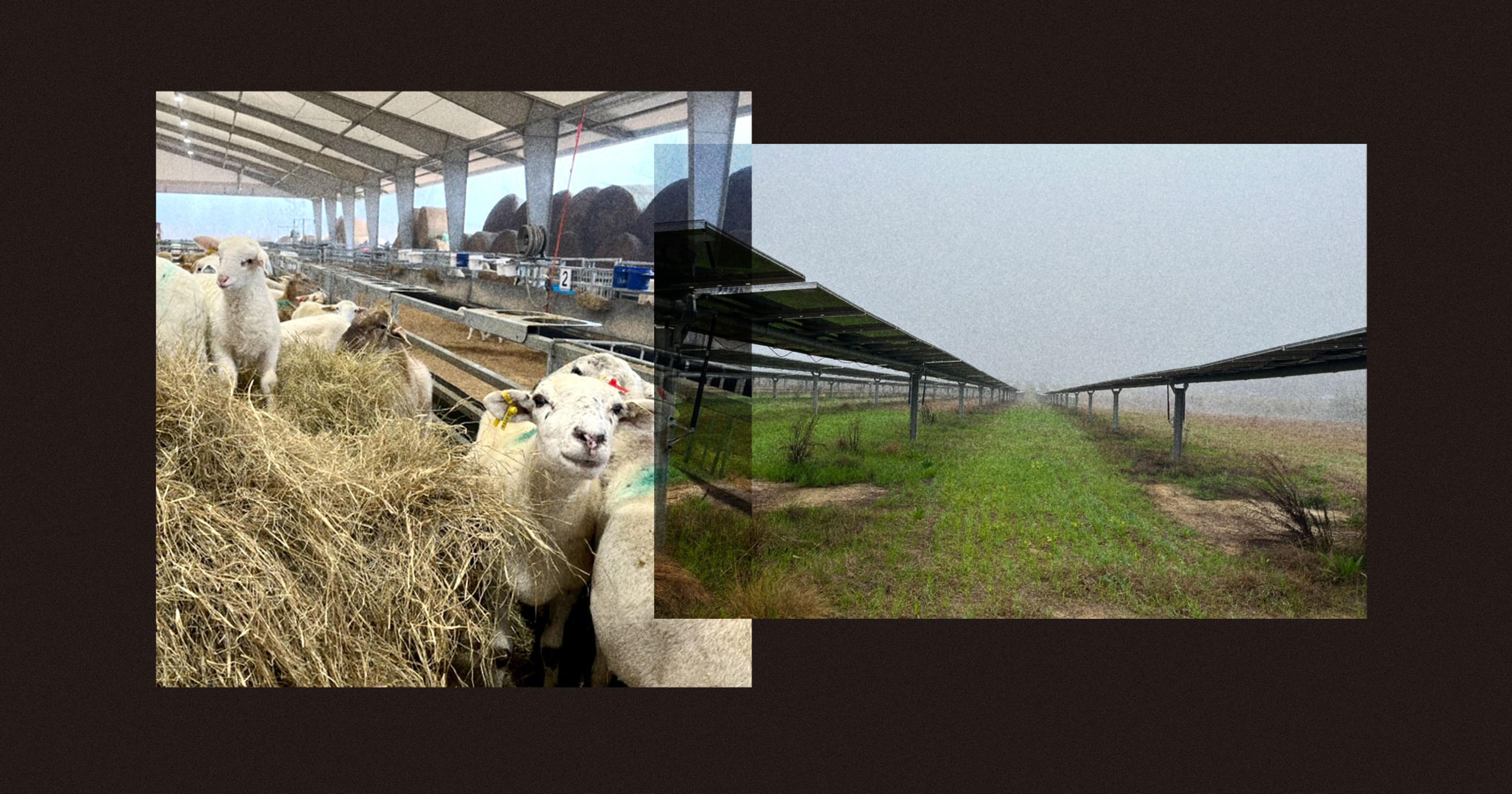
And for solar companies, sheep and solar have a “perfect symbiotic relationship,” according to Kevin Richardson, senior director at the American Solar Grazing Association (ASGA).
Wool, Wattage, and Weed Control
With low raw wool prices, shearing expenses, and market fluctuations, the wool industry isn’t what it used to be, but that doesn’t mean raising sheep has to be unprofitable. Because of their short stature and active browsing, they’re a perfect fit for solar companies looking for ways to keep vegetation low so solar panels are productive. Yet, there is some skepticism surrounding the sustainability of the practice. For example, transportation of flocks between sites can increase fuel use and emissions, and overgrazing or poor pasture management can impact soil, reduce plant diversity, and contribute to erosion. However, for those who operate sheep solar grazing operations, it can also be a way to increase their farm’s bottom line.
About 150,000 acres are being maintained by sheep, according to the ASGA’s United States Solar Grazing 2024 Census, roughly 10% of all ground-mounted solar in the U.S. While the majority of larger solar arrays are in Texas and California, smaller ones are popping up all across the country, resulting in more options for sheep farmers interested in commercial grazing opportunities.
“Solar grazing has been around for about 10 years now, but really started accelerating in the last two years.”
“That large-scale grazing presents a real opportunity where you can get a very large flock, keep your sheep on the site most of the year, and then make the vegetation management fee a pretty sustainable business,” said Richardson. “With smaller sites, it’s a good way to diversify your farm income if you’re close to the site.”
Farmers are still raising the sheep as agricultural commodities, but the solar grazer sheep farmer is generally paid the same vegetation management fee that a mower would be paid, plus also has the ability to sell lambs, which makes the sheep operation “really profitable — and no longer dependent on market prices,” according to Richardson.
Pasture to Profit: Starting a Grazing Business
Depending on whether you have goats or sheep, both GotG and ASGA have plenty of resources available to farmers interested in adding commercial grazing as a way to diversify income.
“Targeted grazing on a commercial/for-profit scale is still a very amorphous industry with no norms or standards, so one of the reasons we have the affiliate network and training is to help answer questions that don’t have easily research-able answers,” said Margaret Chamas, who’s been handling recruitment, onboarding, and support for GotG since 2018.
Chamas helps farmers interested in becoming full-time grazing operations determine how many goats they need, what to charge per acre, how to locate customers, and ways to market their goat grazing business. She also acts as the liaison between farmers and municipalities who may be “resistant to livestock in city limits” and insurance companies that don’t know how to classify or cover a livestock landscaping business — two issues Suter initially ran into when he began Lamb Mowers.
“It wasn’t like I was trying to raise livestock on a property where I needed a variant to raise livestock,” explained Suter. “I just needed to come in and let the sheep graze for two hours and then pull them again.”
Liability insurance can be tricky for some grazing operations to obtain, since “they’re new and relatively unknown to insurers, which makes them nervous,” noted Steele.
ASGA provides training courses — for both farmers and solar companies — as well as sample contracts, budget templates, and more.
ASGA also provides training courses — for both farmers and solar companies — as well as sample contracts, budget templates, and more. It also plays matchmaker between farmers and solar companies.
“Solar grazing has been around for about 10 years now, but really started accelerating in the last two years,” said Richardson, noting that farmers within the ASGA network are often more visible to solar companies searching for grazers in particular counties or states where they don’t already have connections. “They’ll look at our map to find what solar grazers are there and what solar grazers have been trained. We’re still in that growing period of matching demand to where the sheep producers are.”
Other services provided include business planning and management, budgeting, profit projections, the formal/governmental bidding process, animal care and maintenance, and communicating with customers.
Since commercial-scale, managed grazing is anticipated to increase as more solar arrays are installed, and conservation groups, governments, power transmission companies, golf courses, and other large property holders learn the ecological benefits they provide, having reliable resources for farmers is a big benefit.
“Nobody wakes up in the morning saying, ‘I can’t wait to deal with my vegetation problem today,’ until they realize that a targeted grazing service can help them out,” said Steele. “And then they can get excited about it. Doing what they probably should have been doing for years in the management of the vegetation on their property.”