
The SBA works with lenders to provide loans to small businesses. The agency doesn’t lend money directly to small business owners. Instead, it sets guidelines for loans made by its partnering lenders, community development organizations, and micro-lending institutions. The SBA reduces risk for lenders and makes it easier for them to access capital. That makes it easier for small businesses to get loans.
Eligibility
SBA does not lend directly and does not decide your application — "You will be applying for your loan directly through a local lender," and "The lender will provide you with a full list of eligibility requirements for your loan." SBA sets the outer boundary; the lender, CDC or microlender sets the credit terms.
The general test, verbatim: "In general, eligibility is based on what a business does to receive its income, the character of its ownership, and where the business operates. Normally, businesses must meet SBA size standards, be able to repay, and have a sound business purpose. Even those with bad credit may qualify for startup funding."
7(a) loans — "To be eligible for 7(a) loan assistance, businesses must: Be an operating business. Operate for profit. Be located in the U.S. Be small under SBA size requirements. Not be a type of ineligible business. Not be able to obtain the desired credit on reasonable terms from non-federal, non-state, and non-local government sources. Be creditworthy and demonstrate a reasonable ability to repay the loan." That sixth test is a real gate: SBA credit must be unavailable to you elsewhere on reasonable terms.
504 loans — "To be eligible for a 504 loan, your business must: Be an operating business. Operate for profit. Be located in the U.S. Be small under SBA size requirements. Not be a type of ineligible business." Plus "falling within SBA size guidelines, having qualified management expertise, a feasible business plan, good character and the ability to repay the loan." And a hard exclusion: "Loans cannot be made to businesses engaged in nonprofit, passive, or speculative activities." Use is limited to fixed assets — not working capital or inventory, and not "speculation or investment in rental real estate."
Microloans — "To be eligible for a microloan, businesses must: Not be a type of ineligible business. Be an operating business. Operate for profit. Be located in the U.S. Be small under SBA size requirements." Certain not-for-profit childcare centers are also eligible. Proceeds "cannot be used to pay existing debts or to purchase real estate."
7(a) Working Capital Pilot adds an operating-history test: consider it if your business "Has at least one-year of operating history" and "Can produce timely and accurate financial statements, accounts receivable and accounts payable agings, and inventory reports."
What is not published here. SBA's "type of ineligible business" list is a separate document these pages only link to, and no farm- or agriculture-specific rule appears anywhere on the three program pages — so whether a particular farm operation qualifies is a question for your lender, CDC, or microlender, not something SBA answers on these pages. No acreage, commodity, income floor, or audience restriction applies. Nationwide (business must be US-located). Start with Lender Match (https://www.sba.gov/funding-programs/loans/lender-match) — not for disaster loans, which are a separate program.
Details
Organization
Financial Instrument
Loan
Maximum Award Amount
$5,500,000
Terms
SBA does not lend directly — "You will be applying for your loan directly through a local lender" — it guarantees loans made by banks, CDCs and nonprofit intermediaries. Three programs, three sets of terms:
7(a) loans (the main program: working capital, refinancing, machinery and equipment, furniture and fixtures, changes of ownership)
-
"The maximum loan amount for a 7(a) loan is $5 million."
-
Repayment: "Most 7(a) term loans are repaid with monthly payments of principal and interest from the cash flow of the business." Rates may be fixed or variable; on variable loans "the lender may require a different payment amount when the interest rate changes."
-
The 7(a) Working Capital Pilot (monitored lines of credit) publishes its own terms: maximum loan amount $5,000,000; SBA guarantee "85% $150,000 or less / 75% if greater than $150,000"; "Maximum loan maturity 60 months"; and interest-rate caps of base rate +6.5% ($50,000 or less), +6.0% ($50,001–$250,000), +4.5% ($250,001–$350,000), +3.0% ($350,001 and greater). Requires at least one year of operating history.
504 loans (fixed assets only — buildings, land, long-life machinery; through Certified Development Companies)
-
"The maximum loan amount for a 504 loan is $5.5 million."
-
"Long-term, fixed rate financing"; rate is "Pegged to an increment above the current market rate for 10-year U.S. Treasury issues."
-
Fees "Total[] approximately 3% of the debt, rate may be financed with the loan."
-
Maturity: "10-, 20- and 25-year maturity terms are available."
-
Cannot be used for working capital or inventory, or for speculation/rental real estate.
Microloans (through nonprofit intermediary lenders)
-
"The microloan program provides loans up to $50,000... The average microloan is about $13,000."
-
"Maximum repayment term allowed for an SBA microloan is seven years."
-
"Interest rates vary depending on the intermediary lender — Generally, between 8%-13%."
Across the board. "SBA-guaranteed loans generally have rates and fees that are comparable to non-guaranteed loans," with "Lower down payments, flexible overhead requirements, and no collateral needed for some loans." For 7(a) you must "Not be able to obtain the desired credit on reasonable terms from non-federal, non-state, and non-local government sources" and must "Be creditworthy and demonstrate a reasonable ability to repay the loan." Businesses must be for-profit, US-based and small under SBA size standards. Exact rate, fees and collateral are set by your lender, not by SBA.
Application Instructions
Lender Match is a free online tool that connects small businesses with SBA-approved CDFIs and small lenders. Do not use if looking for Disaster loans. See this link: https://www.sba.gov/funding-programs/loans/lender-match.
Related Programs
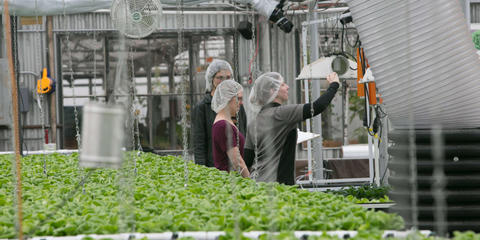
ACRE3 Agricultural Energy Efficiency
Colorado Department of Agriculture
- GrantCost ShareLoanAlternative EnergyConservationIrrigationStorageGreenhouseCOAny
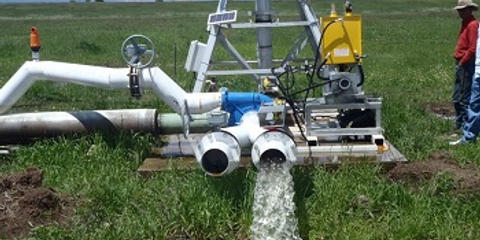
ACRE3 Irrigation Hydropower Programs
Colorado Department of Agriculture
- GrantCost ShareLoanHydro PowerAlternative EnergyIrrigationConservationWater ManagementEquipmentCOAny

ADM re:generations
ADM
- Environmental MarketCarbon CreditsCarbon CaptureSoil HealthCover CropsClimate-SmartNationalCornSoybeansWheatCanolaPeanuts
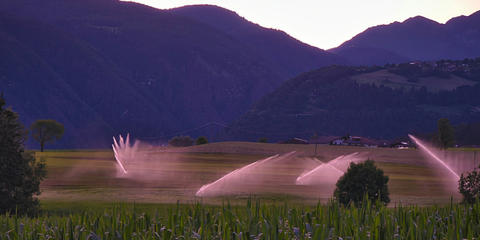
Ag PACE (Ag PACE)
Bank of North Dakota
- LoanIrrigationStorageValue-Added ProductsDiversificationND
Updated September 4, 2026
Image Credit: SBA
This information was gathered from public sources. Ambrook is not responsible for or able to affect the results of any financial programs listed, nor are they responsible for any incorrect information that is listed or is on the hyperlinked external sites. All information is subject to change.
Explore hundreds more programs on Ambrook.