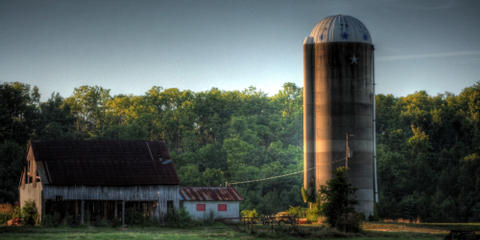
The Kentucky State University (KYSU) Center for the Sustainability of Farms and Families (CSFF) works to develop resources to provide assistance to small-scale farms. In partnership with the Kentucky Agricultural Development Fund (KADF) and the Kentucky Agricultural Development Board (KADB), KYSU is able to provide these grants.
This program helps farmers who want to improve their farming operations, improve the marketability of their products with value-added enterprise, and who want to further their farming and agricultural knowledge through educational trainings.
Applications do not "roll over" to the next period, you must submit an application into each period if you wish to be reconsidered.
Eligibility
The Small-Scale Farm Grant is available for operations in the following priority areas:
Value-Added Enterprise: Changing raw agricultural products into a new product of increased market value (e.g., milk to cheese or lotions, grains to bread). Allowable items include cold storage, commercial kitchen equipment, and appliances such as blenders, mixers, canners, and ovens. Kentucky Farm Bureau Certified Markets are eligible for funding.
Certified Organic Agriculture: Verifiable documentation of Certified, Transitional, or Exempt organic status is required. Allowable items include production-related implements, equipment, or supplies such as seeders, handheld tools, walk-behind implements, and irrigation. Farms registered as Transitional or Exempt are those with organic sales through direct market channels totaling less than $5,000/year.
Agroforestry/Specialty Crops: Equipment and non-disposable supplies related to production, harvesting, processing, storage, and packaging of non-timber forest products and specialty crops such as tree sap syrup, mushrooms, honey, medicinal herbs, fruits, nuts, berries, silvopasture ruminant production, cut flowers, floriculture, and other nursery crops. Excludes beef and dairy cattle.
Food Systems Resiliency: Promotes production, sale, and consumption of healthy foods in areas of Kentucky with high food insecurity. Farmers who accept EBT SNAP payments (or sell at a farmers market that processes EBT SNAP) are eligible for improved crop/livestock production and value-added product development (fruit and vegetable production, aquaculture, poultry or eggs, small ruminant production; excludes beef and dairy cattle).
Emerging Agricultural Technologies (EAT): Supports farmers implementing emerging technologies/practices that enhance farm efficiency and sustainability, focused on Controlled Environmental Agriculture and Precision Agriculture. Designed for experienced farmers with existing infrastructure.
Farmer Education Program: Supports workshops, conferences, and online trainings, including lodging, mileage, registration fees, and reference materials. Applications must be submitted 30-90 days in advance.
Beginning Beekeeper Program: A collaboration among Kentucky State University, the Kentucky State Beekeepers Association, the Kentucky Queen Bee Breeders Association, and local beekeeping groups. Applicants must be a member of a local beekeeper association and/or KSBA, complete 6 Beekeeping Continuing Education Units, submit regular progress reports, and commit to improving Kentucky bee genetics. The beginner kit covers basic hive materials, tools, PPE, and pest/disease test kits; bees themselves are not covered.
General eligibility: The USDA defines a small-scale farm as one that sells less than $250,000 of agricultural products each year. Kentucky State University employees and their immediate family members are not eligible. There is no longer a separate 'Food Insecure Area Production' category.
Details
Deadline
October 1, 2026
Organization
Financial Instrument
Grant
Maximum Award Amount
$5,000
Terms
The U.S. Department of Agriculture defines a small-scale farm as one that sells less than $250,000 of agricultural products each year. Farmers who are motivated to improve their business and who can demonstrate the ability to document their successes will be considered.
Grant funds cannot be used for the following:
-
Motorized vehicles such as trucks, tractors, walk-behinds.
-
Labor costs paid to the applicant or their relatives.
-
Consumables or expendables such as jars, seeds, feed, trees, or plant materials.
-
Perimeter fencing
-
Purchases made prior to grant approval are not eligible for reimbursement.
-
Kentucky State University employees and their immediate family members are not eligible.
-
For the Farmer Education Program, education assistance applications must be submitted at least 30-90 days in advance of the conference/workshop, and you must secure your registration and lodging beforehand.
Maximum funding amounts: The maximum funds available per farm household or business is $5,000 per application with a lifetime maximum of $10,000. Applicants may also be eligible for up to $500 for educational trainings or materials with a lifetime maximum of $1,000. Partial funding of equipment greater than $5,000 requires verified matching funds.
Caps (2026-27 cycle): $5,000 per application, lifetime $10,000 per farm household/business; associations/non-profits one-time $15,000; equipment over $5,000 requires verified match. Farmer Education lane: up to $500 per application (lifetime $1,000) toward registration, lodging and travel for a specific conference or training, reimbursed on receipts; same six deadlines. Eligibility: Kentucky farm with gross annual ag sales over $1,000 and under $250,000 in the previous two years; no start-ups under one year.
Application Instructions
Complete the appropriate application for your priority area:
-
Agroforestry/Specialty Crops
-
Certified Organic Agriculture
-
Emerging Agricultural Technologies (EAT)
-
Farmer Education Program
-
Food Systems Resiliency
-
Value-Added Enterprise
-
Beginning Beekeeper Program
On the application, please:
-
Describe plans for improving your business. Please note that your budget plan should overestimate expected expenses.
-
Describe who will do the work, when the work will be done, and the expected outcome.
-
Please provide a quote for all budgeted items.
-
If funded, receipts for your purchases must be submitted with detailed reports of the projected results.
With questions, please contact:
Joni Nelson at 502-597-6831 or joni.nelson@kysu.edu
Kevin Gurtowski at 859-359-6424 or kevin.gurtowski@kysu.edu
Applications are to be submitted via email or postal mail to:
Allison Noel, Kentucky State University, 400 East Main Street, CEB-218, Frankfort, KY 40601, allison.noel@kysu.edu
Forms
Related Programs

480-a Enrollment Incentive Program
New York City Watershed Agricultural Council
- GrantNY

A Vibrant Future
International Fresh Produce Association, U.S. Department of Agriculture
- GrantClimate-SmartALCAFLGALABerriesGrapesFruitsVegetables

Acequia and Community Ditch Fund (New Mexico)
New Mexico Department of Agriculture
- GrantWater ManagementConservationLegal & FinanceResearchNM
ACRE3 Agricultural Energy Efficiency
Colorado Department of Agriculture
- GrantCost ShareLoanAlternative EnergyConservationIrrigationStorageGreenhouseCOAny
Updated September 9, 2026
Image Credit: Jennifer Kirkland
This information was gathered from public sources. Ambrook is not responsible for or able to affect the results of any financial programs listed, nor are they responsible for any incorrect information that is listed or is on the hyperlinked external sites. All information is subject to change.
Explore hundreds more programs on Ambrook.