Joint Chiefs’ Landscape Restoration Partnership (JCLRP)
The Joint Chiefs' Landscape Restoration Partnership enables NRCS and the Forest Service to collaborate with states, agricultural producers, forest landowners, tribes and public land managers to invest in conservation and restoration at a big enough scale to make a positive difference. Working in partnership, and at this scale, helps reduce wildfire threats to communities, protect water quality and supply, and improve wildlife habitat for at-risk species.
2025 Projects: USDA is investing more than $8 million for five new projects through the Joint Chiefs’ Landscape Restoration Partnership Program. The $8 million investment in new projects is in addition to $32 million for 24 existing three-year-long projects. These projects reduce wildfire risk, protect water quality, and improve forest health across the nation.
Since 2014, USDA has invested more than $423 million in 134 projects in 42 states as well as Guam and Puerto Rico.
Eligibility
There is no landowner application to Joint Chiefs'. The partnership selects project areas, and the projects are proposed by the agencies, not by you: "Joint Chiefs' project proposals are developed at the local level through a collaborative process between NRCS, Forest Service and partners... Proposals are submitted by the local NRCS and Forest Service offices to the national agency offices. Proposals are reviewed and vetted at multiple levels in the agencies based on local, state, Tribal and regional priorities." Past partners "have included county, state, non-governmental, Tribal, utilities or private individual stakeholders."
So for a farmer or woodland owner the real eligibility test is geographic: does your land sit inside a currently funded Joint Chiefs' project area? Ask your local NRCS field office, and check the annual project summaries and the interactive project map on the program page.
Who ultimately receives the money: private forest landowners and agricultural producers inside those project areas. The program "enables NRCS and the Forest Service to collaborate with states, agricultural producers, forest landowners, tribes and public land managers," works "in partnership with state forestry agencies, non-governmental organizations, and private landowners," and the funded projects "provide private landowners with conservation resources that help them complete restoration efforts on their land." Projects are sited "where public forests and grasslands intersect with privately-owned lands" — that is, near National Forest System land.
If your land is in a funded project, you enroll through the regular NRCS conservation programs, and the ordinary NRCS eligibility check applies as stated on this page: "An official tax ID (Social Security number or an employer ID)", "A property deed or lease agreement to show you have control of the property", and "A farm number" from FSA, plus "an AD 1026" for highly erodible land and wetland compliance.
The work funded is forestry, not cropland conservation: "hazardous fuel treatments, installing fire breaks, reforestation, riparian habitat restoration."
No acreage minimum, income limit, or audience restriction is published. The evaluation criteria on the page govern project proposals, not individual landowners — they reward "Reduction of wildfire risk in a municipal watershed or the wildland-urban interface (WUI)," alignment with Forest Service Wildfire Crisis Strategy landscapes and high-risk firesheds, and "Coordination (i.e., pre-planning) with individual landowners within the proposed project's boundaries."
Details
Organization
Financial Instrument
Grant, Cost Share
Total Program Funding
$55,000,000
Terms
No per-landowner award ceiling, payment rate, or cost-share percentage is published.
Joint Chiefs' is not a sign-up a farmer applies to directly. NRCS and the Forest Service competitively select multi-partner, landscape-scale projects; if your land falls inside a funded project area, you then get assistance through the regular NRCS conservation programs, on your state's practice payment schedules — NRCS says to "Review the amount and availability of financial assistance for selected conservation practices in your state." Payment follows completed work: "If you're selected, you can choose whether to sign the contract for the work to be done."
Project term: "Through the three-year projects, NRCS and Forest Service work in partnership with state forestry agencies, non-governmental organizations, and private landowners to apply targeted forestry management practices across public and private lands."
Every dollar figure the program publishes is project-level, not per farm — for 2025, "USDA is investing more than $8 million for five new projects... in addition to $32 million for 24 existing three-year-long projects," and cumulatively "Since 2014, USDA has invested more than $423 million in 134 projects in 42 states as well as Guam and Puerto Rico." Do not read those as anything you can receive.
Funded work is the forest-health set: "hazardous fuel treatments, installing fire breaks, reforestation, riparian habitat restoration."
What to ask your local NRCS field office: whether your property sits inside a currently funded Joint Chiefs' project area, and what the payment rate is for the specific forestry practices you want in your state.
Application Instructions
To apply, reach out to your local USDA service center.
Resources
Related Programs

480-a Enrollment Incentive Program
New York City Watershed Agricultural Council
- GrantNY

A Vibrant Future
International Fresh Produce Association, U.S. Department of Agriculture
- GrantClimate-SmartALCAFLGALABerriesGrapesFruitsVegetables

Acequia and Community Ditch Fund (New Mexico)
New Mexico Department of Agriculture
- GrantWater ManagementConservationLegal & FinanceResearchNM
ACRE3 Agricultural Energy Efficiency
Colorado Department of Agriculture
- GrantCost ShareLoanAlternative EnergyConservationIrrigationStorageGreenhouseCOAny
Updated September 4, 2026
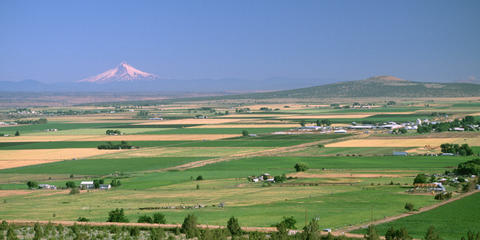
Image Credit: Forest Service Pacific Northwest Region
Run this program? Email fundinglibrary@ambrook.com to request changes to this listing.
This information was gathered from public sources. Ambrook is not responsible for or able to affect the results of any financial programs listed, nor are they responsible for any incorrect information that is listed or is on the hyperlinked external sites. All information is subject to change.
Explore hundreds more programs on Ambrook.