
Many cotton farmers would love to exit the globalized commodity market. Is there enough momentum to do so?
Sam Whitaker is a seventh-generation farmer in Arkansas, and depending on the year, he rotates between commodities like corn, rice, soy, and cotton. Cotton is vital in the rotation for soil health, but ever since 2007, an infamously poor year for the cotton industry, Whitaker and many of his fellow growers have scaled back.


“My dad farmed cotton,” he says. “We had a lot more cotton planted [before 2007].”
Post-2007, many local farmers pivoted to corn and soybeans since their market was high. Ever since, communities with historically high cotton production have closed their gins, which is the first step in processing cotton to split the cotton boll from seed.
It’s an industry-wide problem: In the late 1800s, there were an estimated 900 cotton gins throughout the country. Today, there are about 100. Cotton farmers now have to drive further to another gin. In turn, those gins are overused, which leads to more costly maintenance and repairs. Then last year flooding left many acres of Southern cotton to go unplanted, so even existing gins may not have enough business to sustain themselves.
This is just a snapshot of the challenges to cultivating cotton, yet no one can deny that the fiber is having a moment. In June, USDA released the Great American Cotton Plan, which includes a suite of tax benefits for cotton farmers to offset costs and bolster consumption of American cotton goods. The tagline of the initiative reads “Plant, Not Plastic,” a side-eye to manufactured textiles such as polyester and nylon, made with petrochemicals such as perfluoroalkoxy alkane (PFAs) and bisphenol A (BPA) that are known endocrine disruptors.
The federal government acknowledging forever chemicals in clothing is a big deal. According to a February study by Pew Charitable Trusts, about four in five Americans have concerns about the toxins in everyday products, and across the political spectrum there is consensus that the government should be doing more to protect consumers. Plus, there is evidence that Americans are willing to pay a premium for domestically made American cotton products, especially if they’re organic.
But the elephant in the room is cost. Even for all of the buzz about forever chemicals right now and federal momentum, is that enough to generate different cotton market models? Are consumers actually willing to pay more for such products?
Commodities 101
Whitaker recently stepped into a meeting about opening up a new cotton gin in his area. Six to seven gins were lost in a 30-mile radius over the last 20 years, and reviving some of that infrastructure would reduce travel times for farmers. The catch? It’s projected to cost $15 million.
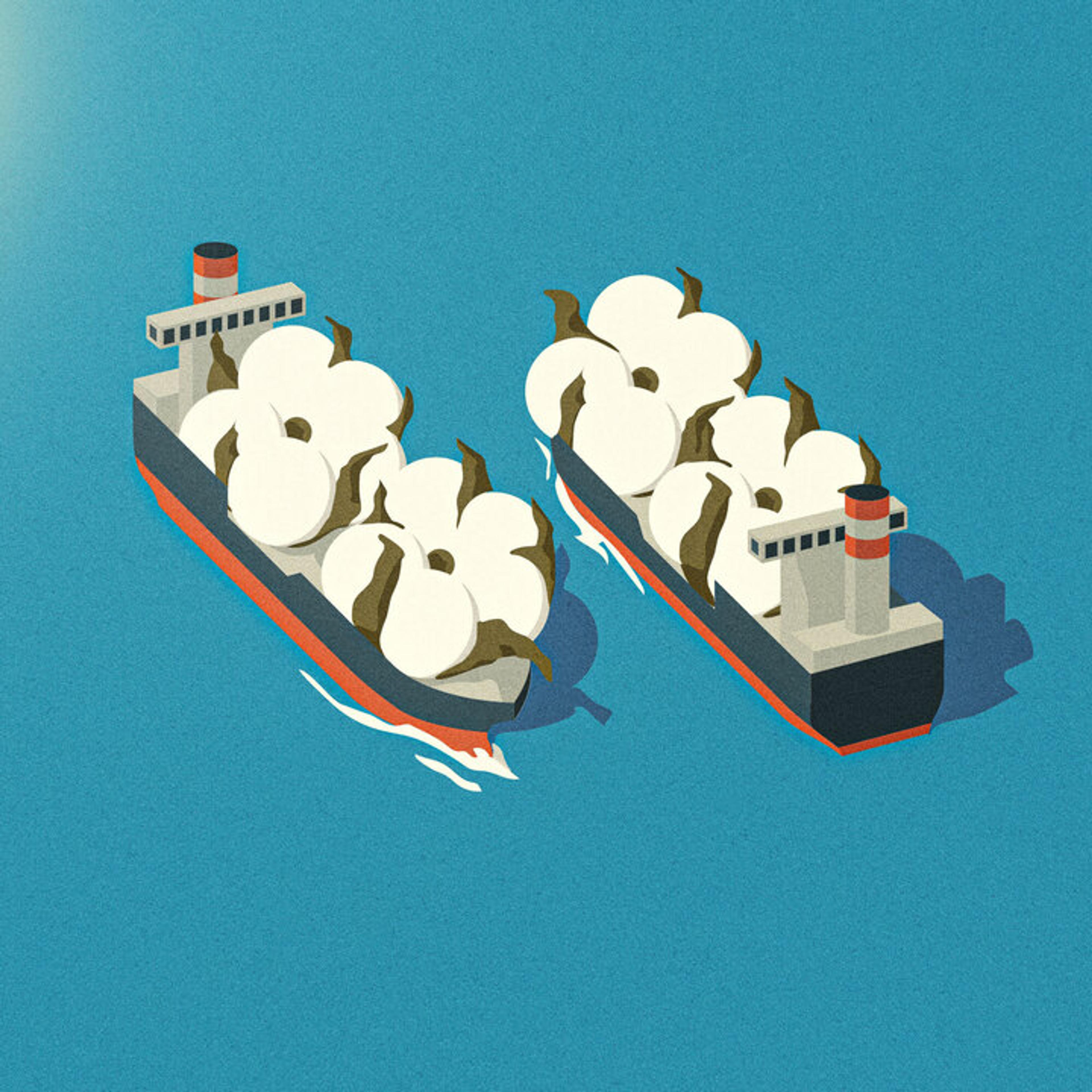
“All aspects of the textile business are very capital-intensive,” he says. From Whitaker’s calculations, the United States produces 14 million bales of cotton, and exports 12 million bales around the world for processing that eventually ends up back in the country. “To me, it makes no sense,” he says.
He’s in favor of onshoring more textile manufacturing to countries in the Western Hemisphere such as Mexico, Honduras, and Guatemala instead of Asia. However, there is no mention of nearshoring in the Great American Cotton Plan. Whitaker says that it would be nice if there was a way to bypass all of this global movement, and sell his cotton directly to domestic textile mills or designers instead, but it’s not easy to even find such entities. “There are few opportunities and little infrastructure available for this,” he says.
There also isn’t clear evidence that consumers would fundamentally bite if such infrastructure was in place. A t-shirt manufactured in Asia can cost as little as $2 to produce, and Americans will buy it for $20 without issue. Making the same shirt in America could cost up to $27, and would require being sold at a multiple, say, $80, to power a sustainable business. Whitaker isn’t optimistic that customers are willing to do that.
“The consumer is addicted to cheap,” he says. “They are very much interested in sustainability, but few are willing to put their money where their mouth is.” Yet even for those limitations, two factors may be lights at the end of the tunnel for cotton: conflict and climate.
The Magic Hour
In May, NOAA published its 2026 Atlantic hurricane season outlook, estimating that this year will have a below-average hurricane season.
Guy Collins, an extension cotton specialist for North Carolina State University, says that while moisture during very specific times of year can be devastating for cotton, it’s largely welcome in North Carolina because only five to eight percent of cotton is irrigated in the state. For comparison, in Georgia 40 to 45 percent is irrigated. North Carolina’s cotton is unique because it soaks up all of the rain it gets, and doesn’t require intensive taps on water resources. Cotton can also be planted in proximity to the ocean because it has a strange superpower.
“Cotton is the most tolerant of salt, then corn, then soybeans,” says Andrea Gibbs, an agriculture extension agent on the Pamlico Sound in North Carolina. In her area, cotton farmers are in proximity to the Atlantic, and have existing infrastructure to drain their fields and prevent storm surge.
One obvious question Gibbs gets all the time is, why bother farming in a flood zone? The answer is that even if Gibbs’ zone gets a lot of moisture, the soil is fit for it because it has a higher composition of organic materials, and this helps farmers withstand drier weather with higher yields. Even if there is a climate risk in the area, it can also heap big rewards.
The Geopolitics of Cotton
Since March, the United States has been in what some call a war with Iran, and others call a conflict. Either way, the Strait of Hormuz has been blocked on and off for nearly six months, sending the price of gasoline and oil at large skyrocketing domestically and internationally.
But in the context of cotton, this is good news. When petroleum prices are high, that raises the cost of polyester, so right now cotton is more attractive for mills to work with than manmade textiles, Collins says. “When oil is cheap, so is polyester, which puts pressure on cotton,” Collins says. “Ultimately, I think the consumer likes cotton products more, but it’s a matter of encouraging the mills [to buy it].”
The deep, unrelenting pressure of cotton’s role as a commodity provides no easy answers. If cotton prices are higher, more mills could open, but if oil gets cheaper, it could plunge, sending massive $15 million investments into local gins into a tailspin. Steering the ship and its myriad of market threats—extreme weather, war, inflation—may ultimately take more precedence than the fact that more Americans are concerned about the toxins in their world. Some of Gibbs’ saltwater research has helped provide a solid background for more infrastructure investments to support cotton production, so she’s hopeful about that.
But even with endless market threats, there is opportunity, one would argue, for cotton to be processed and sold in a different way. American Giant, for example, is still in business 15 years later after taking a big bet on selling American grown, spun, and manufactured cotton clothing. Red Land Cotton sells a variety of bedding and home supplies that are made soup-to-nuts in the South. Actively Black sells a variety of cotton activewear with fiber grown by Black cotton farmers in particular.
All of those businesses are pushing the envelope on ways that American cotton farmers can exit the commodity market, for whatever reason, and find a new path forward. The question is if consumers ultimately care enough to change their habits—for good.