Is growing agave a smart solution to California’s drought problems?
Stuart Woolf’s fields should have been barren by now. The land where Woolf’s family has farmed crops like almonds and tomatoes for more than 50 years lies west of Fresno in California’s Central Valley — what Woolf calls “ground zero” for mandatory water reductions. Due to the state’s long-term drought, Woolf and other farmers in the area will receive significantly less water than they have in the past, which will require him to fallow about a fifth of his 30,000 acres in the coming years.



But in place of bare earth, a portion of that acreage is instead covered in long rows of spiky, gray-green plants. Woolf is growing agave, a desert plant native to Mexico that’s used to produce alcoholic spirits like tequila and mezcal. Around 2021, Woolf started searching for alternatives to fallowing his land, such as planting drought-tolerant crops that require minimal watering. At the same time, he noticed that his wife and her friends were drinking more agave-based spirits.
“I had experience with tequila in college, and I figured I wouldn’t be going back there,” Woolf told Offrange with a chuckle. “But what they were drinking was a lot better than what I was drinking in college. I found myself just pouring a little glass and sipping and thoroughly enjoying it.”
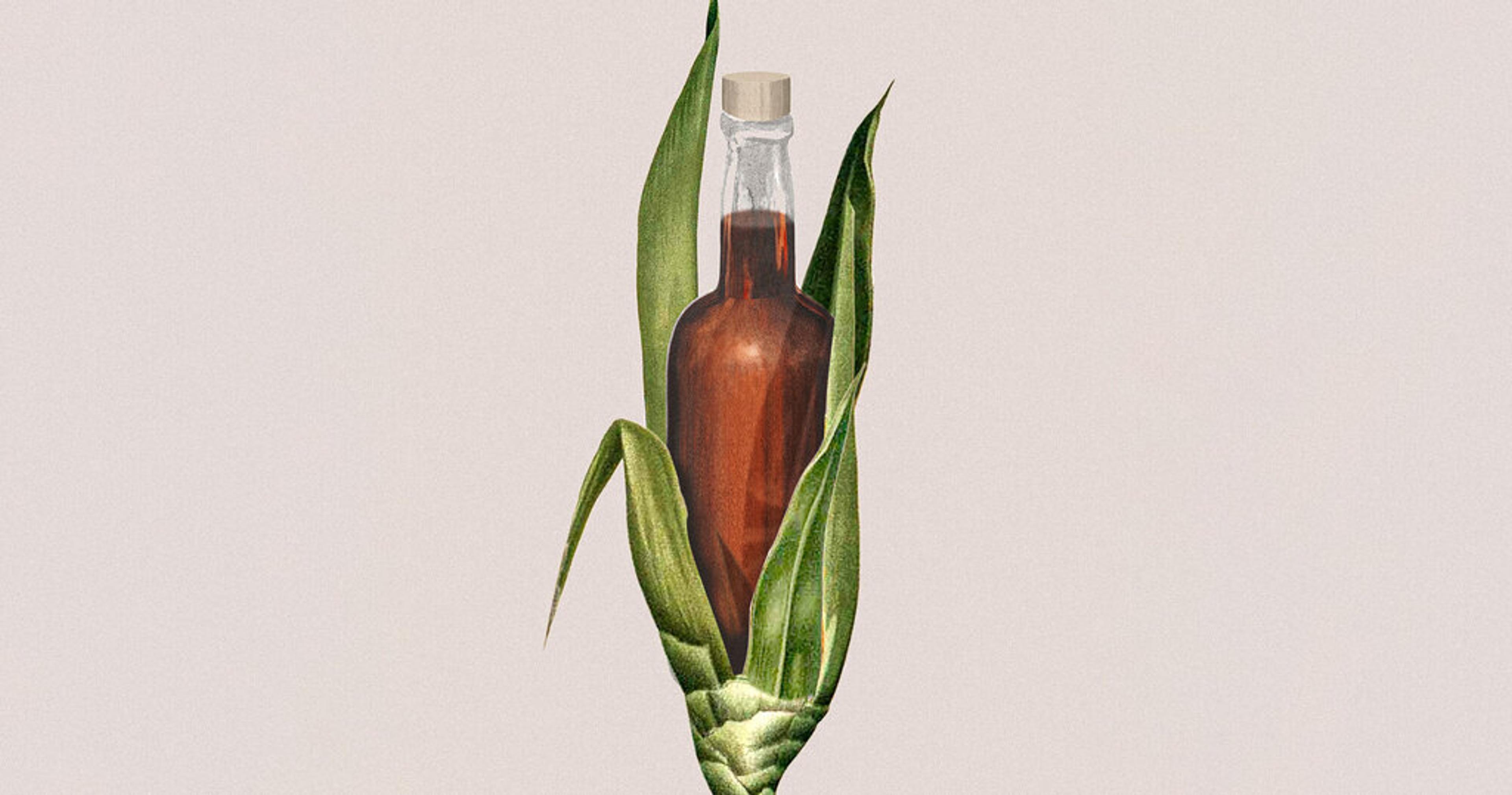
Woolf decided to try planting some himself — and five years later, he has around 550 acres of agave, which he sells to distillers around the state. Because Mexico regulates labeling — much like champagne in France, tequila must be produced only in Mexico, using a specific species, Agave tequilana — Woolf can’t legally call these spirits tequila (or mezcal, which is made using a different agave variety). But he’s part of a wave of growers around California who are pivoting to agave as a solution to the state’s climate change-driven water problems while also seeing an opportunity for a homegrown agave spirit industry (what some have termed “Mezcalifornia”).
“There’s a lot of excitement around this from growers to have a crop alternative that requires so little water,” Woolf said. “This could bring a lot more acreage back into production, create jobs and benefit local communities.”
Craig Reynolds, another California agave grower who harvested his first crop in 2019, founded the California Agave Council in 2022. The group now has about 100 members, and hosts an annual symposium that brings together growers, distillers, researchers, and others. In doing so, they’re learning from the California wine industry, Reynolds said, which also once started as a scrappy newcomer before rising to global prominence. It’s an opportune moment, as demand for agave-based spirits increases; the annual amount of tequila and mezcal sold in the U.S. has tripled since 2003.
It’s an opportune moment, as demand for agave-based spirits increases; the annual amount of tequila and mezcal sold in the U.S. has tripled since 2003.
At the same time, climate change has threatened California’s position as a top producer of high-value crops, such as almonds and pistachios. These thirsty plants suck up water that’s no longer readily available, as shrinking snowpack and hotter, drier weather will likely lead to an estimated 10 percent reduction in available water supplies by 2040. These conditions are ideal for agave, however, which uses about 2 1/2 inches of water per acre, Woolf said, compared to around 50 for almonds. Moreover, Reynolds added, warmer winter temperatures reduce the threat of frost, which could kill agave plants. California is currently at the forefront of agave production, but other states such as Texas, Arizona, and New Mexico are also experimenting.
Still, agave is native to the milder and more humid climate of central Mexico, and as a result, growers told me that yields in the U.S. are not always as high as they’d hope for. In response, some researchers have begun exploring technological solutions. Ron Runnebaum, a professor of viticulture and chemical engineering at the University of California, Davis, is trying to better understand the genetics of the various agave species to see if cross-breeding them could encourage characteristics more suited to California’s soil and climate.
He’s also considering ways to introduce automation into the harvesting process, which is currently labor-intensive; the plant’s heart, or piña, must be cut out and the leaves discarded. That procedure also leaves behind a large amount of organic waste, and Runnebaum is looking into potential applications for that biomass, such as fuel or fiber. “The excitement here is in learning how to grow a crop that’s been successfully scaled elsewhere, and learning how to grow that in a new place,” he said.
Agave is native to the milder and more humid climate of central Mexico, and as a result, growers told me that yields in the U.S. are not always as high as they’d hope for.
Another group of researchers at UC Davis has developed an online guide for California agave growers, with information on different species, growing temperatures, and how to manage residues left over after harvest and processing. They’ve also presented their work to farmers at in-person events and translated their findings into Spanish. UC Merced, meanwhile, has partnered with the Technological Institute of Monterrey, in Mexico, to collaborate on agave research and education, particularly in bioengineering and agtech.
“Mexico has tremendous traditions of tequila and agave production going back hundreds of years, and those are to be respected, but they can also be a hindrance,” Reynolds said. “We’re fortunate in starting from scratch that we can apply more innovative practices.”
In particular, he sees an opportunity for California to be a leader in sustainable agave growing, an area in which he said Mexico has fallen short. He pointed to environmental problems such as pollution from distillery waste as well as deforestation resulting from the expansion of agave plantations. “We have an opportunity to do a better job dealing with those issues,” Reynolds said.
Still, California agave farmers will have to address some major challenges if they want the nascent industry to grow. Agave plants typically take seven to nine years to mature (although some varieties found in California have been found to be ready for harvest in as little as four and a half), making them a difficult startup crop for farmers who might have to wait years before seeing any return on their investment.
Growers like Woolf and Reynolds have had to source their plants directly from Mexico, which has at times created legal and logistical headaches.
Another question is how to obtain the plants. Agave are clonal plants, meaning that parts of a mature plant can be cut off and replanted to propagate. But the initial stock must be purchased from somewhere, and not enough nurseries currently exist in California to meet demand — so growers like Woolf and Reynolds have had to source their plants directly from Mexico, which has at times created legal and logistical headaches.
In the end, Woolf said their goal is to vertically integrate agave production, from planting to distilling. (This idea is controversial in the California agave world, which is split between those who want larger-scale production and others who see it as a smaller, more localized crop). Though he doesn’t necessarily expect to compete with Mexico on a cost basis straight away, he sees potential for high-quality, small-batch agave spirits to take off in California. A small market already exists; other farmers who have tried this approach retail their alcohol for $160 a bottle.
“Within the next few years, I’m probably going to build my own craft distillery,” Woolf said. “It would be so cool to have a bottle of agave spirits with a California label.”