Rodeo said bronco riding wasn’t a sport for women. They got on anyway.
“When they doubt me … I feel like I just want to make them eat their words,” said Bee Underwood, Women’s Ranch Bronc competitor.

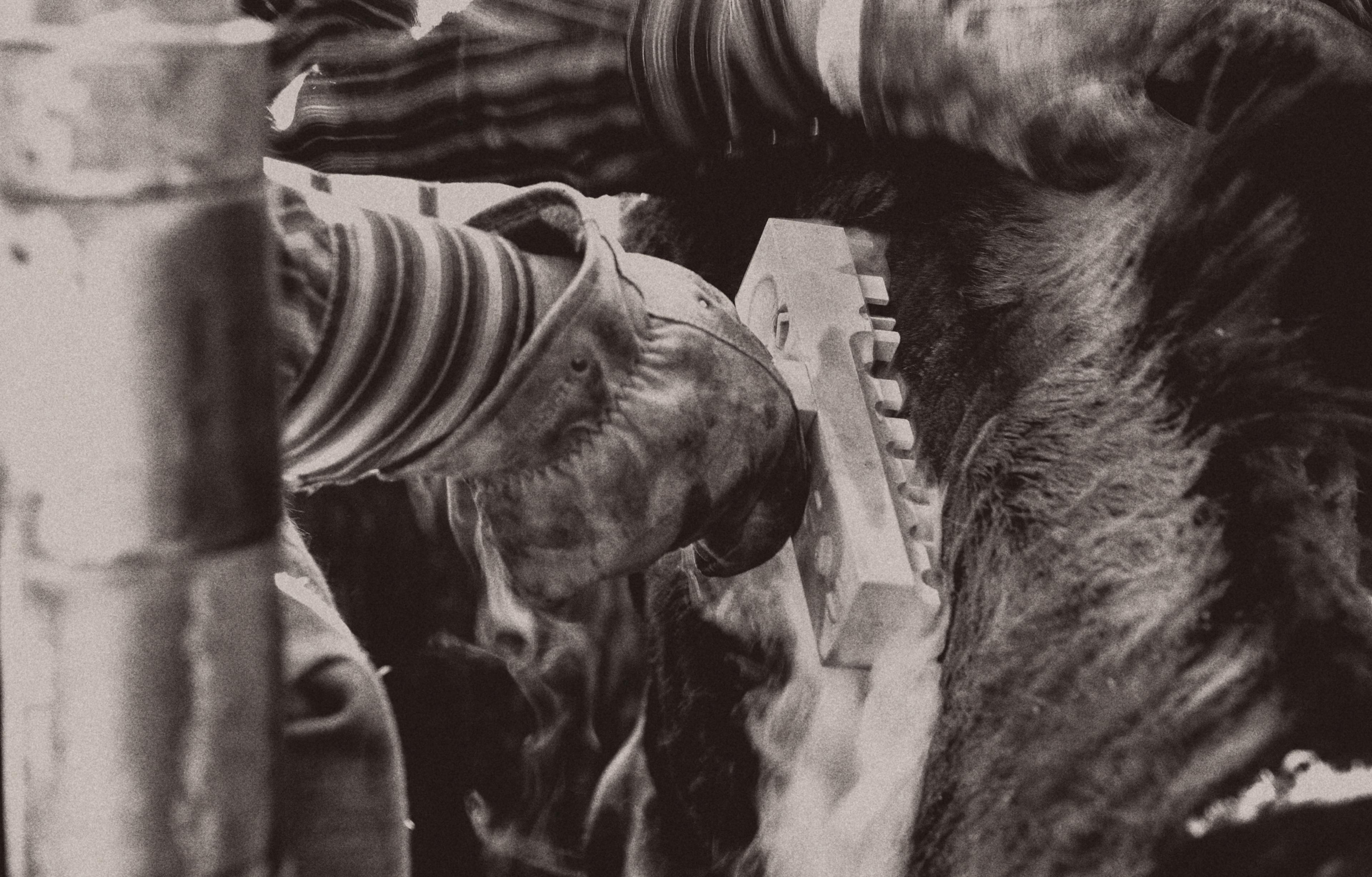
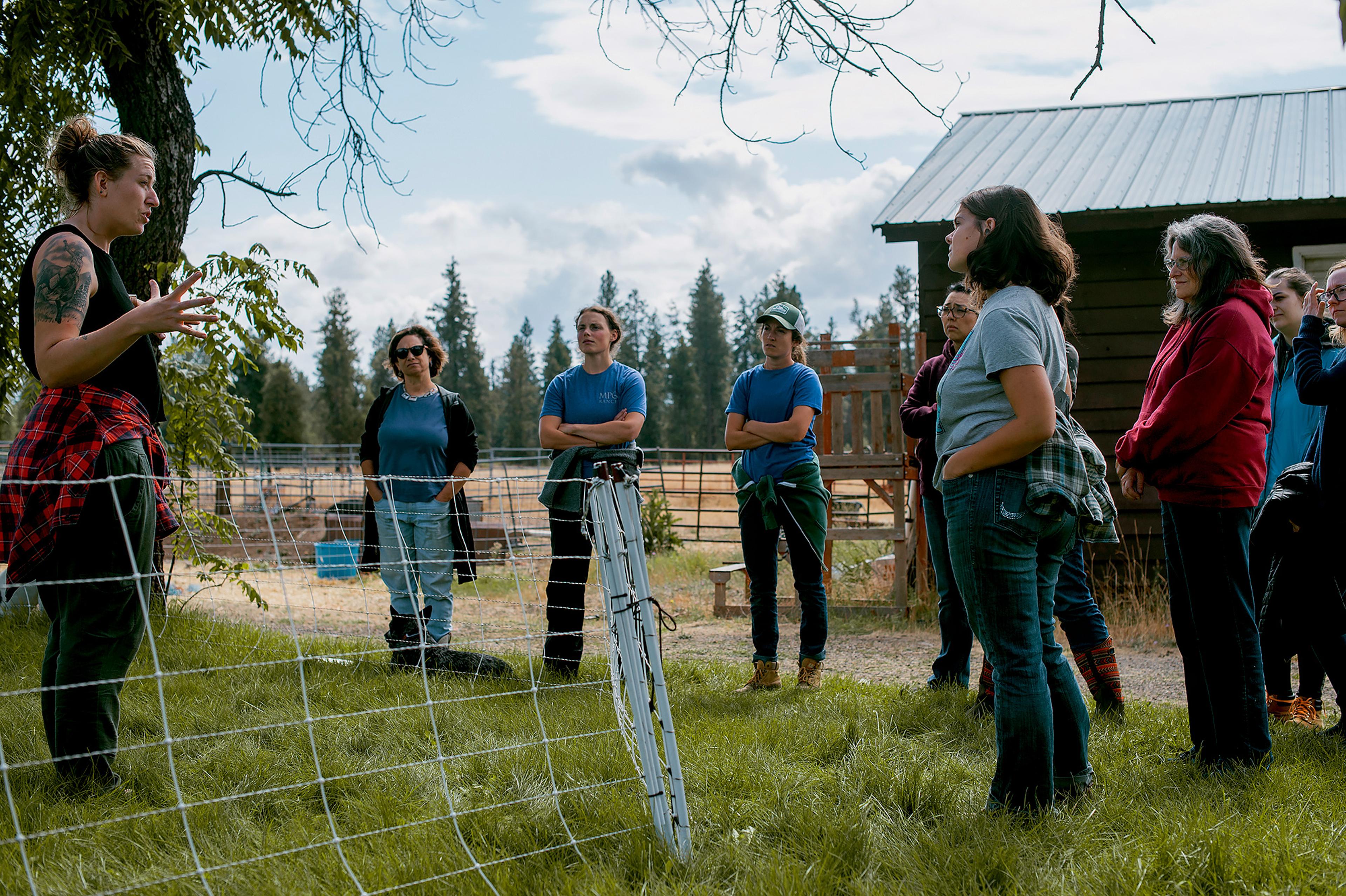
Determined to make a resurgence into roughstock — a rodeo event defined by riding a bucking horse or bull for 8 seconds — women’s ranch bronc riding is sweeping across the U.S., Canada, Australia, and Mexico. In ranch bronc competition, riders use a working Western saddle, often with a rope or nightlatch for one hand, with their other hand gripped tightly around a thick rein. For the women brave enough to climb in a chute, their reasons can be as varied as their backgrounds.
As 18-year-old Canadian bronc competitor Sophia Bunney told the Associated Press: “In Grade 3, we did ‘what do you want to be when you grow up?’ and I said I wanted to be a female bronc rider.”
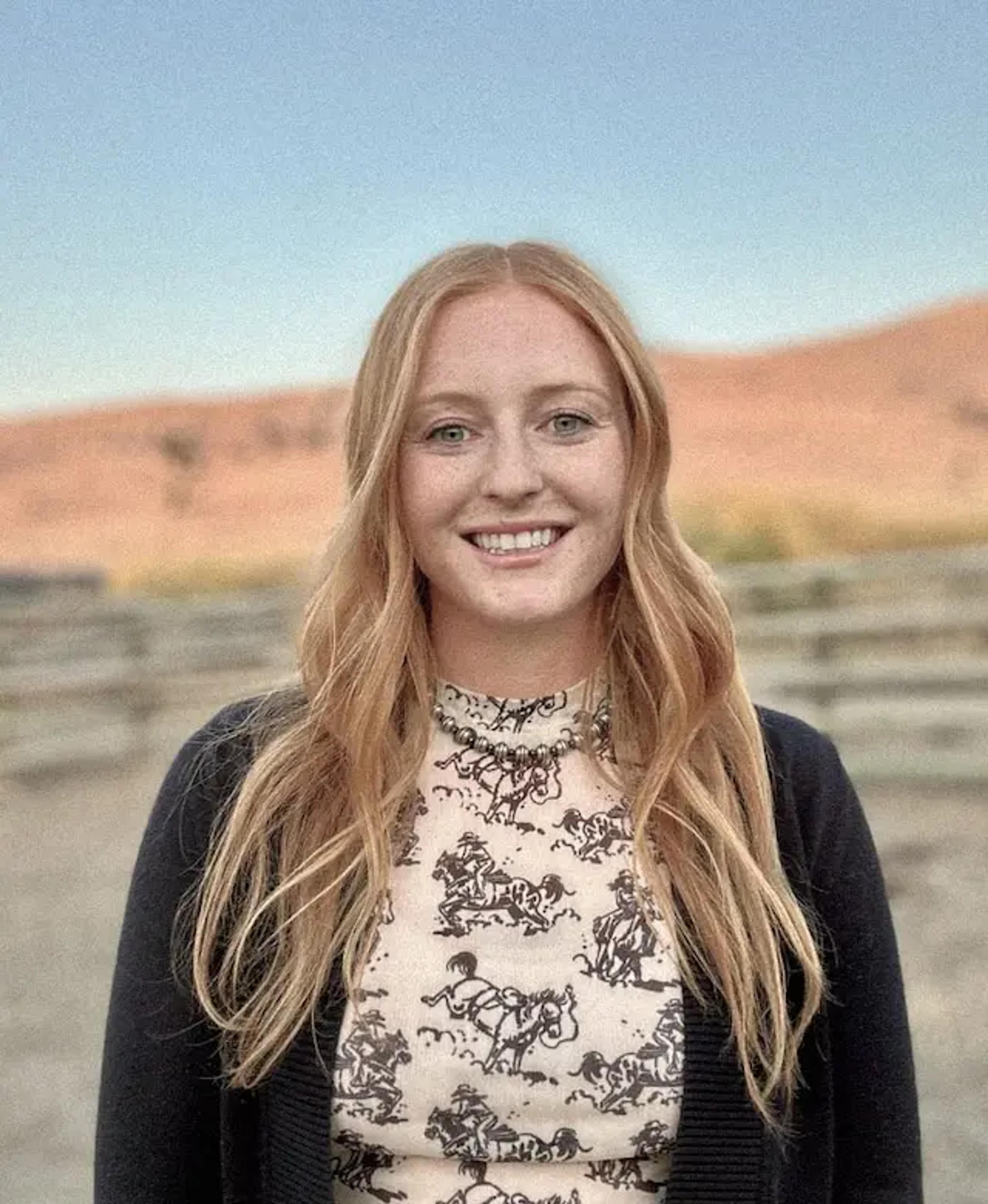
This year marks my eighth summer working alongside my husband at a remote cow camp in Montana. I’ve spent all those years being asked if I’m just up there visiting or “Do you get to help sometimes?” I felt constantly underestimated, even by people who knew us well. So I myself found ranch bronc riding the way a lot of women do, simply to prove that I could.
Once inside the chute, it’s just you and the horse, over a thousand pounds pinning you against metal. When the gate opens, one powerful lurch propels you into the arena; you grip your rope, trying to move with an animal who truly loves to buck. After every ride, I remember thinking, “If I can stay on a horse whose entire job is to throw me off, I can handle anything back at the ranch.”
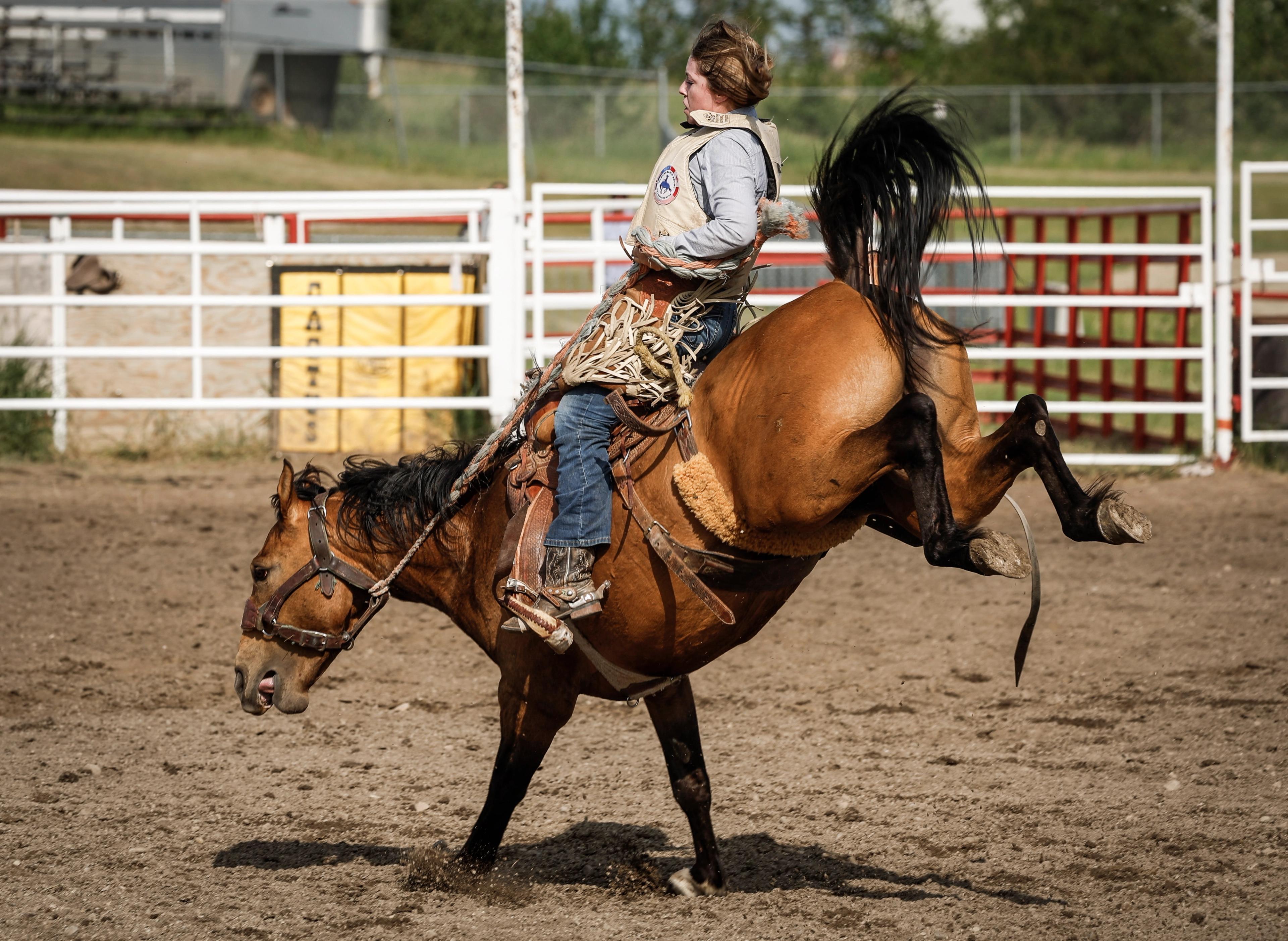
Victoria Ruf, of Rocky View County, Alberta, competes in women's ranch bronc during rodeo action in Crossfield, Alberta, Saturday, June 14, 2025.
·Jeff McIntosh/The Canadian Press via AP
Women in this sport know that feeling — it’s undeniable. “It lights a fire inside you that you didn’t know was there,” Brittany Miller, recent MT Cowboy Hall of Fame Inductee, told me. But for a long time, rodeo has tried everything to keep women from it. Under the bright arena lights of modern rodeos, we were long limited to timed events like barrel racing or breakaway roping. Despite a deep history of women in roughstock, going back well over a century, modern bronc riding has largely been a man’s game.
But all that is changing now.
Before Rodeo Forgot the Cowgirl
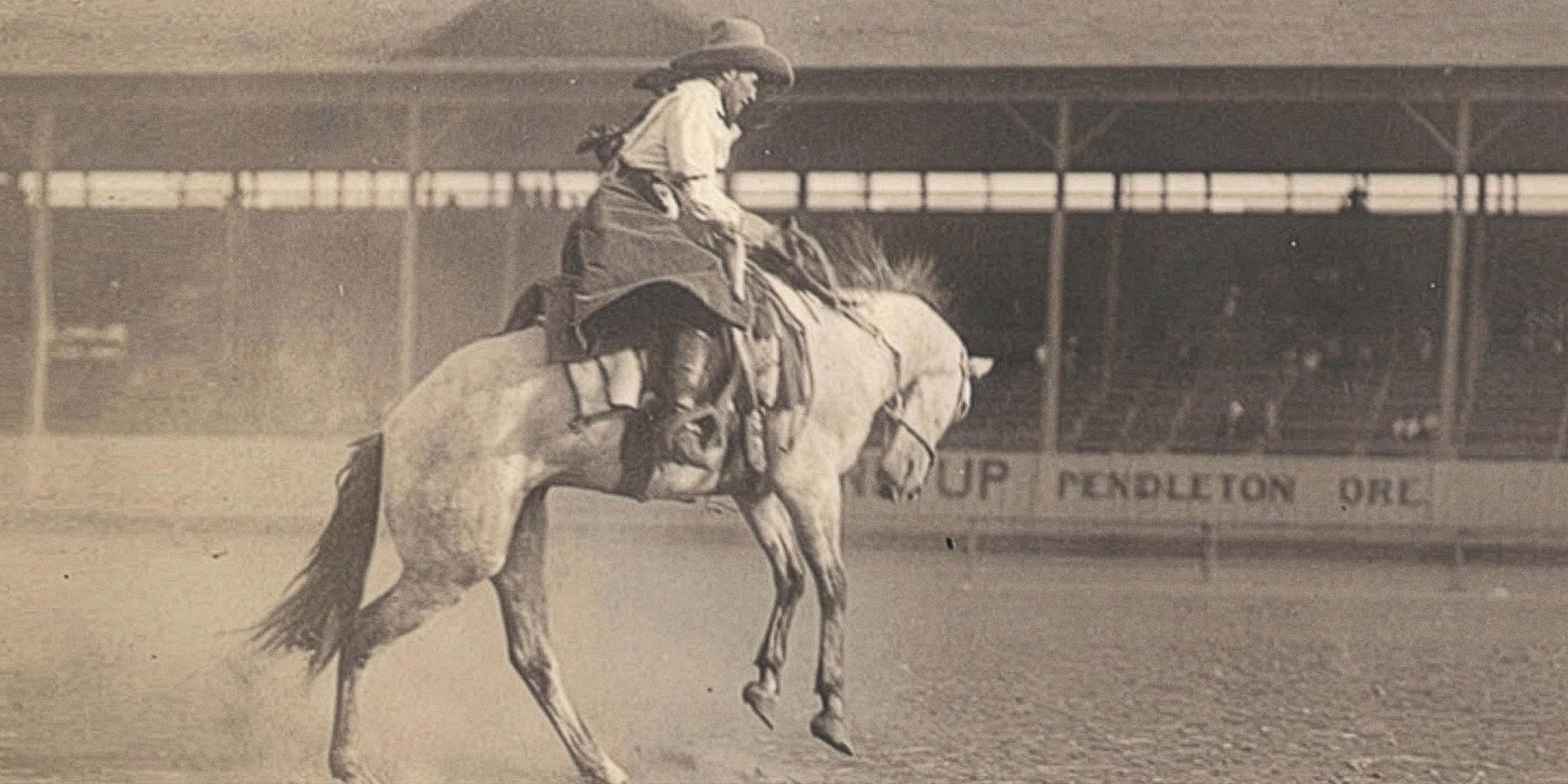
Women roaring out of a bucking chute is not new — history just has a short memory. Well over 100 years ago, cowgirls like Prairie Rose Henderson and Bertha Kaepernick competed during what is fondly considered the Golden Age of women in rodeo (~1890-1929). And even before cowgirls competed on a major rodeo stage, they had already staked out their place in Wild West Exhibition shows. The shows were traveling entertainment spectacles, arena shows packed with sharp shooters, bucking horses, and sometimes wild animals.
Then in 1904, Bertha Kaepernick talked her way into making an exhibition bronc ride at Cheyenne Frontier Days, the world’s largest outdoor rodeo. Just two years later, largely due to her persistence, women’s bronc riding became an official event in Cheyenne. Women’s events were added to more than 20 rodeos by 1916, at some of the most prestigious venues. Women were no longer spectacles or filling a slot in a program — they were competing.
“If I can stay on a horse whose entire job is to throw me off, I can handle anything back at the ranch.”
Despite legends like Fannie Sperry Steele, Mabel Strickland, Tad Lucas, Fox Hastings, and Bonnie McCarroll drawing large crowds at their events, the “cowboy way” resisted the idea that women could compete alongside men. Bertha Kaepernick came within a handful of points of the All Around Title at the 1914 Pendleton Roundup. This was one of the most prized honors in the sport, earned by whoever proved themselves across every event in the arena. In response, the committee quite literally changed their qualifications, deliberately ensuring only a cowboy could ever be named champion. This ruling still stands today.
Kaila Mussell is the only woman in over a century to hold a professional card in the PRCA for bronc riding. The PRCA and the WPRA (Women’s Pro Rodeo Association) run entirely separate standings, never to meet. The All Around title requires earnings across two or more PRCA-sanctioned events, but barrel racing and breakaway roping, the primary events open to women, are sanctioned by the WPRA. Those earnings don’t count. Men and women have not competed against each other for an All Around title since the early 1900s and in roughstock, almost never at all.
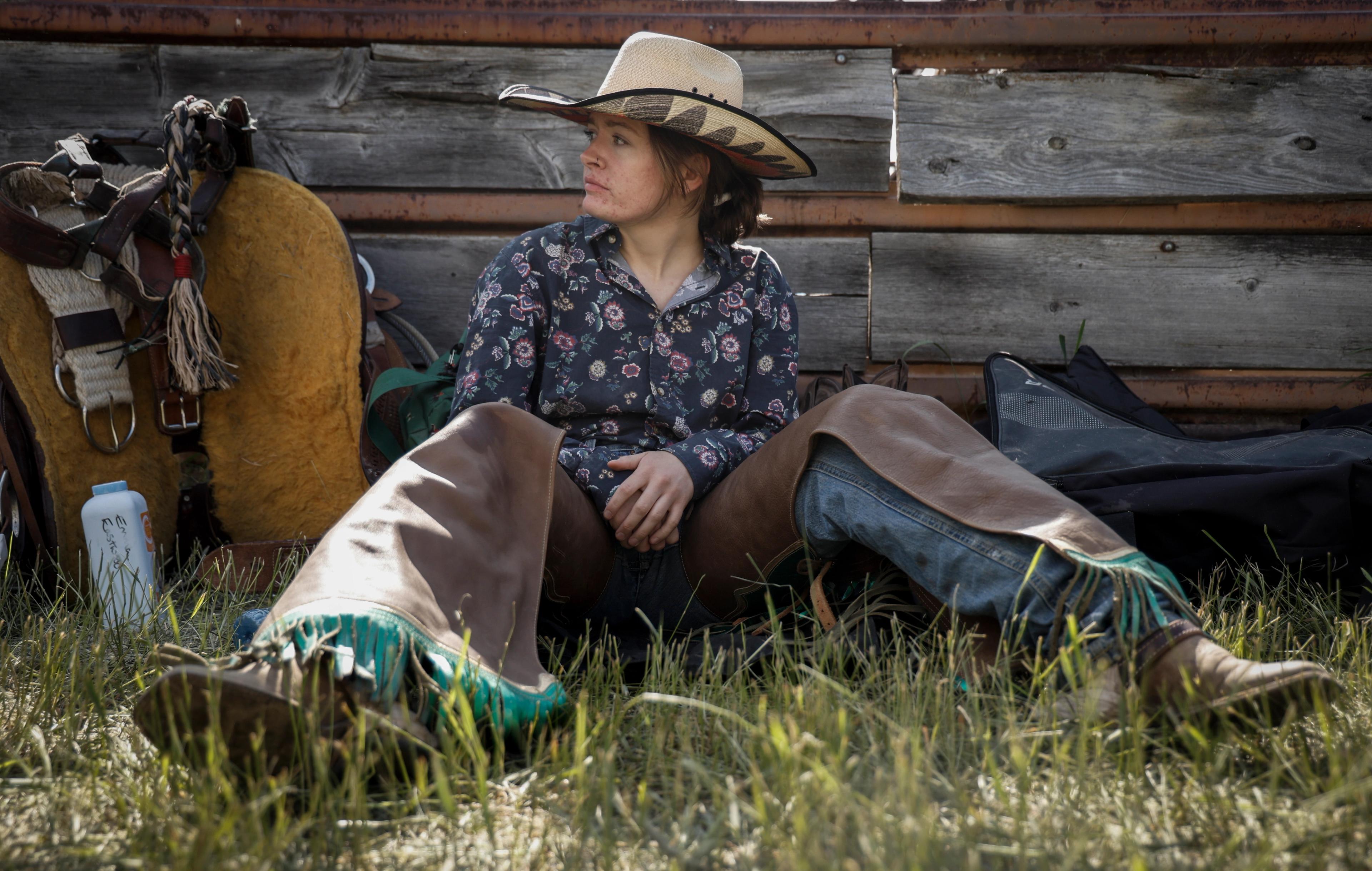
Emma Eastwood, of Calgary, visualizes her ride before competing in women's ranch bronc during rodeo action.
·Jeff McIntosh/The Canadian Press via AP
But women’s first era of competitive bronc riding definitively came to a close in 1929, after Bonnie McCaroll’s death from her injuries being thrown while riding at the Pendleton Roundup. At the time women were required to ride hobbled, a term for tying stirrups together beneath the horse. The problem was that hobbling also prevented riders from getting free easily if something went wrong.
Bonnie drew a bronc named Black Cat, requesting to ride slick, not hobbled, the way she always did. The rodeo committee refused. During Bonnie’s ride, her horse stumbled with her foot getting caught — the wreck was unsurvivable. She died 11 days later. According to Steve Wursta, whose documentary From Cheyenne to Pendleton captured the rise and fall of the rodeo cowgirl, it had already been announced that 1929 would be the last year for women in the sport before Bonnie ever drew that horse. Her death was simply an excuse; the decision had already been made.
The Rodeo Association of America (now PRCA) banned women in roughstock in 1930, forcing a pivot to what were considered more ladylike events like barrel racing and rodeo queen pageants. Completely pushed out of mainstream rodeo, the Girls Rodeo Association (GRA) was formed by 38 women in a San Angelo, Texas hotel room in 1948. “We were just sick of being cheated and not having rules,” said Betty Barron Dusek, one of its founding members. It was the first professional sports organization in the United States created solely by and for women.
“Our economy isn’t set up to rely on a man anymore. So now we compete with them instead of relying on ‘em.”
The GRA became the WPRA in 1981, helping to grow the organization. But reclamation of the sport took a hit when the association cut bronc riding and bull riding entirely in 2008, shifting their resources to more popular roping events and barrels.
Once again, the women who lived for the power of bucking horses quietly got forgotten even inside an organization built to be a home for them for what were deemed more palatable alternatives. Without a true home for their sport, there were no opportunities for women to compete in an Association or on a national level for the next eight years. They kept showing up anyway, quietly, locally, and sometimes under false names to get past barriers.
What Rodeo Can’t Forget Now
After breaking his back in 2015, rodeo competitor Daryl McElroy was no longer able to compete in bronc riding or bullfighting. With just an idea and a phone, he decided to turn his attention to the cowgirls who had nowhere to go. Daryl started calling all the women who had been quietly competing at local rodeos. That year he gathered a handful of women at the Texas Bronc Riders Association Finals in Glen Rose, Texas, adding a separate women’s division to the men’s event.
Their debut at the finals just so happened to catch the attention of the national cable network Ride TV, which turned a sport with no home into a 10-stop televised tour. Cowgirls went on to become a three-season series, giving viewers an inside look into the world of women’s competitive bronc riding in Texas. “Once the TV show started going out,” McElroy said, “that’s when we realized there was a whole lot of people that wanted to be part of this kind of deal.” As it turned out, the demand had always been there.
What began at a small rodeo in Texas is now the Women’s Ranch Bronc Championships, an association for female bronc riders that spans the U.S., Canada, Australia, New Zealand, and Europe. Organized as The Trail to Cheyenne Tour, riders from each country compete in their own circuit before colliding on a national stage for the world finals.
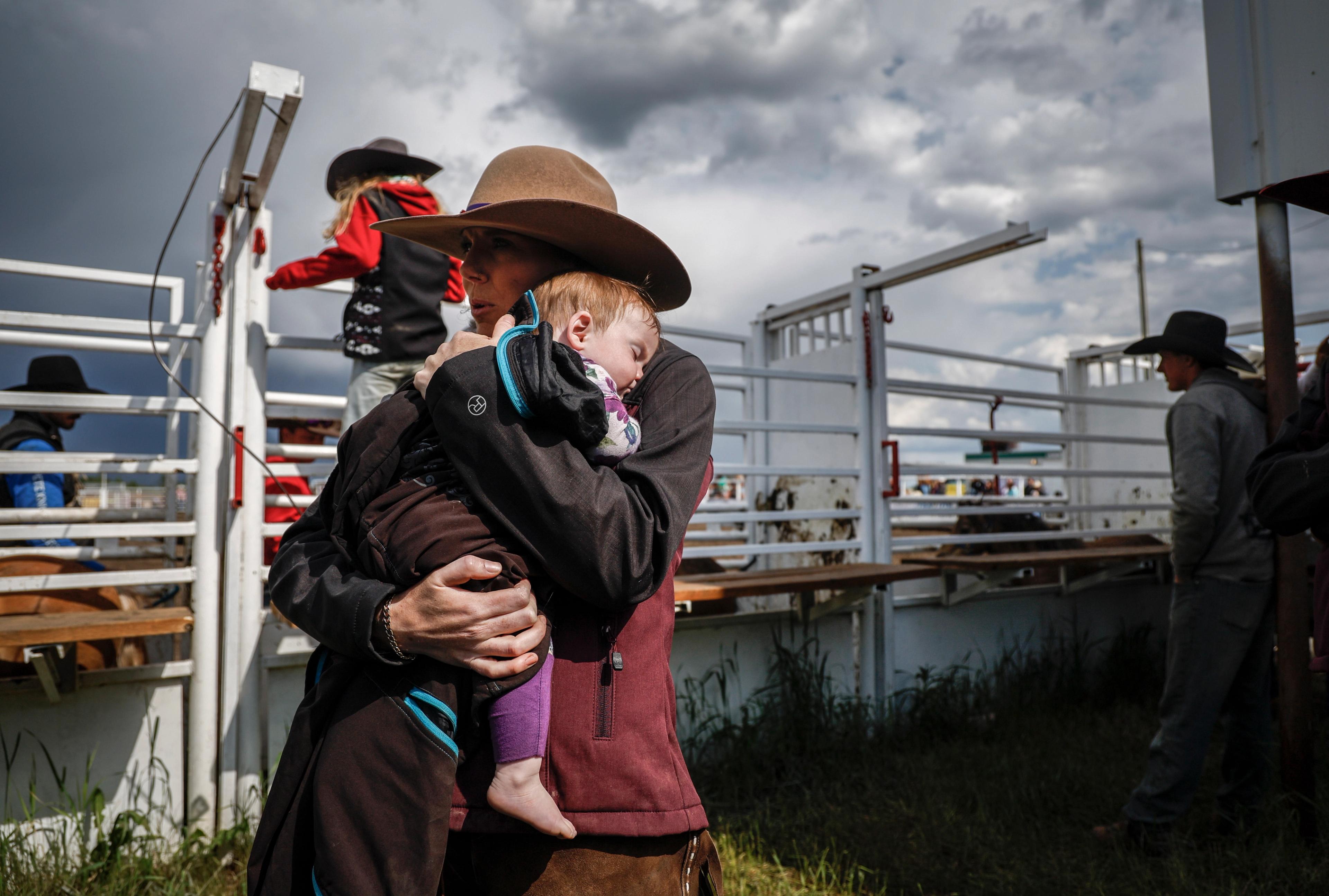
Courtney Beverly, from Winfield, Alberta, holds her nine month old daughter Rowelly-Dee Phillips as the rest of her family gather to support her in women's ranch bronc during rodeo action.
·Jeff McIntosh/The Canadian Press via AP
That stage is Cheyenne Frontier Days, the Daddy of ‘em all, the world’s largest outdoor rodeo. Since 2018 the WRBC has been able to give women’s ranch bronc a home in Cheyenne, the same rodeo where Berth Kaepernick competed over 100 years earlier.
Brittany Miller, a recent Montana Cowboy Hall of Fame inductee, puts the growth in simple terms: “I can count about 500 more women today who’ve ridden at least one ranch bronc than when I started 12 years ago.”
With most riders using gear they already use in their daily work, barriers to entry are low. Now, rodeos that once kept their doors closed out of fear of women getting hurt are now reaching out to WRBC to bring the event to their region. “It’s not as taboo as it was 10 years ago to have a woman in roughstock,” McElroy said. “We have venues wanting us now.”
“The power you feel on that first jump out of the chute is hard to describe. I have felt nothing like it since.”
While women are getting behind the bucking chutes more than ever before, it’s about more than just the thrill. In a narrative written just for cowboys, the culture is shifting. The sport is a reflection of a change much bigger, where women have the ambition and independence to take up space without fear. “Our economy isn’t set up to rely on a man anymore. So now we compete with them instead of relying on ‘em,” said Brittany Miller.
Ranch bronc riding doesn’t ask women to be just one thing. They can climb on a horse and go right back to their ranch, their career, their city, their family. I rode only a handful of broncs, never competitively or consistently. I stopped when I had kids; I like to think my body had already been through enough. But I still carry the feeling. The power you feel on that first jump out of the chute is hard to describe. You are experiencing an animal giving everything it has, doing exactly what it loves. I have felt nothing like it since.