In her latest book, nature writer Nicola Chester celebrates a bygone generation of female farmers in the UK, mourns the ecological outcomes of their methods, and proves herself a master of nuance all at once.
If you’re one of those people who watches “A League of Their Own” with near-religious fervor, you might remember the scene in which members of the Rockford Peaches — Geena Davis, Madonna, Rosie O’Donnell, and others — learn that World War II is coming to a close, taking the demand for their work as professional baseball players with it.
“We told them it was their patriotic duty to get out of the kitchen and go to work,” frets a young executive office staffer and advocate for the women’s league. “Now, when the men come back, we’ll send [the women] back to the kitchen.”
This reality wasn’t limited to the United States. On the other end of the Atlantic Ocean, a different group of women faced a similar wartime fate. They were called “Land Girls” — a bit flippant by today’s norms, but shorthand for members of the Women’s Land Army of Great Britain. The WLA started during World War I, and the point was simple: When the men went to the trenches to fight for the free world, the women went to the fields to farm the free world’s food.
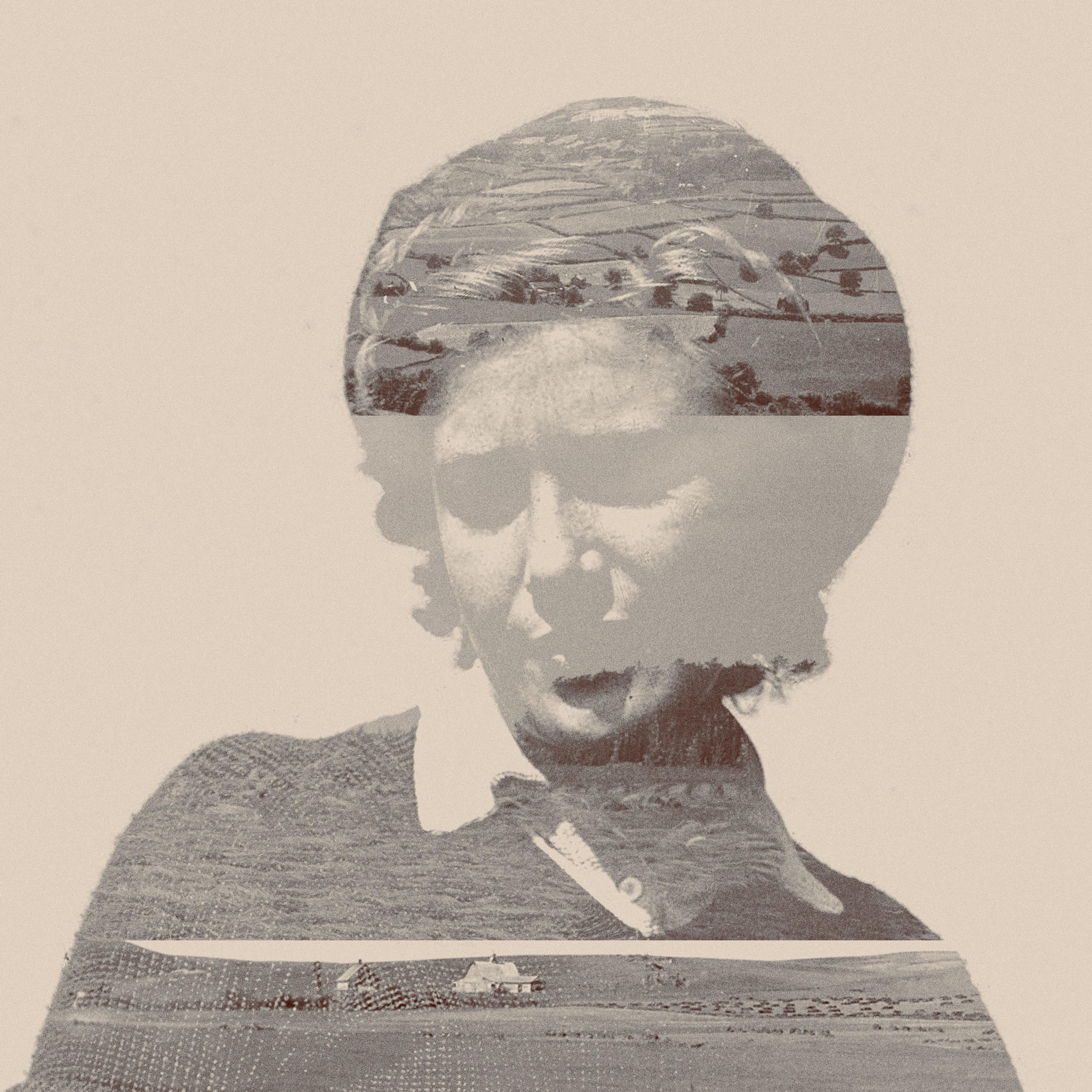
One of those Land Girls was Julia White, a main character in Nicola Chester’s latest memoir “Ghosts of the Farm: Two Women’s Journeys Through Time, Land, and Community.” While most memoirs make a sole protagonist of their author, Chester blends her own story with Julia’s, building a beautiful history of a rural place, the women who once grew a living from its soil, and the biodiversity that once pulsed around it, biodiversity that has since been silenced by the outcomes of operational decisions “Miss White” and her contemporaries made in the throes of international crisis.
Unlike the players in the All-American Girls Professional Baseball League, Julia didn’t go back to her old life after her country lost use for her. Instead, she bought farmland in the village of Inkpen — where Chester lives today — and farmed it through World War II and the rise of machine agriculture and chemical inputs. By studying the life and work of Miss White, Chester also studies the environmental history of her own home, managing to critique Miss White’s methods without incriminating her character in the process.
Instead, Chester trusts that Miss White would have done things differently had she known the eventual consequences of her actions — a dollop of grace future generations might be slower to offer us.
“Miss White doesn’t describe much wildlife in her farming diaries,” Chester told Offrange. “She talks about loving the sounds of the flocks of birds, mostly songbirds. But I know from looking back in the records that many of those bird species she mentions are not here anymore, mostly because of practices that came about during the war.”
Chester strikes this balance by imbuing her tone with awe at the way these women lived. As if farming weren’t hard enough to begin with, Miss White farms while facing down enemies domestic (caving roofs, rat-infested barns, bigoted neighbors) and foreign (Hitler, Mussolini, and a particularly troublesome division of the U.S. Army that conducts munitions training in her fields). Mechanized equipment and chemical applications become lifelines for production. Meadows are ripped up and planted with species that struggle in the chalky soil. Once-vibrant wildlife habitat ceases to exist, mostly at the instruction of the British government; and if you don’t farm your land “properly,” you risk losing it.
Miss White farms while facing down enemies domestic (caving roofs, rat-infested barns, bigoted neighbors) and foreign (Hitler, Mussolini, and a division of the U.S. Army that conducts munitions training in her fields).
By insisting that the reader comprehend these complicating factors before passing judgment on her predecessor, Chester opens herself up to accusations of letting Julia off the hook. But such an accusation would miss the point of the book: to better understand the past, warts and all.
“I didn’t want to make this a rose-tinted, nostalgic, romantic book,” Chester says. “They were in the middle of wartime. They could have been invaded at any point, and they were tasked with stopping a country from starving into capitulation. But I also wanted to meet Miss White’s ghost and say to her, ‘Julia, did at no point you realize what was going on? Did you never think about the future?’”
At the end of the World War II, Miss White retains ownership of her farm while the Land Girls around her receive “a patriarchal patting of the heads” and a one-way ticket “home, to feminine jobs … to apply some serious moisturiser and nail cream to those calloused hands,” Chester wrote. Between the lines, Chester contends with what the UK’s rural landscapes might look like today had the bulk of the women not gone home after the war ended, had they found ways to stick around and buy their own land.
“I really do believe that if the farm gate had been left open to women, things might be different today,” Chester said. “Statistics prove that women are generally better at sharing knowledge and resources, they’re more open to new ideas, and more aware of environment. But the farm gate was shut, and things carried on the way they were.”
Chester’s own desire to farm in Inkpen is palpable. And yet, so are the hindrances that prevent her from closing that distance, like the cost of land and a lack of generational knowledge.
“I really do believe that if the farm gate had been left open to women, things might be different today.”
Plenty of people who dream in similar colors — Weird-Horse-Land-Girl wannabes who settle for reading and writing about these topics rather than living them — will relate.
But throughout the book, Chester also rekindles memories of being farmer-adjacent. This includes her childhood around horses, her early adult experiences with ranch work, and her more recent tendencies toward nature writing, activism, and unearthing the agricultural history of her and Julia’s shared place in the world. By the end, the reader will struggle to recognize where Chester ends and Miss White begins, much in the way a springtime meadow can look ancient and brand new all at once.
“I imagine myself as Miss White now,” Chester writes. “How would I do things and what might be the credentials that get me there? Me as a half-horse, half-girl, a groom, a cowgirl, artist, a conservation worker, wife and mother, writer of rural things, conjuror of ghosts, community cheerleader — all these things might have equipped and schooled me to be a farmer of sorts. Yet that has remained out of reach.”
This might be where readers start to feel bad for Chester. They shouldn’t; she proves flexible under less-than-ideal circumstances. Maybe she learned it from Julia, whose ghost she swears she sees around her village today.
“What I can be instead is a farmer of the imagination,” Chester continues. “A farmer that does not own or run or even do the farming, but one that does everything around that. One that tries to understand, support and applaud farming that has wildlife and people as a central and joyous part of it … There is agency in that, in imagination activism.”