I set out to discover the secrets to growing the perfect tomato. It might be simpler than I had imagined.
My mom calls me downstairs into the kitchen. “Mia!”, she yells, an abbreviated version of my already-shortened Chinese nickname, to proudly show me five handpicked little tomatoes, roughly as wide as my thumb, served on a styrofoam tray.

After weeks of growing seedlings in leftover red Solo cups, then nurturing them in the garden, the first harvest of the season never fails to dazzle. The tomatoes resemble a tie-dyed t-shirt, the tops swirling in hues of brown and green before blending into a burnt sienna towards the bottom. Mom frantically tells me to kuài diǎn chī, to eat it quickly, with such conviction that I, too, believe that the tomato will lose its juiciness with every minute that passes.
My parents immigrated to Canada when they were in their early 30s, carrying with them the habits that survival had taught them. They grew up in China during the Cultural Revolution, under immense poverty. Oil, grains, and cloth were rationed by the government; clothes were patched and passed down between siblings. Hunger was a constant and my parents grew what vegetables they could, scattering seeds in a vacant field near home and watering them with any spare time they had.
But there was rarely time.
Since the age of five, my mom would walk back from school, cut grass along the way to feed their rabbits, then she would start the coal fire to cook and clean for the family before sitting down to do her homework.
When they immigrated, with very little savings or knowledge of English, they continued to make the most out of whatever they had and never let anything go to waste. Styrofoam trays from grocery store packaging could carry anything light enough that needed to be transported between the home and the garden. Unused red Solo cups from a bulk pack my dad bought years ago at Costco are lined up on the windowsill, holding seedlings.
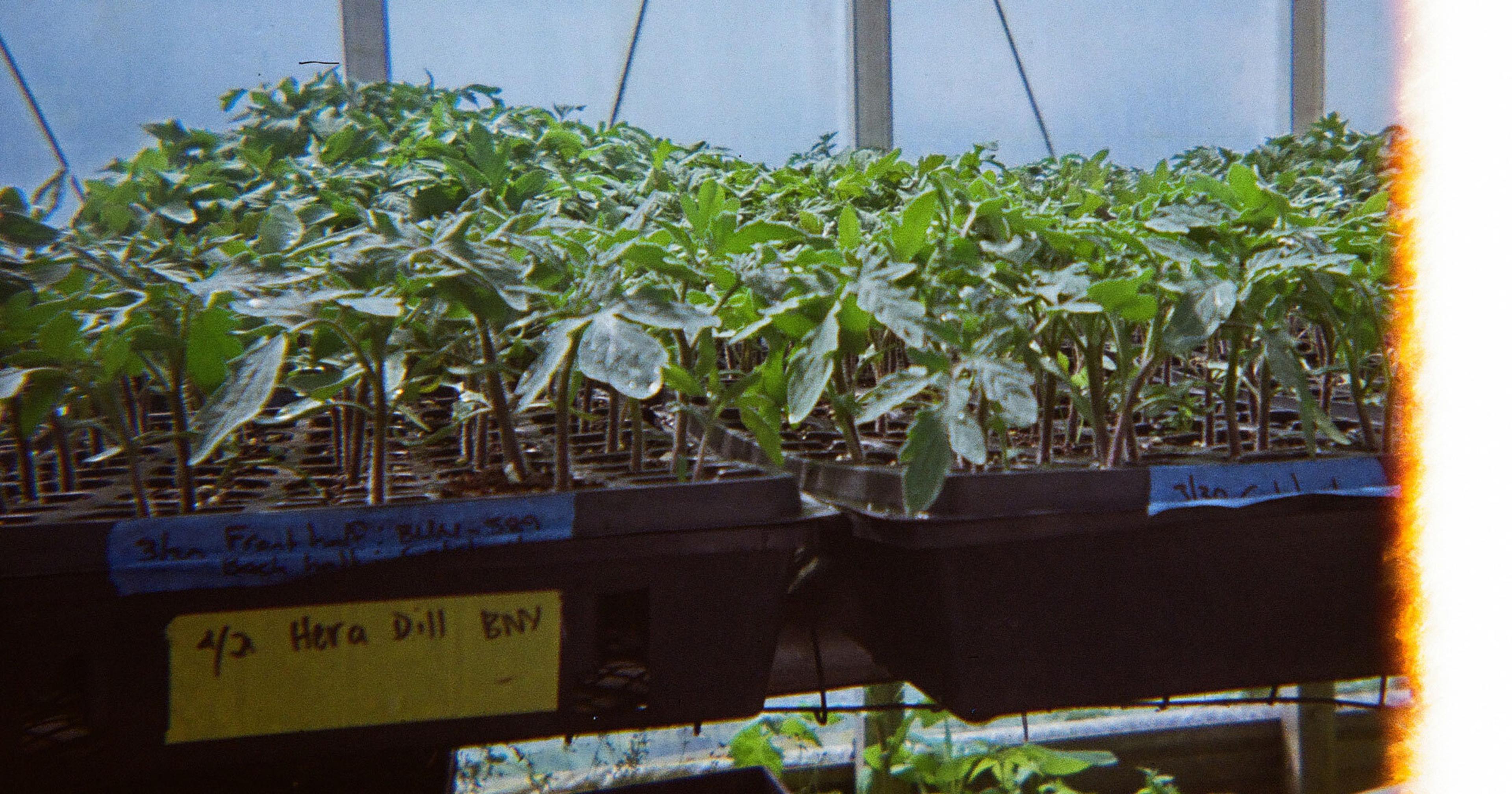
Nothing in my house is bought if it can be DIYed, repurposed, or grown.
My parents insist that a homegrown tomato is far superior — and more affordable — than what they’d get at the store. They also love any excuse to go outdoors every day. My mom lovingly describes the early morning ritual of trimming tomato vines and breathing in the earthy smell of the leaves.
Despite how much I love the (literal) fruits of their labor, when my mom started describing her ritual, I realized that there were many things I didn’t know about tomatoes — or my parents. When I asked my dad if he had any memories of tomatoes, he told me a story about our first neighbor in Canada, Carmelo, a warm Italian man who begins every visit with kisses on both cheeks. It was Carmelo who had grown tomatoes in his backyard and gifted my parents a jar of homemade sauce the first Christmas they were in Canada. Each of these learnings was a gift, like I was handed pieces of my parents I hadn’t known to look for. With a partial language barrier between us, I always treasure these glimpses into their world.
*
I wanted more, so I set out to learn more about how to grow a tomato.
I started at All One One All, a 15-acre regenerative silvopasture farm in Upstate New York. Founded in 2021 by mother-daughter duo Ariane and Alix Daguane, respectively, their farming practice intentionally integrates trees, livestock, and forage on the land where the crops are grown. When I visited, the fields were thick with asparagus and leafy salad greens. Alix excitedly shared how their farming philosophy — that farming should give back to the land — applies to their tomatoes, much like all of their produce. Wearing a tomato-red scarf, with hands swooping at nearly every word, she radiated a warm and familiar energy.
Next I visited Brooklyn Grange Rooftop Farm, drawn by the challenge of growing tomatoes high above New York City. Wedged onto an 11-story warehouse roof in South Brooklyn, the 1.5-acre urban farm holds an extraordinary three million pounds of soil. Brooklyn Grange was one of the first farms to adopt green roof technology — a layered garden built on top of a building’s roof — for agriculture. Gareth Stacke, the farm’s director for the last seven years, guided me past empty beds awaiting tomato seedlings and rows of perky greens. He tells me that he enjoys the challenge of growing tomatoes on a roof, despite their need for soil depth.
And finally, I set up another call with my parents.
Across three conversations with dedicated tomato growers, the methods and settings couldn’t look more different. Yet each source shared the same conviction that a locally grown tomato, tended by hand and eaten at the height of summer, is far superior to anything you can find in a store.
*
Listening to my parents, you’d think that tomatoes are easy to grow. According to them, all they do is trim the tomato-less branches so they don’t consume unnecessary nutrients. They water the plants every day to keep the ground humid. And when they grow over half a meter tall, they’ll tie a string from the plant to a bamboo stake. That’s the extent of their formal process. I ask my parents to tell me more — is there anything complicated? Any secret tips?
But with a mischievous, child-like glint in his eyes, my dad tells me that I could just answer all my questions with a bit of imagination and Youtube. “I’m a simple man,” he said, “just like a tomato.” To him, growing a tomato doesn’t need to be overcomplicated. With enough sunlight, water, and support, it grows like any other living creature — there isn’t much more to it. It occurs to me then that a man who rebuilt his life after an unpredictable childhood thousands of miles away, in a country whose language he didn’t natively speak, probably appreciates the simplicity and reliability of a tomato plant.
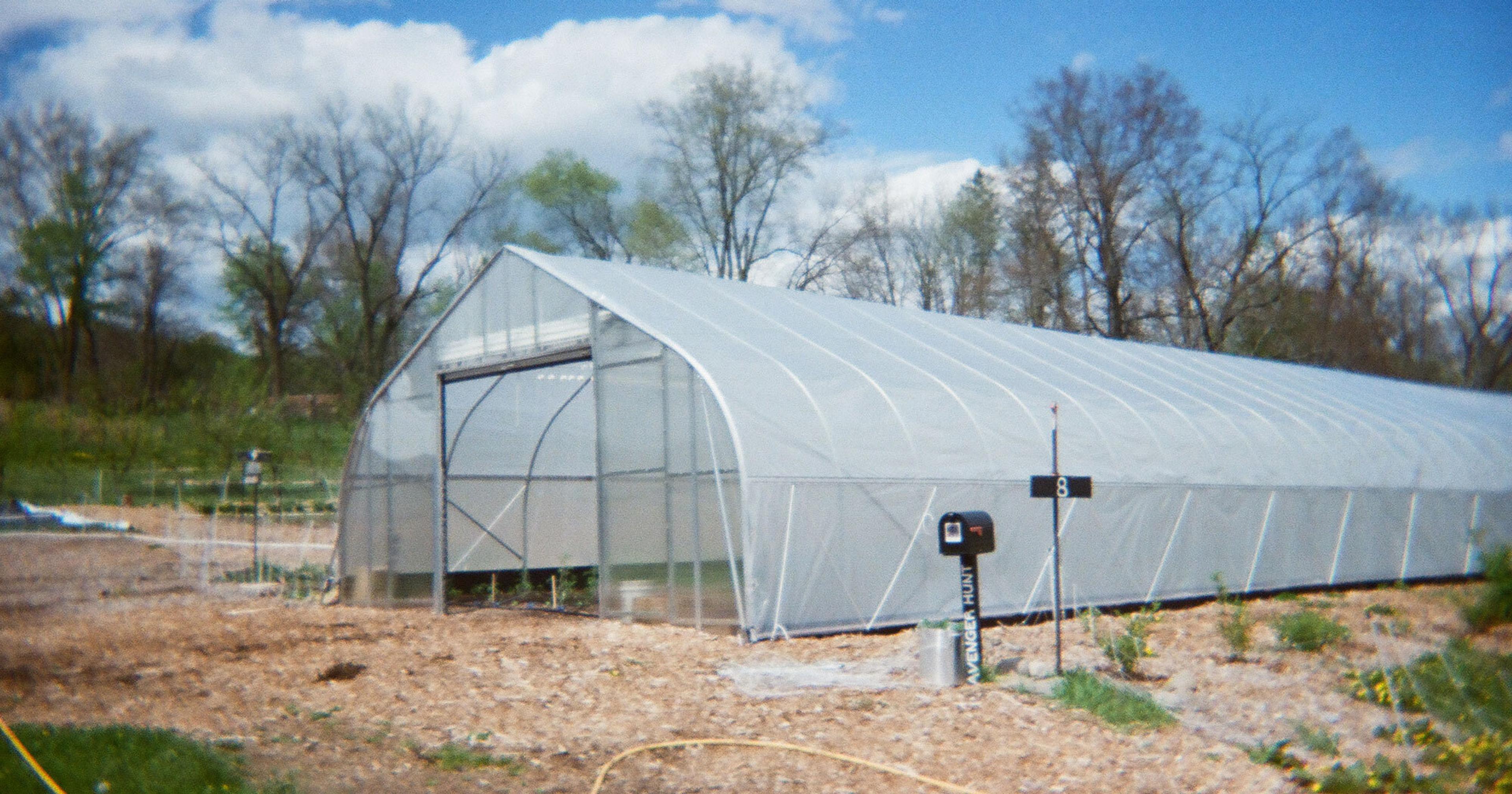
Season extender at All One One All
Like my parents, Alix doesn’t really think in terms of secrets. “It’s not tips and tricks and techniques,” she told me. “It’s a mentality.” From her perspective, the best food comes from farming practices that support life rather than deplete it: healthy soil, no pesticides, a genuine relationship with the land. “Farming can either deplete or diminish,” she said. “We want to farm in a way that ameliorates the land, the biodiversity that supports the local ecosystem.” If there’s a trick with tomatoes, it is simply to grow them in the most natural conditions possible. Everything else follows from that.
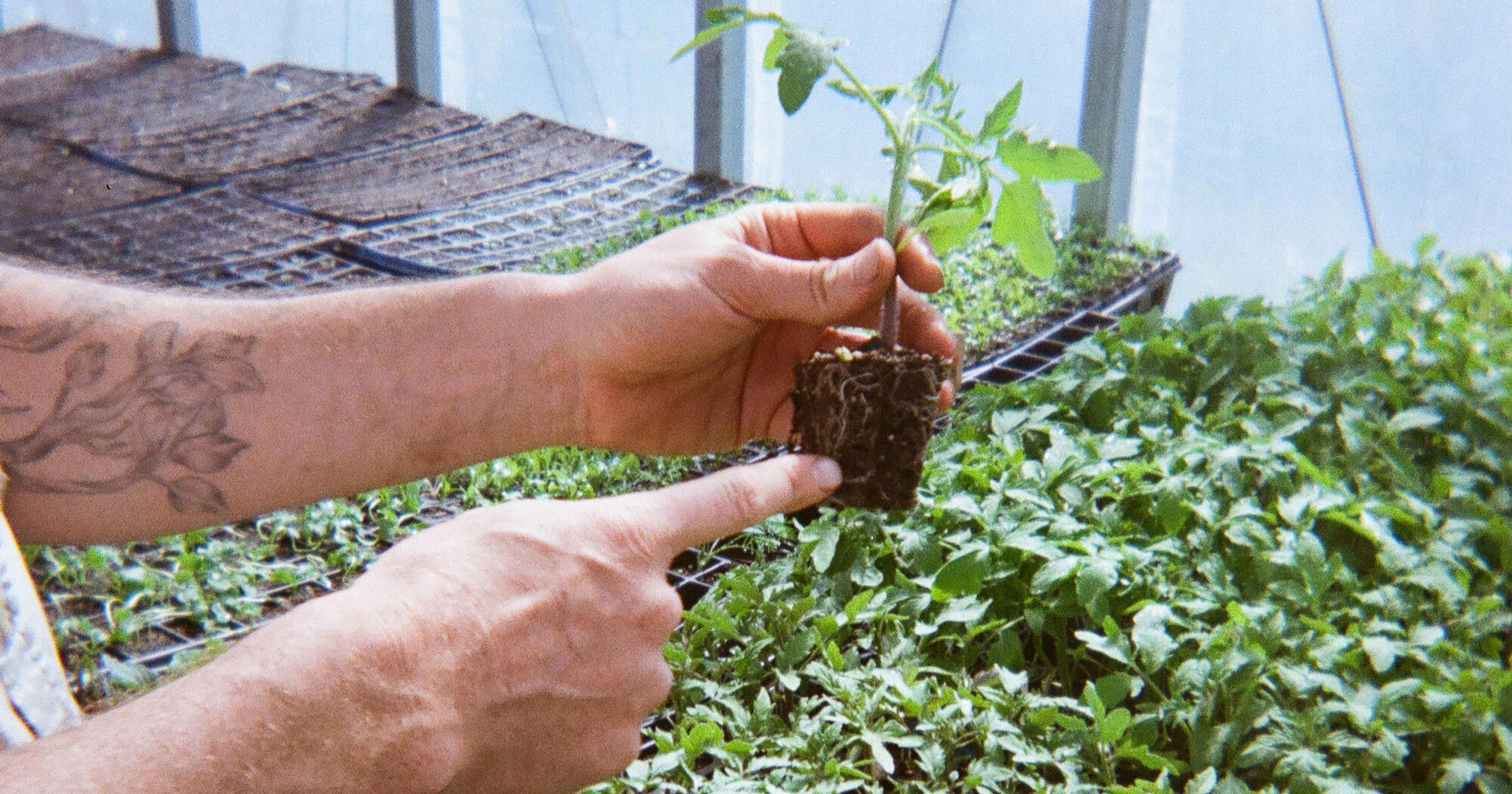
Alix prepares for the growing season by starting the tomato plants in the season extender, a large tunnel-like structure wrapped in plastic sheeting that captures heat. The farm aims to grow tomatoes as quickly as possible, to be first to market for the area here. But this feels like a practical commercial tool rather than some bit of grower magic.
In the farm bathroom, I met a woman whose son works at the farm. She told me about getting produce from Alix’s farm like something she still can’t quite believe. Her eyes shimmered when telling me that I’ll never find a juicier tomato in the grocery store.
She invited me to come back in the summer; I know that I will.
*
Everyone kept telling me how much they love the taste of tomatoes but I noticed that they all wanted other people to have them too. Gareth shared with me that Brooklyn Grange is located in a mixed-income neighborhood, so they offer a sliding scale CSA: “No matter what your income or wealth level, you deserve the same nutritious produce.” This mission is powered almost entirely by hand. Without the luxury of being able to use heavy machinery on a rooftop, the farm relies on manual labor distributed across three people and small motorized tools: drills and equipment powered by e-bike batteries.
At Brooklyn Grange, growing tomatoes means constantly adapting natural practices to unnatural constraints. Gareth told me that tomatoes are natural wanderers. “Classically, they have adventurous roots and they enjoy being replanted,” he shared. “You want to plant them really deep, but there’s only so deep we can go.” Unlike a field that stretches endlessly downwards, there is only so much soil that you can pile onto a rooftop before the underside gives out. To squeeze whatever extra depth is possible, the beds are hilled up to make it possible for the tomatoes to get a deep taproot.
Growing crops 11 floors above ground also presents the challenge of wind, which can snap a tomato plant that isn’t deeply rooted, no matter how well it’s staked. Gareth tells me that the farm can lose up to 20% of some crops to wind alone. “If we plant a gorgeous classic tomato in a four-inch pot that’s maybe 18 inches high,” he said, “it’s gonna snap in the wind if it doesn’t have a sturdy root structure.” Like my parents, Gareth once used bamboo stakes. But the farm has found greater success with a more sturdy fiberglass, a basket weave running between them.
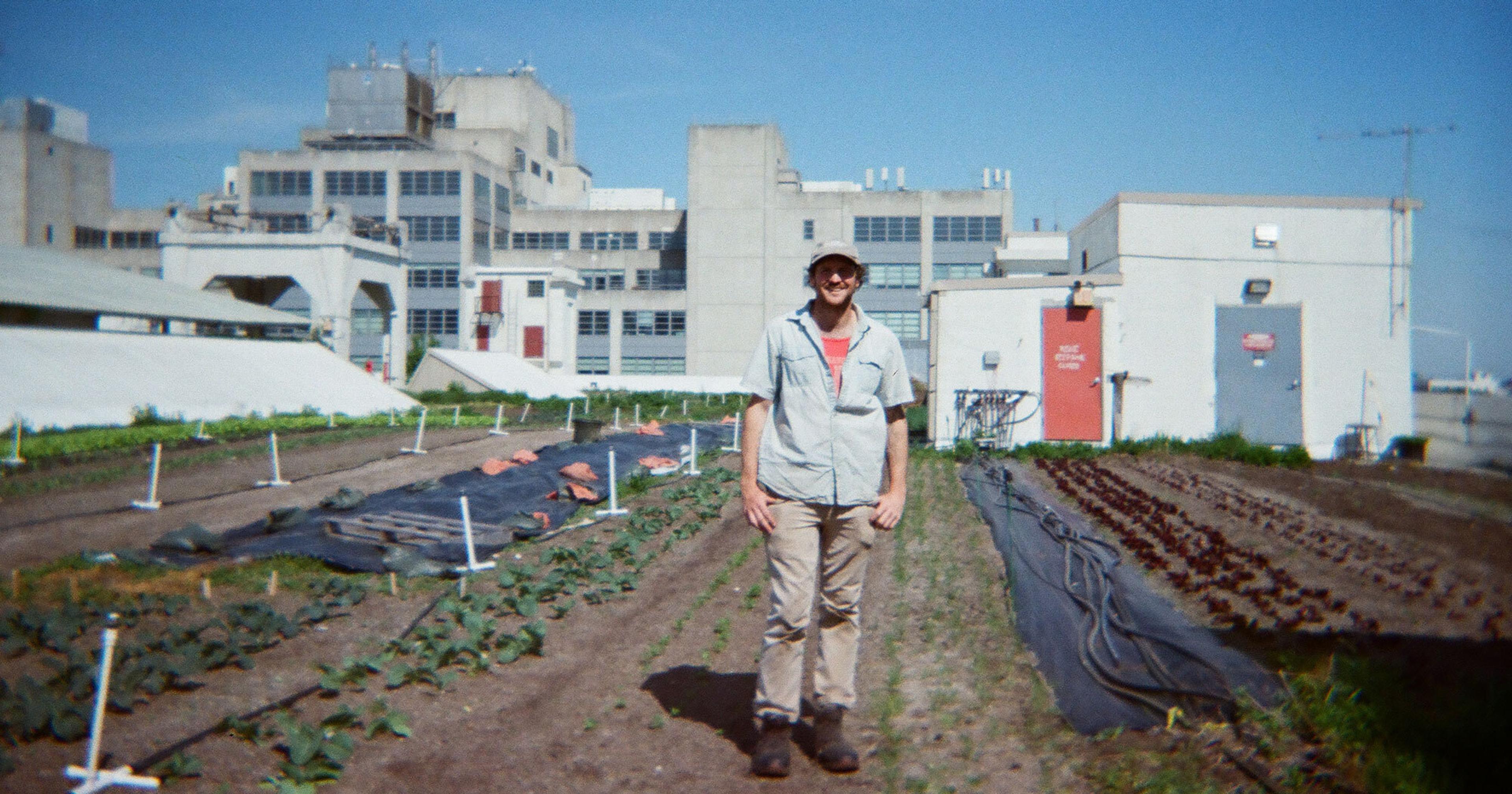
Gareth Stacke
I think the reason why a homegrown tomato tastes so good is because no shortcuts are taken. My parents feed their garden with compost from our own veggie scraps, excess manure from the local farm, and water it with what’s left over from rinsing dirty dishes. There’s nothing added that doesn’t already belong there. At Brooklyn Grange, Gareth grows without synthetic fertilizers, herbicides, or pesticides and just lets the soil and plant work the way they were supposed to. And Alix farms in a way where the trees, the animals, and the crops all take care of each other.
I had come into these conversations expecting to find an array of whispered growing techniques, some kind of shared secret knowledge amongst serious growers. But what I kept finding was deep attentiveness. It turns out that, just maybe, growing successful tomatoes is less like a science and more like anything else in life. What you nurture with intention and protect with care will have a richness that can’t be manufactured.
*
I’ve been a six-hour flight away from my parents for the last six years. And what I miss most are the smallest things. The golden hour sunlight streaming in through the kitchen window. My dad wearing his grey Costco polo and running shoe combination while making the latest garden renovation. My mom coming through the door, animated with a wide smile, ready to show off whatever the garden gave that day.
She’ll hand me that styrofoam plate of tomatoes. Most times, those five tomatoes are the whole harvest for the day. The juices burst in my mouth and I tell her Tài hào chīle: It was delicious!
I understand now what these tomatoes have asked of my parents. The weeks of preparation, the daily rounds, the patience of waiting for them to turn red. And yet, they don’t consider any of this a burden. They find something so joyful in growing, in improvising garden supplies, in watching me eat. Receiving these homegrown tomatoes, offered so freely, is a gesture of love that I didn’t completely realize before.
I can’t wait to accept that gesture again.