As antimicrobial resistance rises in humans, researchers are looking for ways to fix the problem back where it starts: in the hen house.
There’s lately been a furor over what’s known as “functional medicine.” Think red ginseng for metabolic disorders like diabetes; plant compounds called polyphenols, found in red wine, dark chocolate, and berries, to boost digestion; and probiotic-packed fermented foods like yogurt and sauerkraut for gut health. There’s even a $100 million federal fund, called MAHA ELEVATE, earmarked to address chronic health conditions with these sorts of nutritional interventions.



Operating outside this cultural zeitgeist (but perhaps even more consequential) is the potential for food-based cures to find a toehold in the $45 billion broiler hen business. Most meat birds are produced in massive, over-crowded facilities that expose them to a range of infections; coccidiosis, from a group of parasites called Eimeria, is the most common, causing intestinal lesions that prevent nutrient absorption so “basically, the animal is starving,” said Elad Tako, a food science researcher at Cornell University.
Antibiotics are the most efficient treatment for coccidiosis and the secondary bacterial infections that come with it. The thing is, many of those drugs are medically important to humans and the more we use them in poultry and livestock, the more antibiotic-resistant super-bacteria we create. Once-treatable infections in people now lead to 35,000 human deaths in the U.S. every year.
“Because of the risks antibiotics present to us we have to make a shift,” Tako said. But he also sees an opportunity: “To find an alternative that not only can fill the gap in the context of antibiotics but possibly provide other nutritional value that can contribute to the productivity and overall health of the animal.” He’s talking functional medicine for chickens.
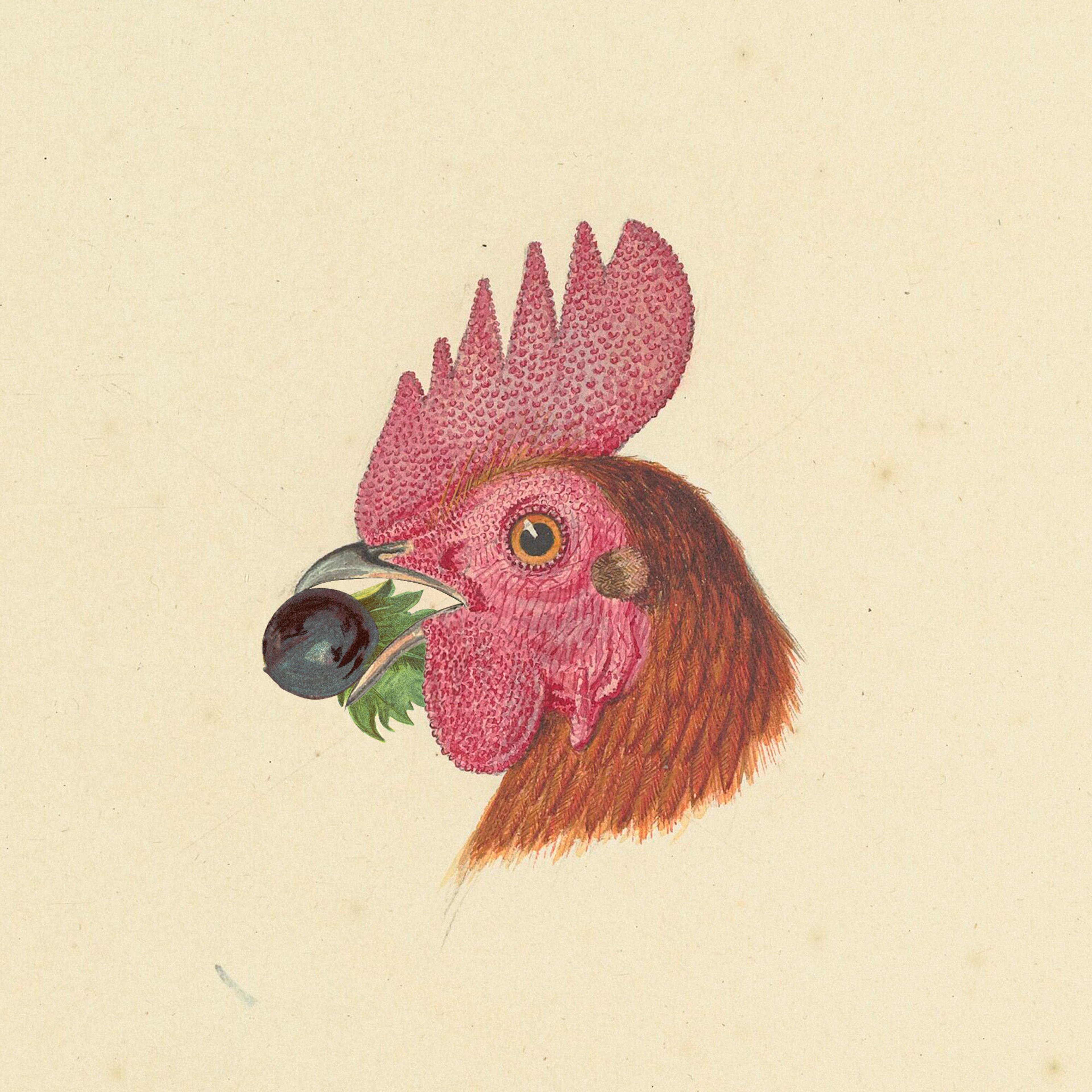
For the last several years, Tako has been fiddling with a formula that uses as its base the pomace from grapes—the skins, pulp, and seeds left over from the wine-making process. (He’s previously tried a similar fix, using apple scraps.) Like the red wine it’s a byproduct of, grape pomace is loaded with polyphenols, which have anti-inflammatory properties. When you feed it to chickens, “You shift the microbiome towards something that is health-promoting,” Tako said. This mitigates and even reverses the “constant, low-grade inflammation” that’s common in the broiler business as hens’ immune systems respond to the stress of being exposed to so many pathogens.
Calming that inflammation creates overall healthier birds that can better fight off infection without the use of antibiotics. In a research facility, “On pretty much all the biomarkers that were tested, from lesions on the intestine to the microbiome to feed conversion ratio to size to weight, we’re able to reverse it, maybe not completely as a healthy animal, but very close to it,” Tako said.
Tako found that just the right dose of grape pomace extract injected into the amniotic fluid in chicken eggs resulted in healthy Cob and Ross hens—the most common broiler breed.
Tako wasn’t the first researcher to have this idea; he’s just the first one to get grape pomace to work. He thinks the reason is that other studies relied on overly heavy doses of pomace. Thinking about the French Paradox (now debunked), in which low incidence of cardiovascular disease is found in the French population despite their high fat consumption, Tako realized, “To see this effect, we can’t drink tons of grape products,” he said. “So maybe it’s enough to consume a significant but not-too-much amount.”
Tako found that just the right dose of grape pomace extract injected into the amniotic fluid in chicken eggs resulted in healthy Cob and Ross hens—the most common broiler breeds—that grew to full size (5.5 pounds) in the industry-standard 42 days. In another study, a microdose of 0.5 percent grape pomace extract added to broiler feed reduced chickens’ inflammation, increased their growth, and improved their microbiome.
Medically important antibiotics such as the Salinomycin, Monencin, and Semduramicin that are commonly used to treat coccidiosis could once be purchased over the counter at the local Tractor Supply. In 2017, however, new rules limited the number of medically important antibiotics that could be used, and mandated a veterinarian’s prescription for them.
Usage went down and down until it shot back up, by almost 80 percent, in 2024, when “birds were dying from secondary bacterial infections after bouts with viruses like infectious bronchitis and Newcastle disease,” said Jarra Jagne, a veterinarian at Cornell unaffiliated with Tako’s work. Farmers had been treating them with oregano and garlic and “they were having very high mortality. It takes a lot of garlic to feed millions of chickens”—a clue as to why it’s so tricky to get functional ingredients tweaked and scaled enough to actually be useful.
Poultry antibiotic usage went down and down until it shot back up, by almost 80 percent, in 2024.
Additionally, by the time coccidiosis is diagnosed by a vet, “It’s kind of too late and we hear news that they had to destroy a humongous flock,” Tako said. Still, despite the challenges, he believes that adding grape pomace to chickens’ daily feed, which is how poultry medicines are typically administered, could act as a prophylactic. About 5 billion birds annually are raised without antibiotics, to address consumer demand, and if Tako can get this to work, it would give an alternative treatment option to organic farms and those interested in labeling their meat antibiotic-free.
Tako is considering other potential improvements to his pomace elixir. He’s looking into fermenting the pomace with lactic acid or yeast, to make the polyphenols more bioavailable. But he also thinks the fiber in the pomace may have benefits he hasn’t quite homed in on. That said, Gino Lorenzino, a maize geneticist and veterinarian at Penn State Extension, doesn’t believe fiber is actually a good thing for chickens.
“Every time you’re adding fiber to the equation you are slowing” their growth down, he said. (Tako said he has not witnessed this phenomenon in his studies.) What would Lorenzino recommend instead? Perhaps another functional medicine intervention that he’s been cooking up: a corn line that naturally produces flavonoids, which have antioxidant properties, to create a medicine that emanates from the actual feed itself. Several experiments Lorenzino’s research group has going “are demonstrating that we can modulate intestinal disease with this particular corn,” he said.
Still, Tako’s project may have at least one benefit over Lorenzino’s. Grape pomace is a material that exists in abundance in winery-packed New York. That includes the far-West portion of the state along Lake Erie, near Cornell, in what’s known as the Concord (Grape) Belt. Typically, leftover pomace is spread on dairy or crop farms as a soil amendment, according to Sam Filler, executive director of the New York Wine and Grape Foundation, which has a mandate from New York State to fund applied research like Tako’s.
All this tech and focus is “going to make it a lot easier to put together things that might replace antibiotics. I have a feeling that is what is going to happen.”
The vast majority of pomace, though, is sent to the landfill, where it continues to ferment and release greenhouse gases. If it could be sold to a company bent on turning it into a product for chicken producers, “That would form a secondary market for the waste from the wine industry,” Filler said, providing an income bump to wineries at a “difficult time for the adult alcohol beverage industry, with the [current] decline in consumption.”
Next up for Lorenzino: hybridizing his corn line so he can ramp up production. And for Tako, finding a large chicken farm to partner with, “to demonstrate that [benefits are] actually happening in real-world conditions,” he said. Then he’ll have to convince the chicken industry that he’s got a product that’s worth their while. After that, maybe, just maybe, “We could use it in different human products, too,” he said.
Jagne believes that vaccinating chickens needs to be part of the conversation about keeping them healthy. The EU and Japan led this charge initially—they vaccinated birds for salmonella long before the U.S. caught on to the practice, for example. But she also sees more effort to bring functional medicine into the hen house on the horizon, and there are already companies that are working on devising “animal nutrition technologies.”
One of them, Alltech, offers nature-based products meant to support gut health in chickens as “alternative strategies to maintain bird health and control foodborne pathogens such as Salmonella, E. coli and Campylobacter,” according to its website. All this tech and focus, said Jagne, is “going to make it a lot easier to put together things that might replace antibiotics. I have a feeling that is what is going to happen.”