
Researchers have found an underground industry helping spread the New World screwworm across borders: “narco ranchers,” trading cattle for narcotics.
It was a night in 2009 when Jennifer Devine first heard the planes overhead. The rumble was eerily out of place in the velvety remoteness of the Maya Biosphere Reserve—a protected tropical forest that spans half of the Mexico-Guatemala border. Devine, a human geographer, was staying in a cabin that didn’t even have electricity.

She turned to her neigbor—who had been working in the forest for decades—to ask what was bringing the planes so close to the middle of nowhere. “Son los narco-ganderos,” he told her. It’s the narco ranchers.
In Central America, narco ranching is the colloquial term used for a sophisticated cattle smuggling industry that launders money for the illegal drug trade. That night, Devine heard plans taking off to head northward, carrying drugs to the U.S. and Canada. Once sold, some of the profit would be used to purchase cattle in Central America. Those animals would be transported northward through clandestine border crossings in the protected forests of Nicaragua, Honduras, and Guatemala until they are smuggled into the Mexican cattle market.
If you look at the animals slaughtered in Mexico versus the number raised and legally imported, “the numbers simply don’t add up,” Devine said.
At least 800,000 animals are illegally trafficked into the Mexican cattle market every year. Cattle smuggling is the leading cause of deforestation across all five of Central America’s protected forests. And now, experts like Devine believe it’s enabling infestation—specifically a resurgence of the flesh-eating parasite called the New World screwworm.
As of June 7, New World screwworm is back in the U.S. for the first time in 60 years. It is a capable parasite, reproducing fast, flying far, and adapting to a wide range of climates. But narco ranching’s deforestation and evasion of veterinary care has cleared the way and accelerated the pest’s foothold in North America. Attempts at a second New World screwworm eradication are underway; the U.S. has invested more than $1.3 billion. But as long as narco ranching is funnelling cattle northward through unchecked channels, what’s to keep this pest—or one far more dangerous—from coming right back?
“We tried to warn [that this would happen],” said Jeremy Radachowsky, director of Mesoamerica for the Wildlife Conservation Society. Radachowsky’s team has been tracking the illegal cattle trade through Central America for decades in an effort to conserve the forests. Then in 2023, shortly after an outbreak of New World screwworm crossed the Darién Gap into Panama, the WCS researchers noticed the reported cases were following the illegal cattle routes near the jungles, and with increasing speed.
“[The screwworm] shot northward at a rate that’s much faster than a fly can fly or wildlife could carry it.”
First, the pest was reported through Costa Rica and Nicaragua. “Then it shot northward at a rate that’s much faster than a fly can fly or wildlife could carry it,” Radachowsky said of the screwworm. “It was obvious at that point it was travelling from the southern border of Honduras [to Guatemala] by truck.”
The protected forests being used for the trafficking—collectively known as the Five Great Forests of Mesoamerica—are all border forests, ideal for covert crossings and stowing contraband cattle. Narco ranchers descend on these jungles in jeeps, cutting down trees with chainsaws and burning the land to convert it to pasture, according to Honduran Indigenous communities interviewed by InSight Crime News. An estimated 1.3 million hectares of protected jungles have been deforested by illegal cattle grazing over the last 35 years.
The deforestation alone removes a barrier for the New World screwworm, according to biologist Andres Lira-Noriega, a biologist and research fellow at the Institute of Ecology (INECOL) in Mexico whose 2025 research modeled how the screwworm would move north. Thinning the jungles literally clears the way for the fly to spread further and faster, he said.
The dense jungles also provide cover for illicit border crossings, allowing smugglers to move stressed and injured livestock that are more susceptible to the screwworm northward without any veterinary oversight. In the Maya Biosphere Reserve alone, there are hundreds of illegal crossings, Devine said.
By late 2024, the screwworm was in Mexico. Five months later, the U.S. closed its southern border to all cattle, horse, and bison imports, a trade halt that has cost Mexican ranchers an estimated $2.8 billion in lost live exports.
“Those ranchers trying to do things the right way have lost the most,” Radachowsky said. Meanwhile, the backlog of Mexican cattle has increased domestic slaughtering and beef exports, creating more opportunity for smuggled cattle.
“Those ranchers trying to do things the right way have lost the most.”
The U.S. border closure combined with sterile fly releases—swaths of sterile male flies released by plane over target spots to mate with females and prevent reproduction—managed to fend off the parasite for over a year. Then on June 3, a Texan rancher reported the parasite in a 3-week-old calf 50 miles north of the Mexico border. Thirty cases were reported across southwest Texas and eastern New Mexico by the end of June.
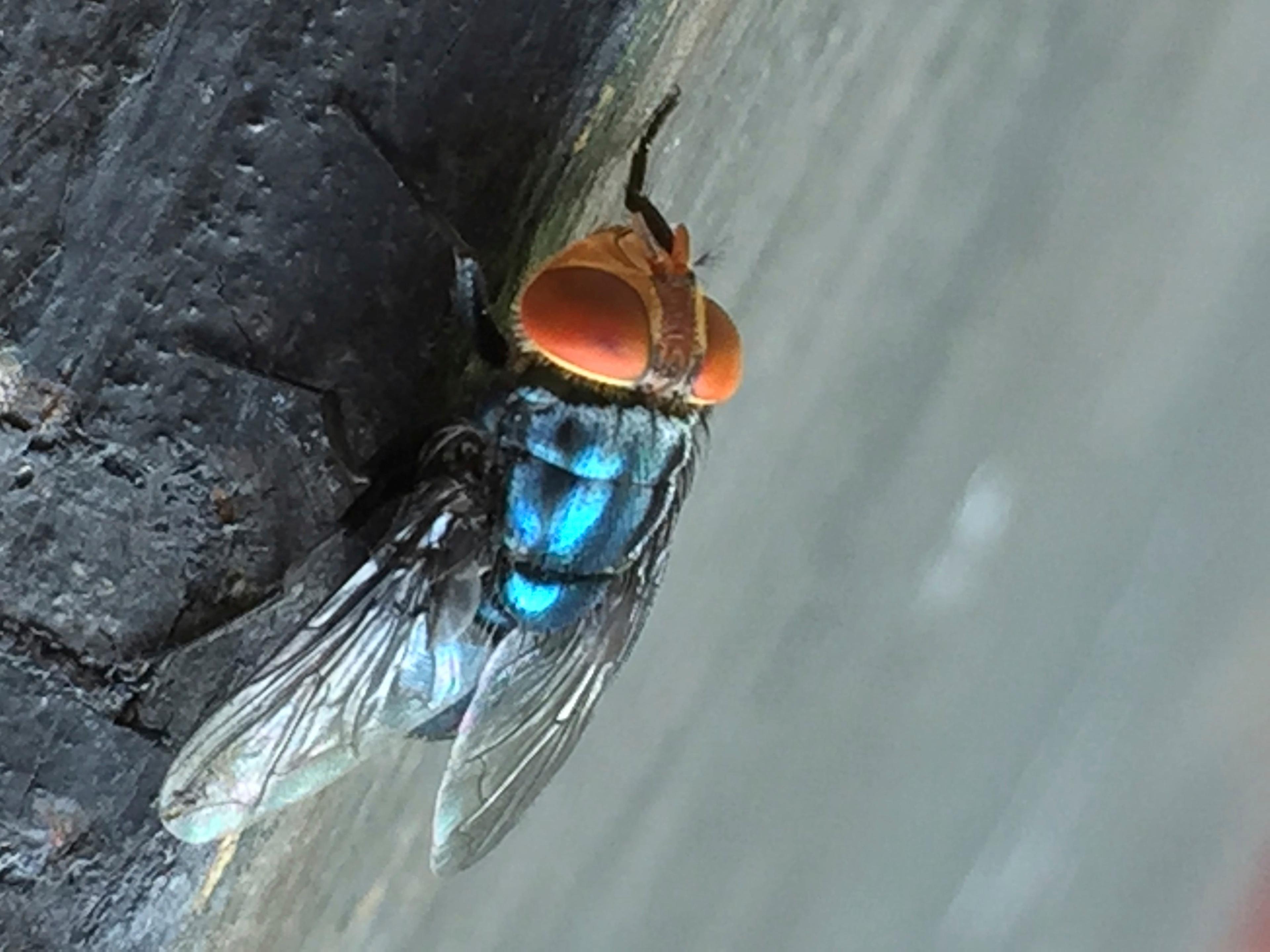
It’s the screwworm larvae that do the damage. Unlike most fly larvae, New World screwworm larvae feed on live tissue rather than dead. Females lay a prolific 75 to 500 eggs in an open wound or orifice, and once hatched, the maggots burrow into the tissue. Untreated, the wounds are fatal to an adult in just a few days, faster for younger animals.
Cattle are a common culprit, but all warm-blooded animals—including humans—can contract the New World screwworm. So far, Mexico’s Ministry of Health has reported more than 500 human cases, most in the lower extremities. Dogs are a significant carrier in Mexico. And recent footage captured by the WCS showed the pest is rapidly infecting Guatemalan wildlife—among them, the endangered jaguar, puma, and tapir—some of which share water sources with the smuggled cattle.
The infections can be treated if they’re caught in time. All the larvae must be meticulously removed from a wound—disgusting work, no doubt—and then the animal is treated with a larvacide like Dectomax. This approach saved the 3-week-old calf in Texas.
But in many cases, the infection goes under the radar until it’s too late. Ranchers can do daily surveillance on smaller herds. But for large operations managing thousands of animals scattered over thousands of acres, it’s practically impossible to visualize and evaluate every animal every day.
“In South Texas, the concern is that the pest is descending during calving and fawning season,” said Mychael Small, a cattle nutrition consultant in the region. Isolated young animals and mothers with open wounds could be extremely susceptible to this kind of parasite and hard for ranchers to find, she said.
“We should be taking this as a warning about what the next transmissible disease could be.”
It’s unclear how, exactly, the pest made the journey across the U.S.-Mexico border. But illegal cattle smuggling clearly does not bear all the blame, according to Lira-Noriega.
The fly itself is a meaningful contributor to the spread, Lira-Noriega told Offrange. It boasts a broad ecological niche, thriving in temperatures ranging from 68° to 104° F and surviving extreme temperatures as low as 53° and as high as 117°.
The flies also have significant flying potential, able to travel up to 20 kilometers. Combine that with its prolific reproduction cycle, and it’s a noteworthy threat. But people and policies have certainly lent the screwworm a hand, Lira-Noriega said. Warming global temperatures, deforestation, and cattle smuggling have all given the pest an advantage.
The U.S. and Mexico have already invested heavily in the launch of another sterile fly campaign, the same approach used to eradicate New World screwworm in the 1960s and to stop a small outbreak in Florida in 2017.
As of July, Texas has released more than 400 million sterile flies this year. But experts estimate it will take 500 million a week to eradicate the pest. A facility in Panama is currently producing 100 million sterile flies per week, and a newly opened facility in Mexico is ramping up production. But experts told Offrange that starting screwworm colonies in artificial environments will be slow work. A third facility is under construction in Texas, but isn’t expected to open until late 2027.
Beyond capacity issues, Radachowsky warned that infrastructure and scale of cattle production across the U.S. and Mexico are not the same as they were 60 years ago. The density of animals, of people, the volume of illegal trafficking—none of that was happening in the 1950s and 60s, he said.
“We should be careful not to trust that the exact same formula is going to work this time.” And even if the sterile flies do work, what is to stop the steady stream of illegal cattle from bringing it right back? A lasting solution to the screwworm resurgence must deal with the illegal cattle trafficking in some way, he said.
“The screwworm is one of the most innocent things that could have been transmitted through illegal cattle,” Radachowsky said. Because even though it causes damage, screwworm is ultimately treatable. If the smuggling isn’t addressed, the next disease ushered through these illegal channels could be far more dangerous. “To me, we should be taking this as a warning about what the next transmissible disease could be.”