To curtail a tick epidemic exacerbated by alpha-gal syndrome, Martha’s Vineyard needs deer control. Its hunters are ready to help.
It’s a couple hours before sunset when Joe Capece pulls on his camouflage and clambers up into a sprawling oak with an ocean view. There are thousands of acres of woods on Martha’s Vineyard that shelter nearly 4,700 deer, but these days his hunting grounds look different than they used to. In a community overwhelmed by ticks that feed and reproduce on all those deer, his hunts have taken on a suburban aspect.

The oak stands alone, bound by an expanse of well-kept lawn and a light-filled coastal guest house. It’s early October, so the owners have left their summer home behind and invited Capece to use their property, hoping he can reduce the risk they face when they return.
Martha’s Vineyard, a 96-square-mile island off the coast of Massachusetts, is home to 55 deer per square mile, according to an aerial survey taken last spring—roughly four times the state’s target for deer management. With an abundance of hosts, ticks have pervaded the island. So has fear of the diseases they carry.
It’s bad enough that they are vectors for diseases including Lyme and babesiosis, both of which occur on the Vineyard at 11 times the statewide rate. But the rapid spread of alpha-gal syndrome, which can cause a nasty allergy to mammalian meat and dairy, has changed life here. After two positive tests in 2020, cases ballooned to 742 by 2025—in a community with about 20,000 year-round residents. Everyone knows someone with alpha gal, and many residents have faced Lyme disease multiple times.
In response to a deepening public health crisis, the island community has turned to hunters like Capece in search of relief. Where once they had to beg landowners to use their property, they now get calls asking for help. On multiple occasions, Capece has been approached in public by an appreciative neighbor: “Thank you for your service.”
To combat the spike in tick-borne disease, Massachusetts has relaxed its regulations to encourage more hunting, and a new nonprofit, Tick Free MV, has invested in processing capacity to help handle the increased deer output. In lieu of effective methods to directly reduce tick-borne disease, the island community is doing the only thing it can: Cull the deer on which ticks feed. That’s changed the mindset for the Vineyard’s hunters.
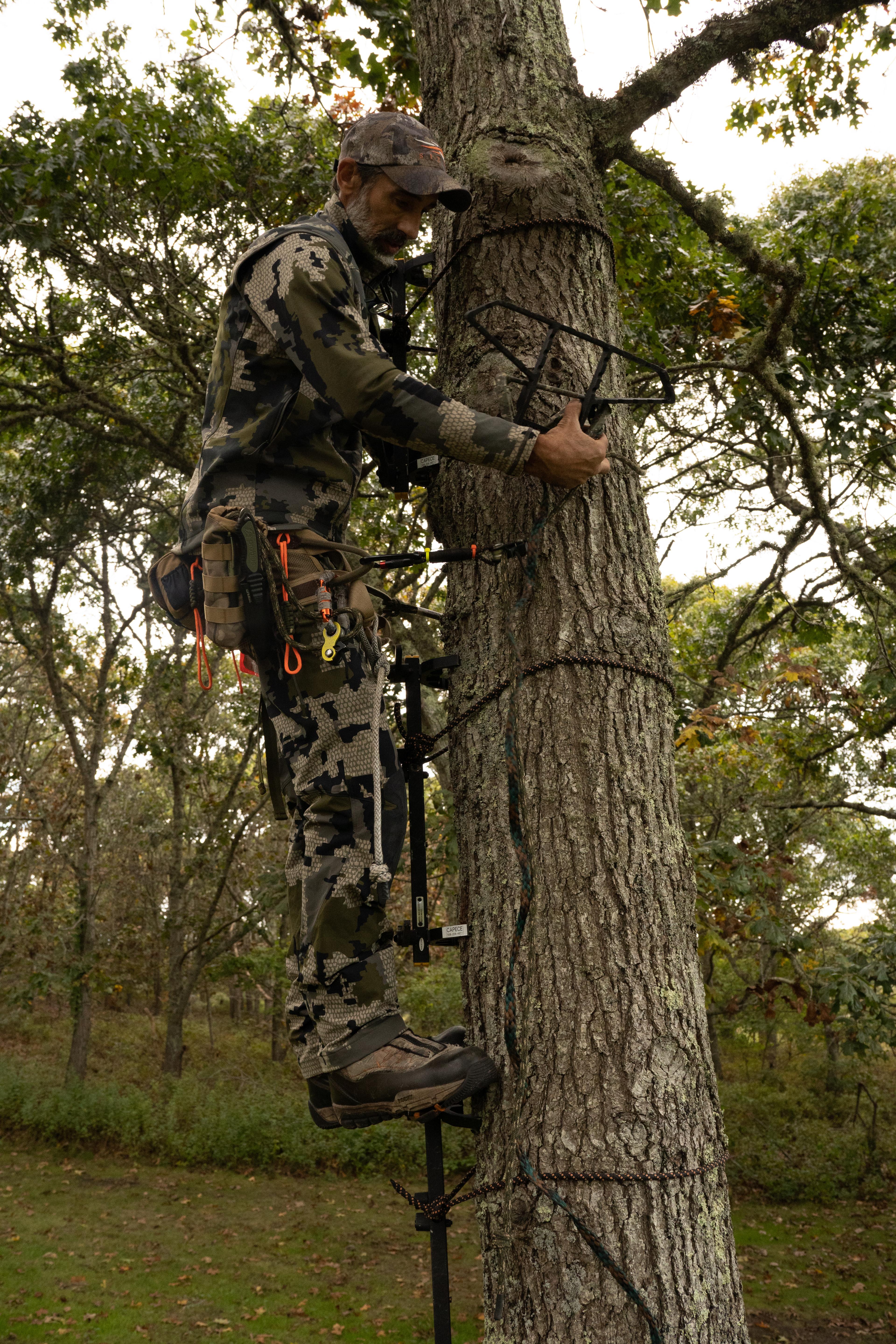
Joe Capece prepares a tree for an afternoon hunt in Martha's Vineyard.
·Ben Seal
“Trophy deer has to go out the window,” says Brian Athearn, a hunter whose island property housed a processing facility for years. “Now it’s a utility.”
Martin Feehan, the deer and moose biologist for the Massachusetts Division of Fisheries and Wildlife, says he’s never seen anything like what’s developing on the Vineyard, “in terms of the speed by which people are being galvanized around this issue and also the speed by which resources are being allocated.” Deer management doesn’t often garner vast support and funding, especially when it requires killing a large number of animals, but deer aren’t often such a concern for public health. One in five ER visits on the island is now tick-related.
The problem isn’t relegated to Martha’s Vineyard, even if it’s amplified there by runaway growth in the deer population. Statewide cases of Lyme, babesiosis, and anaplasmosis have all roughly doubled in the past decade, spurred on by an estimated doubling of the deer population since the 1990s. In a bid for containment, Massachusetts has dramatically expanded the hunting season. In 2026 it added a six-week winter hunt and a two-week early season in the fall, effectively doubling the hunting window on the islands.
It has also promoted deer damage permits, which allow landowners to disregard normal restrictions on the timing and method of a kill in order to protect agricultural products, which includes not just crops but also conservation land, gardens and golf courses. Gov. Maura Healey has proposed additional legislation that would end the state’s longstanding prohibition on Sunday hunting; cut in half the distance archers must keep from nearby dwellings; and allow all licensed hunters to use crossbows, rather than just those with a disability, opening the door to those who struggle with the strength required by a compound bow.
Already, the changes are proving effective. In the first year with the extended window, hunters on Martha’s Vineyard and its neighboring islands took nearly 40 percent more deer.
Many of those deer end up being donated through the state’s Share the Harvest program, which directs venison to people facing food insecurity. (Disease is conveyed only through tick bites, not through the meat of their hosts.) Last season, 11 percent of the 934 deer harvested on Martha’s Vineyard were donated—four times the statewide average— and the rest fed hunters and their families throughout the year. Donations are likely to grow in concert with the island’s processing capacity.
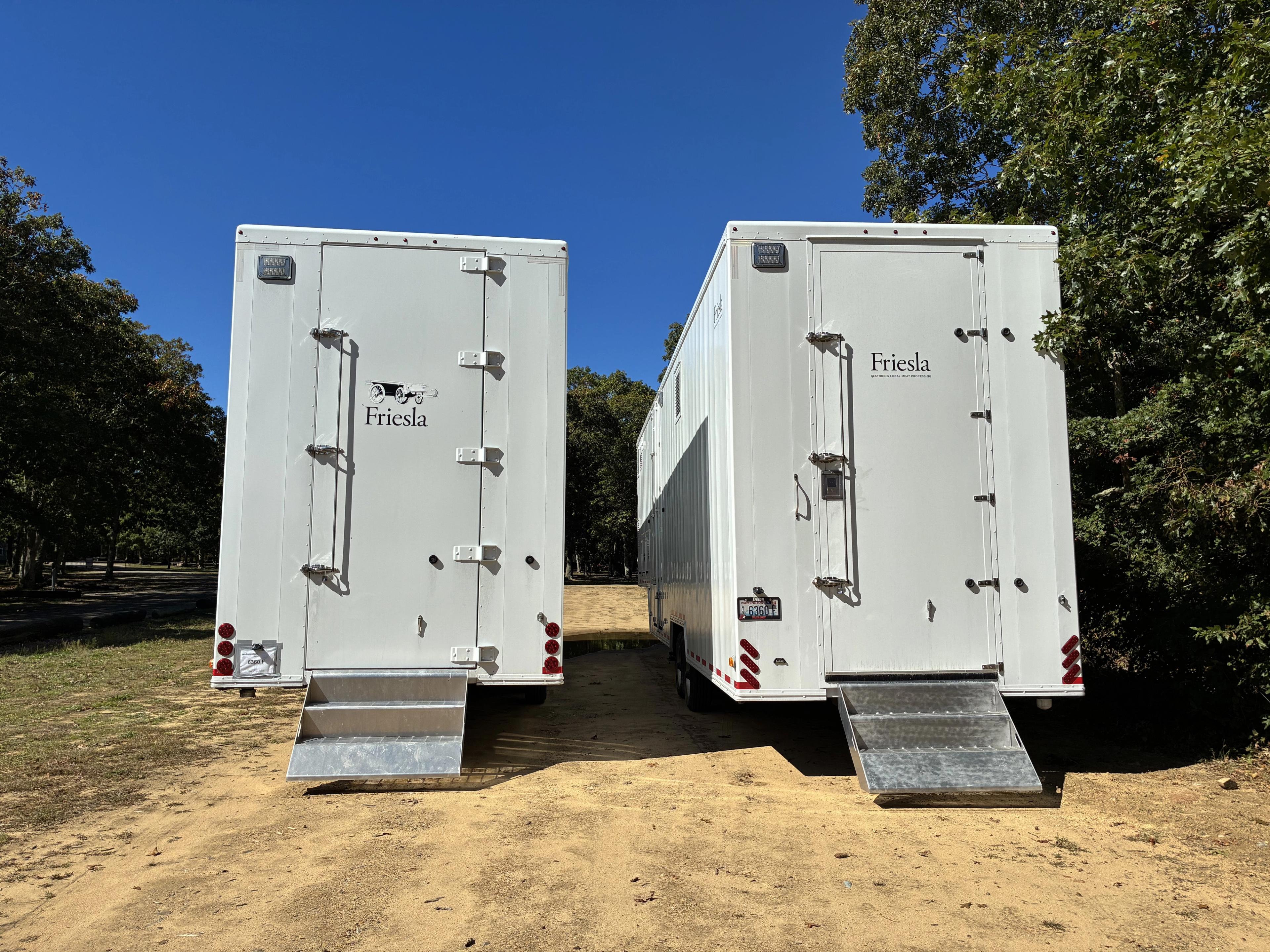
Two mobile meat processing trailers were installed at the Martha's Vineyard Agricultural Society in early fall to ramp up the island's venison processing capacity.
·Ben Seal
This fall, Tick Free MV installed a pair of mobile venison processing trailers on the grounds of the Vineyard’s Agricultural Society. They contain refrigeration, storage, stainless steel equipment for butchering, and a rail system to move deer down the processing line. Before reaching the island, they were used to process livestock in New York.
As the organization works toward establishing a permanent building to house the trailers, its members and collaborators are being trained to use them by Friesla, the company that designed them. Capece, a builder by trade who is president of the Martha’s Vineyard Hunt Club and a board member at the Agricultural Society, says they’re expected to handle up to 40 deer per day once operational, offering hunters a place to bring their deer to be butchered and allowing them to devote more time to hunting.
A few hours before he commenced his afternoon hunt, Capece watched as Blake Wasson, a hunter and program coordinator for Tick Free MV, processed a deer in a makeshift cooler that has stood on the Agricultural Society’s property since 2019. Sixteen deer hung in a converted semi-trailer refrigerated by a pair of standard air conditioner units. With nothing but a four-inch knife and a pair of gloves, he broke down a four-point buck he’d shot a week earlier. He expected it to produce more than 30 pounds of meat for Share the Harvest.
The venison donated through the program is routed to food banks and pantries both on and off the island, and roughly half reaches the 300 or so resident members of the Wampanoag Tribe. On an island with an unsustainable cost of living, where the average price of a home is well over $2 million, the venison is a lifeline. More than that, though, it’s a way to preserve tribal members’ relationship with traditional protein sources.
“Food share is nothing new in the Native community,” says Bret Stearns, a Tick Free MV board member who spent 32 years as the Tribe’s natural resources director.
The Tribe has three freezers for weekly food distributions, and they’ve never been more full with venison. The new trailers at the Agricultural Society, one of which will serve as a cooler and the other for butchery, will create “an easy button on the processing side” that should only lead to more donations, Stearns says.
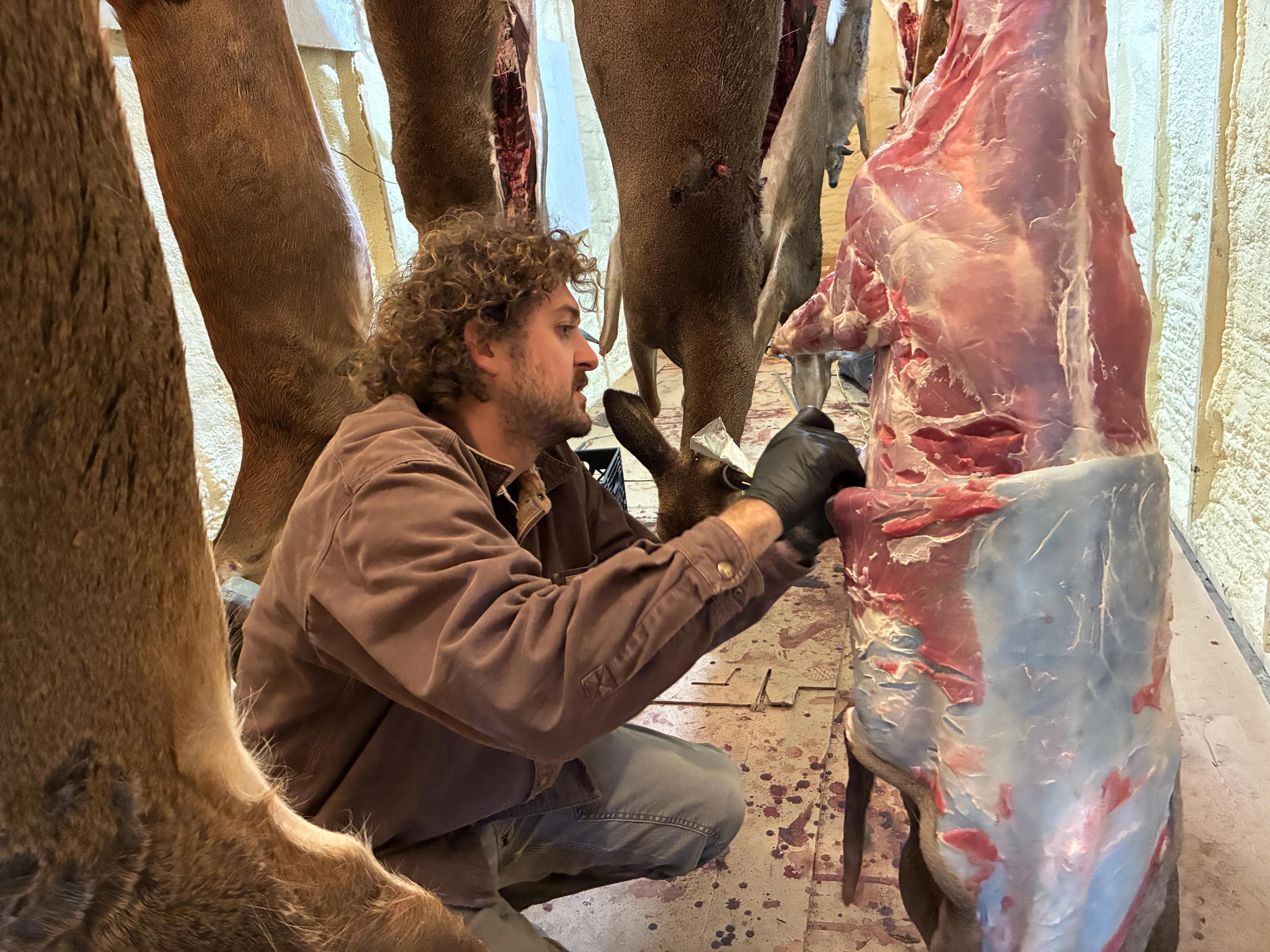
Blake Wasson processes a deer in a cooler at the Martha's Vineyard Agricultural Society.
·Ben Seal
Patrick Roden-Reynolds, the island’s tick biologist and a hunter himself, believes scaling up both hunting and processing is the Vineyard’s best chance to address its disease epidemic. “If you want my bold opinion,” he says, “I think the way out of the tick problem is to eat our way out.”
Not everyone agrees it will work, though. Durland Fish, a Yale epidemiologist who has studied tick-borne disease since Lyme was first identified in the 1980s, says deer control is the path to minimizing disease. Ticks are an environmental problem that require an environmental solution, he says, rather than the human diagnostics, therapeutics, and vaccines being developed by pharmaceutical companies.
But he’s skeptical that hunting can make enough of a difference to matter. To alter the trajectory of tick-borne disease on an inundated island, “the deer population has to be reduced to such a level that they won’t be able to find the remaining deer. It will be too hard.” A more holistic and effective approach would include vaccinating deer to make them unattractive hosts and stop the disease cycle before it starts, he says.
If the deer population ever dwindled enough to take a bite out of tick-borne disease, the initiative might lose the support of hunters keen to preserve their prey, while also raising questions about tribal sovereignty and access, Feehan suggests. Some hunters have also expressed concern that Martha’s Vineyard might eventually bring in sharpshooters to finish the job for them, as was done in Monhegan Island, Maine, when a Lyme outbreak led to complete extirpation of the deer population in the late 1990s.
For now, though, the project has empowered the island’s hunters and made them feel like a vital resource rather than a nuisance to their neighbors. “I’m not out there just to kill animals,” Athearn says. “There’s a purpose to it now.”
Statewide, hunting has been in decline for decades, peaking at around 150,000 license holders in the 1990s and dropping to about 58,000 last season, Feehan says. Licenses have fallen by about 4 percent per year for the last decade. But on Martha’s Vineyard, hunters have been reinvigorated by their role as part of the public health response. For the first time in many years, they’re bringing more people into the fold. And their commitment is evident: The island’s resident hunters harvested an average of 3.6 deer per successful hunter last season, Feehan says—more than twice the statewide rate.
“I think we could put a pretty big dent,” Capece says. “There’s light at the end of the tunnel. There’s hope now.”
Back in his suburban oak, Capece has spent more than an hour silent in his tree saddle. The sky softens over the ocean and the wind whips up around him. It’s feeling “deery,” he says. Last year he shot three here in a single afternoon, so he knows his patience should soon be rewarded.
Shortly before sunset and the close of the day’s hunt, two deer emerge from the brush at the edge of the lawn. Capece calmly reaches to grab his bow from its resting place, pulls back the string and lets loose an arrow. It strikes the smaller of the pair, which drops for a second, then scampers off into a thicket.
Almost as soon as Capece climbs down to track the deer, four more amble by, as if to show off their ubiquity. He has a hard time explaining what it’s like here to hunters who’ve never seen abundance like this. “It’s shooting,” he says, “not hunting.”
By the time he starts searching the brush for his deer it’s getting dark, and after a valiant effort he decides he needs help. He goes home to grab Charlie, his Texas-bred Lacy game dog, who finds the felled target in a matter of minutes. Another deer to donate, and one less for the ticks.