Landlocked farmers are growing saltwater shrimp in a niche market.
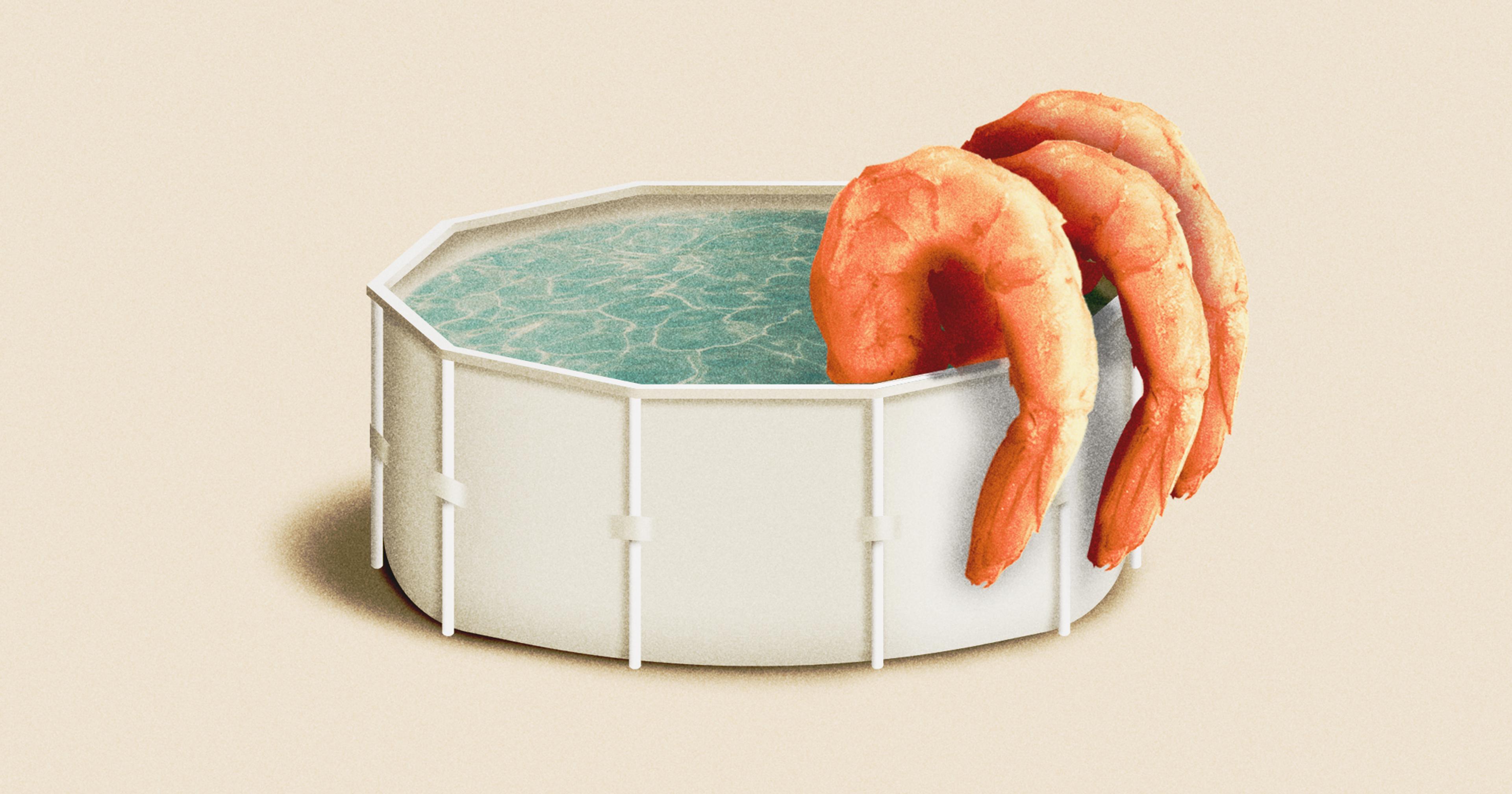
Benton County, Indiana, may be over 900 miles from the Atlantic Ocean — and smack dab in the middle of the Midwest — but it’s also home to a saltwater shrimp farm that’s been supplying local communities and restaurants for the past 15 years.
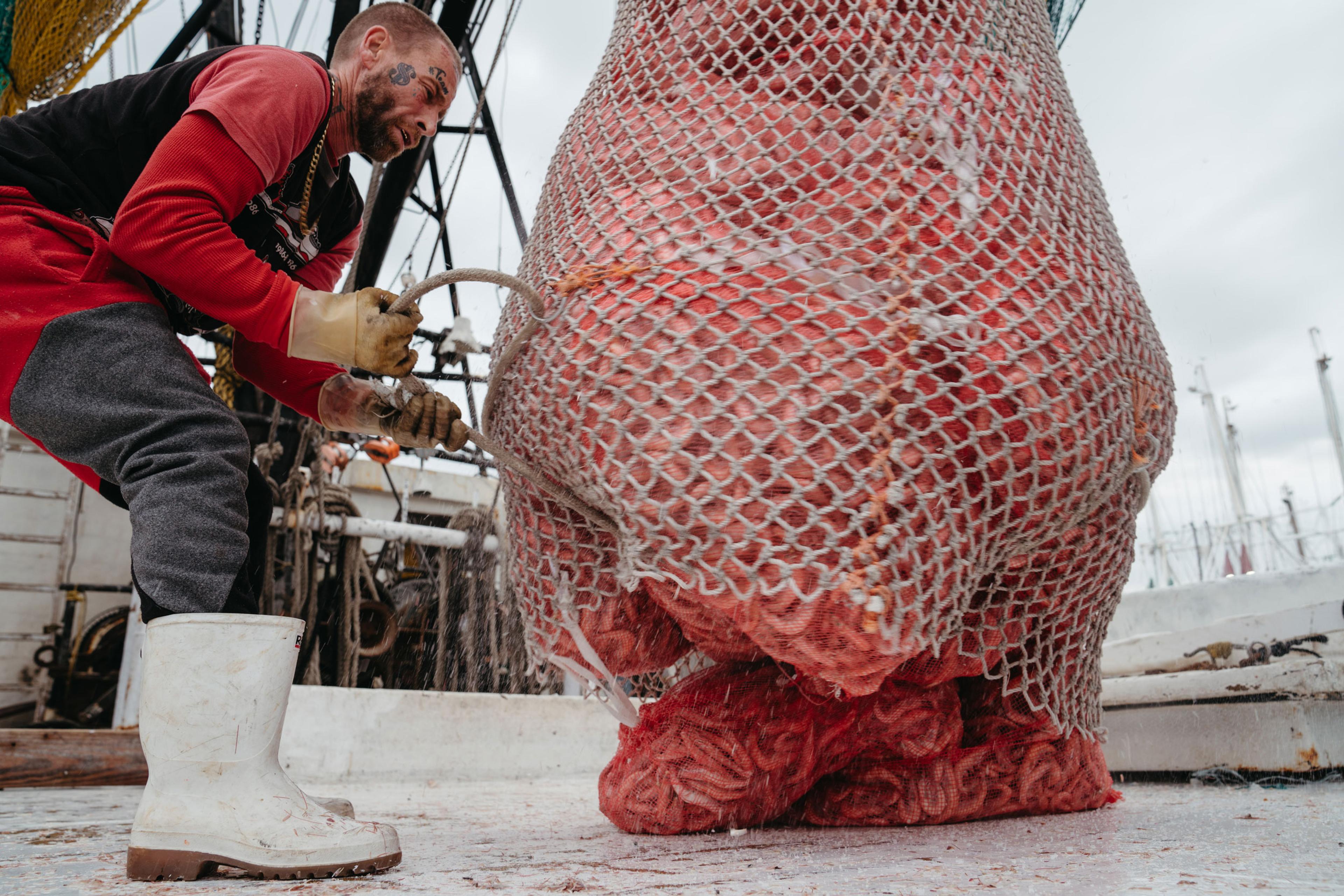

“We sell them out faster than we can grow them,” said Karlanea Brown, who started RDM Aquaculture LLC in 2010 with her husband, Darryl. “Each of my 14-foot tanks will produce anywhere from 125 to about 150 pounds of shrimp every 90 days.”
There are 51 saltwater shrimp farmers in the U.S., according to the USDA’s 2023 Census of Aquaculture; the majority of them are located in traditional coastal states like Florida or Texas. Brown is one of only seven saltwater shrimp farms located inland with the others found in Iowa, Kentucky, Minnesota, and Missouri.
By raising saltwater shrimp hundreds of miles from the coast, these Midwest operations are challenging long-held assumptions about where seafood can be grown, and testing whether inland aquaculture can play a bigger role in the future of U.S. food production while potentially reducing reliance on imports.
“We’re still kind of small,” said Brown, noting that theirs is a two-person operation with 19 production tanks, seven intermediate tanks and between six and 10 nursery tanks, depending on the time of year.
A self-described “city girl,” Brown said she’d never “met a pig or cow in her life” until she met her husband, a third-generation pig farmer, decades ago. When they married and decided to start their own farm, their original plan was to follow in his family’s hog-shaped footprints, but that changed during the 1990s when the pork market hit a price collapse that pushed thousands of independent producers out of business.
“We literally poured the concrete for the pits and the slats for the first two hog barns and the price bottomed down,” said Brown.
This forced them to pivot to another type of livestock farming both were curious about: aquaculture, one of the fastest-growing forms of both U.S. and global food production. Their initial research brought them in contact with someone who not only had a tilapia system they could check out, but also a shrimp system. Brown said her love of shrimp influenced her to create their land-locked farm — but the fact that it was also cheaper than growing tilapia didn’t hurt either.
Shrimp: It’s What’s for Dinner
Shrimp is a perennially popular protein among Americans, due to their flavor, their nutritional value, and their versatility when it comes to preparation — they can be grilled, boiled, steamed, sautéed . In fact, shrimp accounts for about 38% of all seafood eaten in the U.S., according to Sustainable Fisheries, and the average American consumes roughly 5.5 pounds each year, which adds up to more than 1.5 billion pounds annually.
That level of popularity — and the potential for dibs in a growing U.S. market — is what made shrimp farming appealing to Landon Loftsgard.
“Shrimp’s the number one seafood consumed in the U.S. and we import about 90% of it,” said Loftsgard, who operates LandGrown with his wife. “We see an opportunity to eat into some of that 90% and provide a high-quality, local product. How cool is it that we can grow it in Iowa?”
Loftsgard’s operation is based near Redfield, Iowa, and consists of a 15,000-gallon system that takes up two 17-foot tanks where the Pacific white shrimp are grown and three tanks for water treatment in roughly a 1,200-square-foot barn. However, it utilizes a patent-pending, closed-loop Recirculating Aquaculture System (RAS) created by Midland Co. that uses algae to process shrimp waste, minimizing the environmental impact and reducing water loss from evaporation.
“I wouldn’t say that theirs is a booming industry at the moment. I think that there is promise of good things to come.“
Brown’s setup isn’t the same as Loftsgard’s. She uses an RAS with heterotrophic bacteria-based water that the Browns redesigned to run on an air pump after the motorized pump failed. Heterotrophic bacteria break down shrimp waste, converting ammonia into nitrite and then nitrate, allowing the same water to be reused for years, adding to the sustainability of raising shrimp in Indiana.
And for both, it’s all about the water quality when it comes to the shrimp they raise.
“We actually do nine tests on our tanks every day,” said Brown. “I learned the hard way when we first started. I didn’t test for four days and it cost me 400 pounds of shrimp in one day.”
The Medication Behind the Crustacean
One of the key differences between U.S. farmed shrimp and global aquaculture operations is the lack of added antibiotics, chemicals, or hormones. Last year, the U.S. Food and Drug Administration (FDA) refused 81 shipments of foreign shrimp because of antibiotic contamination — the highest refusal rate since 2016. The kicker? According to Seafood Source, “Many of the refused shipments came from Best Aquaculture Practices-certified producers and processors.”
“They’re at such a mass scale that they have to use those antibiotics, they have to use those chemicals to control for disease,” noted Loftsgard, adding, “It was funny, the first time we harvested, that week was the same week as when the radioactive shrimp recall came out.”
Antibiotics commonly used in global shrimp production are banned for use in the U.S.
“If you put an antibiotic in a pig or cow, you cannot sell that pig or cow until that antibiotic’s run its course, but in imported shrimp, it’s in their food, it’s in their water,” said Brown. “They literally just harvest it at that time, then freeze it, so now it’s frozen in their bodies when you thaw it out and cook it.”
Brown’s point is clear: “You’re literally cooking [the antibiotics] into the meat.”
Is Shrimp America’s Next Great Commodity?
Shrimp farmers like Brown and Loftsgard begin each growing cycle with a delivery of postlarvae (PL) shrimp — juvenile shrimp that have completed their larval stage — that are usually only a few millimeters in length. The quality of the PL shrimp is crucial because it directly influences their growth and ability to resist disease.
Most come in shipments direct from the Gulf, according to Thomas Detmer, an assistant professor in the department of natural resource ecology and management at Iowa State University and director of its North Central Regional Aquaculture Center.
Brown said she gets hers from a supplier in Florida.
“We typically get them in groups of approximately 40,000 PLs at a time, which we hope to turn into about a thousand pounds harvested,” said Loftsgard, noting that the shrimp at this stage are about the size of an eyelash, filling large, grocery-store-like bags that are transferred to grow tanks for several months.
“After about 90 days, we harvest them as 20-gram shrimp, which is basically like a jumbo-size shrimp,” said Loftsgard.
U.S. shrimp fall under the same umbrella as all American aquaculture processors and are regulated by the FDA. To date, there are no future FDA or USDA regulations targeting shrimp farmers, according to Detmer, likely because there are so few producers in the country.
“I wouldn’t say that theirs is a booming industry at the moment,” said Detmer. “I think that there is promise of good things to come as there are some creative new approaches that would improve sustainability in the region in more ways than one.”
“Demand for shrimp in the U.S. far exceeds domestic production, so most shrimp is imported and can lack consistency and sustainability.”
One of the biggest barriers, according to Detmer, is competing with overseas shrimp “that are produced with limited/no regulations and under poor working conditions.”
“It has not been a particularly sticky industry in that there have been several ventures that have not persisted in the last decade,” he added, noting however that U.S. shrimp aquaculture could be a way for farmers to diversify income streams when there are stresses in other sectors.
The price is also a factor as well as availability. Brown sells direct-to-consumer at $22 per pound and relies on repeat customers and referrals for business. Loftsgard, who sells his shrimp at $20 per pound, also sells direct-to-consumer, but with an online order form on his website. He’s branched out by selling his shrimp under the Midland Co. brand in several central Iowa stores like Fareway Meat & Grocery. Loftsgard anticipates a mid-30% profit margin once they’re in full production.
“We are higher priced than frozen imports, but it’s really hard to compare the two, in my opinion,” said Loftsgard. “Frozen imported shrimp is really a commodity product while fresh domestic shrimp is a premium product. We see positioning it similar to high-quality beef versus frozen.”
For both, the shrimp people buy is never frozen and always fresh — quality that Brown hopes makes the cost worthwhile compared to imported shrimp sold at major retailers that averages between $8 and $14 per pound, depending on whether it’s farmed or wild-caught.
“The barriers that jump out in conversations are economics, permitting, and a supply chain built around frozen (not fresh) products.”
“Demand for shrimp in the U.S. far exceeds domestic production, so most shrimp is imported and can lack consistency and sustainability,” said Detmer. “That creates opportunity for domestic farms to compete on freshness, traceability, and high environmental standards. The barriers that jump out in conversations are economics, permitting, and a supply chain built around frozen (not fresh) products. Even so, the industry appears to be evolving quickly with several farmers demonstrating exciting new approaches.”
While Brown’s not looking to expand her operations, she has turned her focus to consulting on top of shrimp farming, and has helped train other potential shrimp farmers — both nationally and internationally.
Loftsgard is eager to see how the future of shrimp aquaculture will pan out — from an increase in his direct-to-consumer sales as well as other interesting shrimp-byproduct avenues.
“Shrimp molts have some pretty interesting potential byproduct uses … in medical like wound dressing,” said Loftsgard. “We’re hoping we can actually sell that, too, if we end up with the right volume.”