
Salmon farmers spent decades reducing their reliance on wild-caught fish. Now the industry’s emissions are up 300%.
When the productivity of fish farms surpassed that of fishing for the first time in 2024, advocates around the world heralded the news as a triumph for both food security and sustainability. Given the limited landmass available to expand traditional farming, organizations such as the Food and Agriculture Organization of the UN argue most of the protein needed to feed a growing human population will have to come from the oceans. And of course none of these organizations support overfishing, so the recent growth of fish farming—known as aquaculture—seemed like a win for everybody.

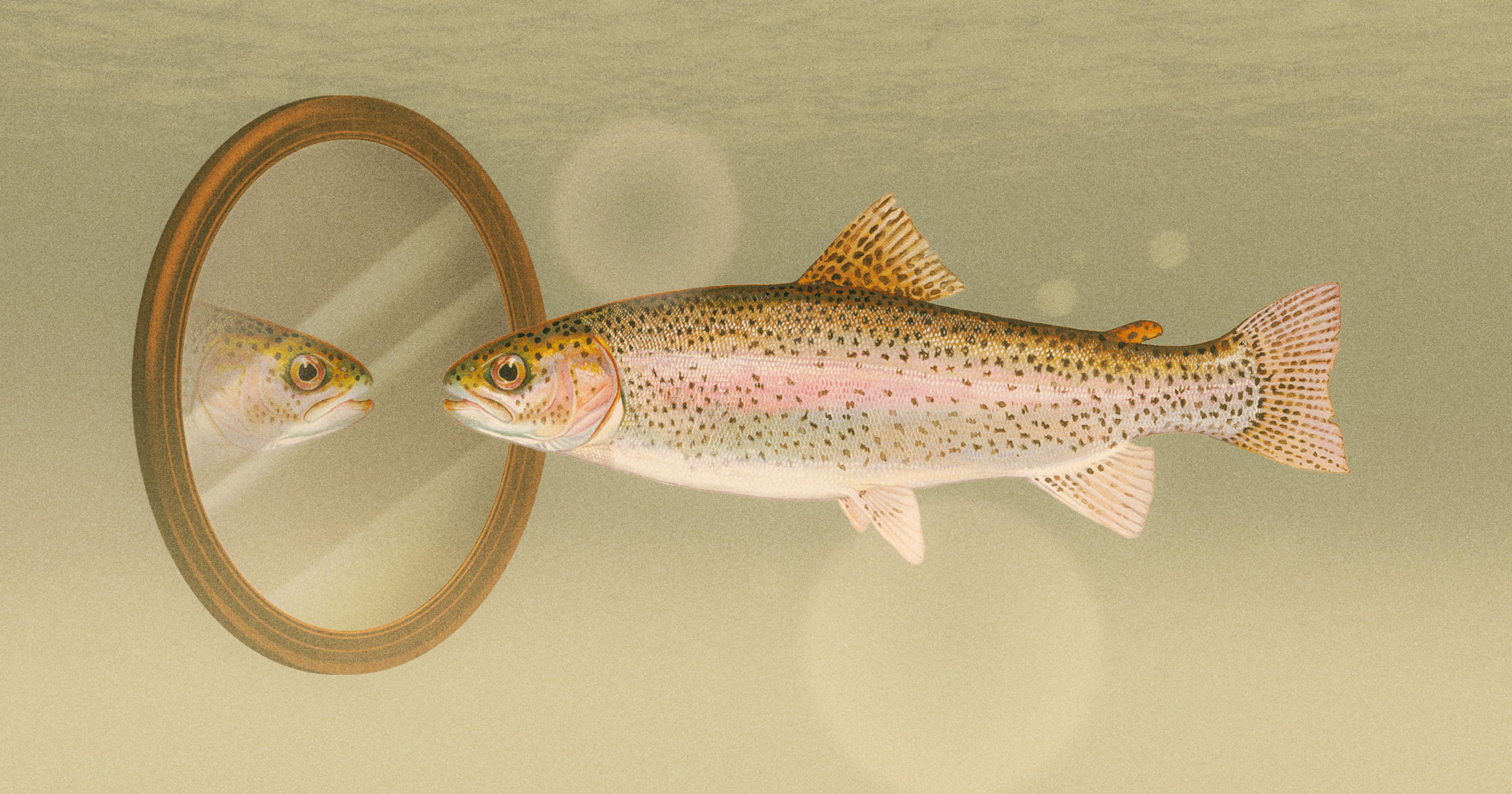
Recent research suggests there could be a catch—pun quite literally intended.
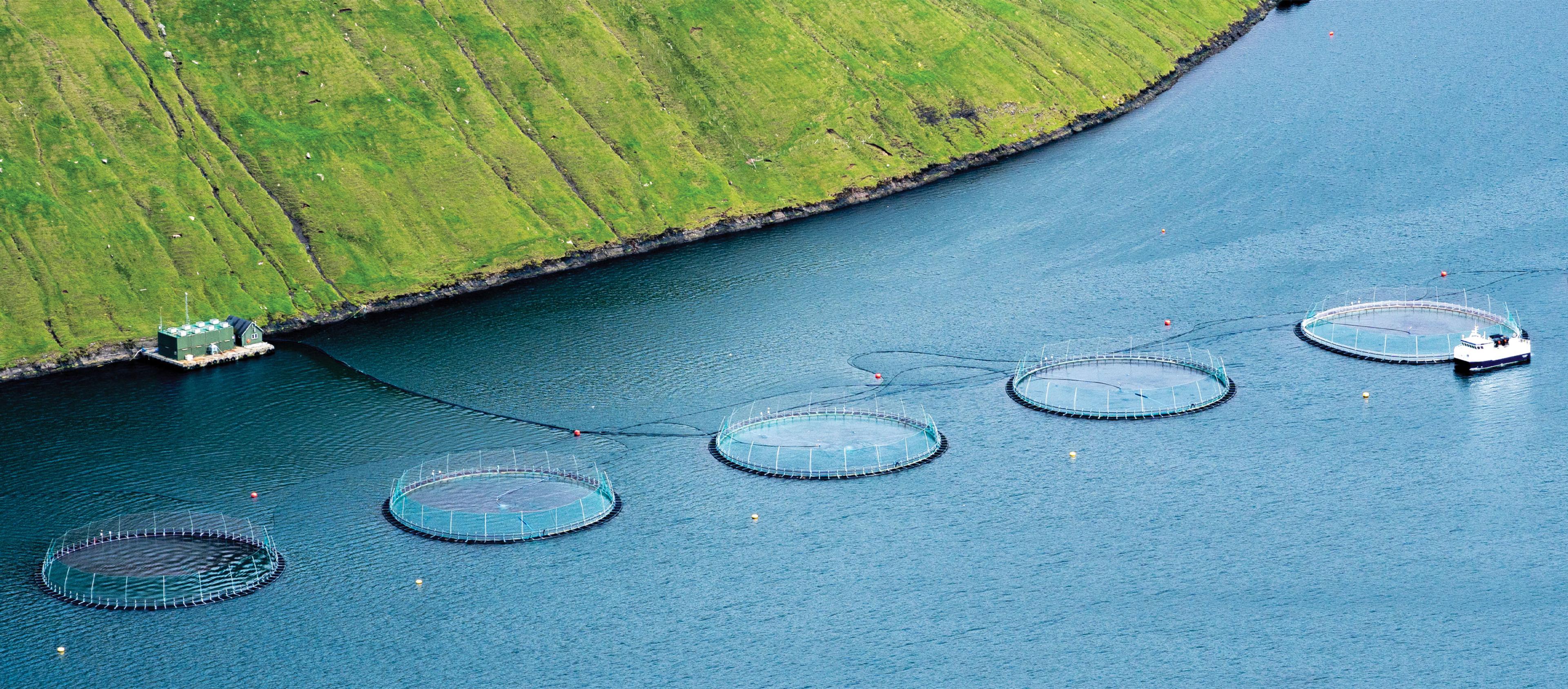
The fastest-growing segment of the aquaculture industry—salmon farming—remains heavily dependent on small, wild-caught fish. Replacing some of those fish with soy has allowed the industry to grow without further depleting the world’s oceans, but it has also increased the carbon footprint of salmon farming by some 300%—and increased land and water use, as well.
With the oceans tapped out and most other wild-fish alternatives still too expensive for wide-scale use, some experts have been asking: Are we farming the wrong fish?
The Salmon Takeover
Aquaculture isn’t a new industry. But if you look at the past few decades, it’s clear that something changed in the 1970s and 1980s, when aquaculture—and salmon farming in particular—began growing exponentially, according to Aleah Wong, a PhD candidate at The University of British Columbia’s Institute for Oceans and Fisheries.
When the salmon industry began to boom, global fishery collapse was top of mind for many of the world’s fishermen. If they took too many fish from the ocean, they faced a very real possibility that key species like tuna or salmon would be unable to reproduce. Aquaculture offered a sustainable solution: Raising more fish in captivity reduced the need to take fish from the wild.
Historically, aquaculture focused on vegetarian or omnivorous fish like carp and tilapia, because carnivorous species like salmon and shrimp were harder to raise in captivity. Then a series of technological advances allowed aquaculture to dramatically increase production of carnivorous fish species. That, in turn, cut the cost of salmon and put it within reach of more consumers. Ye it preserved just enough of the price premium that salmon farmers enjoyed significantly greater profit margins than, say, farmers raising carp, Wong said.
“Some of the data we collected in terms of availability and the number of products with salmon in it ... it rivals big meat.”
The rapidly increased productivity of salmon farms left the industry with a glut of salmon following the so-called “Blue Revolution” from the 1980s onward. And so the salmon industry launched an effort to identify new international markets for its products.
Perhaps the most famous of those efforts included a highly successful campaign that promoted salmon—which was not traditionally consumed in Japan—as a component of sushi. The rise of interest in Omega-3s for health came along as a happy coincidence that drove further demand for salmon in the U.S. and Europe.
The salmon industry also pushed for more grocery stores and restaurants to carry salmon, and developed an array of convenience products like pre-packaged, heat-and-eat meals with salmon as a star ingredient, said Josi Fernandes, an assistant professor who studies marketing at Lancaster University. In many parts of the world you can now eat salmon for breakfast, lunch, and dinner and find salmon products to feed your baby and even your pet.
“Some of the data we collected in terms of availability and the number of products with salmon in it ... it rivals big meat,” Fernandes said.
The Feed Problem
Because salmon are carnivorous and limited in their ability to digest carbohydrates, salmon feed has traditionally looked different from the grain-based diets fed to terrestrial livestock like chickens or cows.
Salmon are usually fed pellets like many other farmed species, but historically these pellets were made primarily from ground, dried fish, fish oil, and some wheat to bind the pellets together, according to Turid Synnøve Aas, a senior scientist at the Norwegian Institute of Food, Fisheries and Aquaculture Research, Nofima.
The fish meal and fish oil in the pellets are largely derived from small, wild-caught fish species like anchovies and mackerel—species that are similar to what salmon would eat in the wild.
That’s where the salmon farming industry hit its first major roadblock: Just as it eventually couldn’t fish any more salmon out of the ocean, it has found in recent decades that there are not enough anchovies or mackerel to be had. Yet demand for salmon continues to grow, and Bjorn Kok, an aquaculture sustainability specialist and life cycle assessment (LCA) expert, estimated that European aquaculture is now so large it could consume more wild-caught fish than exist in Earth’s oceans.
The salmon industry has taken pains to avoid that particular bottleneck by reducing the total amount of fish meal and fish oil used to raise salmon and other farmed fish species. In 1990, according to research by Aas and colleagues, salmon feed consumed more than four times as many fish—as fish meal—as it produced. By 2020, the so-called “fish-in-fish-out” ratio had fallen to .7: slightly less fish consumed than salmon farming produces.
But it achieved this milestone primarily by trading some of the marine protein in salmon feed for soy. And while this has improved the sustainability of fishing—environmental advocates like Sergio Nates, senior director of aquaculture at the World Wildlife Fund, say most fisheries are now relatively well-managed—it has introduced new environmental questions.
“We as an industry have to realize that [reduced marine resource use doesn’t] necessarily improve sustainability but rather shift pressure.”
According to research released earlier this year by the University of Stirling’s Institute of Aquaculture, total greenhouse gas emissions associated with aquaculture increased by more than 300% between 2000 and 2020—primarily as a result of increased reliance on Brazilian soy. Land use also increased nearly 600%, and water consumption by 236%.
“We as an industry have to realize that [reduced marine resource use doesn’t] necessarily improve sustainability but rather shift pressure,” Kok, one of the co-authors on the University of Stirling report, said during a June 25 presentation hosted by IFFO, the trade organization that represents fishmeal and fish oil producers. “Going forward we need to have a more holistic view of what sustainability means, and that every ingredient will have a tradeoff that we have to manage.”
Not everyone agrees with the University of Stirling’s recent conclusions; Nates said he doesn’t believe that using more plant-based ingredients in salmon feed increased the industry’s carbon footprint. He pointed out that different methodologies for calculating carbon emissions have in the past produced wildly different results, and said that the WWF is currently reviewing the various methods used to estimate carbon emissions, and plans to release a ranking of which methods it determines are the most accurate when their study is completed.
But Wesley Malcorps, a research fellow at the Institute of Aquaculture, said his team’s recent research highlights the potential problems of focusing on a single metric, such as aquaculture’s fish-in-fish-out ratio, as an indicator of sustainability.
“The best way to describe it is, single-metric tunnel vision because in aquaculture it has been fish-in-fish-out that has led to this,” he said.
Fishing for Alternatives
Kok believes alternatives like insect meal could help the salmon industry continue to grow while reducing its impact on the environment. But he also worries that the industry’s growing awareness of the emissions associated with soy will lead to another shortsighted quest with negative consequences.
“Soybean itself is a very efficient crop,” Kok said. “If we look at insects or algae or single-cell protein, they also have a protein that has benefits and downsides. And we have to be aware of that and not fall into the same trap where in 20 years we are now saying we reduced the deforestation problem, but now there’s not any fossil gas anymore because we used it all for single-cell protein.”
There’s also the issue of their limited availability, according to Aas: The Norwegian salmon industry consumed nearly 2 million metric tons of feed in 2020. The most recent figures released by the International Platform of Insects for Food and Feed suggest Europe’s entire insect-rearing industry will produce just 40,000 metric tons of insect meal this year.
Wong believes there is another solution: Convince consumers to eat other fish. Species like carp and tilapia don’t require marine-based ingredients to grow. Farming species like oysters, mussels, scallops or even seaweed would not only reduce the need for fish meal, but could come with additional environmental benefits because these species may improve water quality, Wong said.
As much as all the experts love this concept for its environmental benefits, some of those same experts acknowledge they struggle to incorporate more diverse seafood into their own diets. Both Kok and Malcorps said they have tried to eat smaller fish more often, but noted that these can be hard to find in supermarkets and that they—or their family members—often don’t care for the taste.
“It’s cheap as well” as healthy and good for the environment, said Malcorps, who noted that he actually likes anchovies and mackerel but that his daughter and partner do not. “But I love my salmon as well. And sea bass is also delicious.”
“You can tell people, why not eat some haddock or some pollock ... and people would be like, I don’t even know what to do with that.”
For options like shellfish, cost and availability can be real barriers to adoption, Wong said. And when it comes to weeknight meals, convenience and familiarity play major roles in consumer decision-making.
“You can tell people, why not eat some haddock or some pollock, which would be more sustainable fish in the UK, and people would be like, I don’t even know what to do with that,” Fernandes said. “That comes with skills and time that people don’t have. Many species don’t come in a convenient format like salmon does, allowing salmon to more easily insert itself in everyday life and eating habits.”
Yet to act as though we got to this point naturally, Fernandes said, would be letting the marketing arm of the salmon industry off the hook. The industry went to great lengths to ensure ready-to-cook fillets—and even ready-made meal options with salmon—are widely available in grocery stores. And she believes there are lessons to be learned from the salmon industry about how we might get consumers to eat a wider variety of seafoods: Increase the convenience factor.
Countries outside the global West have also experimented with various strategies to get consumers to diversify their seafood habits, from serving them in school lunches to getting them on menus in luxury restaurants, Wong said. But telling people in developing countries who have only recently been able to afford salmon that they shouldn’t Westernize their diets is a tall ask in its own right.
“We can’t just tell developing countries that they can’t follow in our footsteps, that is not equitable,” she said. “It can’t just be on the consumers. It needs to be a global effort.”