Wildfire corridors are widening in the West, putting a strain on the hatcheries that stand in their path.
When the rain rolled in over Katie Harris’s trout farms in the foothills of California’s Mt. Lassen a few weeks ago, relief came with it. Her fish had survived another fire season.

“This summer we had a fire within a quarter mile of one of our farms,” she said. “It’s a threat we live with every single year.”
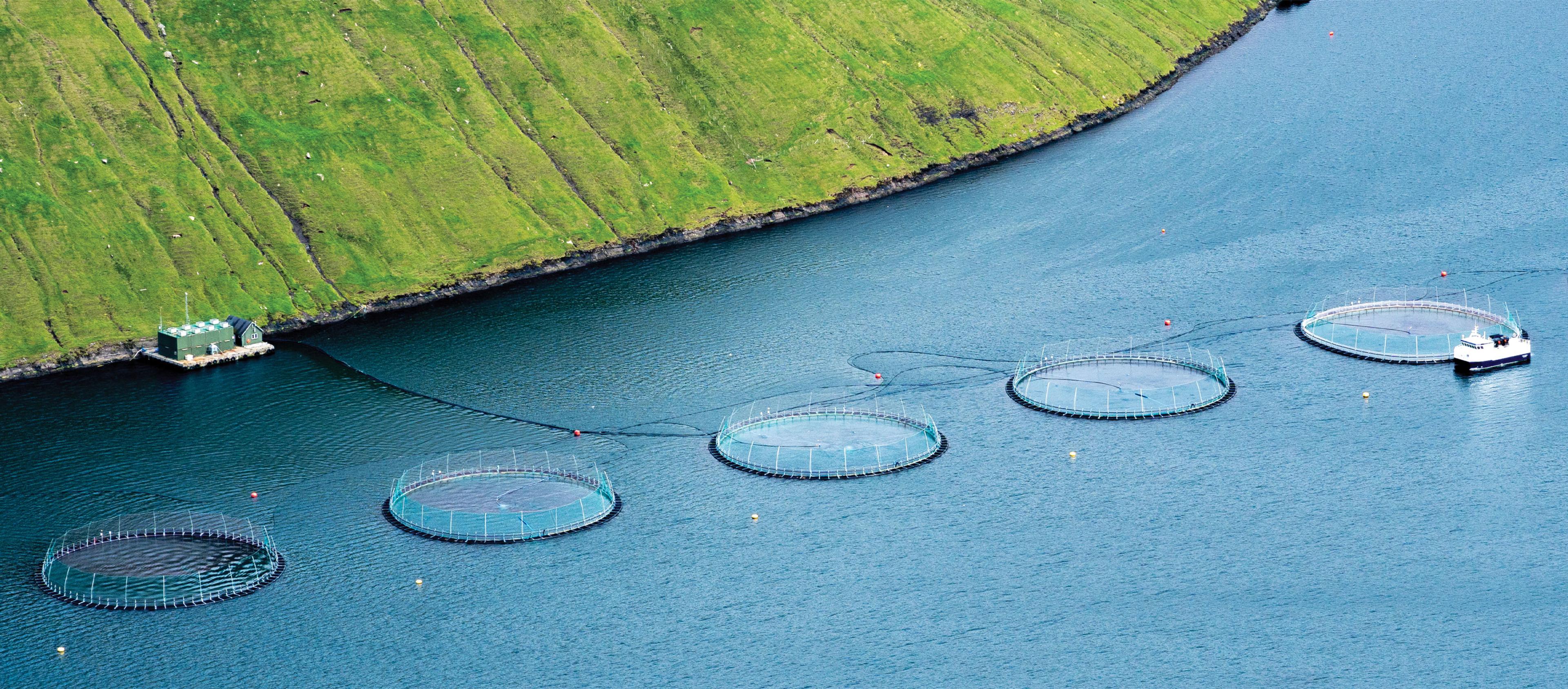
Katie Harris, the owner of Mt. Lassen Trout & Steelhead, the largest private trout farm in the state, has watched huge wildfires muscle their way across her neighborhood for years. West Coast hatcheries like hers sit near inland rivers that are often remote and exposed to increasingly extreme weather events. In 2020, the Dixie Fire flattened one of her farms, sparing only the raceways, or artificial channels built for aquaculture.
“Any farm that’s in these rural communities is facing this,” said Katie Harris. “There’s a state hatchery literally within two miles of one of my farms that is dealing with the same thing.”
Hatcheries and fish farms across the West Coast, both commercial and state- or federal-run, now face year after year of wildfire threats. At best, the fires force staff to evacuate for days. At worst, they burn entire facilities to ash. For the fish, that means lingering illnesses and deaths. For the staff and owners, it means shelling out to repair facilities, many of which, in state and federal systems, are already groaning from age.
“We’re seeing more and more wildfire every year,” said Chris Kern, West region administrator for the Oregon Department of Fish and Wildlife (DFW). “We’ve been lucky that we haven’t had more losses than what we have.”
The staff intended to load up their 80,000 fish onto trucks and get them to another hatchery. But the fire approached too fast.
States don’t keep an official tally, but since 2017, at least five state-run hatcheries in Oregon have been damaged by wildfires, and another dozen have been evacuated or put on alert, some for years in a row, according to an Oregon DFW report. In Washington state, two state-run hatcheries were evacuated this year—the Spokane and Similkameen hatcheries—according to the Washington DFW. And in California, it’s been a pattern over the last several years that “at least one hatchery in the state during the fire season is going to be impacted somewhat,” said Jay Rowan, fisheries chief for the California DFW.
Hatcheries have a range of objectives. Some exist solely as conservation projects for endangered fish. (This includes most federally run hatcheries, which also focus on recreational angling and fortifying fish populations damaged by dam construction.) Private hatcheries sell their eggs or fish directly rather than releasing them into the wild. Many state-run hatcheries shore up sport and commercial fishing stocks. Those hatcheries are most prolific on the West Coast, where some 2 billion Pacific salmon, the most prominent hatchery-raised fish in the West, are propagated annually and later released into the Pacific Ocean.
Estimates of how many hatchery fish end up in the nets of fishing boats are fuzzy. But California DFW states that, of commercially harvested salmon, somewhere between 40 and 65 percent were born in hatcheries.
“There’s a huge capital and material threat to a bigger hatchery that’s raising ... salmon for commercial enhancement or mitigation,” explained Ben Harris (no relation to Katie Harris), executive director of the Monterey Bay Salmon and Trout Project, a non-profit that operates Kingfisher Flat Hatchery in Northern California. “But it’s not quite as much an existential threat to the species.”
At the Kingfisher Flat Hatchery, however, the stakes are high for the critically endangered coho salmon raised there. In 2020, a lightning strike sparked the CZU wildfire, which tore through and gobbled up several rearing tanks and a bridge.
“We’ve been lucky that we haven’t had more losses than what we have.”
The staff intended to load up their 80,000 fish onto trucks and get them to another hatchery. But the fire approached too fast. They fed the fish, turned on their aerators, cleared the pine needles off the roofs, and left, said Ben Harris.
When he returned days later, the familiar Douglas Fir woods were charred. He stepped out of his truck and into eight inches of ash and fiberglass from the burned fish tanks. “The entire place was like, alien,” he said.
Upwards of 25,000 teeny fry salmon had died, although 30,000 did survive and were later released on their seaward journey. Another 170 older fish were boiled in their tanks. That death count can be a heart-stopper for hatcheries trying to resuscitate endangered populations, said Ben Harris.
To protect against losses of that scale, the best option is to move the fish before a wildfire hits, said Kern, the Oregon DFW administrator. If that’s impossible, and if the fish are old enough, facilities can attempt to release them.
Staff and their families, who often live on-site, evacuate except for a skeleton crew. Alan Pariani was one of those who stayed behind at Warm Springs Hatchery in 2020 while planes flew overhead, dropping water and fire retardant on two approaching fires.
The utility company that serves the hatchery cut off the power, so he got up every three hours to add diesel to back-up generators to keep water flowing for the fish. He cooked dinners on a camping stove in his house. Protocol in the shadow of a wildfire “kind of depends on exactly what happens when people aren’t here,” said Pariani.
Oregon already directed $20 million into wildfire resiliency on its hatcheries and it has requested more in the next budget.
If the hatchery’s water flows unassisted from gravity and the fish are healthy and mature, they’ll be fine unattended for a few days. They won’t be fine if they’re sick and need daily treatments, or if the eggs are incubating and need to be cleaned out regularly to keep fungus from growing. Or if the generators go out. Or if the water is released from an upstream dam to keep it from clogging with wildfire debris.
Warm Springs Hatchery didn’t end up losing any fish that year, which is important, said Pariani, since fish spawned in different years are bred together to keep the population genetically diverse.
But the physiological effects of a damaged watershed can linger for a long time on hatcheries, said Ben Harris. Salmonids do poorly in dirty, warm, and flood-prone watersheds, he said. Many hatcheries regularly monitor for those things and can filter out sediments after a wildfire, but not perfectly, especially if the watershed is permanently damaged.
Fire retardant, too, has occasionally flooded salmon streams. Retardant runoff would have ruined one of Katie Harris’s trout ponds one year if she hadn’t known to set up barriers. In general, in lower-quality watersheds, said Ben Harris, “you definitely see more fish stress, and you definitely see more fish disease.”
Wildfire repair and preparedness also come with a steep price tag. Oregon already directed $20 million into wildfire resiliency on its hatcheries and it has requested more in the next budget, said Kern. Insurance settlements for wildfire damages in Oregon in 2020 cost $1.1 million for two hatcheries, according to an Oregon DFW report. California, too, funneled $15 million from emergency drought funding to update its 21 hatcheries for climate resilience, though that covers more than just wildfires.
“If a fire came through today, I would have to pay out-of-pocket.”
Katie Harris, the trout farmer, has spent several hundred thousand dollars already on rebuilding the farm that was burned in the Dixie Fire. At the time, she had insurance. But private insurance companies have vacated California in recent years as wildfire disasters have stacked up, and what’s left is too expensive for her.
“If a fire came through today,” she said, “I would have to pay out-of-pocket.”
Today, Ben Harris can drive to Kingfisher Flat Hatchery over a rebuilt $1.5 million bridge. The slopes around the hatchery are tied down with blackberry growth, he said, and the redwoods never burned. The coho bathe in new, $180,000 tanks, paid for with help from California DFW and National Marine Fisheries grants.
Those investments were critical, he said, and mitigation before the fire is key. But Kingfisher Flat sits in the back of a canyon, and other hatcheries are even more vulnerable to the elements.
“There’s no way you’re ever gonna protect all your infrastructure and all your facilities a hundred percent in a place like that,” said Harris.