A quick kill reduces an animal’s suffering and improves the quality of its meat. Can it also support small-scale fishermen and sustainable seas?
The forecast called for buckets of rain, but the water is still calm as Stu Meltzer drops the morning’s first fishing line to the bottom of the sea. After motoring almost an hour south from Point Judith, Rhode Island, to the southwest corner of Block Island, he’s searching for some black sea bass to humanely dispatch.
Meltzer is a fishmonger, not a fisher. He doesn’t often handle a rod and reel. But on this early September morning he’s chartered the 31-foot Jennifer Lee and brought along a couple of chefs and a seafood distributor for a particular purpose. They’re here for a lesson in ike jime, a traditional Japanese method of slaughter that uses a swift brain-spike to minimize pain and sufferingr. It’s a simple practice that Meltzer believes can produce meaningful benefits for harvesters, consumers, and the very fish that connect them: better income, better quality, and a better way to die.
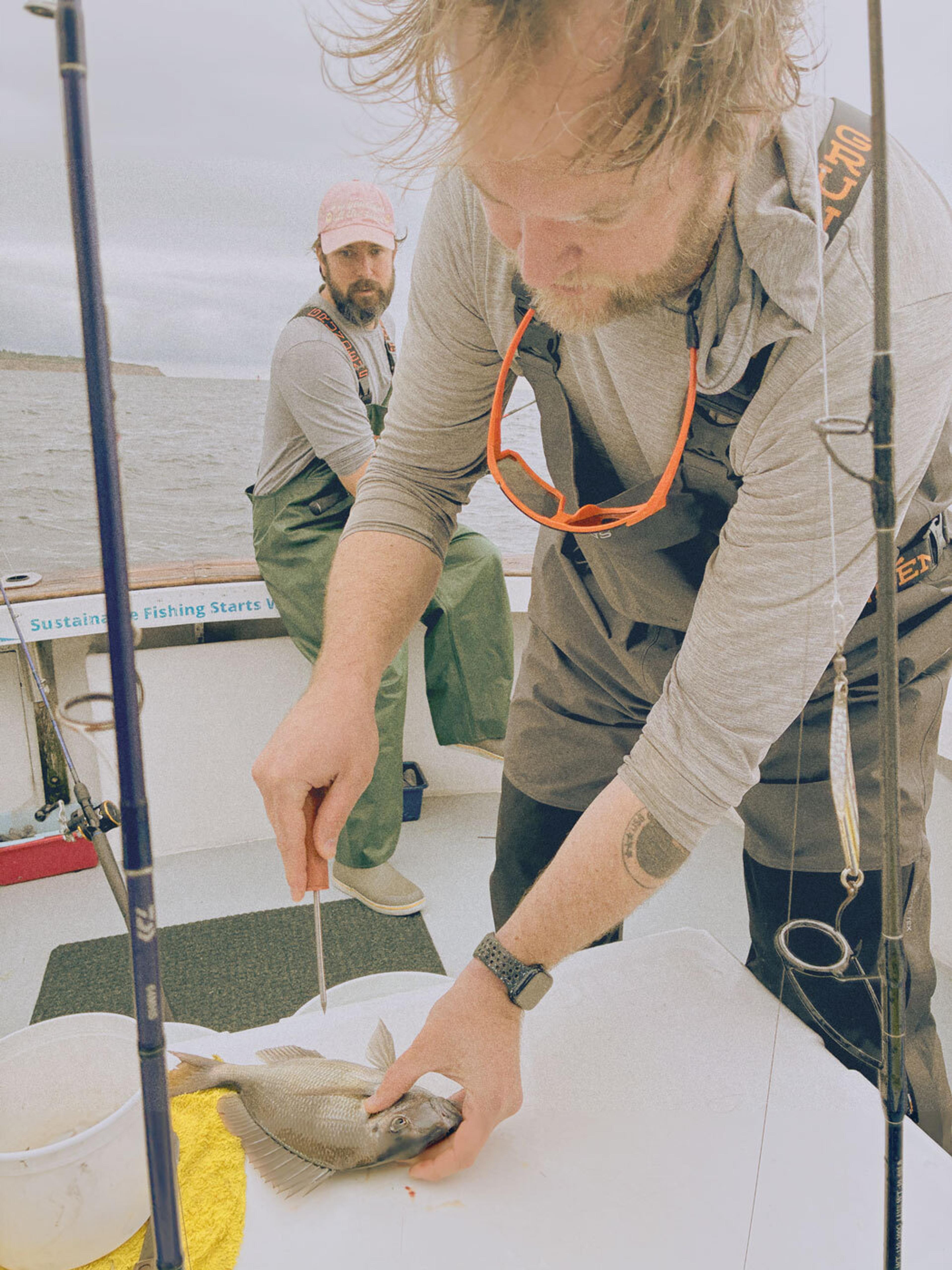
It’s a slow morning until the first bend appears in a rod, followed by a rush of activity. The honor goes to Ben Sukle, James Beard-nominated chef of Providence raw bar Gift Horse and local-fish-forward Oberlin. It’s sea bass season, but the first hit is a scup—often called porgy and known for the dangerous, dagger-like spines on its dorsal fin.
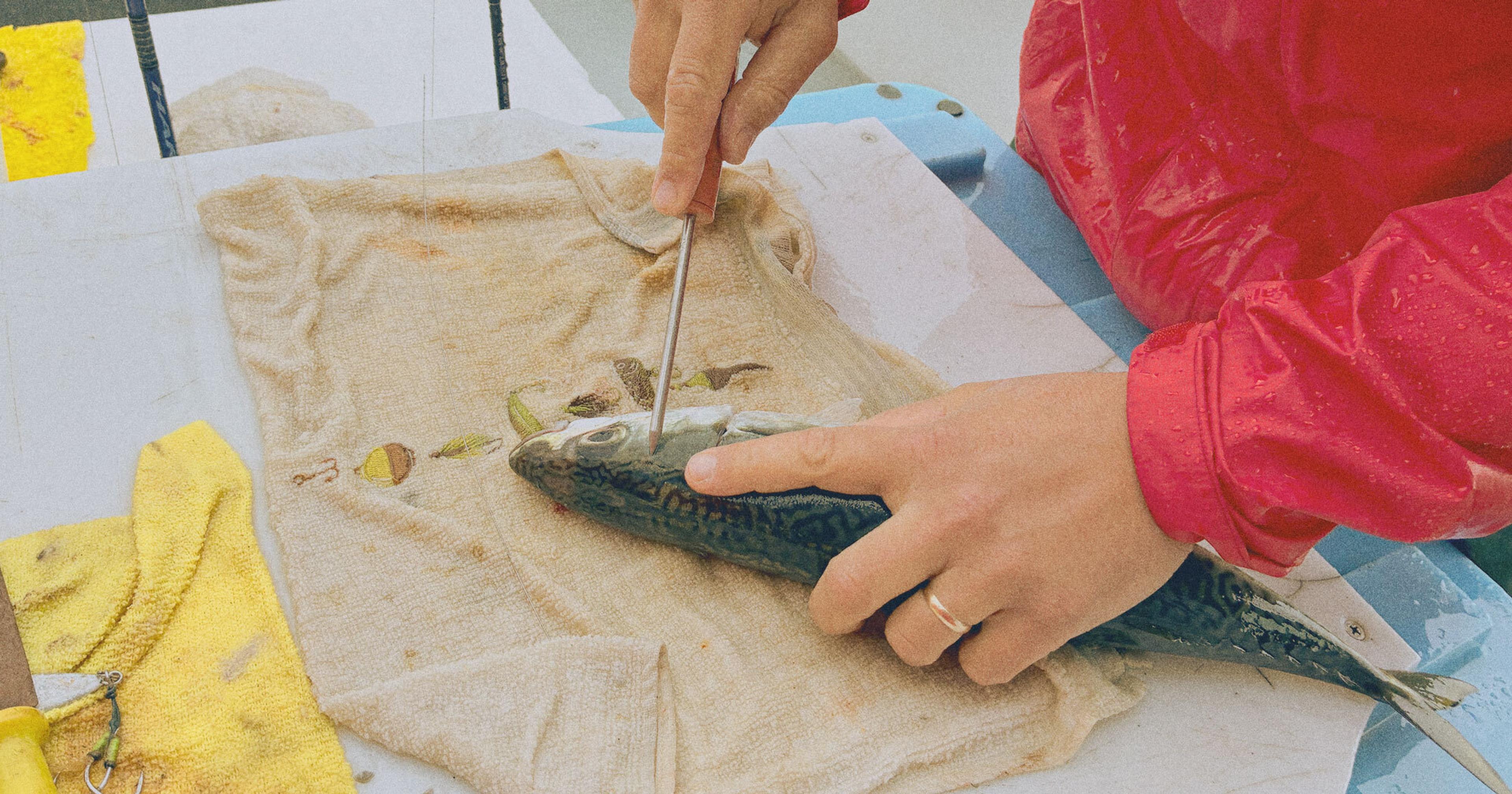
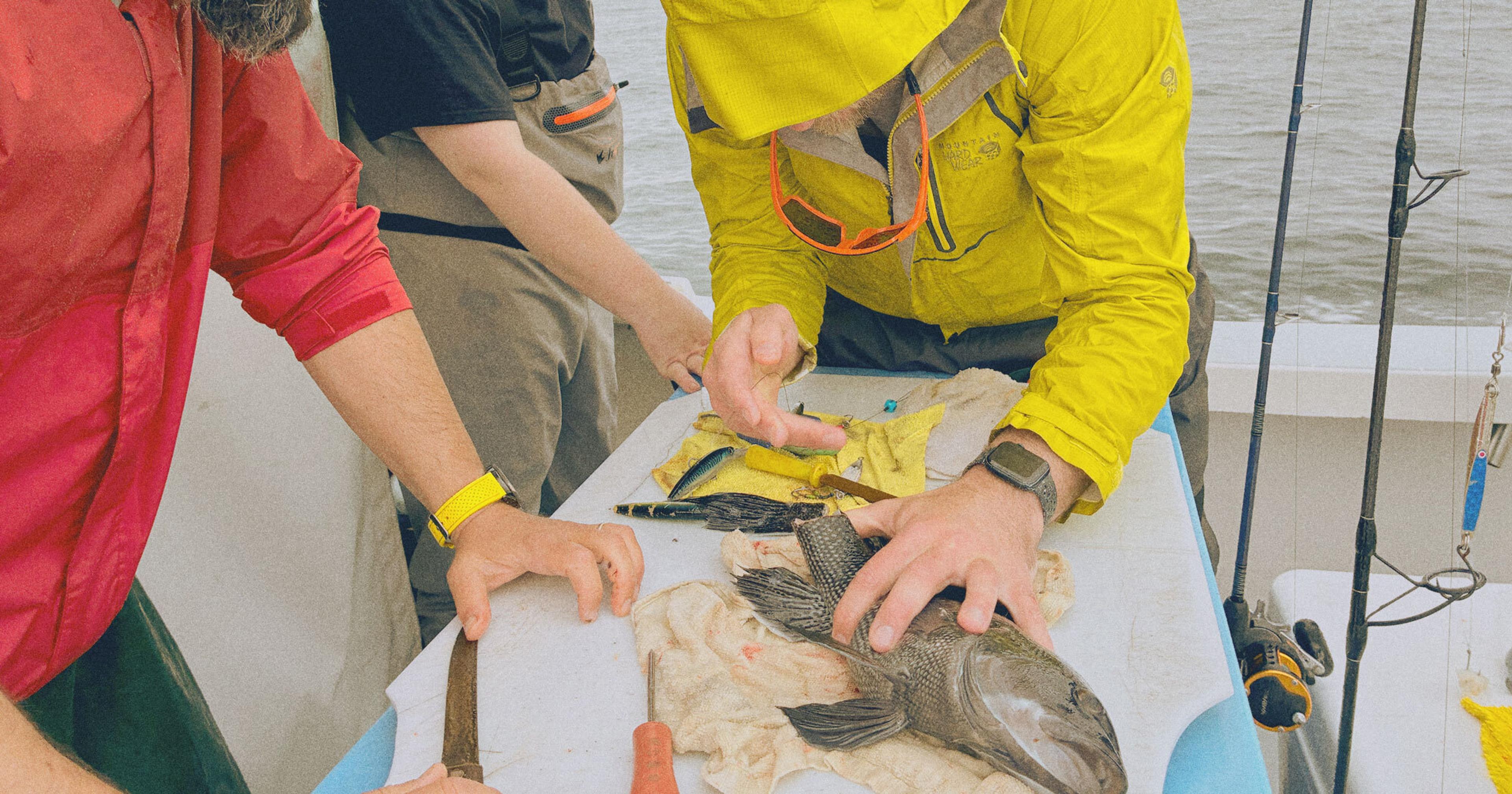
Sukle pins the scup beneath his hefty left palm while John Lee, a fisheries writer turned charter captain, shows him where to aim, just a bit behind the eye. With a firm poke the deed is done. After one final flutter, the fish falls still. It’s a far cry from the stress and suffocation fish often face after leaving the water. The spike is followed by two quick cuts behind the gills to let the scup bleed out in a short water bath before it’s iced.
Although Sukle is still learning the process of ike jime, by now he’s familiar with the results, which he’s been serving in his restaurants for years. The practice suppresses the release of stress hormones like adrenaline and cortisol into a fish’s bloodstream and prevents the buildup of lactic acid caused by the frantic flapping that accompanies asphyxiation. (These stress reactions affect the flavor of other animals as well, including pigs.)
Out with the blood goes the bacteria that would otherwise begin breaking down the fish. The upshot is a firmer texture, a longer shelf life, a lack of discoloration, and lessof the rotten, “fishy” smell of poorly handled flesh. Without bacteria to overcome, the fish’s natural enzymes can also take over, breaking down amino acids to enhance flavor and impart a deeper sense of umami.
Ben Seal
“The quality is beautiful,” Sukle says. He treats ike jime fish simply, either roasted whole or served as crudo with little more than olive oil, lemon juice and salt. It helps that even after a week in a walk-in, “it’s as fresh as the day it was caught,” says Gift Horse sous chef John Robinson, joining Sukle on the trip.
Those qualities make ike jime a potentially valuable tool for small-scale fishers, who can sell their catch for significantly more—often twice as much, Meltzer says—and therefore harvest less to justify a day’s labor. This morning’s excursion is part of a Saltonstall-Kennedy grant from the National Oceanic and Atmospheric Administration, aimed at improving the opportunities for Rhode Island fishers by teaching them ike jime and developing a market for the pristine fish it produces.
Meltzer is an industry partner on research by Hirotsugu Uchida, a professor of environmental and natural resource economics at the University of Rhode Island who sees ike jime—approximate translation: “instant kill”—as a link in a bigger chain. New England’s waters are full of fish that have gone out of favor in the generations since local seafood markets gave way to a global industry and American appetites narrowed to a small set of fish. By making the region’s wide variety of local fish more appealing, Uchida believes ike jime could reduce reliance on the overfished mainstays of the seafood counter, like cod and tuna, relieving pressure and rebalancing the oceans.
“It could be a viable gateway to introduce currently unfamiliar species to consumers, and it just might expand the portfolio of fish they eat,” Uchida says.
Respect for the Resource
When he first came to Rhode Island in 2006, Uchida went to a fish market in Point Judith and saw whole scup on offer. It reminded him of the red sea bream whose color makes it a centerpiece of celebrations in his native Japan—and a pricey one at that. But right by the dock it was going for just a few dollars per pound. Despite its abundance, the fish is often disregarded by consumers in search of something more familiar, making it a hard sell for fishers. In disbelief at the value being left on the table, Uchida eagerly snatched it up.
Years later, he ventured into Fearless Fish, Meltzer’s Providence-based retail shop, and found a future partner. A Chicagoland native, Meltzer got into seafood distribution after college in search of meaningful work that kept him connected to the environment. After moving east with his wife, a Rhode Island local, he was dismayed to find fishmongers in the Ocean State didn’t treat the ocean’s resources with the respect he thought they deserved. He opened up in 2019 with both a retail and wholesale operation focused on selling the best fish he could find.
At first, it was harder than expected. A fish’s quality depends on its handling above all else, Meltzer says, but he couldn’t control what happened on the journey from the water to his shop—all the thrashing about and suffering that accompanies the death by asphyxiation common in high-volume operations, and the degradation that ensues. Uchida asked how he could help, and together they secured a grant to explore whether ike jime could fetch premium prices for artisanal fishers and premium fish for restaurants and consumers.
The grant funded surveys to understand what people would pay for better fish and what fishers would accept for their extra effort. It also allowed Uchida and Meltzer to recruit Andrew Tsui, founder and head of the Ike Jime Federation, for a two-day seminar and training on the method. Although its precise origins are unclear, ike jime developed in Japan some centuries ago to preserve finfish at a time when eating meat from land animals was still banned. It’s commonly used for high-end sushi and sashimi in Japan, and it’s been gaining traction in markets around the world throughout the 21st century.
For fish, that may be welcome news. Through most of human history, people believed they couldn’t feel pain, but the body of research demonstrating otherwise is growing. Fish contain pain receptors used to avoid injury, like those found in other animals. Potentially painful events lead to behavioral and physiological responses. They respond almost immediately to being removed from water.
Ben Seal
And when they suffocate they suffer from several minutes of moderate to intense pain, according to a 2025 paper in the journal Scientific Reports. The emerging science suggests that efforts to promote the humane slaughter of land animals should consider fish treatment, too. In that context, ike jime’s benefits are greatly amplified, advocates say.
In Rhode Island, the partners have now taught ike jime to 20 local fishers; nine regularly bring their catch to Meltzer, from scup and sea bass to fluke, bluefish, and bonito. Much of it lands at restaurants like Gift Horse and Oberlin, primarily for raw preparations. Even if scup is still at the low end of the price scale, Fearless Fish sells it for $18 a pound whole, allowing Meltzer to incentivize fishers with better pay. The value carries over to more popular and traditionally prized fish as well; sea bass fillets at Fearless Fish run $34 a pound.
For Tsui, a Washington, D.C., health care litigator who moonlights as an ike jime evangelist and educator, expanding the practice’s use is a pathway for building healthier seafood economies—and, ultimately, healthier seas. By failing to maximize the value of each fish that’s caught, he says, “We’re losing out on tremendous economic opportunity. And the loss of economic opportunity directly affects the wholesale closure of historic fishing villages around the United States.”
Unfortunately, he says, the seafood system isn’t set up to support fishers in seizing that opportunity. Because harvesters need additional permitting to process their own fish, many are reluctant to do anything more than catch them, store them, and drop them off on land, Tsui says. Even if they want to handle fish in a manner that can preserve its flesh, they don’t. And that compromises its quality.
“In most states, the average commercial fisherman is going to be very hesitant to touch the fish at all,” Tsui says.
Even with interest growing and supporters spreading the gospel, ike jime will remain a niche method until regulators make it more feasible, Tsui says. For example, until recently, ike jime could only be practiced in Maryland by recreational fishers. Last year, Tsui helped get a provision into the Chesapeake Bay Legacy Act that allows commercial fishers to use the method and sell directly to restaurants. He’s now working with legislators in Maine and Alabama to promote similar changes.
Ben Seal
Like Uchida, Tsui sees ike jime as a long-term tool for marine stewardship. At scale, it could support a diversified seafood market that makes better use of abundant local stocks and eases pressure elsewhere, all while easing the pain fish experience when harvested.
“I’ve been a hardcore angler for much longer than I’ve been a lawyer,” Tsui says, “and I have every intention to make sure that my children have the same access to the sport as I did.”
Building the infrastructure necessary to support sweeping change—both legally and practically, in the form of fishers trained in the method—will take a lot longer than it does to kill a fish. But as Meltzer notes, “there’s a wide spectrum between a single rod-and-reel fisherman in a 20-foot boat doing ike jime and a factory trawler in the middle of the ocean.” If ike jime isn’t suitable for the mass market, the lessons it imparts still could be.
Kate Masury, who advocates for local seafood systems at the nonprofit Eating With the Ecosystem, a partner on the ike jime project, acknowledges the limitations of a more labor-intensive process in an industry dependent on volume. But it can be a boon for small-scale fishers, and a chance to rethink how fish themselves are valued. Take scup, for example, a traditionally low-value fish whose landings regularly fall well below the allowable quota—a sign that it can be a hard sell.
“There’s no reason it should be [low-value],” she says. “It’s delicious and versatile. It’s great raw. If you handle it and treat it well, people see the value in it.”
An Appealing Alternative
On the boat, the rain that was promised is starting to fall. Meltzer puts his rod back out and the search continues.
“I can’t accept the existing status quo,” he says. “It’s just so backwards. We go to great lengths to manage this resource. The sea bass we’re looking for right now is quite regulated. And then we allow it to get scooped up by the thousands, not iced, not bled.”
Finally, someone reels in a bass and Sukle gives it a spike. Meltzer pulls out a long, thin wire to demonstrate shinkei jime, an additional step in the process. He cuts the fish through the tail, then carefully shimmies the wire up its back to destroy the spinal cord and any last electrical impulses it might send. The spike does most of the work; severing the spinal cord is “the cherry on top” for maximum quality, he says.
The morning delivers just a handful of keepers—a few bass, a couple scup, and a chub mackerel—before a squall approaches and the horizon blurs. The boat turns back for shore and motors through the chop while everyone digs into a slightly seasick picnic of Sukle’s sourdough and ike jime fish salads Meltzer brought from his shop. Sukle fillets the morning’s catch and they swipe sashimi cuts through soy and an alien green store-bought wasabi.
Back at the dock, Nick Bocchino, one of Meltzer’s most reliable fishers, is cleaning up after a morning catching bluefish and bonito He’s always been frustrated by the seafood market’s emphasis on quantity over quality and never liked being paid the same as those delivering subpar product. When Meltzer offered him a chance to learn ike jime and earn more for his work, “it was a no-brainer, no pun intended.”
“If you’re going to put in the effort and take from the pot, then why not do the best job you can? Why not deliver the best product?” he says. “The hardest part is catching the fish. If you’re fortunate enough to catch it, why not see it through?”