
Along the Pacific coast, a new kind of aquaculture is supplying a niche, in-demand protein to high-end restaurants, while helping with ecosystem restoration.
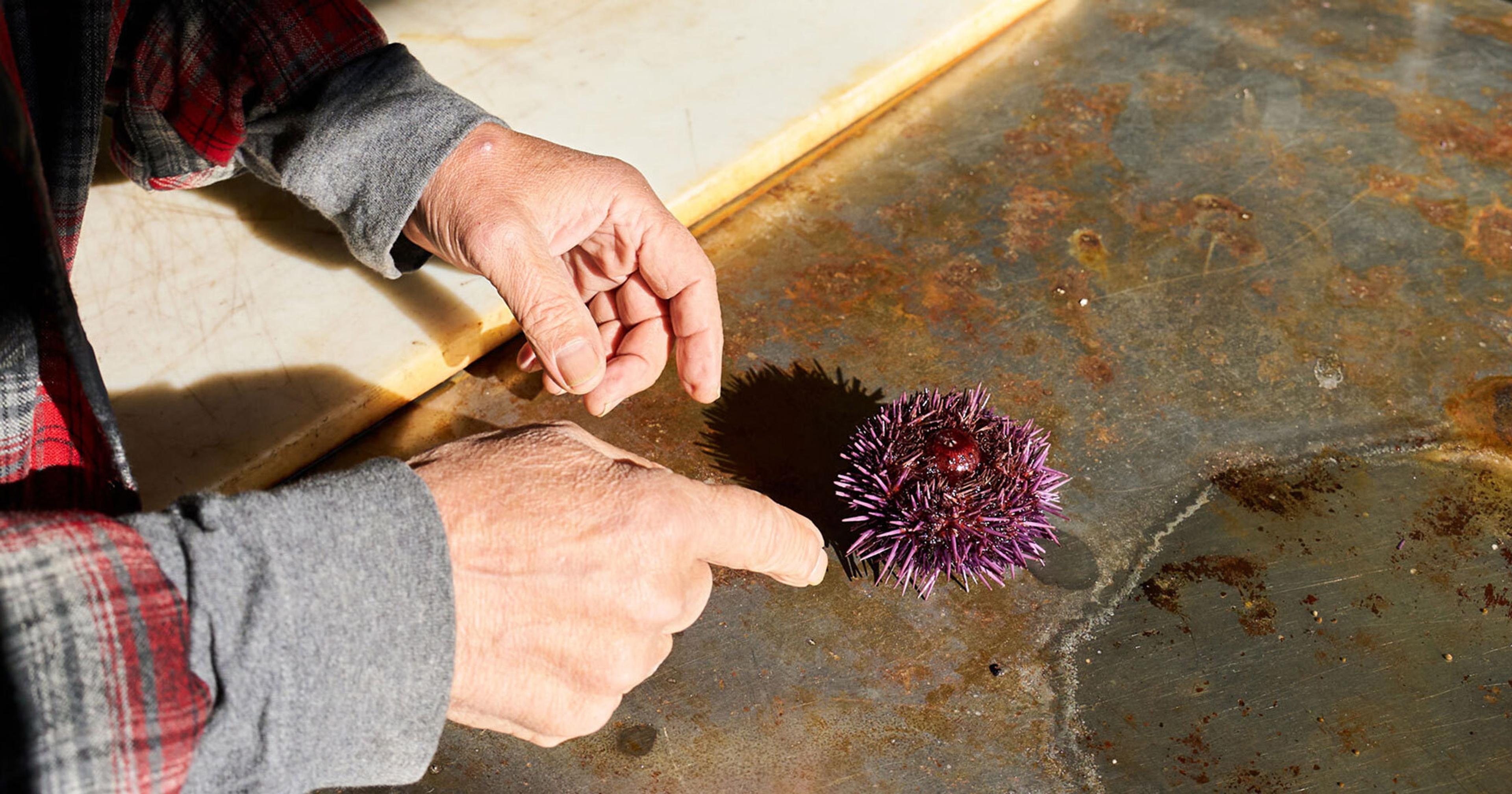
To the uninitiated, sea urchins might seem like they’re not meant to be eaten. The small, round creatures are dark purple and covered in long, sharp spines, ambulating across rocks or reefs with hundreds of suction-tipped feet.


But deep beneath the threatening exterior lies a hidden delicacy—uni, the creature’s bright-orange gonads. It’s a delicacy that humans have enjoyed for more than 40,000 years. Today, you can find it on the menu at most sushi restaurants—as a cut of nigiri, blended into a sauce, or served on the extra-spiky half-shell.
In recent years, however, urchins have been making headlines for a different reason. Ecological imbalances along coastlines have led to a worldwide explosion in the purple grazers, turning lush kelp forests into desolate “urchin barrens” where little other life survives.
“A lot of factors go into why they’re overabundant,” said Aaron Huang, co-founder and CEO of OoNee Sea Urchin Ranch in Newport, Oregon—the first operation of its kind. “But one of the things that we know is they really like eating kelp.”
Huang has combined his concern for kelp forests with his love of good seafood by founding OoNee. It’s a controlled aquaculture operation that removes urchins from areas where they are causing destruction and, in eight to 10 weeks, produces a high-end, consumer-ready seafood. While this business model is new on the Oregon coast, OoNee joins a growing number of sea urchin ranches hoping to transform this problem into a sustainable economic opportunity.
The Urchin Problem
Kelp forests stretch along a third of the world’s coastlines, with a presence on every continent except Antarctica. Typically found in cool, coastal waters, they are hotbeds of biodiversity, providing food, shelter, and breeding habitat for hundreds of marine species while removing carbon from the atmosphere. Along the Oregon coast, bull kelp can grow more than 100 feet in a single season.
Globally, however, kelp forests are in trouble. Warming waters have been an ongoing threat to these ecosystems, and between 2013 and 2016, a marine heatwave known as “the Blob” devastated Pacific kelp. Simultaneously, an outbreak of sea star wasting disease virtually eliminated sunflower sea stars, a major predator of purple urchins.
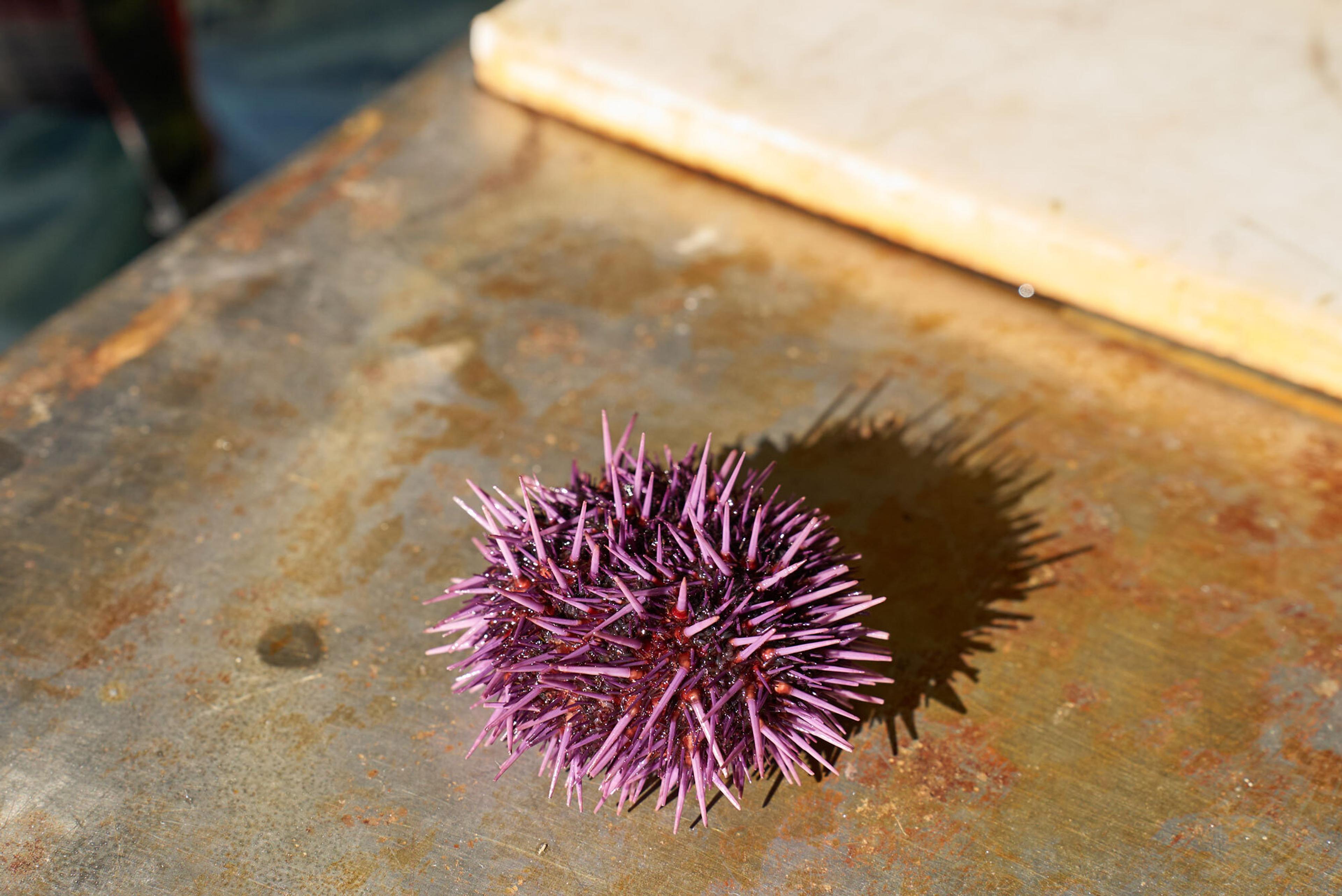
Between 2014 and 2022, purple urchins increased by 10,000% on the West Coast, and the influx of herbivores tore through all the kelp they could find. Oregon lost around 70% of its kelp canopy cover between 2010 and 2022. In Northern California, some areas lost 95%.
Losing kelp forests would trigger a cascade of wildlife declines, along with major economic losses for fishing and tourism industries. But kelp restoration could be as simple as urchin reduction. Crucially, purple urchins aren’t an invasive species. And when the population is rebalanced, kelp forests have proven that they can bounce back quickly.
Conversetly, with no kelp left to eat, urchins on the reef are starving, withered shells with no uni inside. Extremely resilient creatures, they can survive for years in a zombie-like state without dying, which also prevents new kelp from taking hold.
Instead of competing with fishing, as some aquaculture might, it can give divers a year-round opportunity to harvest something with no marketable value.
“In the earlier years when the ecosystem was healthy, you had a bunch of big, fat urchins,” Huang said. “Divers in the past have kind of pulled them off and sent them directly to processing.”
Starving urchins, conversely, are inedible and nearly impossible to kill. But while some well-intentioned groups are destroying urchins to save kelp forests, Huang had a different idea. Urchin ranching on the Oregon coast was born.
On the Urchin Ranch
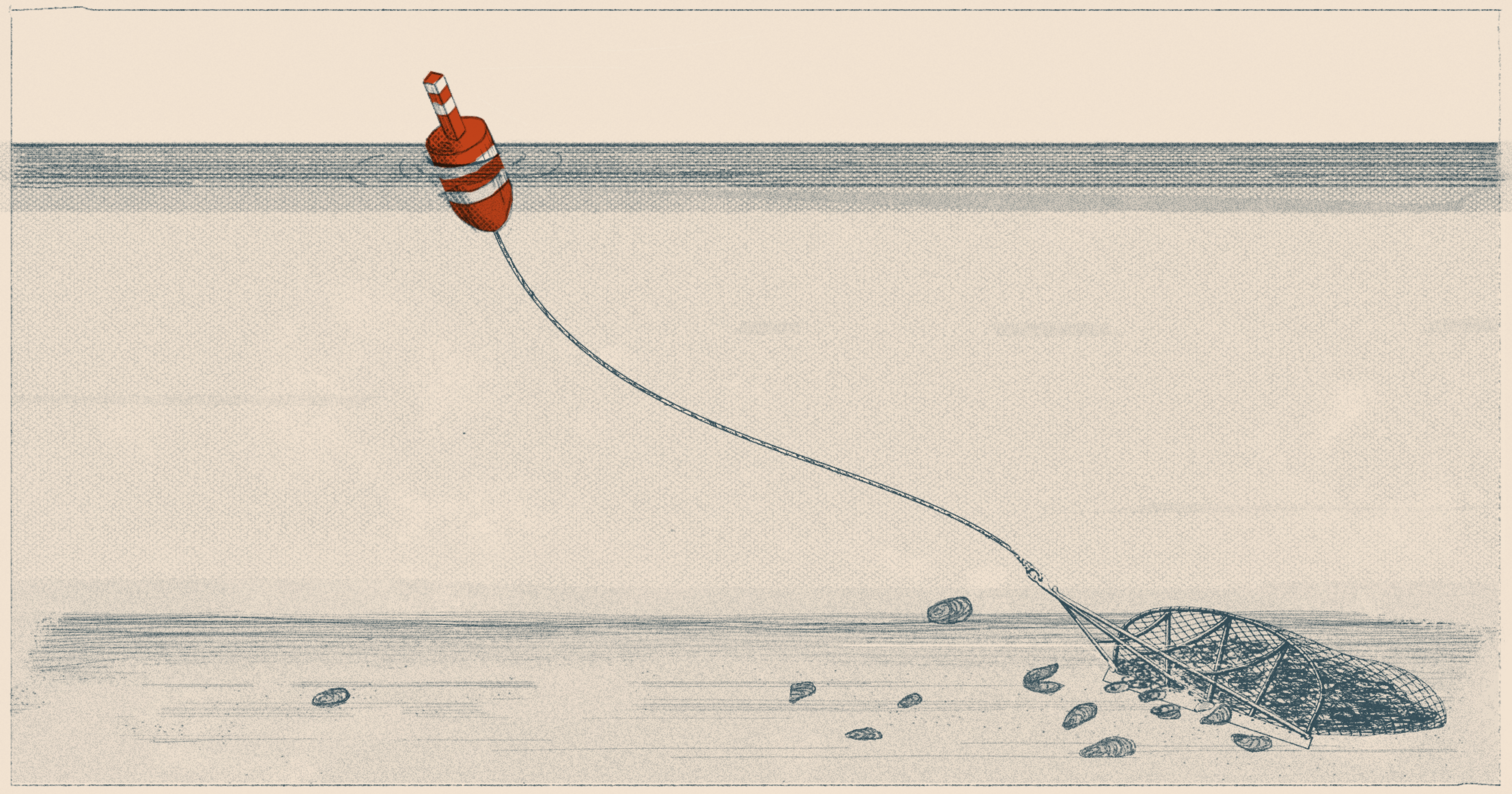
Because of the millions of readily available urchins, they are not spawned onsite like at some other aquaculture ventures. The urchin ranching process starts with a diver, who continually removes starving urchins from southern Oregon’s coastal waters.
As commercial fishing faces an uncertain future, urchin ranching is a way for workers to pass diving and fishing skills down to the next generation, Huang said. Instead of competing with fishing, as some aquaculture might, it can give divers a year-round opportunity to harvest something that otherwise has no marketable value.
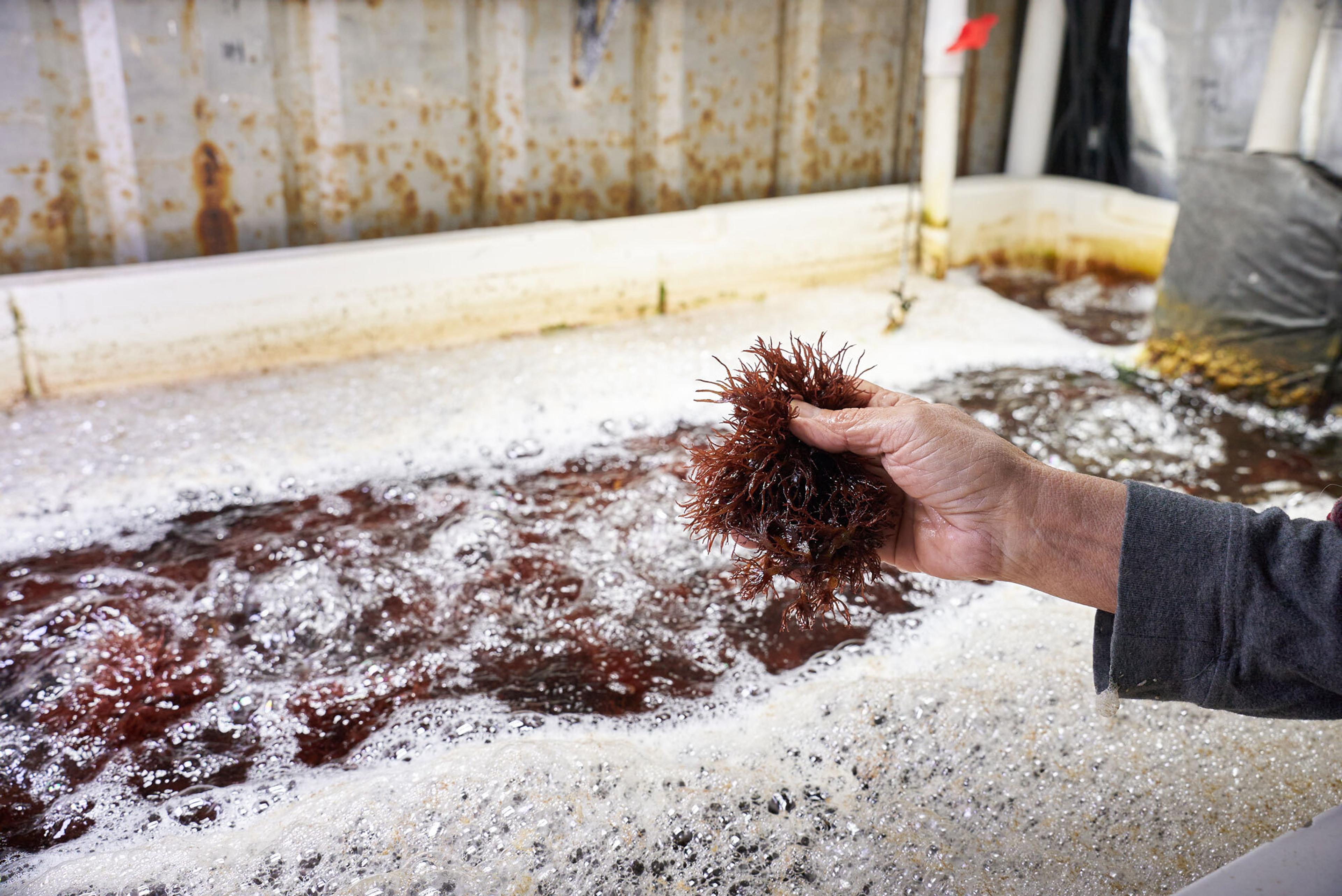
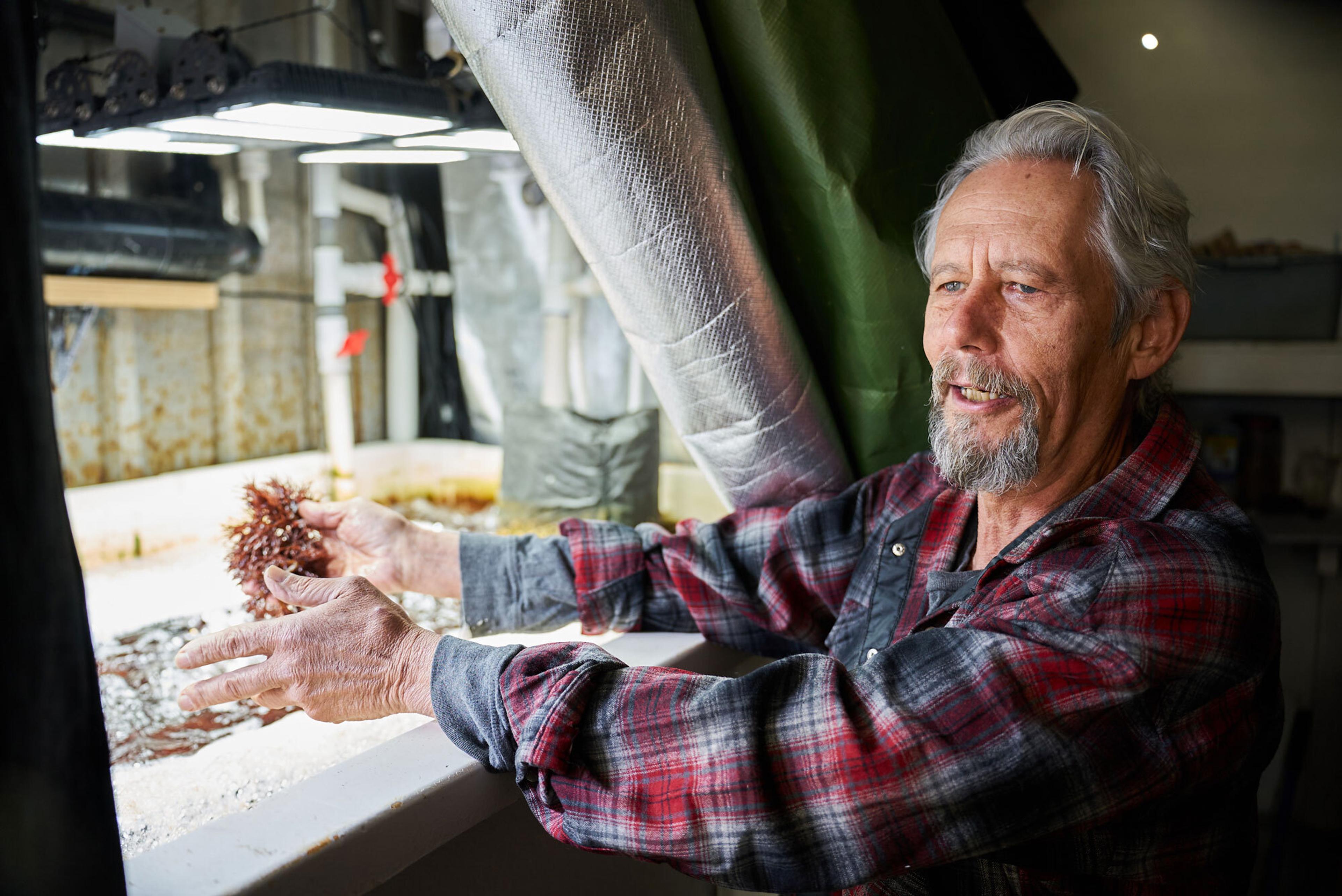
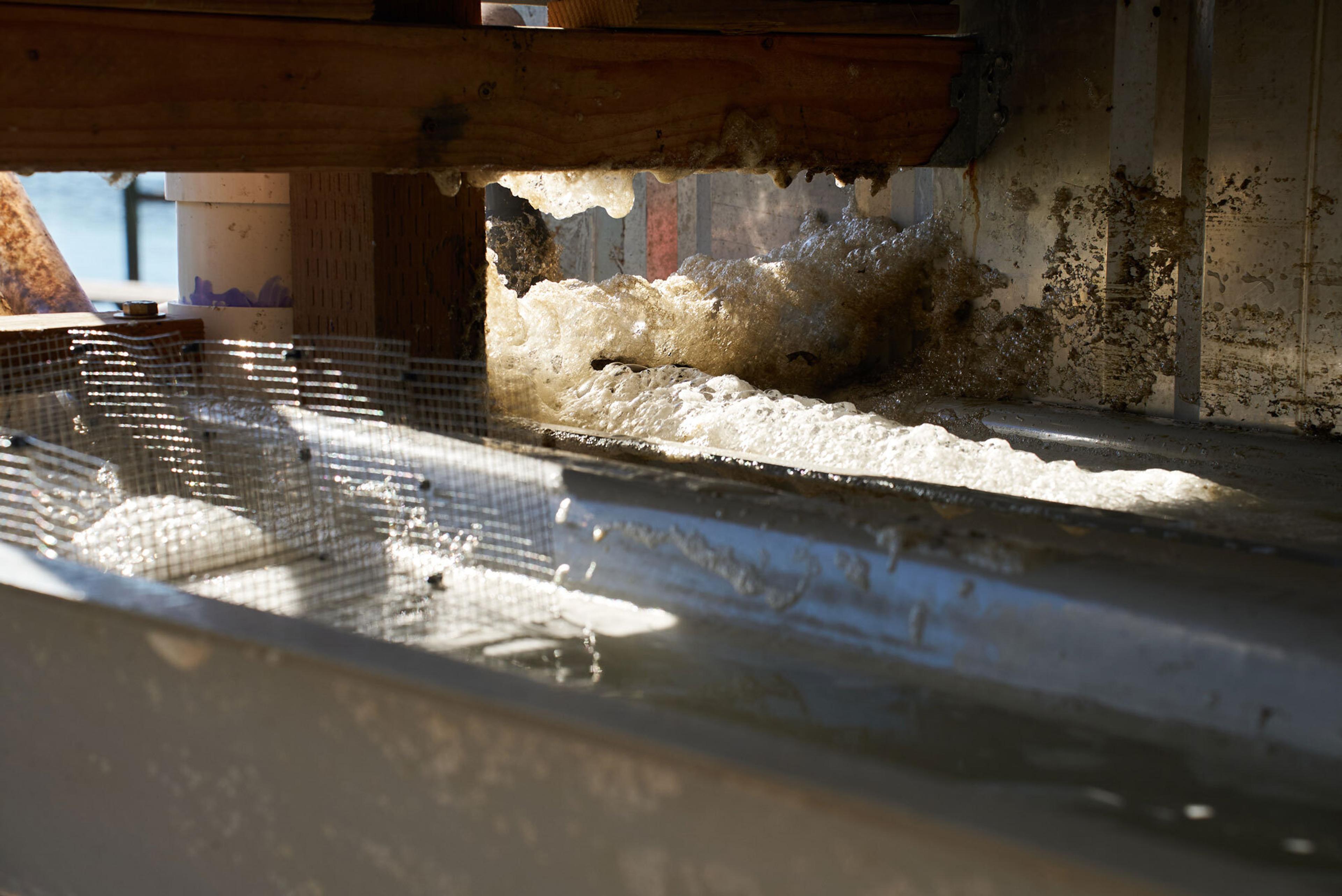
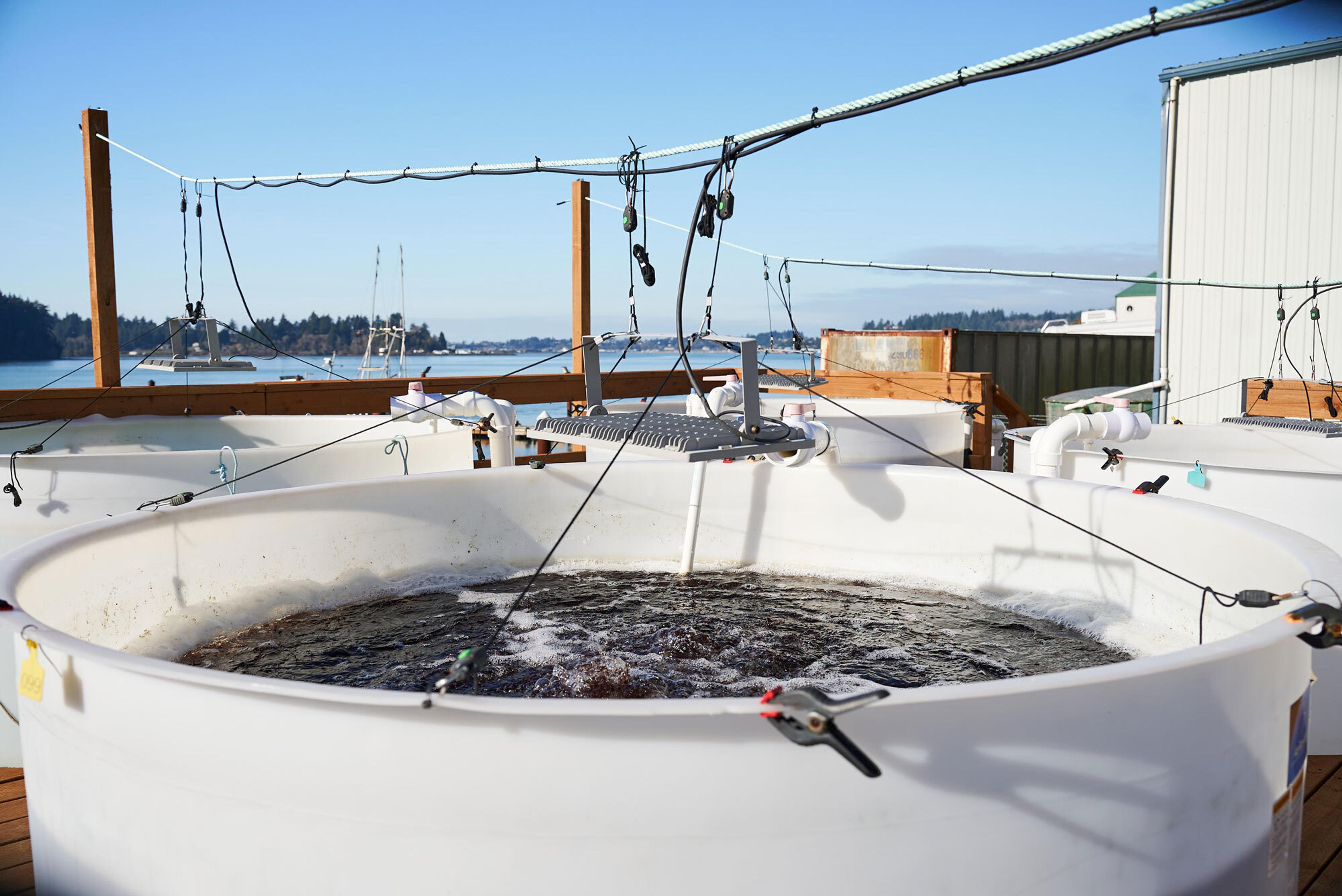
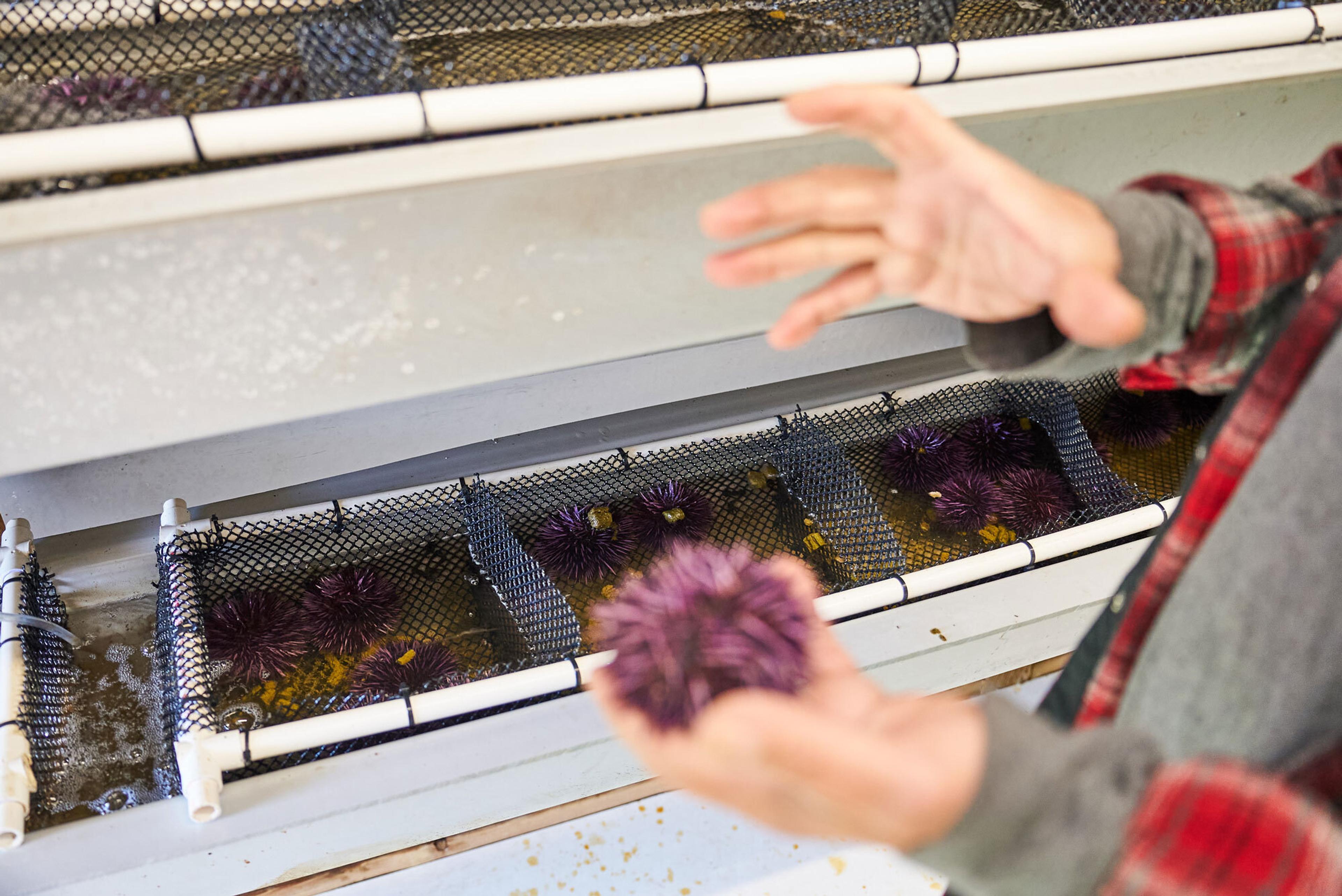
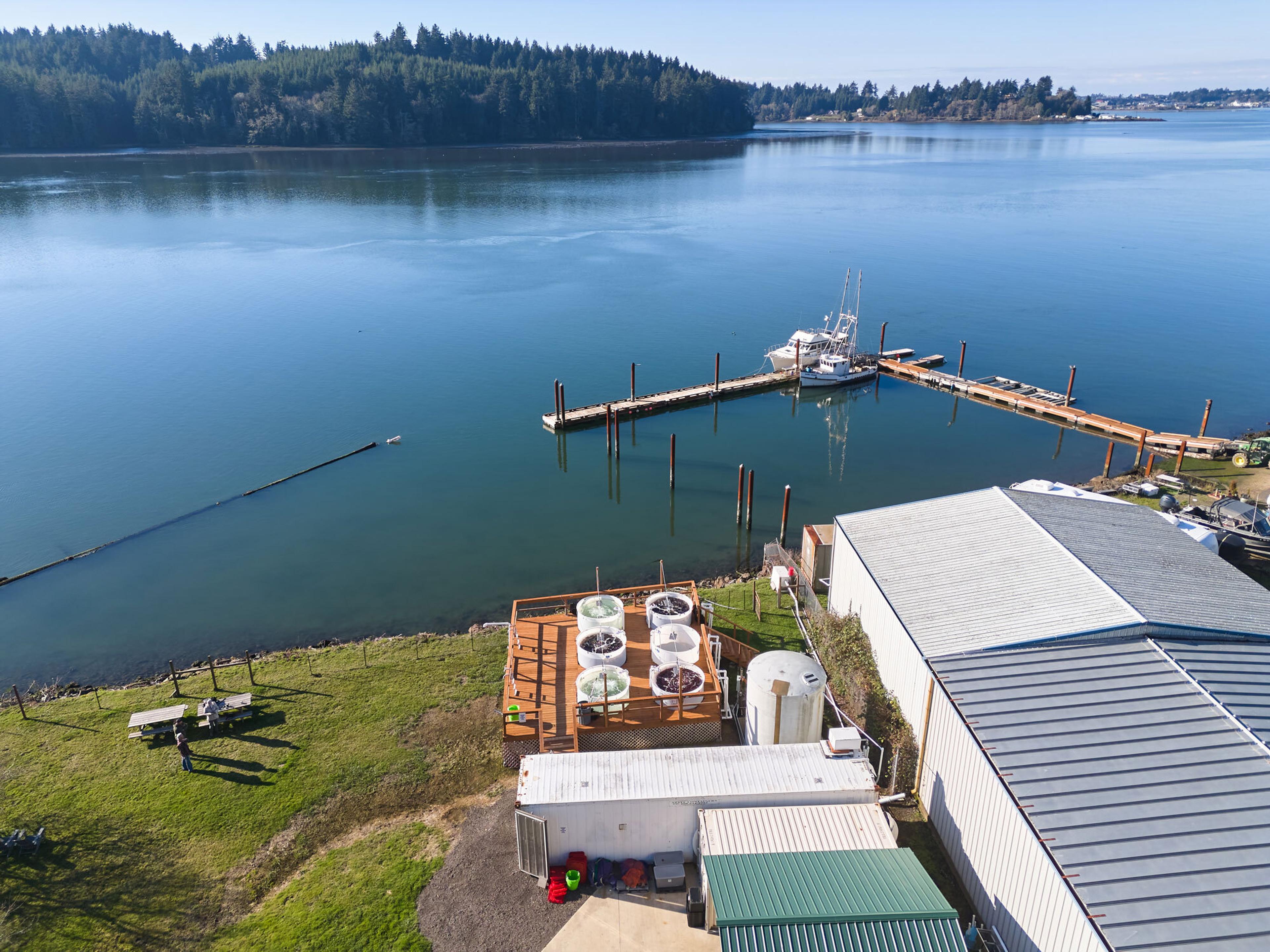
Once harvested, urchins are brought to OoNee’s Newport site, where they are fed a specialized diet of sustainably harvested kelp and algae-based pellets. They then cling to nets in recirculating saltwater raceways that are temperature- and climate-controlled. Huang and co-founder Brad Bailey monitor the urchins and dispose of their waste.
“It’s kind of like the Four Seasons for purple urchins,” Huang said.
In eight to 10 weeks, urchins are full of sushi-grade uni and can be sold live or processed onsite: cracked and shucked with the five edible gonads removed. Ranched urchins can be priced higher than wild-harvested, Huang said, as their quality is more consistent and they can be offered year-round.
Most of OoNee’s restaurant clients so far have been in Portland, which hosts a food scene that Huang believes is a perfect launching point for the business. Tommy Shin, executive chef and co-owner of Portland’s Masu Sushi, has witnessed uni becoming more popular in the U.S. in recent years.
Shin has been a co-owner of Masu since 2024, after building his résumé at culinary legends like Nobu and Masa. Shin said while some fish have to be imported from Japan, Masu tries to keep everything as local as possible. Lately, this has included uni straight from the Oregon coast.
Shin said meeting Huang a few years ago was the first time he’d heard of Oregon uni; it’s now a frequent offering on Masu’s menu. Fresh, premium uni is typically served as sashimi, or as nigiri on top of rice with shiso leaf and fresh wasabi. Leftovers, Shin said, can be turned into a butter or sauce.
“You buy local here, you’re getting it fresher than anywhere else,” he said. “You can definitely taste and feel the difference.”
Urchins and Abalone
OoNee isn’t the only business on the West Coast that has taken up urchin ranching. In California, some urchin ranchers are branching out from another high-end seafood—abalone.
Abalone are a type of large sea snail that are so endangered in the United States, wild harvesting has been completely banned since 2018. Monterrey Abalone Company and the Cultured Abalone Farm spawn abalone themselves. Both have also started ranching purple urchins.
“One tricky thing with abalone farming is they take a long time to reach market,” said Andie Van Horn, farm-to-fork manager at the Cultured Abalone Farm. “Historically … we’ve diversified to have other products.”
Urchin ranching, Van Horn said, came out of a need divers noticed on their coastline back in 2018. Abalone grow for a minimum of five years before they can be sold, while uni is ready in a matter of weeks. Urchins also eat the same food as abalone, and at the Cultured Abalone Farm, the same holding tanks are modified to accommodate the spiny creatures.
According to Noah Sherwood, who works in customer service at Monterey Abalone, urchins aren’t quite as popular as abalone, but people still love them.
“There are plenty of people walking into our shop and just getting them and eating them here,” he said. “It’s so fresh … you get them still alive, still moving.”
Urchin Economics
Although many urchin ranches remain small-scale, Urchinomics is one ranching startup that has grown to have a global reach. A trailblazer in the industry, the company was founded in Japan in 2017 by Brian Tsuyoshi Takeda.
At that time, the loss of kelp forests wasn’t high on anybody’s agenda, said James Reed, chief commercial officer of Verdant Bloom, the parent company of Urchinomics. Much of the company’s early work was dedicated to documenting the scale of the issue and developing protocols for ranching urchins.
Today, Urchinomics has teams developing localized expansion plans across eight countries. While two ranches are currently operational in Japan, the goal is to have 34 ranches in places like New Zealand, Chile, Norway, and the United States.
Urchinomics plans to tap into North American markets with a new ranch opening in early 2027 in New Brunswick, Canada. In early-stage conversations, Reed said, there has been a lot of excitement among U.S. and Canadian distributors on the East Coast.
The supply of wild uni has dropped by about a quarter over the last decade worldwide, Reed said. At the same time, prices have continued to rise.
“A lot of this comes down to, do people want to have our product?” he said. “And so far … the answer is a resounding yes.”
“What we’re seeing in the market data, but also the types of conversations we’re having, is that there is a lot of demand out there that is currently not being met,” he said. “There is a huge opportunity for this market to grow.”
Urchinomics has found support from private equity firms like Cadman Capital Group and a wide range of stakeholders. One example is Japanese giant Food & Life Companies Ltd., which operates the biggest sushi chain in the world, Sushiro.
While Japan leads the world in total sushi consumption and per-capita demand, the United States and North America represent the largest overall commercial sushi market by revenue, estimated at $22 billion in 2026. Huang, too, is confident about his ability to scale.
“A lot of this comes down to, do people want to have our product?” he said. “And so far … the answer is a resounding yes.”
OoNee has secured grant funding, including an innovation grant from Business Oregon and a Small Business Innovation Research grant from the U.S. Department of Agriculture. It also has a handful of targeted investors, firms that focus on aquaculture and blue foods. At this stage, OoNee is making sure investors and strategic partners pass the “vibe check,” Huang said—belief in the company’s mission.
OoNee’s next step is a move to a new 40-acre site in Newport in 2027, where it will build a larger commercial facility. As OoNee grows, it’s also developed a vision for how urchin ranching could be done on a smaller scale through a modular ranching unit the size of a shipping container.
“In other areas where the ports may not have a lot of space, maybe they want to co-locate a few systems within a building,” he said. “We’re really trying to open up discussions with coastal operators to see if they’d be amenable to adopting systems like that.”
In the long term, Huang hopes to help design a new blue economy on the Oregon coast, while creating the best-tasting uni in the world. It’s a broader vision for the future, one he also hopes will “keep coastal fishing towns working towns, and not museums or relics of themselves.”