
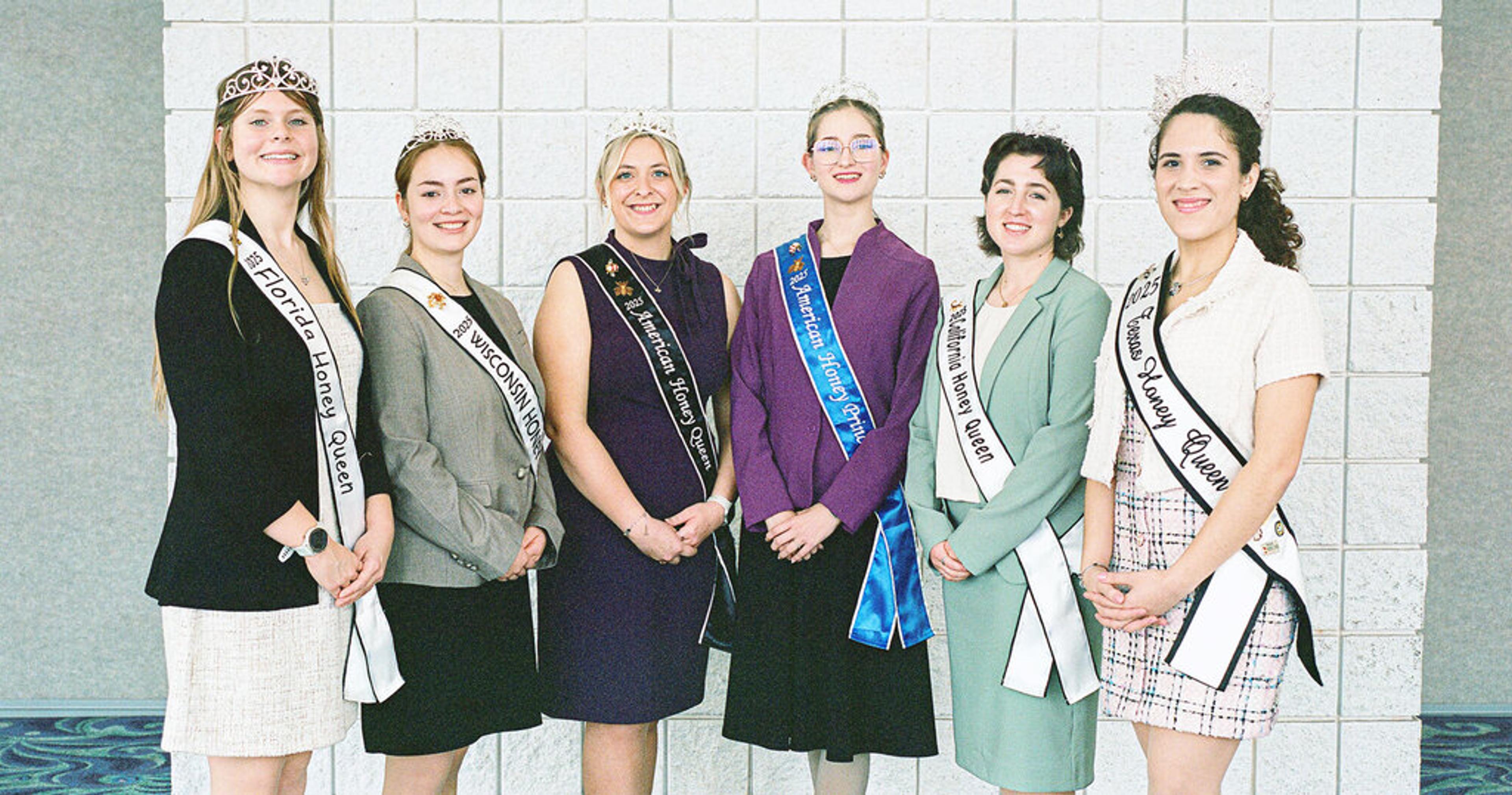
Have you heard of the American Honey Queens? Have a peek at one of our very sweetest commodity competitions.
The reign of the American Honey Queen lasts for one year. She spends her days engaging the public around honey and honeybees in classrooms, fairs, and media appearances across dozens of states. The tiara and sash draw attention, but Honey Queens serve a purpose more than skin-deep. Given the perils facing honeybees and beekeepers, the stakes run high.
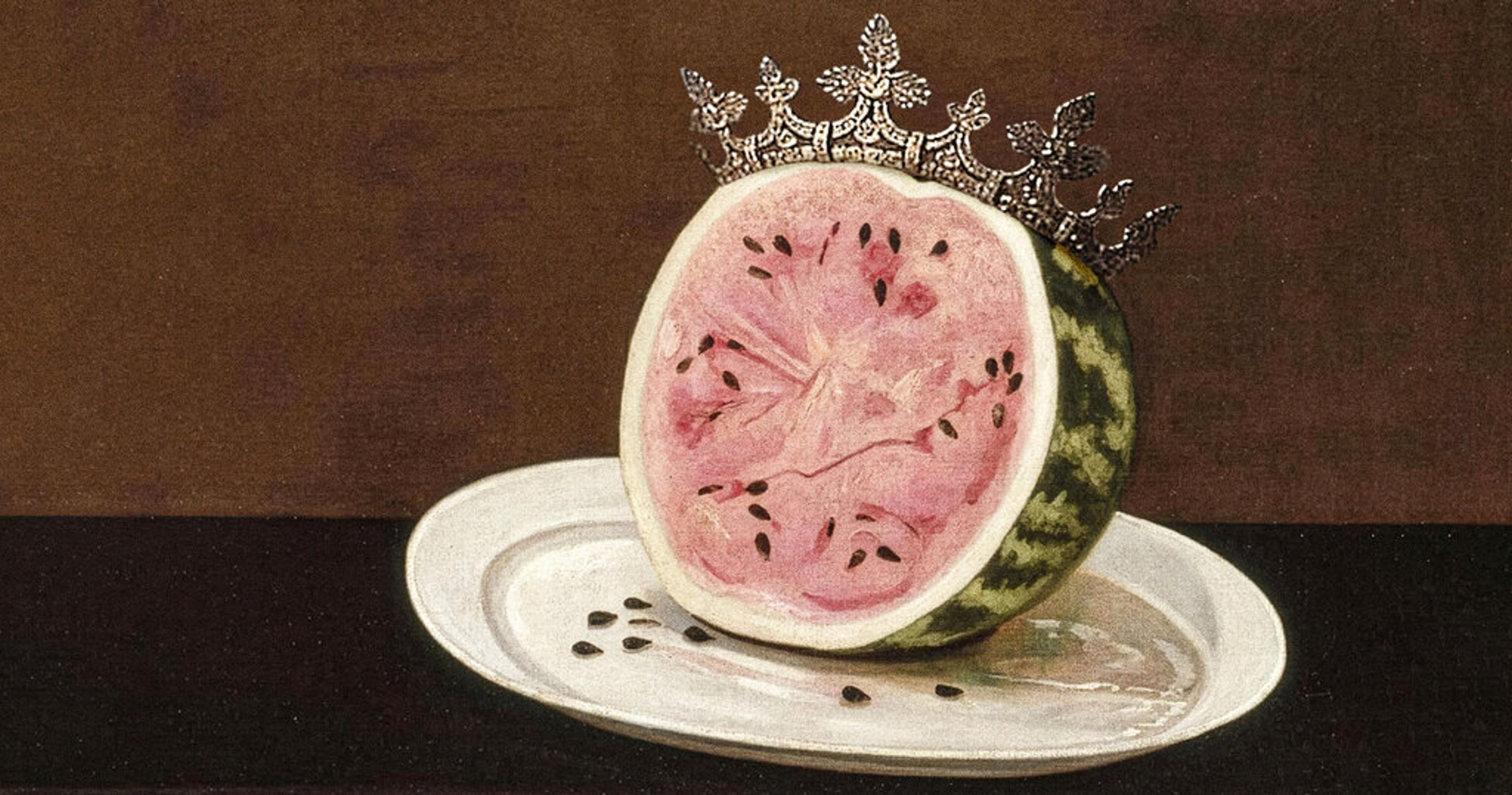
The American Beekeeping Federation launched the American Honey Queen program in 1959. They represent a relatively small, yet massively important beekeeping industry, in a state of constant evolution. Over seven decades, American Honey Queens and Princesses have travelled the country to serve as spokespeople, role models, and advocates, raising public awareness of the honeybee’s outsized role in the vitality of our food systems, communities, and land.
Farmers raising almonds, apples, cherries, melons, blueberries, cranberries, squash, and citrus depend on beekeepers managing 2.6 million colonies to maximize yield, often by migrating hives from state to state. In early 2025, as a new American Honey Queen assumed her role, surveys showed commercial beekeepers experiencing catastrophic losses. An estimated 1.1 million honeybee colonies perished over the winter months, just as almond orchards in California prepared for their arrival. Almond crops alone demand nearly all of the nation’s managed bees. Losses averaging 62% exceeded all historic precedents on record. Many signaled alarm.
Cumulative and compounding factors threaten the health of honeybees, including varroa mites, viruses, and exposure to agricultural pesticides and herbicides. That’s not to mention habitat loss, extreme weather, and the diminishing nutritional value of the land. In 1996, the United States Freedom to Farm Act policies increased agricultural acreage dedicated to corn and soy crops, which produce scant forage for bees. In the 30 years since, honey production fell by half, from 211 million pounds in 1995 to 116 million pounds in 2025. Decreasing honey yields track with changes in land use. American honey producers struggle with pollinator habitat in decline.
Given all the ways that livelihoods and land rely on honeybees, Honey Queens remind people that campaigns to “save the bees” may be better understood as movements to save ourselves.
*
I first encountered the American Honey Queen and Princess at the American Beekeeping Federation conference in Mobile, Alabama, along with four candidates vying for these national roles. They walked the tradeshow floor, peered through microscopes alongside attendees, asked hard hitting questions of research scientists, and introduced themselves from the main stage midway through the first day. These women bring credentials in entomology, plant biology, sustainability, education, and advocacy, as well as a palpable passion for honeybees and their importance to the American food system and economy.
Honey Queens often descend from generations of beekeepers or farmers, and hone their knowledge in research labs at public universities across the United States. They speak with poise, clarity, and confidence—essential skills for connecting with hundreds of thousands of people at schools, fairs, festivals, and the occasional rodeo.
The Honey Queen program provides structured training in public speaking, soft skills, and talking points for promotional appearances. They spend time with commercial beekeepers to understand the inner workings of their businesses and operations, and get familiar with the vast and growing body of scientific research around honeybee health. They study a binder of materials three inches thick.
Honey Queens remind people that campaigns to “save the bees” may be better understood as movements to save ourselves.
Anna Kettlewell has led the program since 2008 after serving as a Honey Queen herself in 1999. She stresses the importance of spreading positive messaging about honeybees and their essential role in keeping our food system afloat. For nearly two decades, she has steered the program through colony collapse, a global pandemic, seismic media shifts, and a surging public interest in bees.
The program started in an era when women had limited visibility in beekeeping and were expected to wear different lengthed gloves to official Honey Queen appearances. While recipes, skirts, and stockings still linger among program expectations, the role of women in beekeeping has taken on new dimensions in the field. The American Beekeeping Federation has seen an uptick in women assuming leadership within the organization over recent years.
Though ABF lobbies state and federal lawmakers around commercial beekeeper concerns, it’s rare for Honey Queens to meet with legislators, public agencies, or elected officials. The Queens focus on radio, TV, and in-person appearances to make their mark on public opinion. The sheer complexity of ecosystems, food systems, and bee biology outstrip any one person’s expertise. Honey Queens and Princesses see themselves as connectors.
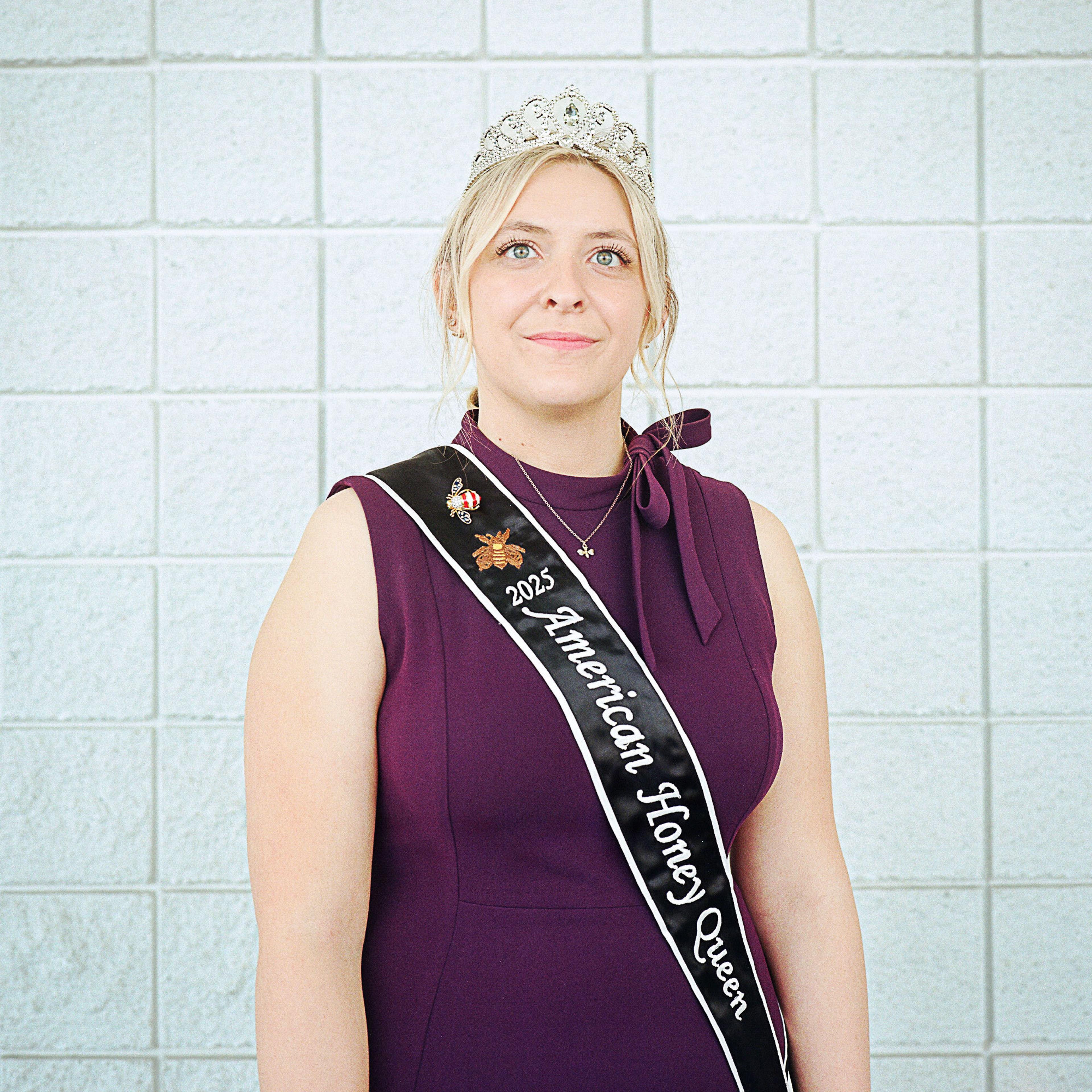
Cheyenne Bastian-Brown
Cheyenne Bastian-Brown served as the American Honey Queen in 2025—logging 134 days on the road, criss-crossing trajectories with Emilia Burnham who served as the American Honey Princess. When she transferred the crown at the end of the ABF conference in early January, she had been serving as an agricultural commodity representative in some form for the last seven years. She served as a local fair queen, state FFA officer, county Dairy Princess, and state Honey Queen before representing the beekeeping industry nationwide in 2025. After a year visiting dozens of classrooms, Cheyenne and Emilia both committed to a career in education.
When we met in January, Cheyenne expressed excitement to start her first career role as an agricultural educator. She sees the greatest potential for change in the classroom. She explains, “I originally went to Penn State for political sciences, and eventually just decided that there was more I could do in a classroom teaching younger students that can then go home and teach their families like I did mine.”
Emelia became equally enamored with classroom connections, and was tickled by one of the most common questions she heard from kids. “Are you a real princess?”, they would ask. She responded, “Yes. I’m standing here. I’m real. You can pinch me.” Emilia backed up her royal title by spending 32% of the year in a tiara and making appearances in 15 states. She grew up down the road from the Disney princesses of Southern California, and learned through her travel to other regions that she does not care much for the cold.
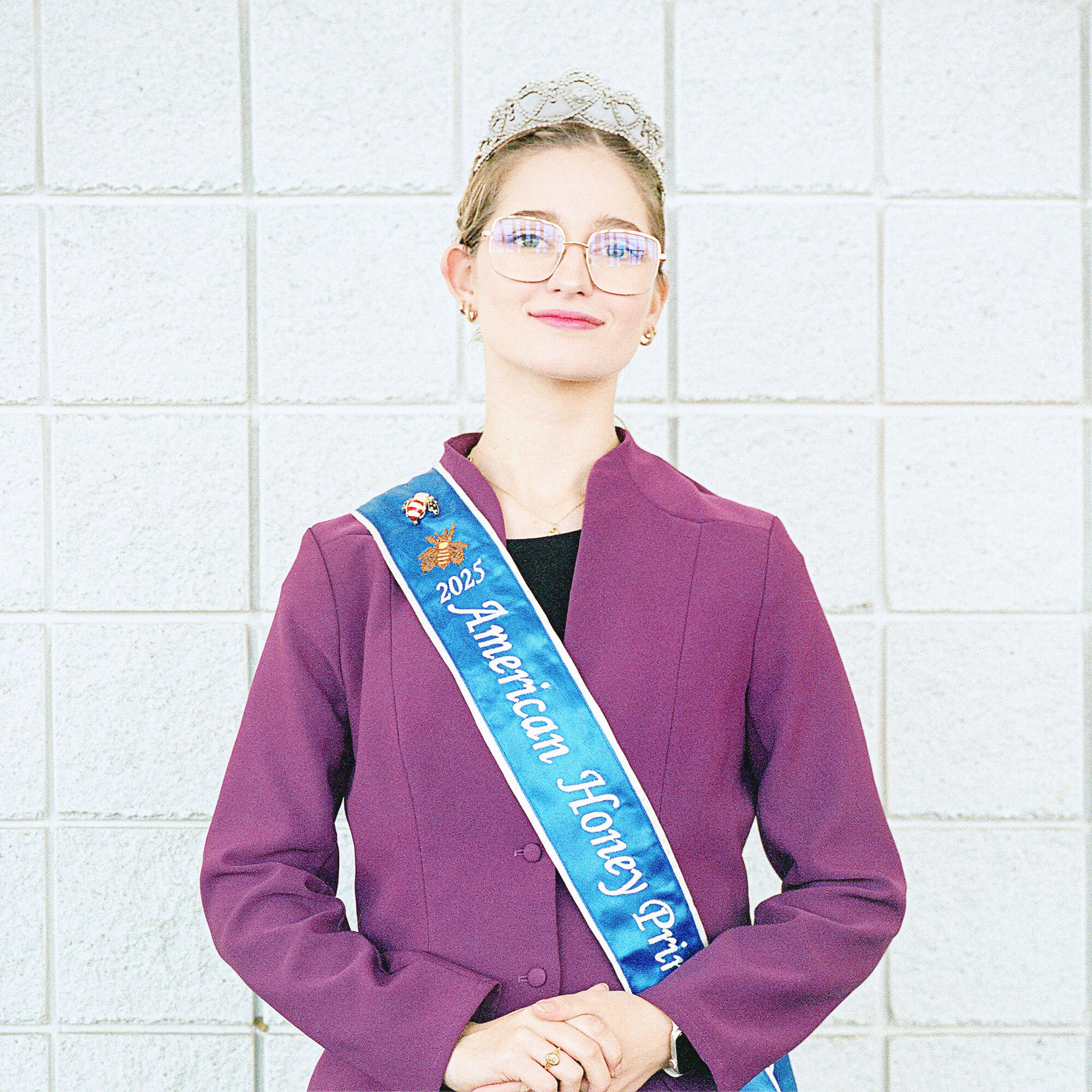
Emilia Burnham
Emilia’s family kept bees for four generations through migrations from the Czech Republic to Canada to California. Though she had no personal exposure until she encountered an observation hive at her university and began to study entomology and honeybees at the Center for Integrative Bee Research at UC Riverside. Emilia has no plans to keep her own bees despite her deep fascination. Ironically, she’s allergic to honeybees!
Delanie Craighead serves as the reigning American Honey Queen, crowned in 2026. She shares the passion of her predecessors for helping audiences find their own place in supporting honeybee health and food production. She reminds people that many talents and interests have a role to play in the support of beekeeping, including making hives, building equipment, driving trucks, conducting research, tending gardens, planting for pollinators, or crafting laws to permit or restrict practices that impact bee health. She loves to demonstrate the power of teamwork by holding up a slim stick of honey and noting that it takes 12 bees an entire lifetime to produce its contents.
Delanie philosophizes that “for something to progress and grow, you need to change a little bit. You also need to keep what you’re already doing and carry that on with you. You really gotta mix it all together.” She encourages new beekeepers to start slow and learn the basics, then gradually go deeper with guidance from a local club or a good mentor.
Oceanna Escribano won the title of American Honey Princess with her own legacy and community impact in mind. Born in Puerto Rico and raised in Texas, she knew of her grandparents keeping bees, but never had a chance to learn from them directly. Her first exposure came through the University of Texas in San Antonio where she graduated with a bachelor’s in plant biology. She beams with excitement when talking about the research she conducted with Dr. Ferhat Ozturk on the medicinal properties of honey, as well as her own studies of bee behavior during the 2024 total eclipse. She harbors dreams of revolutionizing medicine by reintroducing honey as an affordable treatment option.
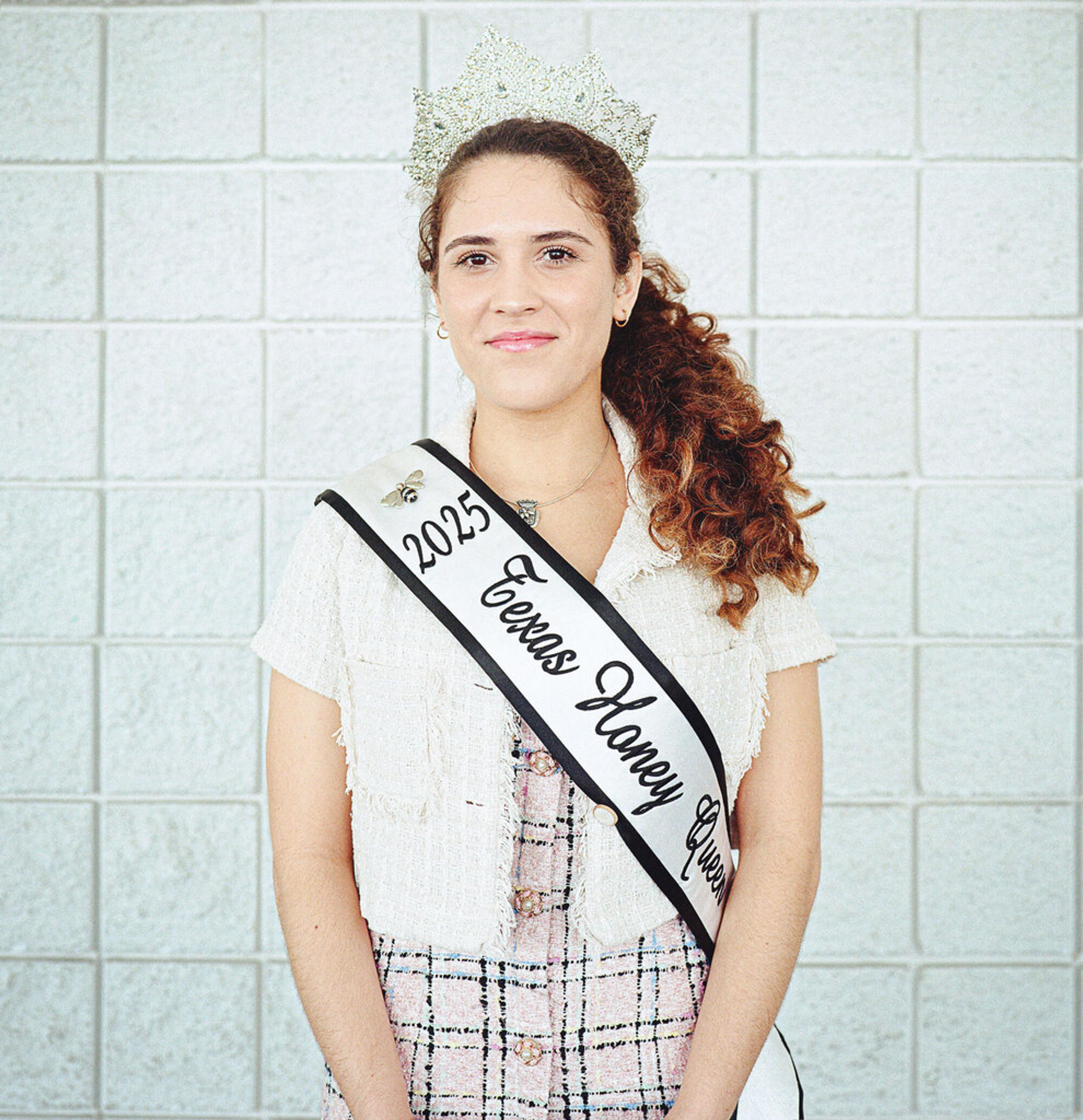
Oceanna Escribano
Oceanna studied with the Honey Pathway lab at UTSA, making promising discoveries about the potential of honey to heal wounds and cure infections with sourcing from domestic honey producers. Oceanna helped to collect honey samples from Texas beekeepers and analyze their anti-oxidant, anti-microbial, and anti-fungal properties. While Manuka honey imported from New Zealand currently has exclusive FDA approval for medicinal use, this lab’s research findings could open up new pathways for affordable treatments using locally available medicinal honey.
With antibiotic resistance on the rise, hospitals could revisit the use of honey treatments, which were widely utilized before the advent of antibiotics. Oceanna laments the misconception of honey treatments as an old wives tale, and reminds people that honey has been cultivated for medicinal purposes across long spans of human history.
Oceanna holds deep admiration for honeybees who operate as a collective organism. Astounded by everything they build together, she remarks, “This tiny little insect is doing so much work and being so extremely productive in the way that they work together and the way that they care about each other. It’s something that sometimes as humans, I feel like we don’t always do. Seeing an insect have that much intelligence and empathy is incredible”. In her reverence, she notes that honeybees have much to teach us about humanity.
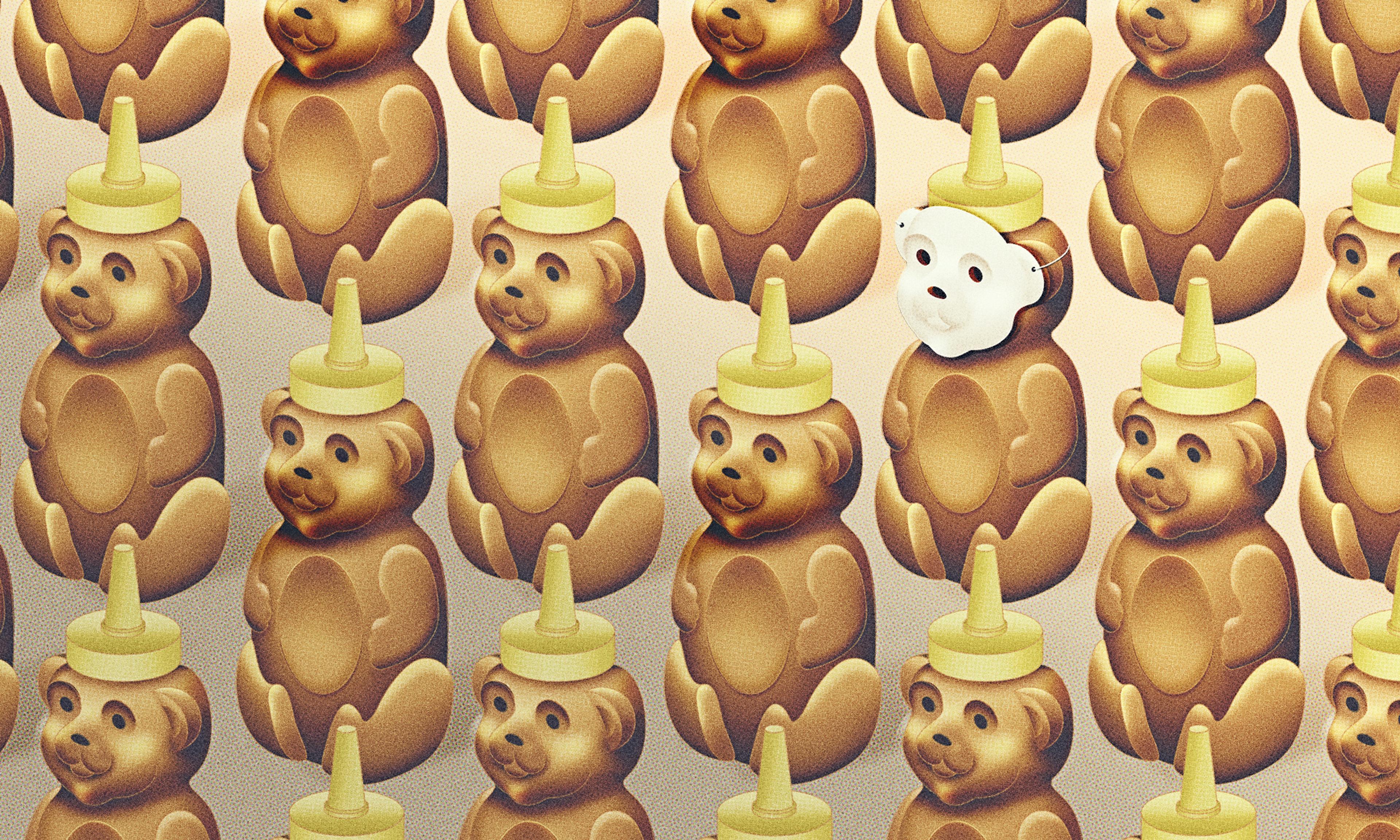
The American Honey Queens and Princesses are characters in a story of honeybees and humanity that has been unfolding for 10,000 years. Their sparkling tiaras signal hope that the next generation will sort this all out. They tour across an American landscape that feels stressed, shining, changing, and constantly up for sale. We funnel liquid gold into plastic bears. Bees remind us to attend to our collective wellbeing. They point to stories of land, work, economies, and industries in need of evolution. As the American Honey Princess reminded me, “It’s not about saving the bees. Save yourself, save your neighbor. This isn’t for the bees. This is for us.”