Corny was literal until Americans came into the picture.
When I think of the word corny, I think of my mother: She’s always doing and saying things that are overly sentimental, a little off-center, and often unwarranted. Sometimes, it comes across like a lack of ability to read a room, or calibrate her comments to the social context. But the subtleties within the word seep beyond individual actions. Corny stories, for example, are clichés with over-simplified lessons, often with a lack of nuance or sufficient adversity facing the main characters. Corny can also be clothing that clashes, or looks childish considering the age of the person wearing it. The connective thread across the board is that when something is corny, it’s somehow disconnected from reality, maybe overly idealistic.

If you knew nothing about the word beyond these suppositions, the actual history of corny as a descriptor would indeed align—with a twist. The bit of vernacular has a relatively firm modern beginning, informed by rural America, while another word is slowly swallowing up corny: cringe.
Shucking of the Corn
When Americans think of corn, they likely think of yellow maize on the cob, shucked at summer festivals and slathered with butter. The word corn itself is at least 6,000 years old, according to Danny Bate, a linguist from England. But for hundreds of years, the word simply meant “the most common grain,” says Jeffrey Ross Ibarra, a professor of evolution and ecology at the University of California Irvine. For centuries, the word corn referenced wheat, rye, oats, or whatever types of cereal were on hand at any given time. Therefore, corny was used as an adjective as early as the 1300s by Geoffrey Chaucer, author of “The Canterbury Tales.”
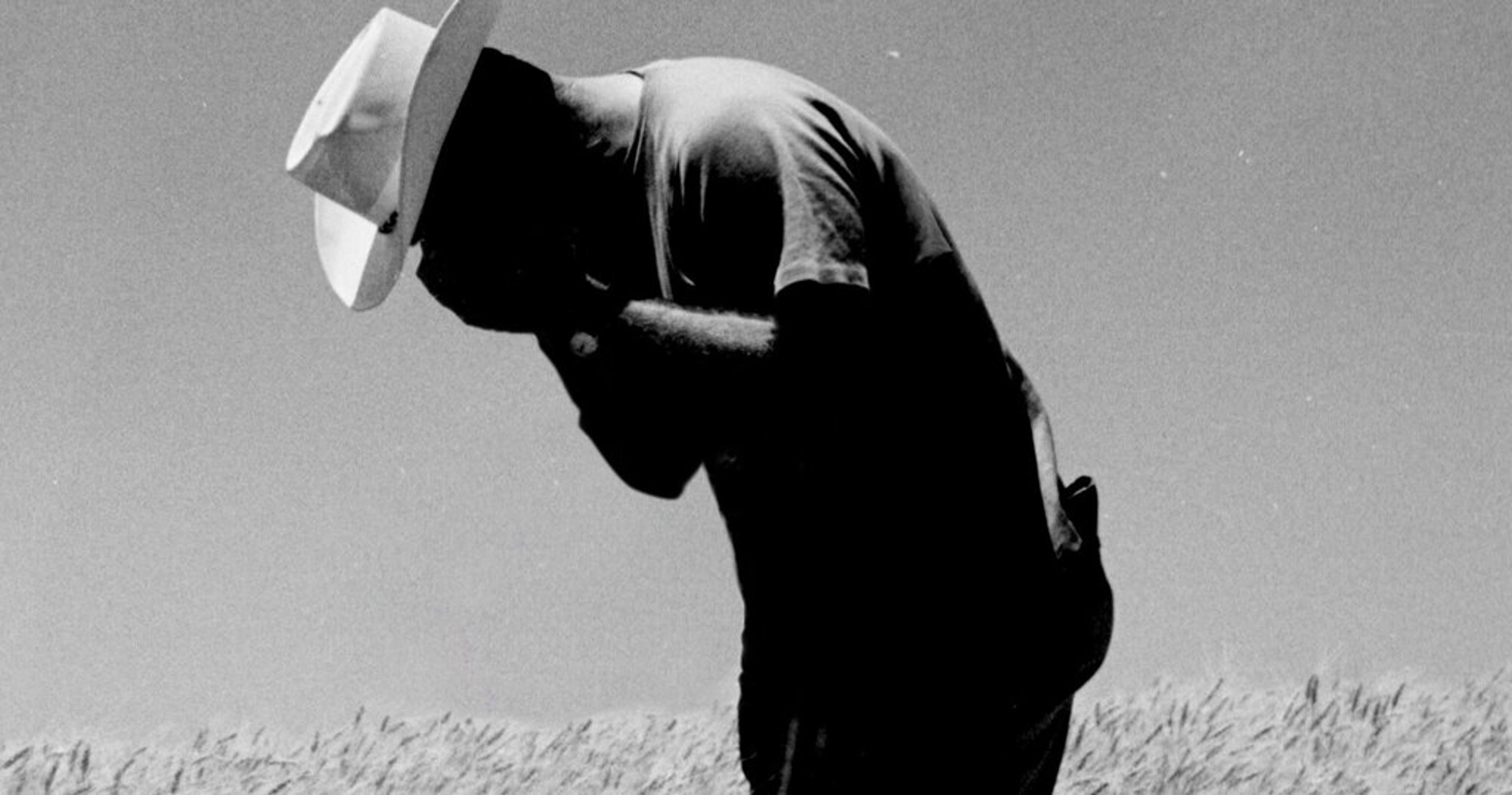
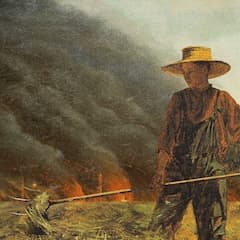
“[He was] referring to an ale that tasted strongly of malted grain,” said Cynthia Clampitt, author of Midwest Maize: How Corn Shaped the U.S. Heartland. Corny in that context literally colors a specific place and time where you can almost feel the twang of hops fizzling in the jowls. But when North America was settled by Europeans, corny took on a new connotation starting in the 1800s. For context, in 1850, over 60 percent of the American workforce worked in agriculture—two out of three workers were farmers. It was extremely typical.
But as the years went by and the economy modernized throughout the Industrial Revolution, corny took on a vintage connotation as something old-fashioned. It was a reference to the unrefined tastes of farmers in the middle of nowhere, tending their cornfields, said Bate. Corny evolved to represent the masses, like a wholesome humor that was obvious, lacking nuance or subtlety.
For hundreds of years, the word simply meant “the most common grain.”
The word was always interpreted as somewhat derogatory, and considered slang for a significant amount of time—as of 1934, it still wasn’t in dictionaries. Four years later, in 1938, critics tried to unpack the word and clearly define its amorphousness and vibe. That decade, corny also did something very rare, considering its British roots: It crossed back over the pond, and began to infiltrate English life as an adjective in the same way as in the America.
Corny’s peak, Bate says, was the 1940s; its very Americanness inspired jokes in short stories between international tourists and locals. It was also powerful: In the 1950s, when something was deemed corny, it was enough for the thing to be socially blacklisted. From there, anyone who liked said thing felt pressured to change their minds for fear of being seen as a rube.
But to be fair, though corny is still heard today, its natural progression has gone a step further to cringe. That in itself is curious—the term for something mainstream and hokey went from being an agricultural object you could see, to a reflexive human action.
Back Across the Pond and Beyond
Cringe goes back to Middle English, similarly to corny. Its definition, similarly to today, reflected the physical act of cringing, so the word became associated with strong negative emotions and involuntary internal contractions, Bate said. But using cringe in the same way as corny is new. Cringe only became a way to indicate something embarrassing in the early 2000s. Bate said that the only reason the word has taken off is that over time, the English language has been losing grammatical endings that indicate whether a word is a noun, verb, or adjective. Without a strong indicator, words like cringe can transcend to encapsulate all of these different forms.
The million-dollar question is staying power. When will Americans fully stop using the word corny? When will we outgrow cringe, and what comes after that? Words, Bate said, don’t tend to strike twice. “Corny at least seems to have had its moment of coolness back in the 1940s, just like the moment that cringe is enjoying now,” he said. “Words rarely get given another [moment].”
But there is potential for corny to live on in some capacity, and enjoy hundreds of years of staying power in the Anglosphere. For example, to this day in Hispanophone countries such as Mexico, it’s common to hear “Aguas!” when a person is about to slip and fall, or two people are about to run into each other. It literally translates to “Water!” though it’s used as a way of saying “Watch out!”
“All corners of society have the means to fashion new words [...] inspired by the objects at hand.”
That’s because for hundreds of years, well-to-do families had bedpans in their rooms. So when a maid picked up the bedpan from an upper floor and went to empty it on the street below out the window, she inevitably yelled, “Aguas!” as (hopefully) liquid rained down onto the streets below. “Aguas!” eventually got co-opted to go beyond bedpans, revolutions, and class. It’s still so common that many say it, but don’t even know why. It’s a fact of life.
Granted, “con cuidado,” or “with caution,” is also common. But aguas is a joy to hear in the here and now if you know that history, and can see the layered, linguistic connections that still follow everyday vocabulary around. In the spirit of aguas, one can only hope that corny can be appreciated free of derision in the future. Maybe one day, its own historical lineage will be equated majestically with amber waves of grain and bison struck on coins.
“All corners of society have the means to fashion new words [...] inspired by the objects at hand,” Bate said. “What really matters in the lifespan of a word is whether it becomes common and useful enough that it gets passed on to the next generation.”