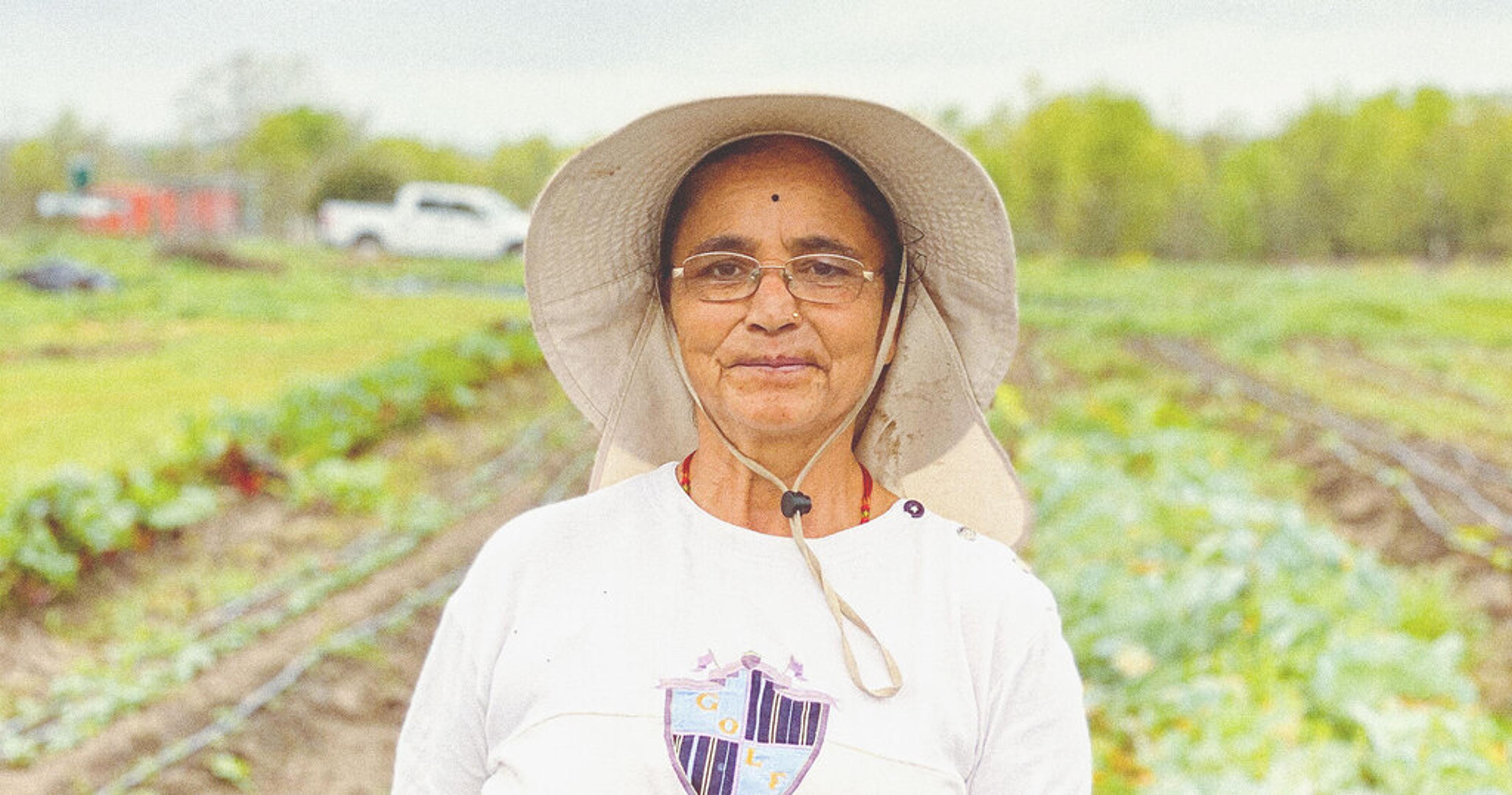
Fleeing persecution at home, refugees from around the world are farming and selling their wares in the Lone Star State.
Before arriving in the United States, Musoum* spent his entire life as a farmer in his native Afghanistan. He worked land inherited from his father, cultivating apples, apricots, and other orchard fruits, as well as vegetables like tomatoes, pumpkins, and beans.
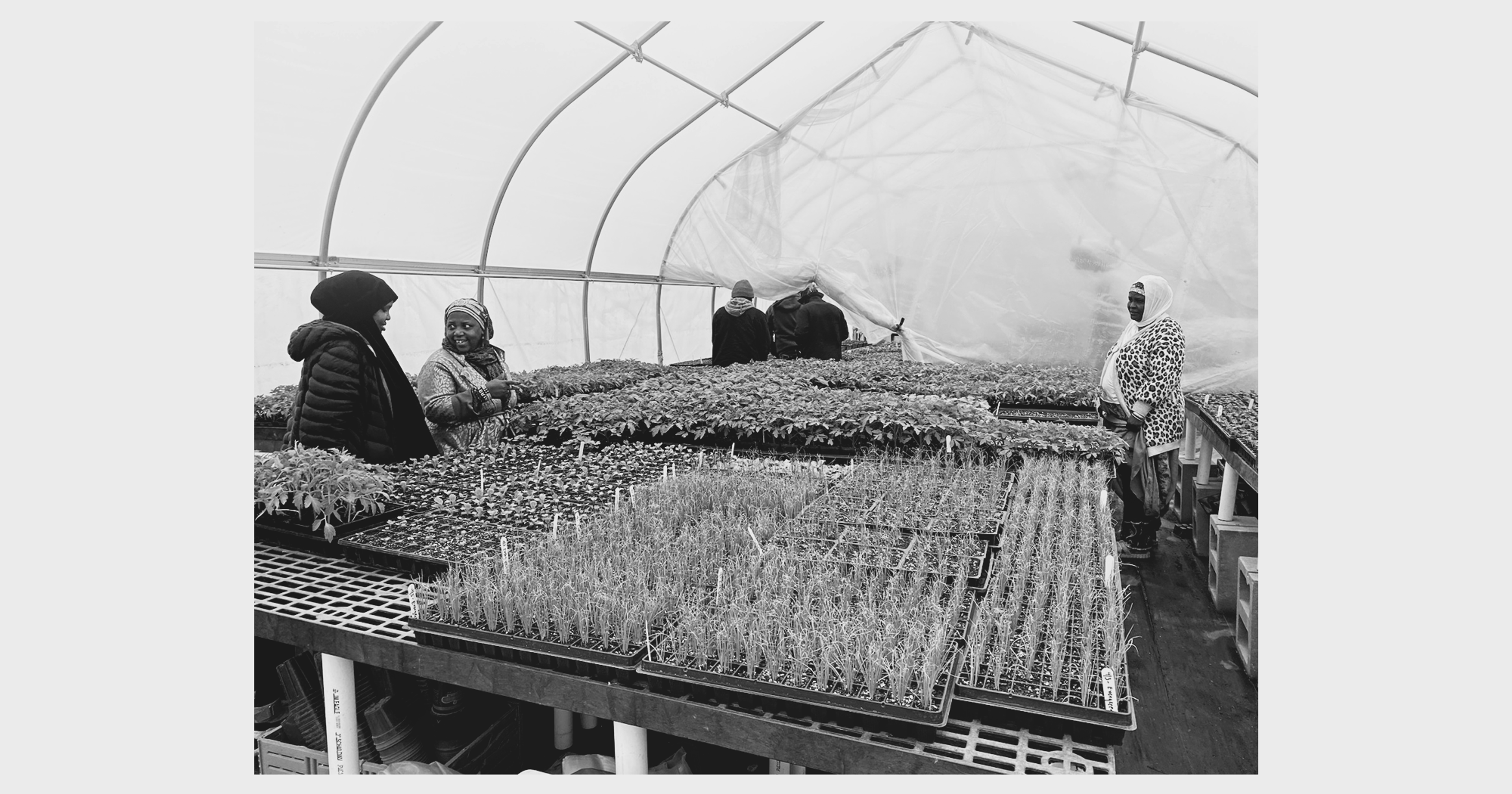

Musoum applied for Special Immigrant Visa status after the Taliban’s return to power in 2021, and in 2024, he and his family relocated to Austin, Texas. Today, they live amongst other Afghan refugees, and Musoum has a full-time job as a farmer for The Refugee Collective (TRC). The non-profit provides community connection, training, and dignified employment to refugees and immigrants from agrarian and sewist (textile-producing) cultures.
TRC’s refugee employees are paid to take one on-site English class per week, and they receive round-trip transportation to work if needed, monthly yoga classes, and fresh produce; farm employees also receive food handler certification. “I’ve learned a lot and can communicate better now at my job,” said Musoum.
Since 2018, TRC has leased a 20-acre plot of land from conservationist Jon Beall. Located in nearby Elgin, The Refugee Collective farm cultivates over 50 crops, including heirloom peppers, squash, melons, greens, brassicas, as well as raising chickens for pastured eggs. These products are sold through TRC’s CSA and to wholesale partners. The farm is one of the organization’s public-facing, social enterprise revenue-earning arm, along with a textile studio utilizing farm-grown dye plants.
TRC was founded in 2009 by two Liberian refugees, Johnson Doe and Paul Tiah, in collaboration with CEO Meg Erskine and Sarah Stranahan. While applicants aren’t required to have a background in farming, TRC’s premise was based upon the fact that much of the world practices subsistence agriculture. The Food and Agriculture Organization of the United Nations estimates that 40 percent of the global population “live in rural areas of developing countries, depending mainly on small, family farms for their livelihoods and food.”
“We’re not a resettlement agency,” said TRC’s agricultural director Matt Simon. “We’re trying to give refugees a foothold in the U.S. by using the skills they acquired in their countries of origin, so they can support their families. Many resettlement agencies focus on placing refugees in any type of employment, regardless of whether it fits their skillset.”
It may seem surprising that a non-profit devoted to refugees and immigrants can thrive in Texas, a state whose governor has made no secret of his distaste for immigrants. But while the political environment in Texas is certainly charged, CEO Erskine said TRC has been mercifully spared from state or federal interference.
“We’re not a resettlement agency. We’re trying to give refugees a foothold in the U.S. by using the skills they acquired in their countries of origin.“
“Thankfully (ICE raids and deportation) haven’t been an issue for us since we primarily work with those with legal refugee status, and everyone has their work authorization,” she said. “But we’ve consulted with a local immigrant aid organization called American Gateways to provide a Know Your Rights session so that our employees are prepared and knowledgeable about the situation with immigration enforcement.”
That said, the current administration’s federal funding cuts have had a devastating domino effect on refugee resettlement agencies. In addition to layoffs and loss of funding, the cuts have curtailed recruitment opportunities for TRC; to combat this, TRC’s staff disperse informational packets and applications in various languages at resettlement agencies.
“If you have refugee status and a valid work permit, you’re eligible for our programming and can be in the field in a week,” said Simon.
A Lush, Productive Farm
TRC’s refugee farmers start at $16 an hour, which is two times Texas minimum wage and competitive with other certified organic farms in the region. Employees get annual raises, paid time off, and connections to agencies that assist with community resource access.
Musoum’s farm co-workers are from the Democratic Republic of the Congo, Myanmar, Bangladesh, and Bhutan. Shortly after his arrival in 2024, Musoum learned about TRC from a refugee farmer and within weeks, he was planting, harvesting, pruning, and driving tractors and other farm machinery. His experience with orchard crops has also proved valuable to the programming, says Simon.
“A lot of what we do here would look, on paper, like [only] agriculture,” said Sarah Sims, TRC’s community farmer program manager. “But it’s actually giving some control back to our refugees after they’ve gone without for a long time. Many of our farmers have survived things most people can’t imagine, and they’re struggling to communicate even basic needs. But out in the field, none of that applies, even if they don’t even share a common language. Their agricultural knowledge is shared and understood, regardless.”
In 2022, TRC began implementing more regenerative practices on the farm, including an on-site compost facility that processes 300 metric tons annually. And in 2023, it was a pilot location for a Resilient Farm Plan, developed by the USDA’s Natural Resources Conservation Service and the Carbon Cycle Institute, making it the first farm in Texas to codify practices that maximize on-site carbon sequestration. Next year, the farm will apply for Regenerative Organic certification.
“They took an over-grazed, barren pasture and turned it into a lush, productive farm. These folks know what they’re doing.“
Landowner Beall is, for his part, delighted with what TRC and its refugee farmers have done with his acreage. “They took an over-grazed, barren pasture and turned it into a lush, productive farm. These folks know what they’re doing, and they strive to farm regeneratively. I’m pleased to be associated with them,” he said.
The farm also provides full-time and seasonal refugee farmers with a way to give back to their respective communities, in the form of traditional produce and prepared foods.
“I find that here, food from the market isn’t as fresh as what we had in Afghanistan,” said Fermena*, a full-time caregiver to small children who earns seasonal income harvesting roselle—a type of hibiscus—on the farm. “We spend a lot of time in the kitchen, and the farm is as close as we can get to fresh, tasty Afghan food,” she said, adding that the supplemental income enables her to buy clothes for her family.
TRC also produces spice blends, finishing salts, and preserved foods like pickled okra, inspired by refugee farmers’ native countries. These items form TRC’s Pantry Line, value-added products that utilize surplus produce from the farm while sharing refugee foodways. A selection of fermented foods will launch in 2027, and current offerings are sold through TRC’s online shop.
Personal Plots and Pantry Provisions
In addition to the main farm, TRC has a four-year-old Community Farmer program that provides participants with 750-square-foot plots, equipment, and organic inputs like compost, seeds, and soil. Community farmers can grow their own culturally desired crops for home use, supplemental income, or donation within their respective communities.
“The program is a jumping-off point designed to reach newly arrived refugees,” said Simon. “Many need a job immediately but may not have the English proficiency or access to transportation needed to jump into the workforce. Discretionary funds for refugees and immigrants have been cut, so there’s not much on-ground support for recent arrivals, and we try to offer as much in-house employment as possible, plus entrepreneurial opportunities for supplemental income.”
TRC offers plots on a seasonal basis and provides a six-module training course to teach participants how to grow using regenerative methods. Simon said that, depending upon the season and crops grown, community farmers can be earning money selling vegetables within six weeks. There are currently 10 plots in use, bursting with esoteric varieties of peppers and eggplant, as well as pumpkins, amaranth, and more.
Krishna* is one of TRC’s first farm employees (Her son Bal is TRC’s chicken and greenhouse assistant). Today, she’s the farm crew chief and a Pantry Line participant, a reflection of her upbringing on a diversified, water buffalo-powered farm in her native Bhutan. Krishna was eventually forced to seek refugee status in Nepal for 19 years and arrived in the U.S. in 2010.
In her community garden, Krishna grows Dalle Khursani peppers, a small, blisteringly hot Himalayan variety, as well as mustard greens, known in Nepal as rayo ko saag. She uses them for gundruk, a pungent pickle made with mustard oil, chilies, ginger, and garlic. In Nepal, making gundruk is a communal activity amongst women, who prepare it for use in winter; Krishna is currently developing the recipe for the Pantry Line.
“Our participants were practicing subsistence agriculture in their countries of origin, a way of life that yields a sense of self-determination and autonomy.”
For supplemental income, Krishna grows marigolds. After spending nearly $300 on marigolds for personal use last year, she decided to start cultivating them with a Burmese refugee farmer named Sui Nai*. The two women identified a gap in the local market that forced Austin-based Nepalese community members to travel long distances to purchase flowers.
For Sui Nai, an ethnic Chin who is part of the minority Christian population of Myanmar, marigolds hold importance during the Christmas and Chin holidays. She and Krishna intercrop them with lentils, as the flowers are a natural pest deterrent. When they bloom, “the sea of marigolds looks so beautiful,” said Sui Nai.
Sui Nai also grows and sells roselle, a key ingredient in Burmese cuisine that is used fresh, cooked, or dried for use as tea. High in vitamin C and essential minerals, roselle is an important source of nutrients for refugee families experiencing food insecurity or limited grocery access, and Sui Nai distributes any surplus amongst the local Burmese community.
While the community plots are private, the TRC Farm welcomes volunteers two days a week and holds public tours (past visitors have included Charles Schwab and Meta employees, and local culinary businesses). Visitors learn about regenerative agriculture and harvest crops, but these educational endeavors also humanize refugees and immigrants at a particularly critical time in the political landscape.
And, although helping displaced immigrants enter the workforce is TRC’s objective, there’s a bigger picture, said Simon. “Many of our participants were practicing subsistence agriculture in their countries of origin, a way of life that yields a sense of self-determination and autonomy.” By reconnecting them with a sense of food sovereignty, refugee farmers regain a sense of normalcy while getting the literal and metaphorical tools they need to nourish their families, friends, and neighbors.
Ferema has a more succinct take, however. “Food is everything. It should be fresh, made with love and care, not with fast food or microwaves. It’s how we care for family and community.”
*Some last names and other identifying details have been omitted by request.