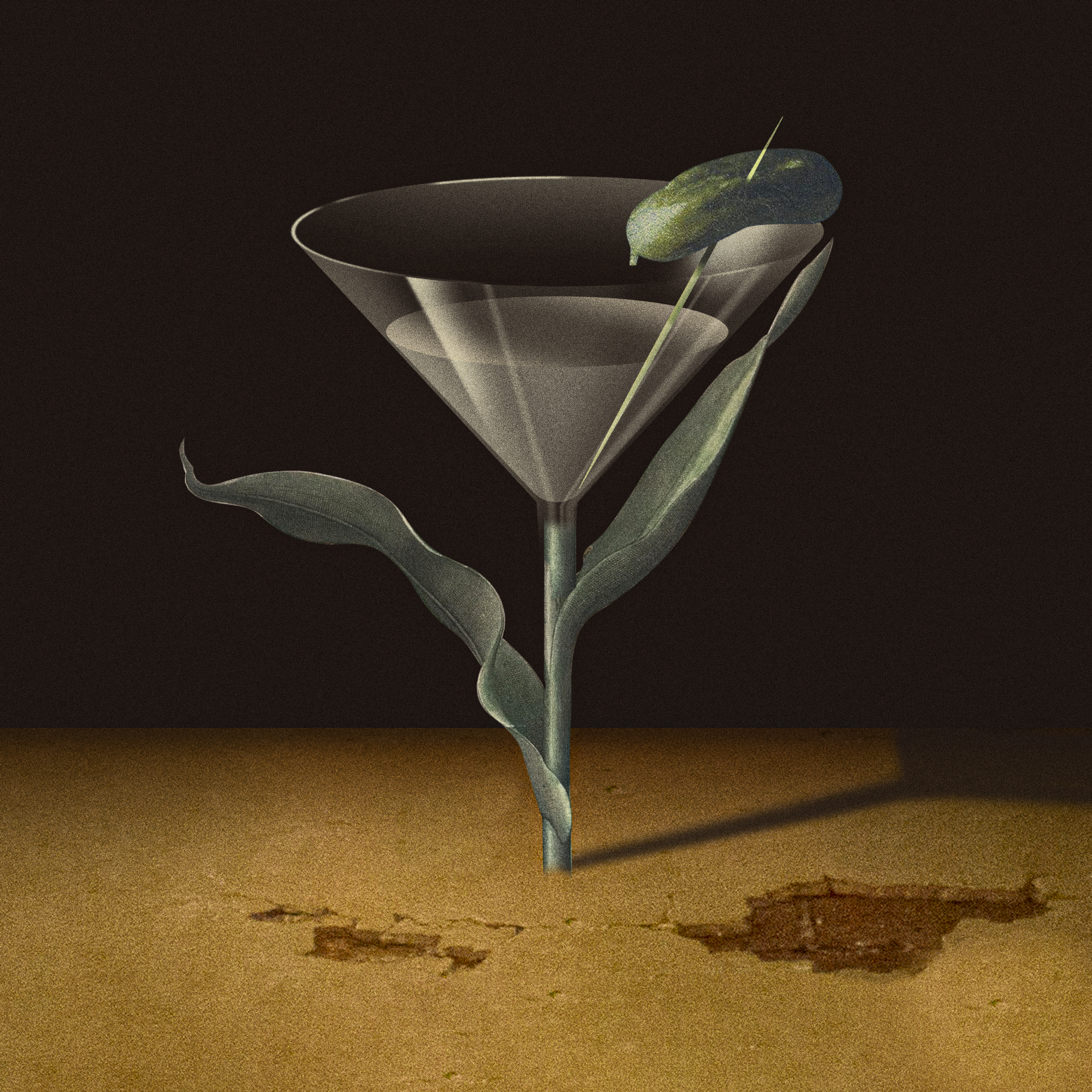
A new crop of bars has been growing fruits, vegetables, and herbs for well-considered cocktail programs.
Beneath the flight path to Los Angeles International Airport, Eden Katz is at work. She pauses mid-conversation as a jet roars overhead, while continuing to harvest an array of herbs—tulsi, culantro, chrysanthemum, rau răm—destined for use behind the bar at Tomat, located three blocks away.
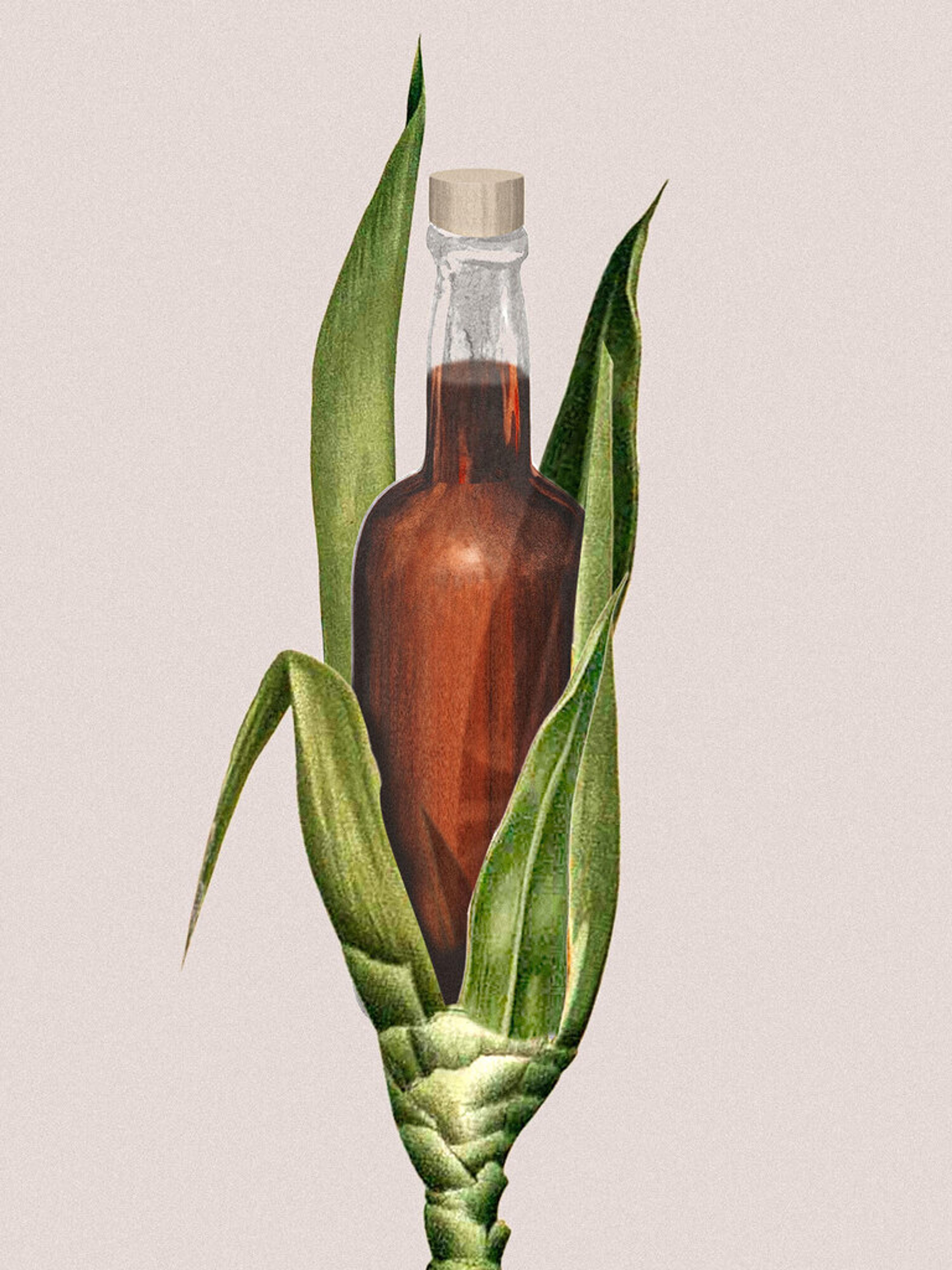


As owner of edible gardening company Down to Farm, she spends one day a week tending Tomat’s 4,000-square-foot regenerative plot, which produces 50 different crops and borders an abandoned parking lot in L.A.’s Westchester neighborhood.
“They’re our first restaurant client doing this at such a high level and that includes the bar,” said Katz. “We have a lot of freedom to be creative and trial new things, and there’s constant conversation about [general manager/beverage director Miley Aryucharoen’s] needs for the bar, zero-proof, and coffee programs.”
Tomat is one of a growing cohort of domestic restaurants with its own regenerative plot, but upping the ante is the fact that its bar programming also relies almost entirely upon those crops. Some items are grown exclusively for Aryucharoen, who deftly turns surplus product and kitchen scraps into shelf-stable products like syrups, shrubs, vinegars, liqueurs, colas, and ferments. “The only thing I purchase for the bar are small-batch, sustainably made spirits,” she said.
Tomat isn’t the first bar to cultivate crops or practice closed-loop (also known as circular) programming. But its sustainability initiatives, combined with Aryucharoen’s vision, have made it a model for urban and closed-loop food and beverage programming.
While it can be economically and logistically challenging to create and operate a stand-alone bar program of this type, Tomate and its contemporaries are giving a blueprint for what is possible if owners and operators are willing and able to invest in a sustainable operation. (It should be noted that outside sourcing is still necessary for these businesses to meet supply and demand, so the below bars work closely with local farms and regional growers.)
Bringing the Farm to Your Glass
The so-called “farm to glass” movement is an offshoot of “farm to table” or “farm to fork” dining, the now-ubiquitous concept brought to public consciousness in the early 1970s by Chez Panisse founder Alice Waters and chef Jeremiah Tower.
By the early 2000s, an increased demand for transparency and sustainability in food sourcing dovetailed with the birth of the modern craft cocktail movement. That trajectory led to unregulated industry and marketing jargon like “grain to glass,” “seed-to-spirit,” “seed-to-sip,” and “farm-to-barrel,” popularized by craft distilleries and breweries.
“’Farm to glass’ and related names have become a kind of marketing shorthand … but for us, the story behind what’s in your glass matters just as much as what’s in it,” said Natalia Faustino, general manager of Northern California’s Little Saint, a plant-based bar/restaurant with a wine shop, coffee bar and music venue. “It’s not about the terminology; it’s about the integrity behind it.”
Drinking the Rio Grande Valley
Albuquerque’s Los Poblanos, located in the fecund Rio Grande Valley, emerged around its 25-acre organic farm. The historic inn’s food, beverage, and spa program includes lavender and other essential oil-bearing plants, fruit trees, herbs, berries, and other crops, overseen by farm manager Judy Hartline.
The former dairy farm describes itself as a “living farm estate” that now boasts a sister farm shop and bar in Santa Fe, as well as an onsite apothecary that produces luxury farmstead products. Los Poblanos also has an award-winning distillery, located in downtown Albuquerque.
“’Farm to glass’ and related names have become a kind of marketing shorthand.“
The farm produces dozens of edible and distillable plants for its food and beverage programming. Spirits manager Joseph Simonson helped open restaurant Campo in 2018 and continues to oversee the bar program; in August, he received the inaugural Michelin Guide Southwest Exceptional Cocktails Award for his work rendering a “beverage program deeply influenced by New Mexico’s landscape, ingredients, and producers.”
“We call ourselves preservationists. Our goal is to capture the seasons through our food and beverage programming,” said Simonson. For the bar program, farm crops are preserved through pickling, lacto-fermentation, dehydration, and infusions for cocktails like Field Notes (housemade strawberry amaro and persimmon vinegar, Scotch, pineau rouge, mint, vanilla, farm bitters, soda water), and Mulberry Mountain (pickled mulberry brine, sotol, housemade herbal liqueur, lime, lavender salt). “It’s a rare privilege to be able to operate a bar program like this,” said Simonson.
At the distillery, lavender, violets, roses, hawthorn berries, lemongrass, and lemon balm from the farm are used to make Los Poblanos’ Western Dry Gin and Lavender Gin. “It’s basically having a farmer on demand,“ Simonson said, ”but I also think our focus on honoring local and New Mexican producers has encouraged other establishments to strengthen their local ties, as well.”
There’s No Playbook
Los Poblanos walked so Little Saint could run. When owners Laurie and Jeff Ubben established an eight-acre regenerative farm in 2017, their overarching vision was to provide the nearby restaurant (which opened in 2022) and community with nutrient-dense food. The 12-person farm team, overseen by head farmer Ava Jablonski, cultivates more than 300 different crops, which supply 70 percent of the ingredients for the restaurant and bar. The goal, said Jablonski, is to eventually get that number up to 90 percent; the property also draws revenue from its farm stand, CSA, and stall at the weekly farmer’s market.
Little Saint beverage director Daniel O’Brien has crops grown to his specifications. “There are herbs and edible flowers, but there’s also a lot of leaf action,” said farm general manager Rebecca Kelly. “There’s no playbook and we do everything by hand: Tractors don’t have eyes and brains to see what’s best for the land.”
The farm maintains close communication with the kitchen, bar, and pastry department, utilizing a Slack channel to provide updates on what’s waxing, waning, or surplus. Much of what O’Brien doesn’t source from the farm will be gleaned from kitchen and pastry department scraps: tomato tops, melon rind, carrot skins (the latter are fermented for tepache, a pre-Columbian beverage typically made from corn, pineapple, or guava).
“Whatever grows in abundance we ferment, dehydrate, juice, or freeze.
O’Brien’s superpower, besides what Kelly calls his “ferocious curiosity,” is coaxing layers of flavor from a single ingredient, as with last summer’s zero-proof cocktail, The Last Strawberry. Green fruit that failed to ripen was pickled, the leaves used for tea. Leftover, overripe berries were turned into juice, as well as dehydrated for use in a salt garnish.
“It was my case study in how to use the whole plant other than the root,” O’Brien says. “All of my zero-proof drinks take elements from the kitchen, like I’ll blitz stonefruit pulp or turn white peaches into a tea.” Little Saint’s non-alcoholic game is also strong because the owners wanted an inclusive space, added O’Brien.
When it comes to alcoholic cocktails, however, O’Brien is no less gifted. His Tomato-Tini contains olive oil-washed, tomato-infused vodka with tomato vermouth and tomato water, while The Continental Breakfast, made with tequila, melon, maple syrup, orange, and pickled melon rind, brings together the sweet and savory elements of the morning meal. Farm pears find their way into a Penicillin riff made with Irish whiskey, chamomile, ginger, lemon, and Scotch aromatic.
“You need to be nimble, flexible with utilizing excess product, and prepared before it even ripens,” said O’Brien of how he conducts his weekly to bi-weekly menu changes.
An Apothecary Program
While O’Brien leans into distilling a single ingredient into tiers of flavor, Aryucharoen’s gift is reimagining and repurposing. The Bangkok-born and -raised beverage director has a background in bioscience that has been critical to her analytical approach. Despite having less than three years of bartending under her apron, PUNCH named Aryucharoen one of America’s Best New Bartenders of 2026.
Aryucharoen also leans heavily on the pastry department, utilizing leftovers like spent grains, whey, and stale bread; the latter is soaked in bourbon, clarified, and combined with egg yolk and vanilla for what she describes as a “French Toast-inspired drink.”
Beeswax from Tomat’s hives is used to fat-wash gin, which adds a “soft, rounded, silky mouthfeel to the drink,” says Aryucharoen. She uses residual citrus peels for the house margarita, the rind forming the base for both a shrub and oleo saccharum to add intensity to the drink, while allowing the bar team to utilize more scraps.
“All of my zero-proof drinks take elements from the kitchen, like I’ll blitz stonefruit pulp or turn white peaches into a tea.”
Incorporating traditional foodways such as nespolino and exploring herbal medicinals like mugwort also inspire Aryucharoen, who says she wanted the bar program to resemble an apothecary where she could explore the heritage of cocktails as remedies.
“I want to use herbal practices and fermentation in a contemporary way,” she explained. “Mugwort, which I use in a green tea highball, is often associated with digestion and relaxation, while amazake, a rice-based ferment, is a naturally sweet, amino-acid rich beverage. It represents the idea that fermentation can create and transform both flavor and nutritional complexity.”
The current lack of regulation or watchdog organizations to ascertain where and how farm-forward establishments are sourcing their ingredients can be daunting for consumers. Still, there remains value in educating guests and encouraging them to demand greater transparency from restaurants and retailers. The benefits also exist in other ways, said Faustino.
“It’s about knowing where ingredients come from, understanding how they’re grown and produced, and building meaningful relationships with people who share our values. We don’t see that desire for connection going away, and we believe it’s worth continuing to invest in the spaces and experiences that bring everyone together.”