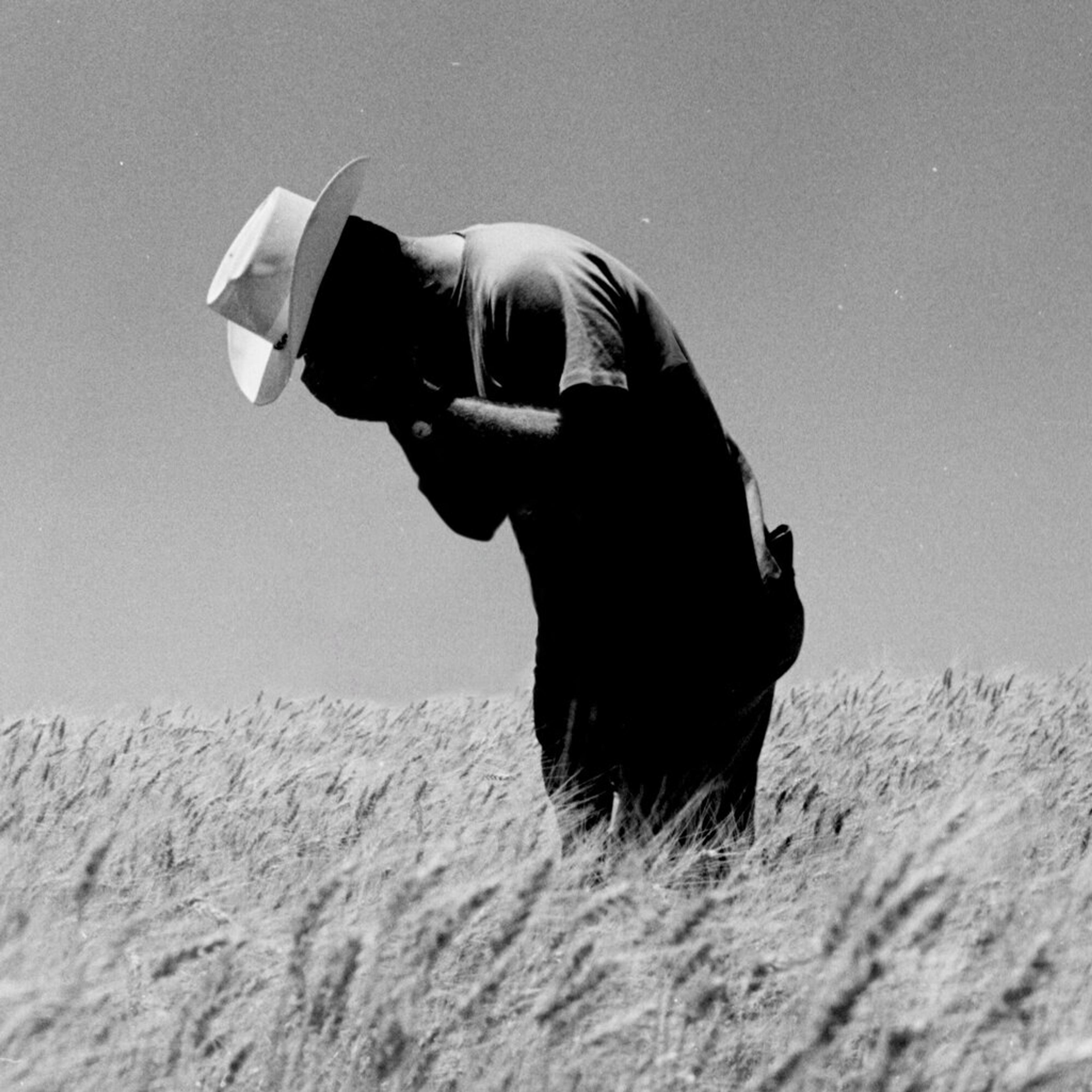
From financial counseling to critical mental health services, programs created by Farm Aid, extension departments, and state ag bureaus have offered a lifeline in farm country.
A fifth-generation rancher grappling with the aftermath of his father’s suicide. A producer fretting over not being able to “fix” his own anxiety. A farmer discussing her despair and sleep deprivation as she faces mounting debt. These sorts of stories, featured in an informational film put out by the Colorado Department of Agriculture, are all too common in the industry. For a long time, they remained untold; yes, farmers are notorious for keeping their problems to themselves but in rural places, they can also have scant access to professional help.



Since the farm crisis of the 1980s—when farmers en masse lost their land, their income, their community ties, and sometimes took their own lives—there have been waves of support meant to bolster producers through hard times. Although, said Florence Becot, rural sociologist and lead of Penn State’s Agricultural Safety and Health Program, in the ‘80s and again after the 2000s farm crisis and again after the late 2010s crisis that led into Covid, “The interest and the attention went away, as there was a sense that the crisis was over.”
Nevertheless, little by little over the years, there has arisen greater understanding among farmers themselves about the potential wisdom of asking for help. In 2018, the Farm Bill included mental health funding in the form of the Farm and Ranch Stress Assistance Network, or FRSAN. However, FRSAN under the Trump administration’s USDA is undergoing big funding changes. That’s creating unease among the behavioral health specialists who have spent years building and expanding services to help farmers—especially as crises have become farmers’ steady companions. That has made services offered by non-government entities all the more critical.
Here, Offrange takes a look at what types of help are currently available, and where to find it—for now. If you are having immediate thoughts of self-harm, you can call or text the free, national 988 Suicide & Crisis Lifeline 24/7.
***
Farm Aid,* which was founded in 1985 when singers Willie Nelson, John Mellencamp, and Neil Young organized a concert to raise money for struggling farmers, was and continues to be a leader in the space of farmer support. Its hotline (1-800-FARM-AID) came about as a result of those tumultuous times. As co-executive director Jennifer Fahy explained it, “We had these 800 numbers you could call to make a pledge,” but they were also being used by farmers in crisis who were “calling up to say, ‘I need help.’ It quickly became obvious that, Oh, this isn’t just a concert raising money and putting it out to the countryside. It’s developing an internal program, which became our hotline.”
FRSAN money has mostly funded the hotline since 2020. Its current staff includes four hotline operators, including one fluent in Spanish, who answer phones Monday through Friday from 9am to 9pm Eastern time. “We are not strictly a crisis line, although we do get crisis calls—everything’s connected,” said Caitlin Stephano, the hotline program’s senior manager. “They might not say, ‘I am experiencing farm stress,’ but they might say, ‘I am embroiled in a legal situation with my brother over our family land,’ and we know that is very stressful. We talk to them as long as they need, and then we curate a list of resources that will best fit their situation.” Since January of 2026, the hotline has received calls from 359 farmers, 62 percent of whom said they were financially stressed.
In fact, said Becot, this coincides with the need she’s seen among farmers for social and economic supports, “and how they intersect with the farm business. What does it look like to farm—to be able to pay your bills and live a fulfilling life?” From discussion groups she’s led with farmers and the people who work closely with them, she’s learned that “They are looking for things connected to their finances: better farm income, more affordable health insurance,” she said; these are among the main causes of their stress and anxiety. “Information related to mental health, that was kind of towards the bottom, which is not surprising because you’re actually asking people, do you want your problem to be fixed, or do you want the symptoms of your problem to be fixed? People are looking for practical solutions.”
“Number one across the board always is money: farmers needing money because of an emergency situation, it could be because of a climate disaster, it could be a legal problem, it could be they need to buy a new piece of equipment.”
“Number one across the board always is money: farmers needing money because of an emergency situation, it could be because of a climate disaster, it could be a legal problem, it could be they need to buy a new piece of equipment,” Stephano said. “So, we’re going to try to find them funding resources, which are very few and far between ... A $1,000 grant over here, we’ll point them towards FSA farm credit, lower-interest loans or a cost-share matching program through NRCS.”
Legal guidance is another big ask, in response to which Farm Aid suggests contacting the Farmers Legal Action Group (FLAG) and Farm Commons. Even if a farmer does not explicitly say, “’My mental health is suffering, I am super stressed, I’m not feeling good,’ we’re probably gonna put those resources in there anyway, because they probably need it,” Stephano said.
Research Becot co-conducted over five years shows that many farmers are not as resistant to the idea of seeking mental healthcare as they’ve been made out to be. Instead, they are often confronted with access challenges: the steep cost of such care, combined with no time between farm work, off-farm work, and childcare. What’s really needed, the research concluded, were more programs that help them navigate the complexities around their money woes (not unlike what Farm Aid is doing); and the removal of barriers to farmers seeking help, including for mental health issues.
Lack of rural broadband to research potential avenues of care or to meet with a therapist online is one such barrier. But for those who can get online, there now exists a plethora of mental health information. For example, you can find many resources via Rural Minds, founded by New York dairy farmer Jeff Winton after his nephew died by suicide in 2012, a nonprofit that’s something of a clearinghouse of useful mental health resources.
Over the years, many types of mental health services for farmers, beyond helplines, have become available. The Minnesota Department of Agriculture funds Minnesota Farm Advocates, which sends staffers—trained in farm and disaster programs, crisis counseling, and mediation—to speak one-on-one with farmers. Similarly, Cornell University funds NY FarmNet for struggling farmers in that state. State-based voucher programs for free mental health sessions have proved popular, although many of them have been defunded, according to Stephano.
“Farming needs to be sustainable in terms of income, in terms of stress, in terms of health, in terms of family—we can’t just keep farmers farming if they’re falling apart at the seams.”
FRSAN, when it came into being eight years ago, divided the country into four regions through which to channel grant money. In the Western region, Colorado State University (CSU) used funds to devise a program, called LandLogic, that’s trained over 700 behavioral health providers and added mental health services to its existing AgrAbility Project, which used to focus solely on physical disabilities. Now, “We see our mission as working to reduce farm stress and suicides in rural and agricultural populations,” said Chad Reznicek, a behavioral health specialist at CSU Extension.
That work includes trainings “where we teach rural community members how to respond to signs of distress amongst their neighbors and family members and friends to help create a safety net,” he said. Partners like Rocky Mountain Farmers Union concurrently boost social connections through community events. Extension, Reznicek believes, is the ideal place for these sorts of programs to be anchored, because there are trusted Extension offices in 62 of Colorado’s 64 counties. “Extension just carries additional weight in rural communities,” he said.
But brand-new changes to FRSAN have caught everyone off guard. Funding has come one year at a time since the last farm bill expired. But in July of 2026, USDA abruptly announced a four-year funding opportunity that gave grant seekers only two weeks to apply. This “dropped out of the blue with an almost criminally insane short turnaround time,” said Reznicek.
Farm Aid last received $350,000 in FRSAN money and is certain to receive far less moving forward, partly because the program is now going to separately fund a national farmer distress hotline; Farm Aid’s hotline will no longer qualify for a grant. The new rules have sent all previous grantees scrambling to write grant proposals in the hopes of keeping at least some existing programs alive.
“Farming needs to be sustainable in terms of income, in terms of stress, in terms of health, in terms of family—we can’t just keep farmers farming if they’re falling apart at the seams,” said Stephano. The same can be said for keeping vital mental health services up and running. “If I had a magic wand, I would just wish for sustainable funding,” Reznicek said.
*Note: Farm Aid is a paid sponsor of the Offrange newsletter.