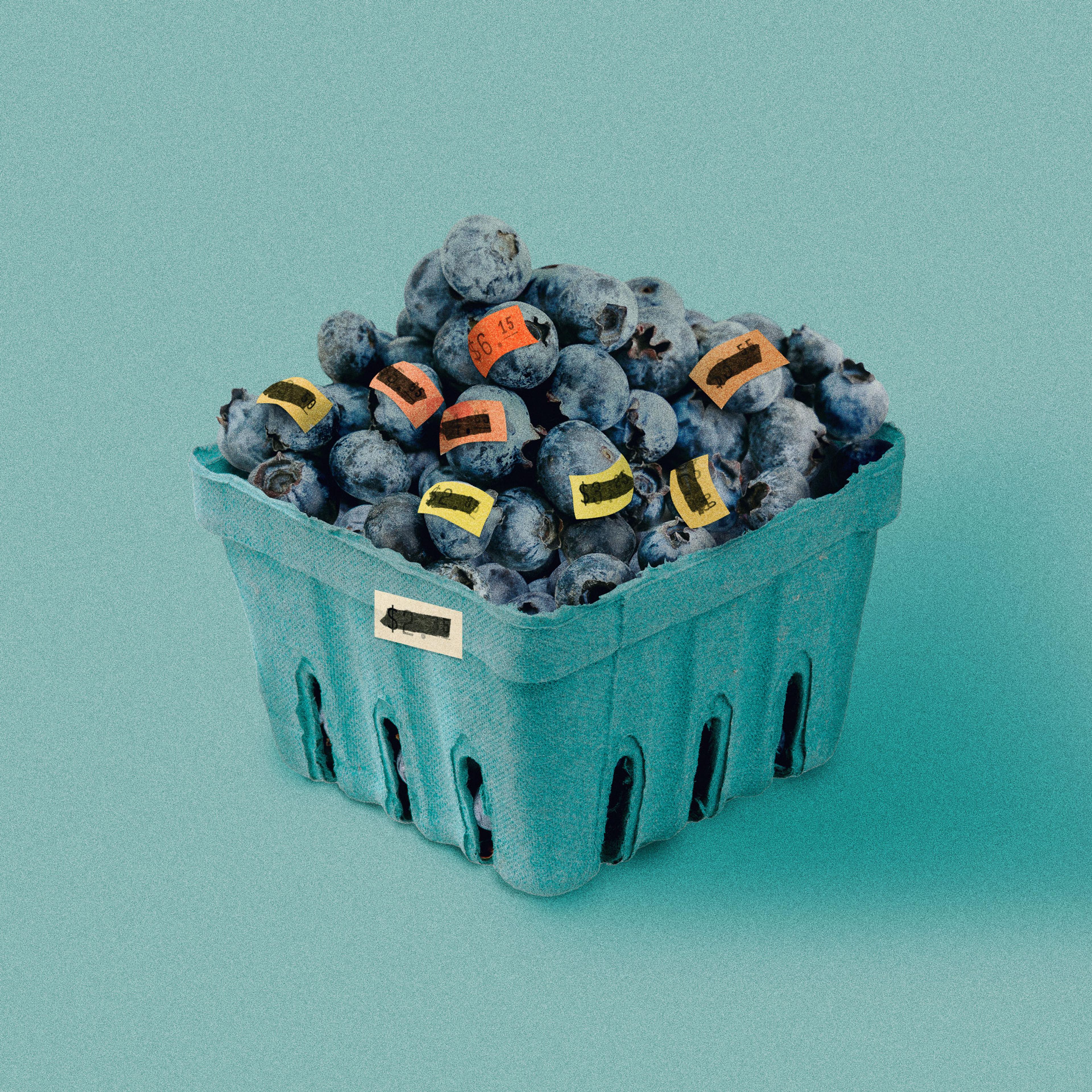
As consumption of raspberries, strawberries, and blueberries spikes among American families, so do their prices. But don’t blame the farmers!
When my partner’s nine-year-old daughter leaves soggy raspberries in her cereal bowl after claiming she’s full, that’s big money down the drain — literally.



The cost of those pints have been climbing every year; a sizable chunk of our weekly grocery bill is now devoted to blueberries, raspberries, and strawberries. At this point berries and meat are running neck-and-neck for weekly sticker shock.
When I pitched the idea of tracking the cause of this jump in berry prices, my editor was initially skeptical, claiming it didn’t seem like a huge crisis. But he returned to my inbox two weeks later, saying he changed his mind: “Suddenly my social media feeds are awash with parents complaining about the cost of berries!”
I’ve seen the same phenomenon over and over in recent months, whether in parent huddles at a kid’s birthday party or in opinion pieces in a metro daily.
David M. Perry, a history professor living in Shoreview, Minnesota, wrote in the Minnesota Star Tribune why the Trump administration’s zeal for tariffs will likely pushed the price of berries even higher, writing, a “10% price bump will be passed on to consumers like us in the short-term.”
In an interview with Offrange, Perry said he buys blueberries for his son Nico, and shells out $150 a month to satisfy that berry hunger. Due to his autism, Nico will only eat a limited number of foods — blueberries is high on that list.
“I’ll often head to Costco to buy bigger packages of them to try to save some money,” said Perry. He estimates Nico eats around a half pint of blueberries each day. His situation isn’t unique.
Joe Flynn, a father of a berry-loving daughter in Northern Virginia, also has seen the price of berries spike in the past year. “In a week she goes through two packages of strawberries,” he said. “I feel the hit [in my bank account].”
“In a week she goes through two packages of strawberries. I feel the hit [in my bank account].”
Perry and Flynn are among many Americans who have seen the price soar for blueberries, strawberries, raspberries, and blackberries. According to USDA data, the per-pint price of blueberries and strawberries has increased by 14 percent in January 2026 compared to just one year earlier.
Meanwhile The Hustle newsletter surveyed U.S. parents in 2025 and found their kids are gobbling up berries at a breakneck rate: Close to one-third of respondents said their children downed a carton of berries every day.
The sticker shock facing many Americans may be sparking a slew of questions over what accounts for the rising cost of berries. The answer isn’t simple but comes down to one key metric: As costs rise for berry farmers, prices increase for consumers.
From Labor Shortages to Extreme Weather
Imagine having something to sell, ready for consumers, but you can’t get the product out into their hands. That’s what blueberry growers endured in 2025 when they faced a labor shortage: One New Jersey grower said he lost two-and-a-half million pounds of blueberries lost to not having laborers to harvest them.
At Wish Farms in Florida, strawberry grower Gary Wishnatzki echoes that pain. “Domestic workers in Florida doing ag work are just almost non-existent,” he said. “We try to bring in H-2A visa workers to fill that gap.” Berries are delicate fruit that can’t be picked by large commercial picking machines, so manual labor is often the only answer, Wishnatzki added.
A University of Michigan study drew a line connecting labor shortages to what berry lovers face at the cash register. It found that when domestic farm employment declines by 10 percent, food prices of labor-intensive crops such as berries increase by around 3 percent.
The Trump Administration’s imposed tariffs in April 2025 also significantly affected berry consumers in the U.S. When the 10 percent duty on almost all imports from Peru took effect — the largest supplier of blueberries to the U.S. — costs were passed on to consumers.
Berries are delicate fruit that can’t be picked by large commercial picking machines, so manual labor is often the only answer.
Also, the 25 percent tariff imposed on all goods from Mexico and Canada exempted fresh produce that is USMCA-compliant, but a “hidden tariff” still influenced the per-pint price. The administrative burden and “transshipment” audits (to ensure fruit isn’t coming from a third country like Chile) led to massive logistical delays. Those delays instigated a rash of increased shipping costs and boosted spoilage which led to a reduced supply of Mexican fruit and boosted on-the-shelf prices.
According to a 2024 report, blueberries alone exported from Mexico to the U.S. are valued at $3.6 billion annually. The U.S. is so hungry for berries south of the border, it gobbles up an 85 per cent share of Mexico’s export berry market, grabbing as much as 608,000 metric tons every year.
Adding to the headache is extreme weather, an increasingly weighty issue Sharon Walker has encountered. As owner of the 2.5-acre Hummingbird Berry Farm in Brighton, Missouri, Walker often finds herself explaining to customers why certain parts of the year will see a price increase.
“The weather can be so unpredictable, from longer hotter summers to times when we get so much rain,” she said.
Walker added that a snap frost decimated more than 90 percent of her harvest in 2023. “We can try to do as much coverage as possible but that doesn’t always help,” she said.
“We would [lower prices] if we could. It’s easier said than done.”
Blackberries from Mexico might be more attractive to customers, Walker noted, if supply can’t meet demand. Thing is, imported fruit will come with added costs to the customer. Raspberries are in a similar boat, or rather truck. More than 90 percent of the raspberry supply in the U.S. is imported, with the majority hailing from Mexico.
Fertilizer, fuel, and packaging have also seen a cost bump in the past year, directly affecting farmer’s bottom line. In 2025, phosphate prices soared by roughly 36 percent compared to 2024, and potash also saw a 21 percent increase compared to the previous year.
Being a berry farmer in the U.S. is challenging today, Wishnatzki said, and the sentiments he often hears from customers is a mix of admiration for his product and disappointment at the high price. “A popular comment I hear from folks is what we can do to lower costs,” he said with a heavy sigh. “We would if we could. It’s easier said than done.”