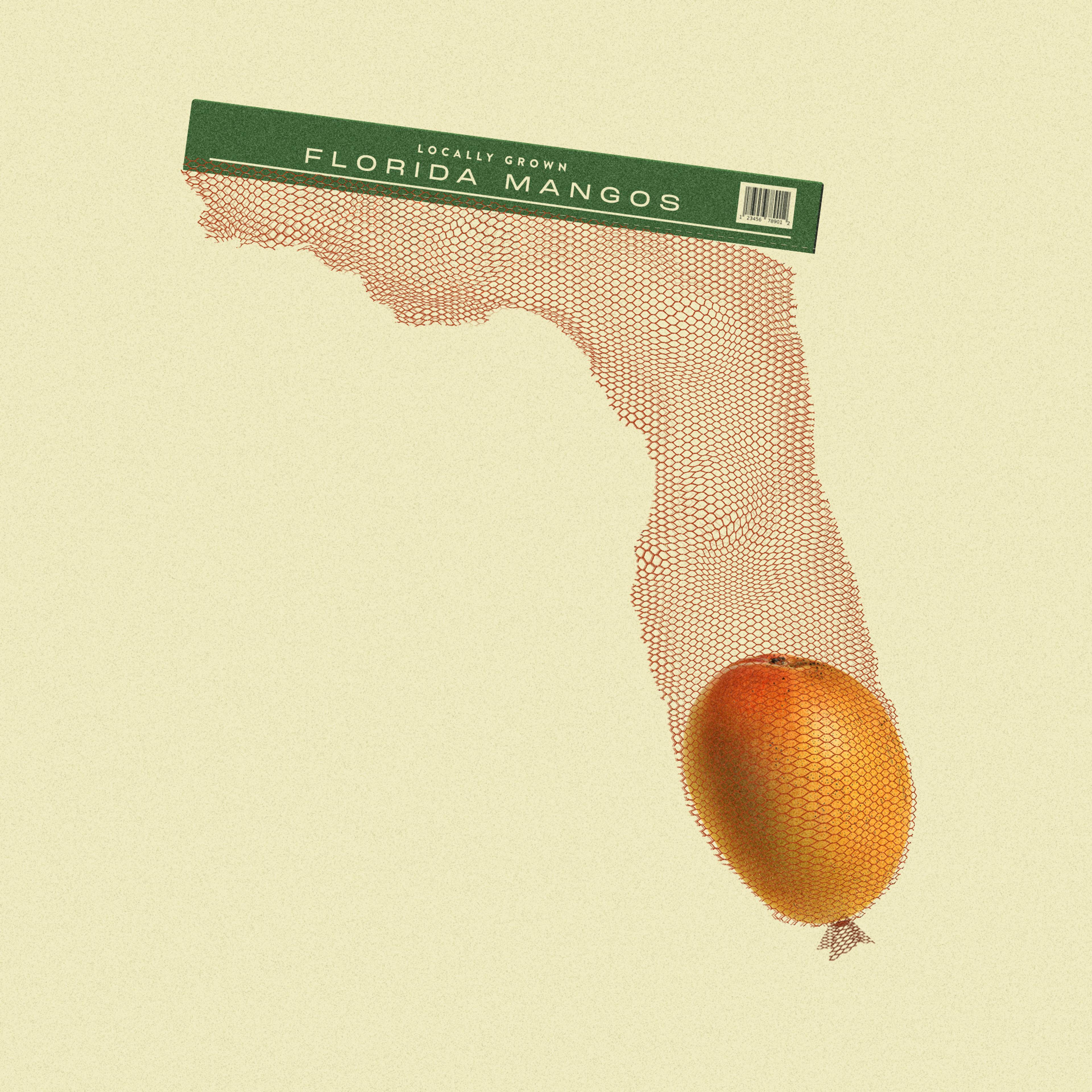
South Florida is the growing epicenter of America’s rare and exotic fruit industry.
About 40 minutes south of Miami, gleaming high-rises and snarled traffic give way to country roads lined with lush greenery. Here, sprawling out from the agricultural town of Homestead, is the center of South Florida’s tropical fruit industry, which produces specialty crops that thrive in the hot and humid climate.

On a balmy afternoon in November, I drove past farms with names like “Tropical Sugar” and “Vietnamese Fruits Garden” to reach the University of Florida’s Tropical Research And Education Center, or TREC. The center’s associate director, Jonathan Crane, showed off row after row of fruit trees on the facility’s 160-acre campus. Some, like papaya, guava, and lychee, I recognized, while others — mamey sapote, carambola, sapodilla — I had never heard of.
As the only place in the continental United States where it almost never freezes (Crane cautioned that though rare, occasional freezes do happen, so growers shouldn’t get too complacent), South Florida can support the kinds of fruits usually only found in the tropics, which start about 1,000 miles to the south, below the Tropic of Cancer. And thanks to new advances in plant breeding as well as growing interest from consumers, the tropical fruit industry here is booming.
For anyone interested in cutting-edge plant research and growing new varieties commercially, Crane told me: “South Florida’s the place to be.”
Florida is famous for its citrus industry, which once raked in billions of dollars annually. The state has long sold its renowned fruit around the country, with marketing campaigns promoting products such as Florida’s Natural orange juice. But starting in the mid-2000s, a bacterial disease called Huanglongbing, or HLB (also known as citrus greening), tore through the state’s orange groves, crippling trees and reducing yields by over 90 percent. As citrus has moved out, tropical fruits have moved in, Crane said, offering growers alternative crops that allow them to continue working with trees — though not nearly to the same extent as before.
Though oranges remain Florida’s top fruit crop, generating $197 million in revenue each year, the tropical fruit industry, which consists of higher-value crops like avocadoes and mangoes as well as more niche fruits like starfruit and guava, isn’t far behind. The state’s 15,000 acres of tropical fruit groves rake in $100 million in annual revenue, up from 12,000 acres and $74 million two decades ago. That’s still small compared to ornamental plants and vegetables, the state’s other top agricultural commodities, but the industry has potential because of the uniquely high value of its crops, Crane told me.
Vanilla, for example, is one of the most expensive spices in the world, because the plants have to be pollinated by hand and are susceptible to disease. The vanilla industry is currently concentrated in Madagascar, but TREC is working on developing a variety of self-pollinating, disease-resistant vanilla that could provide valuable opportunities for Florida growers.
Using conventional breeding as well as genetic modification techniques, researchers at TREC are working to introduce other varieties of tropical fruits, such as papayas, mangoes, dragonfruit, and avocados, which could become agricultural commodities in the region. They share their knowledge as well as access to these varieties with farmers through the university’s agricultural extension service, Crane explained. The goal, he said, is to encourage growers to diversify their production, making operations more resistant to fluctuations in the climate and the market.
South Florida can support the kinds of fruits usually only found in the tropics, which start about 1,000 miles to the south.
“[Growers say:] you’re telling me to diversify — so, what do I grow?” Crane said. “By us testing and developing these alternative crops, it helps them figure out [their options].”
Even if these fruits can be grown in Florida, however, questions remain about how to get consumers interested in them, or how to ship them to other states. So far, many customers have come from immigrant communities around the U.S. who already know about niche tropical fruits and are willing to pay a premium to ship them quickly — before they spoil. Other fruits can only be bought from in-state or local customers, as they need to be eaten shortly after harvest.
Still, as the tropical fruit industry grows in South Florida, it’s also attracting tourists who come specifically to experience produce they can’t find anywhere else in the continental U.S. The Fairchild Tropical Botanic Garden, just south of Miami, hosts an annual mango festival in the summer, while the Truman’s Tropical Fruit Festival at the former president’s home in Key West offers tropical fruit trees for sale. Miami-Dade County’s Fruit & Spice Park, a 37-acre botanical garden home to over 500 varieties of fruits, vegetables, spices, and herbs, allows visitors to collect as many fruits as they want from the ground with the price of admission.
A few miles down the road from the TREC facility, I stopped by the Robert Is Here fruit stand, a south Florida institution founded in 1959 and still run to this day by 72-year-old Robert Moehling and his family. True to the name, Moehling was there when I arrived, carving up fruit behind the counter and suggesting the ripest passion fruit for customers to choose. (Tip: “The worse they look, the sweeter they taste.”) He told me that since the citrus greening disease claimed almost all of Florida’s citrus, tropical fruit is “all we’ve got left.”
Although it’s expanding now, the tropical fruit industry isn’t new to Florida, with curious growers planting crops like mango, avocado, lychee, pineapple, and key lime as far back as the mid-19th-century. David Fairchild, a botanist responsible for bringing more than 200,000 varieties of plants into the United States from around the world (and for whom the Fairchild Tropical Botanic Garden is named), introduced many of these species to the state, seeing that its climate could support plants incapable of growing elsewhere in the country.
Many customers have come from immigrant communities around the U.S. who already know about niche tropical fruits.
Some growers are now taking advantage of newfound consumer interest to build on South Florida’s long history with these crops. The family of Alexandria Garner, a 17-year-old senior at the Palmer Trinity School in Palmetto Bay, Florida, grows over 70 varieties of mangoes, along with dozens of other rare tropical fruits, on their farm in Homestead, called Jamy Mango. Garner, who plans to take over the 15-acre operation after finishing college, showed me around. The mango trees here were planted in 1949, and her parents bought the land in 2022, seeking a future in agriculture after serving in the military.
In the past few years, they’ve seen demand for online fruit sales skyrocket, particularly for lychees and jamun, a type of tropical berry native to Southeast Asia and known as the “Java plum.” Much of it comes from immigrant communities living in the U.S. who seek fruits they grew up with in Vietnam or Bangladesh, but which are difficult to import and impossible to grow outside of Florida’s tropical climate.
“We’ve had people write poems for us about a specific fruit” that they haven’t been able to eat since leaving their home countries, Garner said. “They reminisce — like wow, I had this as a child.”
Other people have developed a taste for so-called “designer” mangoes — new varieties bred for their unique flavors, many of which were developed by Florida horticulturalist Gary Zill. “Orange sherbet” mangoes are said to taste like creamsicles; “cotton candy” varieties evoke spun sugar. Connoisseurs of these rare breeds (who, within the community, refer to themselves self-consciously as “mango snobs”) are willing to pay premium prices of more than $25 per pound.
“We’ve had people write poems for us about a specific fruit. They reminisce — like wow, I had this as a child.”
Florida mangoes have another leg up on their competitors from abroad thanks to the USDA’s imported fruit screenings. All mangoes shipped into the U.S. must be disinfected to prevent foreign pests or diseases from entering the country and threatening the domestic agricultural industry. That process involves either boiling the fruit or zapping it with radiation, which tends to leach out nearly all of its flavor. (Some enthusiasts bypass these screenings by purchasing their mangoes from smugglers on WhatsApp.)
Crane said that although climate change is opening up opportunities for growing fully tropical fruits such as guanabanas or papayas — which tend not to like weather below 60 degrees — in southern Florida, it’s also making it harder to produce others. Lychees, for example, require exposure to “cool, non-freezing temperatures” between 32 and 59 degrees, without which they have difficulty flowering. “Down here, it’s gotten harder and harder to have cool temperatures because the climate is warming,” Crane said.
The Florida tropical fruit industry faces other challenges, too. Developers are swallowing up more and more farmland each year to build homes for the state’s rapidly growing population, while fruit growers struggle to compete with low-cost imports. Farms like Garner’s also suffer from diseases and pests, while hurricanes can batter mangoes to the point that some people may not want to buy them.
At the same time, she’s excited about the potential for growth in the future, especially for mangoes. Garner said she’s planning on grafting some of the specialty varieties, like orange sherbet, onto the nearly century-old mango trees in her family’s plot to increase production. Jamy Mango also just received its organic certification from the USDA, and Garner believes fruits grown without chemical fertilizers or pesticides will draw in a dedicated customer base.
“People really want organic, straight-from-the-tree fruit,” Garner said. By buying imported fruits from the grocery store, she added, “we are just losing so much flavor out of our fruit that we don’t even know what we’re missing out on.”